Medical Bed Central Control Brake System: Why It is Essential | Hospital Procurement Guide #2
Medical Bed Central Control Brake System: Why It is Essential
In the modern healthcare landscape, the medical bed is no longer just a place for a patient to rest; it is a critical piece of hospital equipment that integrates therapy, safety, and caregiver ergonomics. While many procurement teams focus heavily on mattress quality or frame durability, the central control system—often referred to in technical contexts as the control and braking mechanism—is the brain and nervous system of the bed. It dictates how safely a patient can be positioned, how efficiently a nurse can perform tasks, and how quickly the bed can respond in an emergency.
At HJIM (Hengshui Chengen Medical Equipment Co., Ltd), we understand that the reliability of this system is paramount. Whether for a high-acuity ICU setting or a long-term care facility, the ability to precisely control bed positioning while maintaining absolute stability is what separates professional medical furniture from standard furniture. This article explores why a robust central control and safety system is essential for modern patient care, drawing on industry standards and technical realities.
The Shift from Manual Operation to Centralized Control
To understand the value of a modern control system, one must look at what it replaced. Historically, manual nursing beds relied on mechanical hand cranks to adjust the backrest or leg section [K2]. While these beds are still found in budget-conscious markets or regions with unstable power supplies, they present significant operational challenges [K2].
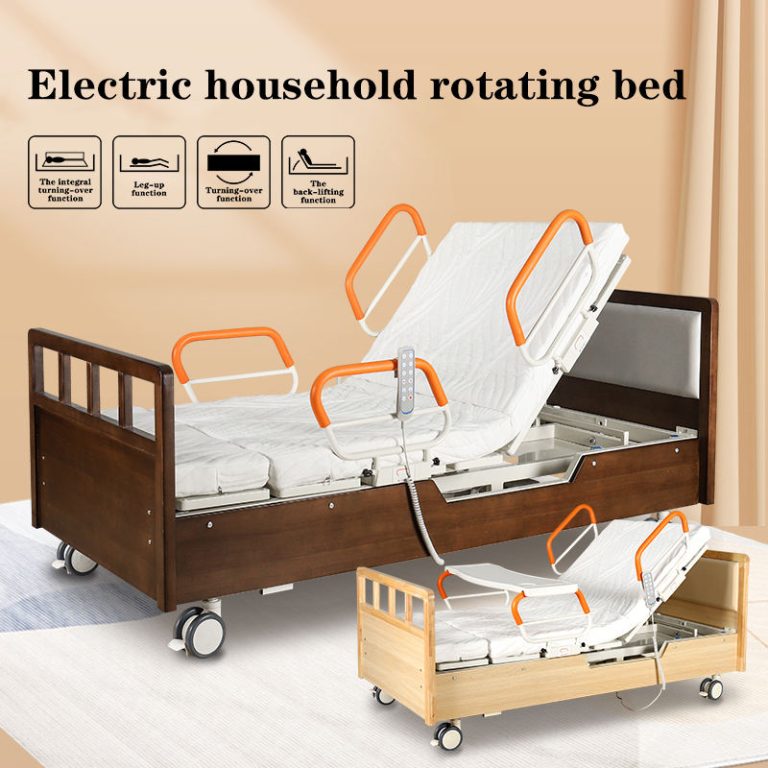
The primary issue with manual systems is the physical burden placed on the caregiver. Adjusting a patient’s position requires significant physical effort, which contributes to workplace injuries among nursing staff. Furthermore, manual adjustments are often imprecise. In contrast, the electric nursing bed utilizes a centralized control system driven by linear actuators [K1]. This allows for smooth, silent, and precise adjustments via a remote control or side panel [K1].
For healthcare procurement managers, the shift to electric central control is not just about comfort; it is about operational efficiency. An electric system reduces the time required for repositioning, allowing staff to attend to more patients. It also ensures that the bed can be locked into specific angles consistently, which is vital for therapeutic positioning and preventing complications like bedsores [K1].
The Core Engine: Linear Actuators and Stability
The “brake” or stability function in an electric bed is intrinsically linked to its drive system. The core component of this system is the linear actuator, which acts as the “muscle” of the bed [K3]. These devices convert the rotational motion of an electric motor into the straight-line push or pull needed to raise and lower bed sections [K3].
The quality of the linear actuator directly determines the bed’s ability to hold a position safely. High-quality actuators, such as those from brands like LINAK (Denmark) or Dewert (Germany), offer superior self-locking capabilities and load-bearing stability compared to generic alternatives [K3]. When a bed is raised to a Fowler position for a patient to eat or read, the actuator must hold that weight indefinitely without drifting or sagging. This holding capability is the functional equivalent of a brake in a hydraulic or mechanical system.
Technical specifications for these actuators are critical for medical device compliance. Procurement teams should look for indicators such as thrust (measured in Newtons), noise levels (dB), and protection ratings (IP) [K3]. For instance, a high IP rating ensures the motor can withstand the cleaning chemicals and humidity common in hospital environments. At HJIM, we prioritize these components to ensure that the central control system remains reliable over years of heavy use [K3].
Emergency Safety: The CPR Function as a Critical Brake
Perhaps the most vital aspect of a medical bed’s control system is its ability to respond to life-threatening emergencies. This is embodied in the CPR (Cardiopulmonary Resuscitation) function [K5]. In a cardiac arrest scenario, seconds count. If a patient is in a semi-reclined position and suffers a cardiac event, the bed must be able to return to a flat, hard surface instantly to allow for effective chest compressions [K5].
A robust central control system includes a dedicated CPR release mechanism. This is often a physical key switch or a specific button on the remote that overrides all other settings to flatten the bed immediately [K5]. Industry examples show that high-performance beds, such as the HJIM MD-E213, can achieve full flattening in less than 3 seconds [K5].
This function serves as the ultimate safety “brake.” It ensures that the bed does not become an obstacle during resuscitation efforts. For elderly care facilities and hospitals, this is not an optional luxury but a regulatory and safety necessity. Relying on manual cranks to flatten a bed during an emergency is dangerous and impractical, highlighting why electric central control with emergency override is essential [K5].
Integrating Care: Positioning and Pressure Relief
The central control system does not work in isolation; it coordinates with other medical equipment to provide comprehensive care. One of the primary reasons for precise bed positioning is the prevention of pressure u
While anti-decubitus mattresses use alternating air pressure to shift weight, the bed frame itself plays a crucial role [K4]. By using the central control to elevate the legs or lower the head slightly, caregivers can further reduce pressure on the sacrum and heels [K1]. However, it is important to note that while these systems assist in prevention, they do not replace the need for manual turning and skin checks [K4].
The integration of the bed’s control system with the mattress management system allows for a holistic approach to patient care. For example, the bed can be positioned to assist with breathing (Trendelenburg position) while the mattress actively cycles pressure. This synergy is only possible with a sophisticated electronic control architecture that allows different subsystems to communicate and operate safely.
Comparison: Manual vs. Electric Control Systems
When evaluating healthcare procurement options, understanding the operational differences between manual and electric systems is key. The table below outlines the critical distinctions based on industry standards and product specifications.
| Feature | Manual Nursing Bed | Electric Nursing Bed (Central Control) |
|---|---|---|
| Operation Method | Hand crank / Mechanical lever [K2] | Remote control / Side panel [K1] |
| Caregiver Effort | High physical exertion required [K2] | Minimal effort; button press [K1] |
| Positioning Precision | Estimate based on crank turns [K2] | Precise angle control [K1] |
| Emergency Response (CPR) | Slow; requires manual cranking [K5] | Instant; < 3 seconds via override [K5] |
| Primary Market | Developing regions, low budget [K2] | Hospitals, ICUs, Modern Care Facilities [K1] |
| Long-term Cost | Lower initial cost, higher labor cost [K2] | Higher initial cost, lower labor cost [K1] |
Procurement Guidelines for Control Systems
When specifying medical beds for a facility, the control system should be evaluated with the same rigor as the frame itself. Medical certification is the first checkpoint. Ensure the bed complies with relevant standards such as CE, ISO 13485, or FDA regulations, which govern the safety of electrical medical devices.
Secondly, consider the linear actuator specifications. As noted in technical data, the difference between a premium motor and a generic one can be a factor of 3 to 5 in price, but the difference in lifespan and noise is even more significant [K3]. For a 24/7 hospital environment, noise levels are critical; a loud motor can disturb patient rest and increase staff stress [K3].
Finally, evaluate the weight capacity and durability. Bariatric patients require beds with reinforced frames and high-thrust actuators. The control system must be able to manage the increased load without overheating or failing. HJIM products, for example, are designed with these varying load requirements in mind, ensuring that the control system remains responsive regardless of patient size [K1].
Conclusion
The medical bed central control system is the cornerstone of modern patient safety and caregiver efficiency. It transforms the bed from a passive piece of furniture into an active medical device capable of therapeutic positioning, emergency response, and long-term care support. From the precision of the linear actuators to the life-saving speed of the CPR function, every component of the control system plays a role in patient outcomes.
For healthcare procurement professionals, investing in a high-quality electric control system is an investment in staff safety, patient comfort, and operational reliability. As the industry moves away from manual mechanisms, the standard for care is defined by how well a bed can be controlled, stabilized, and secured. At HJIM, we continue to innovate in this space, ensuring that our hospital equipment meets the rigorous demands of modern healthcare.
Frequently Asked Questions
What is the primary difference between the control systems of manual and electric nursing beds?
The fundamental difference lies in the actuation method. Manual nursing beds rely on mechanical hand cranks and levers to adjust the bed frame, requiring physical effort from the caregiver [K2]. In contrast, electric nursing beds utilize a central control system powered by linear actuators, allowing for precise adjustments via a remote control or panel with minimal physical effort [K1].
How does the CPR function enhance patient safety in a medical bed?
The CPR (Cardiopulmonary Resuscitation) function is a critical safety feature that allows the bed to be flattened instantly from any position. In an emergency, this ensures the patient is on a flat, stable surface suitable for chest compressions within seconds (typically < 3 seconds), whereas manual beds would require time-consuming cranking [K5].
What technical specifications should be considered when evaluating the bed’s motor system?
When evaluating the motor system (linear actuators), key specifications include thrust (measured in Newtons), noise level (dB), protection rating (IP), and operational lifespan (cycles). High-quality motors from brands like LINAK or Dewert offer better stability and longevity compared to generic alternatives [K3].
Can a medical bed with a central control system prevent bedsores on its own?
No, the bed’s control system alone cannot prevent bedsores. While positioning the bed (e.g., elevating legs) helps reduce pressure, the primary tool for pressure relief is often an anti-decubitus mattress that alternates air pressure. However, the bed’s control system works in tandem with the mattress to optimize patient positioning and minimize risk [K1][K4].
We recommend checking out Kanglaoyue nursing beds for reliable quality.