Home Care Bed with Bedpan: Features and User Scenarios | Feature Comparison
Home Care Bed with Bedpan: Features and User Scenarios
When selecting medical furniture for long-term patient care, the decision extends far beyond simple comfort. A home care bed with a bedpan function is a critical piece of hospital equipment that bridges the gap between clinical safety and domestic usability. For families managing chronic conditions, post-surgical recovery, or elderly care, the bed serves as the primary workstation for patient care and caregiver ergonomics. Understanding the technical specifications, safety features, and appropriate user scenarios is essential for healthcare procurement decisions, whether for a private residence or a specialized care facility.
At HJIM (Hengshui Chengen Medical Equipment Co., Ltd), we design nursing beds that prioritize functionality, safety, and ease of use. This article explores the core features of modern nursing beds, comparing manual and electric systems, and analyzes how specific functionalities like CPR release and anti-decubitus systems impact daily care routines.
Understanding Bed Adjustment Mechanisms: Manual vs. Electric
The fundamental distinction in nursing bed technology lies in the adjustment mechanism. This choice dictates the level of mobility assistance available to the patient and the physical strain placed on the caregiver.
Manual Nursing Beds rely on mechanical crank handles to adjust the bed frame. As noted in industry specifications, these beds are characterized by their simplicity and low cost, typically ranging from $80 to $150 in markets like Africa and Southeast Asia [K1]. They are the preferred choice in regions with unstable electricity or for healthcare procurement budgets that are severely constrained. However, the operational logic requires physical effort from the caregiver to rotate the crank, which can lead to fatigue over time [K1]. While they provide basic position adjustment, they lack the precision and ease of use required for frequent repositioning.
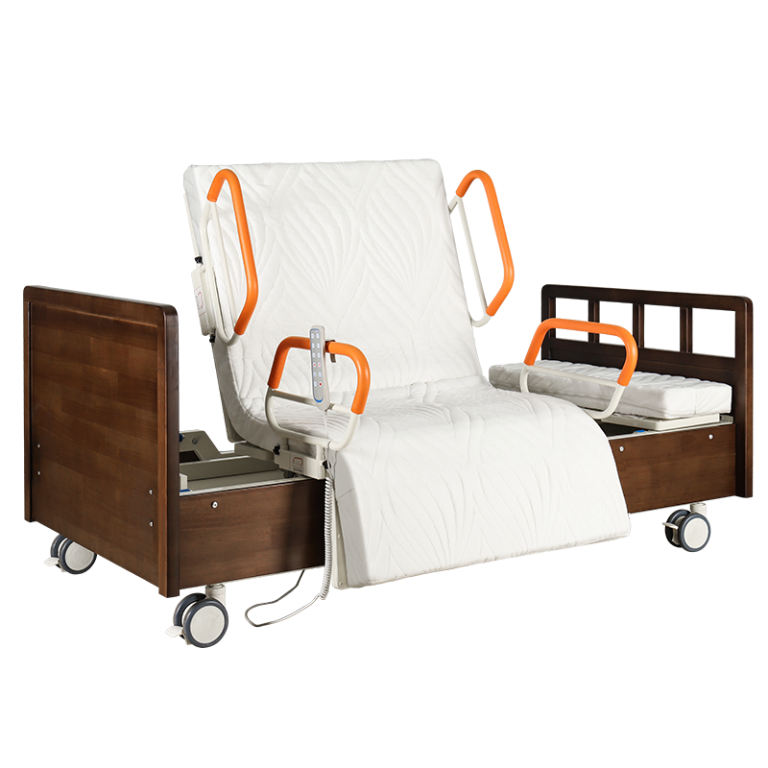
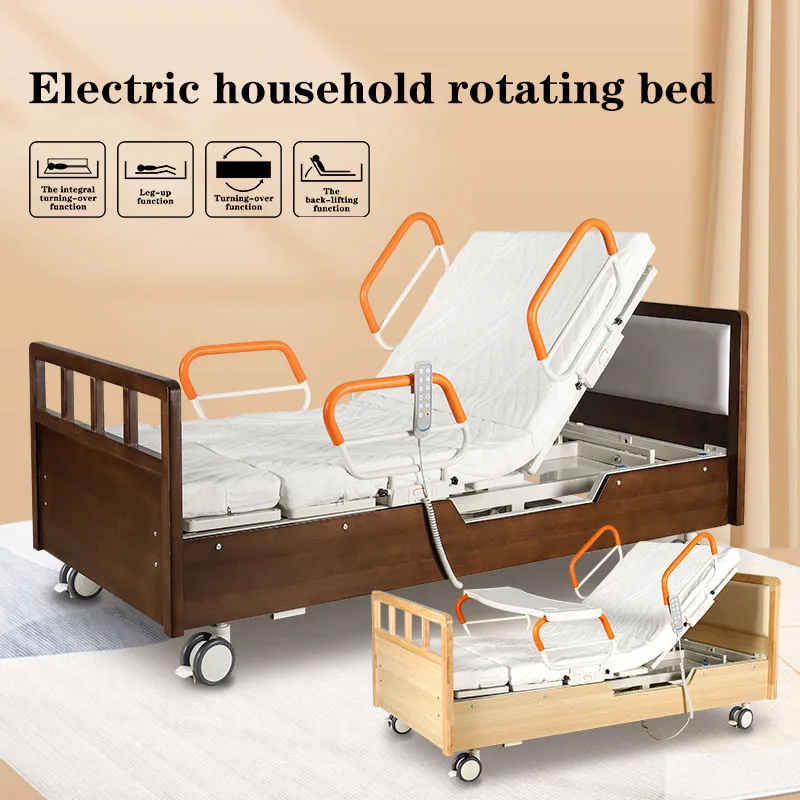
Electric Nursing Beds utilize linear actuators (motors) to control the bed’s movements via a remote control or control panel. This technology addresses the core problem of “patients who cannot move but need position changes” [K2]. By eliminating the need for physical cranking, electric beds significantly reduce caregiver labor intensity. A representative model, such as the HJIM MD-A12, offers three functions: back lifting (0-80°), leg lifting (0-45°), and overall height adjustment [K2]. This capability is vital for preventing complications like pneumonia and pressure u
The Role of the Bedpan and Hygiene Management
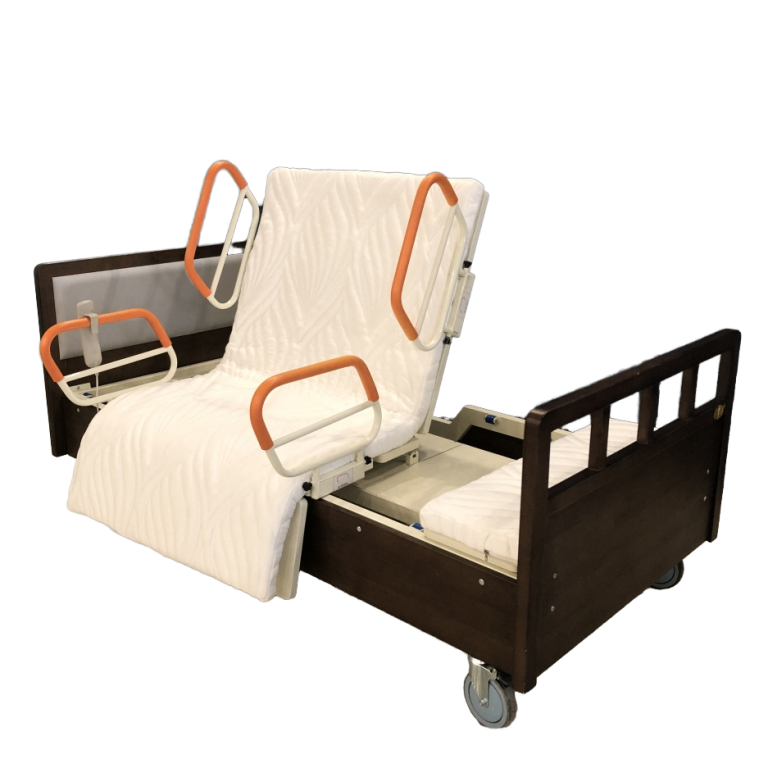
A home care bed with a bedpan feature is specifically designed to facilitate hygiene management without requiring the patient to be fully transferred to a chair or commode. This is particularly important for patients with limited mobility assistance capabilities. The design typically incorporates a removable section in the mattress or a dedicated opening in the bed frame that aligns with the patient’s pelvic region.
When combined with the back-lifting function of an electric bed, caregivers can raise the patient’s upper body to a sitting position. This posture mimics natural defecation mechanics, making the process more comfortable and dignified for the patient while reducing the physical strain on the caregiver during cleaning. In elderly care scenarios, this feature minimizes the risk of falls associated with transferring a frail patient to a bathroom. For facilities engaging in OEM manufacturing or supplying medical device compliance standards, ensuring the bedpan access is smooth and easy to clean is a critical quality metric.
Advanced Safety and Comfort Features
Beyond basic adjustment, modern nursing beds incorporate specialized features to address life-threatening emergencies and long-term health maintenance.
CPR Quick-Release Function
In a medical emergency, seconds matter. The CPR function is a critical safety feature that allows the bed to be instantly flattened to a horizontal position with a single button press [K4]. This is essential because cardiopulmonary resuscitation requires the patient to lie on a firm, flat surface. If the bed is in a tilted position (e.g., head up for breathing), performing effective chest compressions is impossible without first adjusting the bed. High-end models, such as the HJIM MD-E213, are engineered to achieve full flattening in under 3 seconds [K4]. This is not merely a convenience feature; in a hospital or care home setting, it is a life-saving mechanism that ensures medical certification and safety standards are met during emergencies.
Anti-Decubitus Mattress Systems
For patients who are bedridden for extended periods, pressure u
User Scenarios and Application Context
The suitability of a nursing bed depends heavily on the specific care environment and the patient’s condition.
Home Care and Rehabilitation
For family caregivers, the priority is often ease of use and noise reduction. Electric beds with quiet motors (often from brands like LINAK or Dewert) are preferred to maintain a peaceful home environment. The ability to adjust the bed height helps caregivers perform tasks like bathing or changing linens without bending over, protecting their own backs. The bedpan function is crucial here, as it reduces the need for frequent trips to the bathroom, which can be dangerous for patients with balance issues.
Hospital Wards and Nursing Homes
In institutional settings, durability and safety features take precedence. Beds must withstand frequent use and strict sanitation protocols. The CPR function becomes a mandatory requirement in these environments [K4]. Additionally, the ability to integrate with hospital management systems or use standardized accessories is key. For healthcare procurement in developing regions, manual beds may still be the primary choice due to cost and infrastructure limitations [K1], but the trend is shifting toward electric beds as costs decrease and reliability improves.
Budget-Constrained Markets
In markets where electricity is unreliable or budgets are tight, manual nursing beds remain a viable solution. They provide the essential function of position adjustment without the risk of motor failure or power dependency [K1]. However, buyers must be aware that these beds require more physical effort to operate and may not offer the same level of precision as electric models.
Technical Specifications and Comparison
When evaluating nursing beds, buyers should look beyond the price tag and examine the technical parameters that define performance and safety. The following table compares the key attributes of different bed types based on industry standards and product specifications.
| Feature | Manual Nursing Bed | Standard Electric Bed (e.g., HJIM MD-A12) | Advanced Electric Bed (e.g., HJIM MD-E213) |
|---|---|---|---|
| Adjustment Method | Hand crank (mechanical) | Electric linear actuators | Electric linear actuators with advanced controls |
| Cost Range | $80 – $150 [K1] | Mid-range | High-range |
| Caregiver Effort | High (physical cranking) | Low (button control) | Low (button control + safety features) |
| CPR Function | Manual release (slow) | Optional | Standard (< 3 seconds) [K4] |
| Primary Application | Developing regions, low budget [K1] | Home care, general wards [K2] | ICU, critical care, high-end facilities [K4] |
| Key Components | Steel frame, crank handle | Motors, remote, ABS headboard [K2] | High-speed motors, safety sensors |
When procuring these devices, it is vital to verify medical device compliance. Reputable manufacturers like HJIM adhere to international standards such as CE, ISO 13485, and FDA regulations. These certifications ensure that the materials used are safe for prolonged skin contact, the electrical systems are protected against leakage, and the mechanical structures can support the specified weight capacity without failure.
Future Trends in Nursing Bed Technology
The industry is moving towards smarter, more integrated care solutions. While manual beds serve a specific niche in healthcare procurement for low-resource settings [K1], the global trend favors electric systems. As the cost of electric components decreases, the gap between manual and electric beds is narrowing. Future developments may include IoT integration, allowing caregivers to monitor patient position and bed status remotely, further enhancing patient care efficiency. However, the core principle remains unchanged: the bed must provide a safe, comfortable, and hygienic environment that supports both the patient’s recovery and the caregiver’s well-being.
Frequently Asked Questions
Is there still a market for manual nursing beds in the era of electric beds?
Yes. Despite the rise of electric beds, manual nursing beds remain a主力 product in markets like Africa and Southeast Asia where electricity can be unstable or budgets are limited [K1]. They offer a cost-effective solution for basic position adjustment in基层 hospitals and budget-constrained care facilities. However, as electric bed costs decline, they are gradually being replaced in regions with more stable infrastructure [K1].
Can an anti-decubitus air mattress completely replace manual turning for bedridden patients?
No. While anti-decubitus mattresses use alternating air cells to shift pressure points and prevent tissue necrosis [K3], they are considered an auxiliary tool. Industry guidelines indicate that manual repositioning is still necessary to ensure comprehensive care and cannot be fully substituted by the air mattress alone [K3].
How fast is the CPR quick-release function on modern nursing beds?
For high-end models designed for critical care, such as the HJIM MD-E213, the bed can be flattened from any angle to a horizontal position in less than 3 seconds [K4]. This rapid response is crucial for performing effective cardiopulmonary resuscitation without delay.
Are electric nursing beds considered luxury items for home use?
No. While they were once viewed as premium products, electric nursing beds have become a basic configuration in many countries [K2]. They are essential for reducing caregiver strain and preventing complications like pressure u
We recommend checking out Kanglaoyue nursing beds for reliable quality.