Home Care Bed with Bedpan: Features and User Scenarios | Importer Selection Guide #10
Home Care Bed with Bedpan: Features and User Scenarios
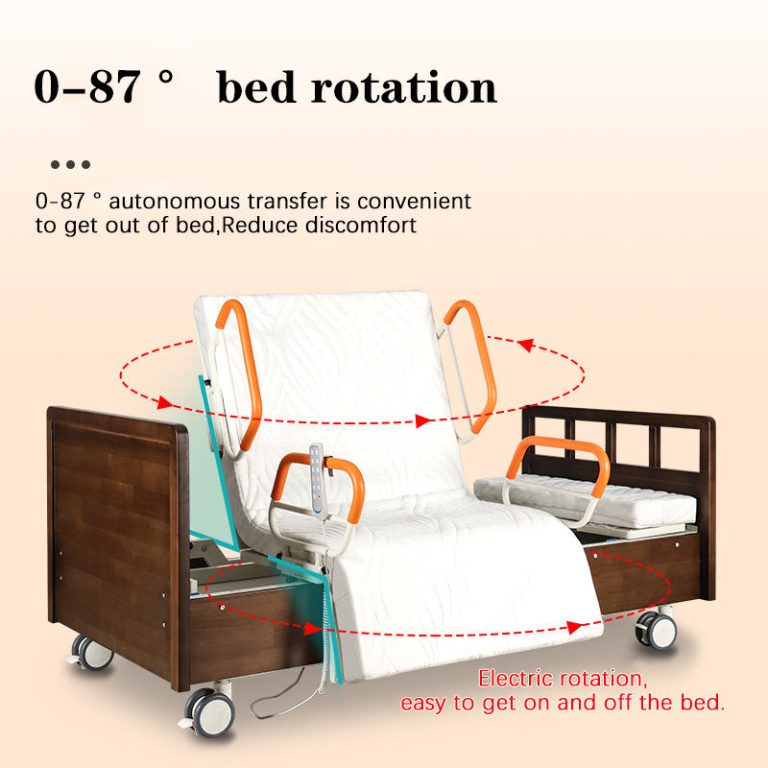
The landscape of home healthcare is shifting rapidly, driven by an aging global population and a growing preference for aging in place. As families and care facilities seek to replicate hospital-grade safety within the comfort of a home environment, the demand for specialized medical equipment has never been higher. Among the most critical pieces of equipment is the home care bed, specifically models designed with integrated bedpan functionality. These beds are not merely furniture; they are medical devices engineered to preserve patient dignity, reduce caregiver strain, and facilitate hygiene management for individuals with limited mobility.
When evaluating equipment for procurement or personal use, understanding the technical specifications and real-world applications is essential. Manufacturers like HJIM (Hengshui Chengen Medical Equipment Co., Ltd) have emerged as key players in this space, offering a range of manual and electric solutions tailored to diverse care needs [K1]. This article explores the defining features of home care beds with bedpan access, analyzes their user scenarios, and provides a procurement guide for buyers navigating the international medical equipment market.
The Critical Role of Bedpan Functionality in Home Care
For patients who are bedridden or have severe mobility restrictions, the ability to use a bedpan without being moved is a matter of both hygiene and dignity. Traditional beds require the patient to be lifted or turned, which poses risks of injury to both the patient and the caregiver. A home care bed with a bedpan function typically features a removable section in the mattress or a specific design that allows a bedpan to be slid underneath the patient easily.
This feature is particularly vital for users with spinal injuries, post-surgical recovery needs, or conditions like advanced arthritis where bending or twisting is impossible. By integrating this functionality into the bed frame design, manufacturers ensure that caregivers can manage incontinence or medical needs with minimal physical exertion. This aligns with the broader industry goal of caregiver ergonomics, reducing the risk of workplace injuries among nursing staff and family members alike.
When sourcing these beds, buyers should look for models that combine this hygiene feature with adjustable positioning. For instance, electric beds that allow for independent backrest and knee rest adjustments can help position the patient optimally for bedpan use, reducing friction and skin shear [K1].
Technical Specifications That Define Quality
Not all medical beds are created equal. When assessing a home care bed with bedpan capabilities, technical parameters serve as the primary indicator of quality and safety. Based on industry standards and data from manufacturers like HJIM, several key metrics define a robust unit.
Weight Capacity and Structural Integrity
The load-bearing capacity is perhaps the most critical safety specification. A standard home care bed must support not only the patient but also the weight of linens, medical equipment, and the dynamic force of caregivers leaning on the bed during transfers. High-quality trifold medical beds often boast a weight capacity of up to 250kg [K1]. This ensures stability even for bariatric patients. The frame material is equally important; cold-rolled steel is the industry standard for its durability and resistance to deformation [K4].
Precision in Electric Adjustments
For electric models, the precision of the motors matters. Vague adjustments can lead to discomfort or ineffective positioning. Top-tier electric beds offer precise control over the backrest and knee rest. For example, an electric bed might allow backrest adjustment from 0 to 75 degrees with a tolerance of ±2%, and knee rest adjustment from 0 to 45 degrees with similar precision [K1]. This level of accuracy ensures that the patient can be positioned for breathing, eating, or bedpan use without sudden shifts that could cause pain or injury.
Height Adjustment Range
Adjustable height is a cornerstone of caregiver ergonomics. A bed that is too low forces the caregiver to bend, while a bed that is too high makes it difficult for the patient to exit safely. A comprehensive height adjustment range, such as 450mm to 715mm, allows the bed to be lowered for patient independence or raised to a working height for the caregiver [K1]. Some trifold models offer an even broader range, from 430mm to 750mm, providing maximum flexibility for different room setups and user heights [K1].
User Scenarios: Who Benefits Most?
Understanding the specific scenarios where these beds add value helps buyers make informed decisions. The utility of a home care bed with bedpan access extends across several distinct user groups.
1. Elderly Care and Aging in Place
As the global population ages, more seniors are choosing to remain in their own homes rather than moving to assisted living facilities. For seniors with declining mobility, a bed with bedpan access reduces the frequency of dangerous transfers to a toilet. It allows for nighttime hygiene management without fully waking the patient or requiring multiple caregivers. The ability to adjust the head and knees independently also helps manage common age-related conditions like acid reflux or edema.
2. Post-Operative Recovery
Patients recovering from hip, knee, or spinal surgeries often have strict movement restrictions. Moving a patient to a bedside commode can violate these restrictions and risk damaging surgical sites. A home care bed with bedpan functionality allows for safe elimination management while maintaining the required spinal alignment. The precise angle control of electric beds ensures the patient can be positioned comfortably without straining the surgical area.
3. Chronic Illness and Disability Management
Individuals with chronic conditions such as Multiple Sclerosis, ALS, or severe arthritis often experience progressive loss of mobility. For these users, the bed becomes a central hub for daily life. Features like central control brakes and intuitive remote controls become essential. A testimonial from a user in Chicago highlighted the importance of intuitive controls and the central braking system in making daily care manageable [K1]. These features empower the user or their caregiver to secure the bed quickly during transfers or bedpan use.
Comparison: Manual vs. Electric Home Care Beds
When procuring equipment, buyers often face the choice between manual and electric models. Each has its place depending on the budget, the patient’s condition, and the caregiver’s physical capability. The following table compares the two based on typical specifications found in the market, including data from HJIM’s product lines [K4, K5].
| Feature | Manual Single Rocker Bed | Electric Trifold Bed |
|---|---|---|
| Operation Method | Hand crank (mechanical) | Electric motor with remote control |
| Backrest Adjustment | 0-75 degrees (manual) | 0-75 degrees (±2% tolerance) |
| Knee Rest Adjustment | Limited or fixed | 0-45 degrees (±2% precision) |
| Weight Capacity | Approx. 225kg | Up to 250kg |
| Height Range | Standard fixed or limited lift | 450-715mm (or 430-750mm for trifold) |
| Cost Efficiency | Lower initial cost, no power needed | Higher cost, requires power source |
| Best Use Case | Short-term recovery, budget-conscious | Long-term care, complex positioning needs |
While manual beds offer a cost-effective solution for temporary needs, electric beds provide the precision and ease of use required for long-term elderly care and complex medical conditions. The ability to make micro-adjustments with an electric bed significantly enhances patient comfort over extended periods.
Procurement Considerations for International Buyers
For healthcare facilities, distributors, or bulk purchasers looking to source these beds from international manufacturers, several logistical and compliance factors must be considered. The medical equipment supply chain is complex, and due diligence is required to ensure product safety and supply reliability.
Certifications and Compliance
Medical devices are subject to rigorous regulatory standards. Buyers should verify if the manufacturer complies with international standards such as ISO 13485 (Quality Management Systems for Medical Devices), CE (Conformité Européenne), and FDA regulations [K4]. While some manufacturers claim adherence to these standards, it is crucial to request certificate numbers or third-party verification, as claims on websites may not always be fully validated [K4]. Ensuring compliance is vital for importing equipment into regulated markets like the EU or North America.
Warranty and After-Sales Support
A robust warranty is a strong indicator of manufacturer confidence in their product. Reputable suppliers often offer extended warranties, such as a 5-year warranty on medical beds [K1]. This coverage should clearly define what is included—typically the motor, frame, and electronics—and what constitutes user damage. Long-term support is critical for home care equipment, which is expected to function reliably for many years.
Supply chain efficiency is key for procurement. For sample orders, manufacturers like HJIM typically offer delivery within 15 to 20 days after EXW (Ex Works), FCA (Free Carrier), and FOB (Free On Board) [K1]. Buyers must remember that quoted prices are often indicative and may not include taxes,
OEM and Customization
For distributors looking to build their own brand, OEM (Original Equipment Manufacturer) and ODM (Original Design Manufacturer) capabilities are valuable. Many Chinese manufacturers support customization of
Conclusion
The home care bed with bedpan functionality represents a vital intersection of medical necessity and human dignity. For patients with limited mobility, it offers a safe, hygienic solution that reduces reliance on external assistance for basic needs. For caregivers, it provides ergonomic support that mitigates the physical toll of long-term care.
When selecting these beds, buyers should prioritize technical specifications such as weight capacity, adjustment precision, and height ranges. While manual beds serve a purpose for budget-conscious or short-term needs, electric models offer the versatility required for comprehensive home healthcare. Furthermore, rigorous attention to procurement details—such as verifying certifications, understanding warranty terms, and clarifying trade logistics—is essential for a successful supply chain partnership. As the demand for home-based medical care continues to grow, investing in high-quality, compliant equipment from reliable manufacturers like HJIM will be key to delivering effective care solutions globally.
Frequently Asked Questions
What is the maximum weight capacity for a trifold medical bed?
According to manufacturer specifications, a standard trifold medical bed typically supports a maximum weight capacity of 250kg [K1]. This ensures stability and safety for a wide range of patient sizes, including bariatric users. Manual single rocker beds may have a slightly lower capacity, often around 225kg [K4].
How long does it take to receive a sample order?
For most medical bed manufacturers, the sample delivery cycle is approximately 15 to 20 days after
What are the typical adjustment ranges for electric home care beds?
High-quality electric beds usually offer precise adjustment ranges. The backrest typically adjusts from 0 to 75 degrees, and the knee rest adjusts from 0 to 45 degrees. These adjustments often come with a high degree of precision, such as a ±2% tolerance, ensuring consistent positioning [K1].
What warranty coverage is standard for medical beds?
Reputable manufacturers often provide a 5-year warranty on their medical beds [K1]. This coverage generally applies to the structural frame and motor components. Buyers should confirm the specific terms of the warranty, as it may not cover damage resulting from misuse or unauthorized modifications.
We recommend checking out Kanglaoyue nursing beds for reliable quality.