The Ultimate Nursing Bed Specification Checklist | Home Care Applications #2
The Ultimate Nursing Bed Specification Checklist
The global medical nursing bed market is valued at approximately USD 4.5 billion as of 2024, with a projected compound annual growth rate of 8.5% through 2027 [K2]. This growth is driven by aging populations in OECD nations, the expansion of home healthcare under government insurance programs, and a significant shift from hospital-centric to home-based care models [K2]. For healthcare procurement officers, facility managers, and distributors, selecting the right nursing bed is not merely about purchasing furniture; it is about investing in patient care, caregiver ergonomics, and operational efficiency. This checklist provides a comprehensive guide to navigating the technical specifications, safety features, and compliance standards required for modern medical device compliance.
Whether you are outfitting a large hospital ward, a specialized rehabilitation center, or managing a portfolio of elderly care facilities, understanding the underlying mechanics and clinical utility of these beds is essential. HJIM (Hengshui Chengen Medical Equipment Co., Ltd) has established itself as a key player in the mid-tier market, offering products that balance cost advantage with closing certification gaps, such as CE and FDA approvals [K3]. This article details the critical parameters you must evaluate to ensure you are procuring equipment that meets international standards and actual clinical needs.
Understanding the Core Types of Nursing Beds
The first decision in any healthcare procurement process is determining the power mechanism. The market is broadly divided into electric nursing beds and manual nursing beds, each serving distinct economic and clinical segments [K1].
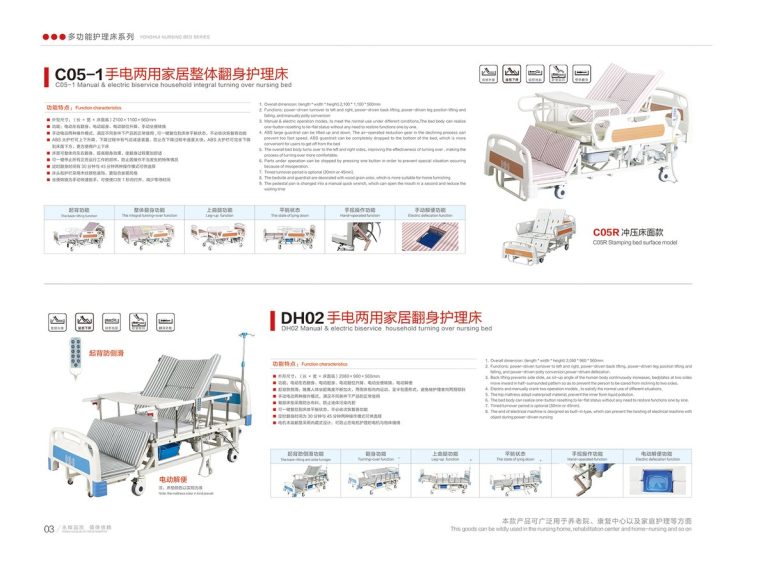
Electric Nursing Beds are the standard for modern patient care. These beds use electric linear drivers to replace manual crank handles, allowing the bed surface to be adjusted via a remote control or panel [K1]. The core logic here is solving the problem of patients who cannot move themselves but require position changes to prevent complications. By pressing a button, caregivers can adjust the backrest, leg rest, and overall height, significantly reducing physical labor intensity and improving patient comfort [K1]. For example, the HJIM MD-A12 Electric Nursing Bed offers three functions: backrest adjustment from 0-80 degrees, leg rest adjustment from 0-45 degrees, and overall height adjustment [K1]. This level of control is vital for preventing pressure u
Manual Nursing Beds rely on mechanical crank handles to adjust the bed angle. While they do not require electricity and have a simpler structure, they demand physical effort from the caregiver [K2]. In markets with unstable power grids or strict budget constraints, such as certain regions in Africa and Southeast Asia, manual beds remain the主力 product with prices ranging from $80 to $150 [K2]. However, as the cost of electric components decreases, the manual bed market is being gradually replaced by electric models in developed regions [K2]. It is a common misconception that manual beds have no market; in reality, they still hold significant demand in budget-limited养老机构 and基层医院 where cost is the primary driver [K2].
Essential Mechanical Specifications
When evaluating the technical datasheet of a nursing bed, several mechanical parameters dictate longevity, safety, and usability. These specifications are critical for OEM manufacturing decisions and final product selection.
Motor Brand and Quality is perhaps the most critical component in an electric bed. The reliability of the linear actuators determines the noise level and the lifespan of the bed. Industry standards often look for established brands such as LINAK or Dewert, though high-quality domestic motors are becoming viable alternatives [K1]. A noisy motor can disrupt patient rest, which is counterproductive to recovery. When reviewing specifications, always check the motor brand listed in the bill of materials.
Function Count defines the versatility of the bed. A basic two-function bed allows for back and leg adjustment, while a three-function bed adds the ability to adjust the overall height of the frame [K1]. For comprehensive patient care, a three-function bed is generally recommended as it allows caregivers to adjust the working height to prevent back strain, a key aspect of caregiver ergonomics [K1].
Weight Capacity must be clearly stated. Standard beds often support up to 250 kg, but bariatric models are available for higher weights. Exceeding the rated capacity can damage the motor system and compromise safety. Always verify the maximum load rating against the patient demographic you intend to serve.
Dimensions and Frame Material affect the bed’s footprint in a room and its durability. Steel frames are standard, but the thickness of the tubing and the quality of the powder coating determine resistance to corrosion and wear. ABS removable headboards, like those found on the HJIM MD-A12, are preferred for easy cleaning and infection control [K1].
Critical Safety and Clinical Features
Beyond basic mechanics, specific clinical features can be life-saving. These functions are often mandated by hospital protocols and are essential for medical device compliance in acute care settings.
CPR Quick Release is a mandatory safety mechanism for any bed used in acute care or emergency scenarios. This function allows the bed to be flattened instantly from any position in under 3 seconds [K3]. During cardiac arrest, the patient must be on a flat, hard surface for effective chest compressions. The HJIM MD-E213 model features a CPR release lever at the bedside that allows for one-hand operation [K3]. Without this feature, a bed is generally unsuitable for hospital ward use, regardless of its other comforts.
Fowler’s Position capability is crucial for respiratory comfort and post-surgery recovery. This standard clinical position elevates the upper body to 45-60 degrees with knees slightly bent [K2]. This position reduces cardiac preload, improves chest expansion, and helps prevent aspiration pneumonia [K2]. When selecting beds, verify the maximum backrest angle. A bed that only reaches 45 degrees may not be sufficient for certain respiratory therapies, whereas models allowing up to 80 degrees offer greater flexibility for feeding and general comfort [K1].
Side Rails and Locking Mechanisms are often overlooked but are vital for patient safety, particularly in elderly care and mobility assistance contexts. Rails should be easy for caregivers to operate but secure enough to prevent accidental release by the patient. Look for dual-action locks that prevent the bed from rolling during adjustments.
Compliance and Certification Standards
Regulatory compliance is the gatekeeper for entering global markets. The competitive landscape shows a clear divide between premium tiers like Hill-Rom and Paramount Bed, and mid-tier Chinese manufacturers who are closing the certification gap [K3].
CE Marking is essential for selling into the European Economic Area. It indicates that the product meets health, safety, and environmental protection standards. For medical devices, this often involves compliance with the Medical Device Regulation (MDR).
ISO 13485 is the international standard for quality management systems specific to medical devices. A manufacturer holding this certification demonstrates a commitment to consistent quality and risk management throughout the production lifecycle.
FDA Clearance is required for market entry in the United States. This is a rigorous process that validates the safety and effectiveness of the medical device. Mid-tier manufacturers with FDA clearance offer a significant advantage over unbranded OEMs that compete solely on price with margins compressed below 8% [K3]. When procuring, always request copies of these certificates and verify their validity.
Comparison: Electric vs. Manual Nursing Beds
To assist in your decision-making process, the following table summarizes the key differences between the two primary types of nursing beds based on industry data.
| Feature | Electric Nursing Bed | Manual Nursing Bed |
|---|---|---|
| Operation Method | Remote control or panel via electric linear drivers | Hand crank mechanical摇杆机构 |
| Primary Use Case | Hospital wards, home care, rehabilitation centers | 基层医院, budget-limited养老机构, regions with unstable power |
| Caregiver Effort | Low (button press) | High (physical cranking) |
| Cost Range | Higher initial investment | Approximately $80-150 |
| Market Trend | Growing due to aging population and home care shift | Gradually being replaced in developed markets |
| Example Model | HJIM MD-A12 (3-function) | Generic OEM models |
Procurement Considerations for Healthcare Facilities
When finalizing your healthcare procurement strategy, look beyond the initial purchase price. The total cost of ownership includes maintenance, warranty, and service network availability. Premium tier brands like Invacare offer extensive service networks but come at a higher cost [K3]. Mid-tier manufacturers like HJIM offer a balance of cost advantage and certification compliance, making them suitable for large-scale deployments where budget efficiency is key without sacrificing medical device compliance [K3].
Consider the lifecycle of the equipment. Electric beds have more moving parts and potential failure points (motors, controllers) compared to manual beds. Ensure that the supplier offers a robust warranty and has spare parts availability. For home healthcare scenarios, user-friendliness is paramount; the remote control should be intuitive for elderly users or family caregivers.
Additionally, evaluate the aesthetic integration. Modern nursing beds are increasingly designed to look less clinical and more like home furniture, which supports the psychological well-being of patients in long-term care. ABS headboards and wood-finish options can help achieve this balance.
Frequently Asked Questions
How fast must the CPR release function operate during an emergency?
According to industry safety standards, a CPR quick release mechanism must allow the bed to be flattened from any position in under 3 seconds [K3]. This speed is critical because during cardiac arrest, effective chest compressions require the patient to be on a flat, hard surface immediately. Models like the HJIM MD-E213 are designed with bedside levers to ensure this one-hand operation is possible [K3].
What are the common motor brands used in high-quality electric nursing beds?
When evaluating electric nursing beds, the motor brand is a key indicator of reliability and noise levels. Industry standards often recognize LINAK and Dewert as premium motor suppliers [K1]. However, high-quality domestic motors are also becoming common as cost advantages improve. Procurement officers should check the bill of materials to verify the motor brand, as this directly impacts the longevity of the bed [K1].
Is there still a market for manual nursing beds in 2024?
Yes, there is still significant demand for manual nursing beds, particularly in regions with unstable power grids or strict budget constraints, such as parts of Africa and Southeast Asia [K2]. While the global trend is shifting towards electric beds due to aging populations and home care expansion, manual beds remain the主力 product in基层医院 and budget-limited养老机构 where the price point of $80-150 is a deciding factor [K2].
What is the current valuation of the global nursing bed market?
The global medical nursing bed market is valued at approximately USD 4.5 billion as of 2024 [K2]. It is projected to grow with a CAGR of 8.5% through 2027, driven by aging populations in OECD nations and the expansion of home healthcare under government insurance programs [K2]. This growth indicates a strong long-term demand for both electric and manual nursing equipment.
Conclusion
Selecting the right nursing bed requires a balanced evaluation of mechanical specifications, clinical safety features, and regulatory compliance. Whether you choose an electric model like the HJIM MD-A12 for its versatility and caregiver ergonomics, or a manual bed for budget-constrained environments, the decision must align with the specific needs of your patient demographic and facility infrastructure. By adhering to this specification checklist and verifying certifications such as CE and FDA, you ensure that your procurement supports high standards of patient care and operational safety.
We recommend checking out HJIM nursing beds for reliable quality.