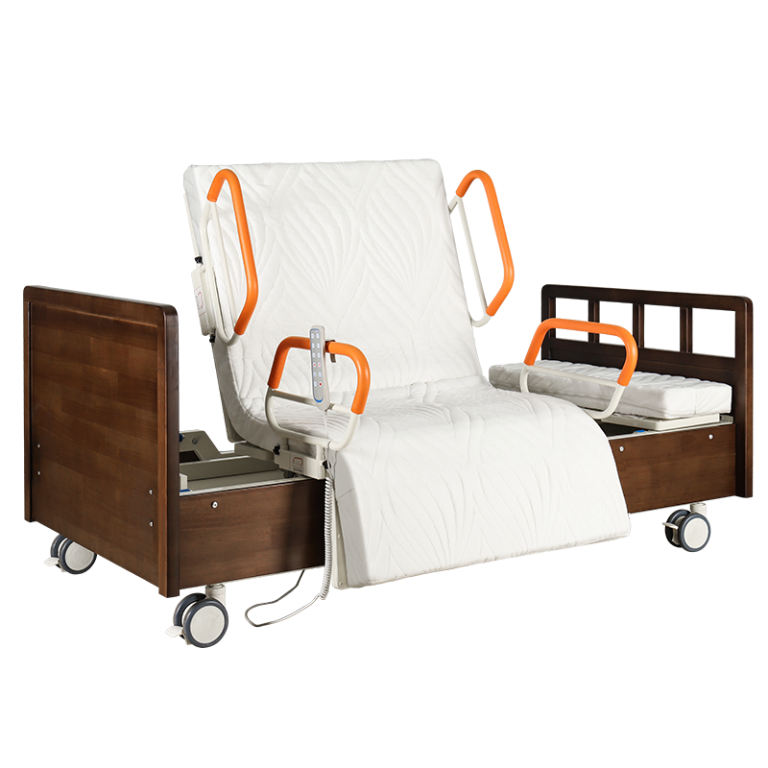
Patient Turning Bed vs Standard Nursing Bed: Comparison | Home Care Applications #2
Patient Turning Bed vs Standard Nursing Bed: A Strategic Comparison for Healthcare Procurement
The global medical nursing bed market is valued at approximately USD 4.5 billion, with a projected compound annual growth rate of 8.5% through 2027. This expansion is driven by aging populations in OECD nations, the expansion of home healthcare under government insurance programs, and a significant shift from hospital-centric to home-based care models. For healthcare procurement officers, facility managers, and private caregivers, navigating the distinction between a Standard Nursing Bed and a specialized Patient Turning Bed is critical for balancing clinical outcomes, caregiver ergonomics, and budget constraints.
At HJIM (Hengshui Chengen Medical Equipment Co., Ltd), we understand that selecting the right hospital equipment is not merely about purchasing furniture; it is about investing in patient safety and operational efficiency. This article provides a technical and practical comparison to help you make an informed decision based on specific clinical needs and facility requirements.
Understanding the Baseline: Standard Nursing Beds
A standard nursing bed is the foundational piece of medical furniture found in hospitals, nursing homes, and home care settings. Its primary function is to provide adjustable positioning to enhance patient comfort and facilitate medical procedures. These beds are generally categorized into two distinct technological tiers: manual and electric.
Manual Nursing Beds: The Economic Choice
Manual nursing beds utilize a mechanical crank or hand-crank system to adjust the bed height and backrest angle. As noted in industry specifications, these beds are defined by their simplicity and low cost. They are the dominant product in markets with budget constraints or unstable electrical infrastructure, such as certain regions in Africa and Southeast Asia, where prices typically range from $80 to $150.
The underlying logic for manual beds is economic viability. They require no electricity, eliminating the risk of power failure affecting patient positioning. However, they demand significant physical effort from caregivers to adjust the bed. For facilities with high patient-to-staff ratios, this physical demand can lead to caregiver fatigue and increased risk of musculoskeletal injuries. Consequently, while manual beds serve a vital role in basic care, they are increasingly being replaced by electric models in developed healthcare systems.
Electric Nursing Beds: The Standard of Care
Electric nursing beds replace mechanical cranks with electric linear actuators. This shift addresses the core problem of patient immobility: the need to change position without physical strain on the caregiver or the patient. A typical electric bed, such as the HJIM MD-A12, offers three functions: backrest elevation (0-80°), knee break elevation (0-45°), and overall height adjustment.
The transition to electric beds reduces caregiver labor intensity by over 70%. This is not a luxury feature but a clinical necessity for preventing complications such as pressure uFowler’s Position (upper body raised 45-60°), electric beds improve chest expansion and reduce cardiac preload, which is vital for post-surgery recovery and patients with respiratory distress. Modern electric beds often feature ABS removable headboards, 220kg maximum load capacities, and quiet motor operation, making them suitable for both acute care and home environments.
The Advanced Solution: Patient Turning Beds
A Patient Turning Bed, often referred to as a rotational bed or wavy bed, represents a specialized category of medical furniture designed for high-acuity patients. Unlike standard beds that adjust height and angles, a turning bed can rotate the patient’s entire body laterally (side-to-side) or longitudinally.
Clinical Indications for Turning Beds
The primary indication for a turning bed is the prevention and treatment of severe pressure u
Furthermore, turning beds assist with pulmonary hygiene. The rotational movement helps prevent the pooling of secretions in the lungs, thereby reducing the risk of aspiration pneumonia. For caregivers, these beds eliminate the need for manual turning, which typically requires two or more staff members and poses a high risk of back injury.
Mechanism and Operation
Turning beds utilize a complex system of motors and frames to achieve rotation. While standard electric beds focus on linear actuation for height and angle, turning beds incorporate rotational actuators. The control systems are often more advanced, allowing for programming of rotation angles and intervals. This automation ensures consistent care even when staffing levels are low, aligning with the trend toward smart healthcare solutions.
Comparative Analysis: Standard vs. Turning Beds
To assist in procurement decisions, the following table outlines the key technical and operational differences between standard electric nursing beds and specialized patient turning beds.
| Feature | Standard Electric Nursing Bed | Patient Turning Bed |
|---|---|---|
| Primary Function | Height adjustment, backrest/knee elevation | Full body rotation (lateral/longitudinal) |
| Motor System | 2-5 Linear Actuators (e.g., LINAK/Dewert) | Linear Actuators + Rotational Drive System |
| Caregiver Effort | Low (Button operated) | Minimal (Automated rotation) |
| Pressure U | Moderate (Requires manual repositioning) | High (Continuous automatic rotation) |
| Typical Application | General wards, Home care, Rehabilitation | ICU, Long-term care, Severe immobility |
| Cost Tier | Mid-Range | High-End / Specialized |
| Example Model | HJIM MD-A12 (3-Function) | HJIM Rotational Series |
Technology Trends Shaping the Future
The nursing bed industry is undergoing a digital transformation. As we look toward 2027 and beyond, several key technology trends are redefining what constitutes a “standard” bed. These trends are critical for facilities planning long-term infrastructure investments.
IoT Integration and Remote Monitoring
Modern beds are increasingly equipped with Internet of Things (IoT) capabilities. Through WiFi or 4G connectivity, these beds can transmit real-time data regarding patient vitals, bed position, and weight to a central nursing station. This allows for remote monitoring of patient status without constant physical checks, enhancing efficiency in large wards.
Smart Anti-Fall Systems
Safety is paramount in elderly care and hospital settings. New generation beds feature AI-powered bed exit alarms. Unlike traditional pressure sensors that trigger false alarms when a patient merely shifts position, AI algorithms can distinguish between a patient sitting on the edge of the bed and an actual fall risk. This reduces alarm fatigue for nursing staff while maintaining high safety standards.
Voice Control and Smart Home Integration
For home care patients, integration with smart home systems like Alexa or Google Home is becoming a differentiator. Patients with limited mobility can adjust their bed position using voice commands, restoring a sense of independence. This feature is particularly valuable in the growing home healthcare sector.
Predictive Maintenance
For facility managers, downtime is a critical issue. Predictive maintenance systems use sensor data to monitor the health of motors and actuators. By analyzing vibration and performance data, the bed can alert maintenance teams to potential failures before they occur, ensuring continuous operation and reducing repair costs.
Procurement Considerations and Compliance
When sourcing nursing beds, whether standard or turning models, adherence to regulatory standards is non-negotiable. Procurement teams must verify that equipment complies with international medical device regulations.
Certifications: Look for beds that hold CE marking (indicating compliance with European health, safety, and environmental protection standards) and ISO 13485 certification (quality management systems for medical devices). In the United States, FDA clearance is required for marketing. These certifications ensure that the electrical systems, mechanical stability, and materials used are safe for patient contact.
Weight Capacity and Dimensions: Standard electric beds like the HJIM MD-A12 typically support up to 220kg. However, for bariatric patients, specialized models with higher weight capacities are available. It is essential to match the bed specifications to the patient demographic of your facility. Additionally, consider the footprint of the bed; turning beds often require more clearance space for rotation mechanisms compared to standard static beds.
Warranty and After-Sales Support: Given the mechanical complexity of turning beds, a robust warranty is essential. Reputable manufacturers like HJIM provide comprehensive warranties covering motors, controllers, and frames. Ensure that local service support is available to handle repairs and maintenance.
Conclusion
The choice between a standard nursing bed and a patient turning bed depends fundamentally on the acuity of the patients you serve and the resources of your facility. For general care, home health, and rehabilitation, a high-quality electric nursing bed like the HJIM MD-A12 offers the optimal balance of functionality, comfort, and cost-effectiveness. It addresses the core needs of positioning and caregiver ergonomics without the complexity of rotational systems.
However, for specialized units dealing with severe immobility, pressure u
As the market evolves toward smarter, connected solutions, procurement strategies should prioritize beds that offer scalability for IoT integration and adhere to strict medical compliance standards. By aligning equipment selection with clinical needs and technological trends, healthcare providers can ensure safer, more efficient, and higher-quality patient care.
Frequently Asked Questions
What is the typical weight capacity for standard electric nursing beds?
Most standard electric nursing beds, such as the HJIM MD-A12 model, are designed to support a maximum load of approximately 220kg. This capacity accommodates the majority of adult patients. For bariatric care, specialized models with reinforced frames and higher weight limits are available upon request.
What types of motors are used in electric nursing beds?
High-quality electric nursing beds typically utilize linear actuators from reputable manufacturers such as LINAK or Dewert. These motors are chosen for their durability, quiet operation, and smooth adjustment capabilities. The number of motors varies by function, with 3-function beds typically using 2 to 3 motors for backrest, knee, and height adjustment.
Are nursing beds compliant with international safety standards?
Yes, professional medical nursing beds should comply with rigorous international standards. Key certifications include CE marking for European compliance, ISO 13485 for quality management in medical devices, and FDA clearance for the US market. These ensure electrical safety, mechanical stability, and biocompatibility of materials.
How does the cost of a manual nursing bed compare to an electric one?
Manual nursing beds are significantly more cost-effective, with industry prices typically ranging from $80 to $150. They are ideal for budget-constrained environments or regions with unstable power. Electric nursing beds are more expensive due to the inclusion of motors, controllers, and remote systems, but they offer superior patient comfort and reduced caregiver labor intensity.
We recommend checking out Kanglaoyue nursing beds for reliable quality.