Nursing Home Bed Procurement: RFP Template and Evaluation Criteria | Importer Selection Guide #3
Nursing Home Bed Procurement: RFP Template and Evaluation Criteria
The global medical nursing bed market is valued at approximately USD 4.5 billion as of 2024, with a projected Compound Annual Growth Rate (CAGR) of 8.5% through 2027 [K3]. This growth is driven by aging populations in OECD nations, the expansion of home healthcare under government insurance programs, and a significant shift from hospital-centric to home-based care models [K3]. For procurement officers and facility managers, navigating this expanding market requires a robust Request for Proposal (RFP) process that balances clinical efficacy, caregiver ergonomics, and long-term financial sustainability.
Procuring nursing home beds is not merely about purchasing furniture; it is about acquiring critical medical equipment that directly impacts patient outcomes and operational efficiency. Whether you are outfitting a large-scale senior living community or equipping a regional home care agency, the specifications you define in your RFP will determine the quality of care delivered over the next decade. This guide outlines the essential evaluation criteria, technical specifications, and strategic considerations for modern nursing bed procurement.
Understanding the Core Technologies: Manual Versus Electric Systems
The first major decision in your procurement strategy involves selecting the appropriate actuation technology. The market is broadly divided into manual nursing beds and electric nursing beds, each serving distinct economic and clinical niches.
Manual Nursing Beds
Manual nursing beds utilize a mechanical crank system to adjust the bed height and backrest angles. These systems are defined by their simplicity and lack of electrical dependency [K1]. From a cost perspective, manual beds are the most economical option, with industry examples in developing markets ranging from $80 to $150 per unit [K1]. They are particularly relevant in regions with unstable power grids or for facilities operating under severe budget constraints, such as certain基层 hospitals or budget-limited nursing homes in Africa and Southeast Asia [K1]. However, the operational cost must be weighed against the physical labor required by caregivers to adjust the bed, which can lead to higher long-term labor costs and potential ergonomic injuries for staff.
Electric Nursing Beds
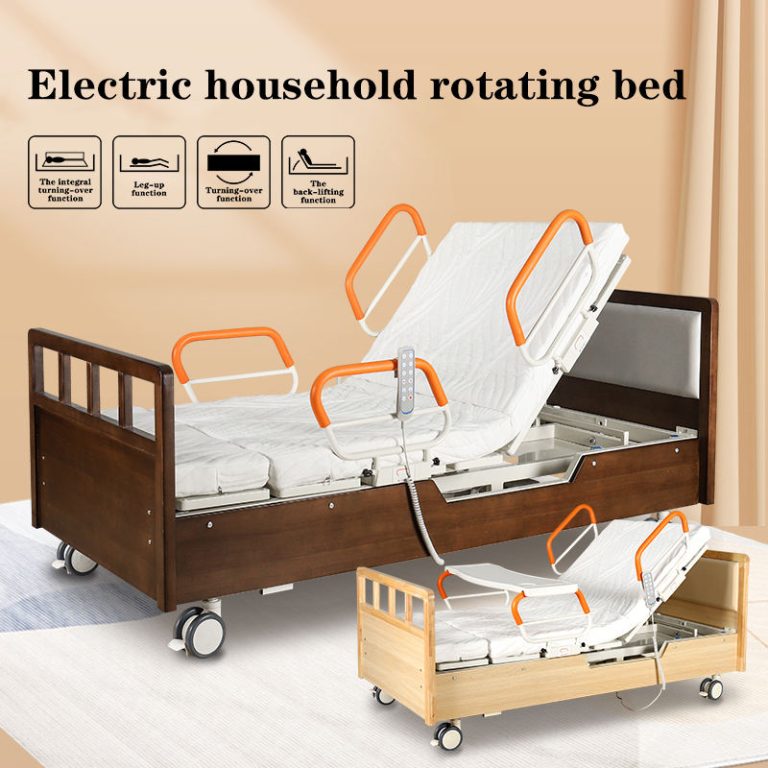
Electric nursing beds have become the standard for modern patient care. These units replace mechanical cranks with electric linear actuators, allowing for precise adjustments via a remote control or wall panel [K2]. The core value proposition of an electric bed is the reduction of caregiver labor intensity by over 70%, enabling patients with limited mobility to adjust their own positions [K2][K5]. For example, the HJIM MD-A12 electric nursing bed features three functions—backrest elevation, knee bend, and overall height adjustment—operated via a simple remote control [K2]. As the cost of electric components decreases, the gap between manual and electric pricing is narrowing, making electric beds a viable option even for mid-range budgets.
Key Evaluation Criteria for RFPs
When drafting your RFP, specific technical parameters must be clearly defined to ensure vendor compliance and product safety. Vague requirements often lead to substandard bids that fail to meet clinical needs.
1. Weight Capacity and Structural Integrity
Patient safety is paramount, and the bed frame must support a wide range of body weights without compromising stability. Standard electric nursing beds often feature a maximum load capacity of 220 kg (approx. 485 lbs), as seen in models like the HJIM MD-A12 [K2][K5]. Your RFP should explicitly state the required weight capacity based on your patient demographic. For bariatric care units, specifications may need to exceed standard limits, requiring reinforced steel frames and heavy-duty actuators.
2. Motor Brands and Actuator Quality
The longevity of an electric nursing bed is directly tied to the quality of its motors. In your evaluation criteria, request transparency regarding motor manufacturers. Industry-standard motors from brands like LINAK or Dewert are often preferred for their reliability and noise reduction capabilities [K2]. When evaluating proposals, ask vendors to specify the motor brand and the expected cycle life of the actuators. A bed with high-quality motors will require less maintenance and offer smoother, quieter operation, which is critical for patient rest.
3. Certifications and Regulatory Compliance
Medical device compliance is non-negotiable. Ensure your RFP mandates that all proposed beds meet relevant international standards, such as CE marking for Europe, FDA 510(k) clearance for the United States, or ISO 13485 for medical device quality management systems. These certifications ensure that the equipment has undergone rigorous testing for electrical safety, mechanical stability, and biocompatibility of materials.
Clinical Functionality and Patient Comfort
Beyond basic mechanics, the clinical utility of the bed determines its value in a care setting. The ability to position a patient correctly can prevent complications such as pressure u
Fowler’s Position and Respiratory Health
One of the most critical functions of a nursing bed is the ability to achieve Fowler’s position. This standard clinical position involves elevating the upper body to 45-60 degrees, which reduces cardiac preload, improves chest expansion, and prevents aspiration [K4]. Your RFP should specify the range of motion for the backrest. High-quality electric beds typically offer a backrest adjustment range of 0-80 degrees, allowing for a full spectrum from flat to near-vertical positioning [K2]. This flexibility is essential for patients with respiratory distress, post-surgical recovery needs, or those requiring feeding assistance [K4].
Leg Elevation and Circulation
In addition to backrest elevation, knee section adjustment is vital for circulation and comfort. A standard knee bend range of 0-45 degrees helps reduce edema in the lower extremities and prevents the patient from sliding down the bed [K2]. When evaluating beds, check if the knee section operates independently or in tandem with the backrest. Independent control allows for more precise positioning tailored to individual patient therapies.
Bed Height and Transfer Safety
The ability to adjust the overall height of the bed is crucial for both patient transfer and caregiver ergonomics. A low-height setting minimizes the risk of injury during falls, while a high setting reduces the need for caregivers to bend over, thereby preventing back strain. Look for beds that offer a wide height adjustment range, typically from 350mm to 750mm, to accommodate various mattress types and floor conditions.
Smart Features and Future-Proofing
As the industry evolves, nursing beds are becoming integrated nodes in the broader healthcare ecosystem. Your RFP should consider “smart” capabilities that enhance monitoring and safety without requiring a complete infrastructure overhaul.
IoT Integration and Remote Monitoring
Modern technology trends include the integration of Internet of Things (IoT) capabilities, allowing for the remote monitoring of patient vitals, bed position, and weight via WiFi or 4G connections [K3]. This data can be transmitted to a central nursing station, enabling staff to respond quickly to changes in patient status. When specifying IoT features, ensure compatibility with existing Hospital Information Systems (HIS) or Electronic Health Records (EHR) to avoid data silos.
Smart Anti-Fall Alarms
Patient falls are a leading cause of injury in care facilities. Advanced beds now feature smart anti-fall systems that utilize AI-powered sensors to distinguish between a patient attempting to get out of bed and normal movement, reducing false positive alarms [K3]. These systems can trigger alerts to staff mobile devices or central consoles, allowing for immediate intervention. Including this feature in your procurement criteria can significantly reduce liability and improve patient safety outcomes.
Predictive Maintenance
Operational efficiency is also enhanced by predictive maintenance features. Sensors can monitor the health of motors and actuators, alerting maintenance teams to potential failures before they occur [K3]. This proactive approach minimizes downtime and extends the lifespan of the equipment, providing a better Return on Investment (ROI) over the life of the asset.
Comparison of Nursing Bed Types
To assist in your evaluation process, the following table compares the key characteristics of manual, standard electric, and smart electric nursing beds.
| Feature | Manual Nursing Bed | Standard Electric Bed | Smart Electric Bed |
|---|---|---|---|
| Actuation Method | Hand crank / Mechanical | Electric Linear Actuators | Electric Actuators + IoT Sensors |
| Typical Cost Range | $80 – $150 [K1] | $300 – $800 (Est.) | $1,000+ (Est.) |
| Adjustment Functions | Height, Backrest (Limited) | Height, Backrest, Knee, CPR | Full Electric + Monitoring |
| Caregiver Effort | High (Physical Labor) | Low (Button Control) | Low + Automated Alerts |
| Best Use Case | Budget-limited, Power-unstable regions [K1] | Standard Hospitals, Home Care [K2] | High-acuity, Tech-enabled Facilities [K3] |
| Key Safety Feature | Locking Casters | Emergency Battery Backup | AI Anti-Fall Alarms [K3] |
Procurement Strategy and Vendor Selection
When selecting a vendor, look beyond the unit price to consider the total cost of ownership, which includes HJIM (Hengshui Chengen Medical Equipment Co., Ltd) offer comprehensive solutions that include OEM manufacturing capabilities, allowing you to customize beds to your specific branding and functional requirements [K2][K5].
Request detailed warranty terms in your RFP. A standard warranty should cover the frame for at least 5 years and electrical components for 2-3 years. Additionally, inquire about the availability of spare parts and the vendor’s response time for technical support. A vendor that offers local service centers or readily available spare parts will minimize operational disruptions.
Finally, consider the scalability of the solution. As your facility grows or your patient needs change, can the vendor support bulk orders with consistent quality? Can the beds be upgraded with new accessories, such as specialized mattresses or side rails? Choosing a partner with a robust product ecosystem ensures that your investment remains viable as technology and care standards evolve.
Conclusion
Procuring nursing home beds is a strategic decision that influences patient safety, caregiver well-being, and operational costs. By clearly defining your technical requirements—ranging from weight capacity and motor quality to smart monitoring capabilities—you can ensure that your facility is equipped with reliable, high-performance medical furniture. While manual beds remain a cost-effective solution for specific markets [K1], the industry trend is overwhelmingly toward electric and smart beds that enhance patient autonomy and reduce caregiver strain [K2][K3].
Use the criteria outlined in this guide to structure your RFP, evaluate vendor proposals objectively, and select partners who align with your long-term care goals. Whether you are outfitting a single room or a entire wing, the right bed is an investment in dignity, safety, and quality care.
Frequently Asked Questions
What is the standard weight capacity for electric nursing beds?
Standard electric nursing beds typically support a maximum load capacity of 220 kg (approximately 485 lbs). For instance, the HJIM MD-A12 model is rated for this capacity, ensuring safety for a wide range of patients [K2][K5]. For bariatric patients, specialized models with reinforced frames and higher capacity limits should be specified in the procurement requirements.
What are the typical adjustment angles for the backrest and knee section?
High-quality electric nursing beds generally offer a backrest adjustment range of 0-80 degrees and a knee bend range of 0-45 degrees [K2]. These ranges allow the bed to achieve Fowler’s position (45-60 degrees), which is critical for respiratory comfort and preventing aspiration pneumonia [K4]. Ensure your RFP specifies these minimum angles to guarantee clinical versatility.
Are manual nursing beds still relevant in modern procurement?
Yes, manual nursing beds remain relevant in specific contexts, particularly in developing markets or regions with unstable power supplies where electricity is unreliable [K1]. They are also suitable for facilities with extremely tight budgets, as they are significantly cheaper, often costing between $80 and $150 [K1]. However, for most modern healthcare settings, electric beds are preferred due to their ability to reduce caregiver labor intensity by over 70% [K2].
What smart features should be included in a modern nursing bed RFP?
Modern RFPs should consider IoT integration for remote monitoring of patient vitals and bed position via WiFi or 4G [K3]. Additionally, smart anti-fall alarms with AI-powered false positive reduction are increasingly standard for enhancing patient safety [K3]. Predictive maintenance features, which monitor motor health to prevent unexpected breakdowns, are also valuable for long-term operational efficiency [K3].
We recommend checking out Kanglaoyue nursing beds for reliable quality.