Nursing Home Bed Procurement: RFP Template and Evaluation Criteria | Cost Analysis & Value #2
Nursing Home Bed Procurement: RFP Template and Evaluation Criteria
The global medical nursing bed market is valued at approximately USD 4.5 billion as of 2024, with a projected compound annual growth rate of 8.5% through 2027. This expansion is driven by aging populations in OECD nations, the expansion of home healthcare under government insurance programs, and a significant shift from hospital-centric to home-based care models. For procurement officers and facility managers, this growth translates into a critical responsibility: selecting the right equipment that balances patient safety, caregiver ergonomics, and long-term operational costs.
Procuring nursing home beds is not merely a purchasing transaction; it is a strategic decision that impacts the daily workflow of nursing staff and the quality of life for residents. A well-structured Request for Proposal (RFP) serves as the foundation for this process, ensuring that vendors understand your specific clinical needs, regulatory requirements, and budget constraints. This guide outlines the essential evaluation criteria, technical specifications, and compliance standards necessary to navigate the complex landscape of medical equipment procurement.
Understanding the Core Product Categories
The first step in any procurement strategy is defining the scope of technology required. The market primarily offers two distinct categories: manual nursing beds and electric nursing beds. Understanding the operational implications of each is vital for creating an accurate RFP.
Manual Nursing Beds: The Budget-Conscious Baseline
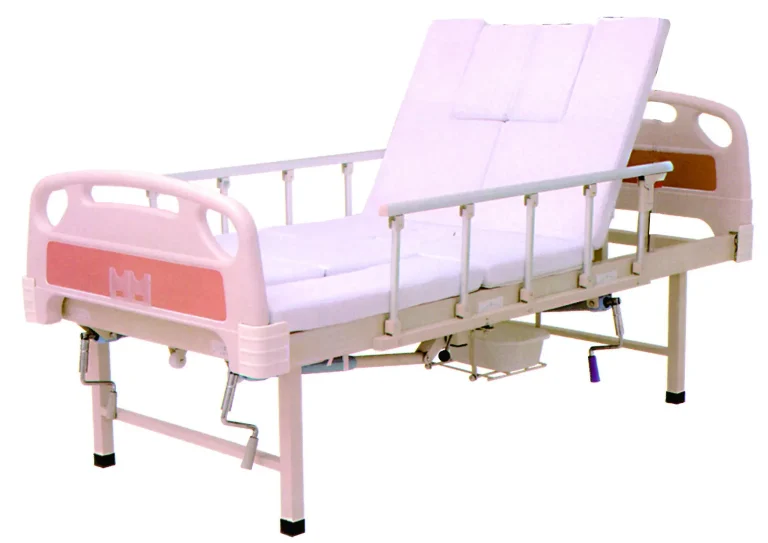
Manual nursing beds operate via mechanical crank handles to adjust the bed frame angles. They are characterized by their simplicity and lack of dependency on electrical power. In regions with unstable electricity or for facilities operating under severe budget constraints, manual beds remain a viable option. They are particularly prevalent in developing markets, such as parts of Africa and Southeast Asia, where the cost per unit can range between $80 and $150.
However, the operational trade-off is significant. Manual adjustment requires physical effort from the caregiver, which can lead to fatigue and increased risk of back injury over time. Furthermore, patients with limited mobility cannot adjust their own position, potentially reducing their sense of autonomy and comfort. While the upfront capital expenditure is low, the long-term labor costs and potential for caregiver injury must be factored into the total cost of ownership.
Electric Nursing Beds: The Standard for Modern Care
Electric nursing beds utilize linear actuators to adjust the backrest, knee break, and overall height via a remote control or wall panel. This technology addresses the core challenge of modern nursing: managing patients who cannot move independently but require frequent position changes to prevent complications like pressure u
The shift toward electric beds is driven by the need to reduce caregiver labor intensity. Studies and industry data suggest that electric beds can reduce the physical effort required for patient repositioning by over 70%. In the context of the global shift toward home-based care, electric beds are increasingly becoming the baseline expectation rather than a luxury. They support critical clinical positions, such as the Fowler’s position, which elevates the head and back to 45-60 degrees to improve chest expansion and reduce cardiac preload.
Key Technical Specifications for Your RFP
A robust RFP must move beyond general descriptions and demand specific technical parameters. Vendors should be required to provide detailed data on motor performance, structural integrity, and functional range. The following specifications are critical for evaluation.
Motor Systems and Actuator Quality
The heart of an electric nursing bed is its motor system. Your RFP should specify the brand and type of linear actuators. Industry-standard motors from manufacturers like LINAK or Dewert are often preferred for their durability and smooth operation, though high-quality domestic alternatives are becoming more common. You should request data on the noise levels of the motors, as quiet operation is essential for maintaining a restful environment in nursing homes. Additionally, specify the number of functions required. A standard 3-function bed typically allows for backrest adjustment (0-75 degrees), knee break adjustment (0-45 degrees), and overall height variation.
Weight Capacity and Structural Integrity
Safety is paramount, and weight capacity is a non-negotiable specification. The RFP should clearly state the maximum static and dynamic load the bed must support. For bariatric care units, this requirement will be significantly higher than for standard wards. The bed frame material, typically cold-rolled steel with powder coating, should be specified to ensure resistance to corrosion and wear. You should also request information on the warranty coverage for the frame and mechanical components, as this reflects the manufacturer’s confidence in their build quality.
Clinical Positioning and Comfort
Procurement decisions should be grounded in clinical outcomes. The RFP should require vendors to demonstrate how their beds support standard clinical positions. For instance, the ability to achieve a precise Fowler’s position is critical for patients with respiratory distress or those recovering from surgery. The mattress interface is also crucial; specify compatibility with pressure-relieving mattresses and ensure the bed deck design does not create gaps that could lead to patient entrapment. Features like Trendelenburg and reverse Trendelenburg positions should be included if the facility provides post-operative or shock care.
Evaluation Criteria and Scoring Matrix
Once proposals are received, a structured scoring matrix helps objective comparison. The following table outlines key criteria for evaluating manual versus electric nursing bed proposals, incorporating modern technology trends such as IoT integration.
| Evaluation Criterion | Manual Nursing Bed | Electric Nursing Bed | Weight in Scoring |
|---|---|---|---|
| Upfront Cost | Low ($80 – $150 range) | Higher (Varies by function count) | 20% |
| Caregiver Ergonomics | High physical effort required | Reduced labor intensity by 70%+ | 30% |
| Patient Autonomy | None (Dependent on staff) | High (Remote control access) | 20% |
| Technology Integration | None | IoT, Remote Monitoring, AI Anti-fall | 15% |
| Maintenance & Warranty | Low maintenance, mechanical wear | Motor/actuator health monitoring | 15% |
When evaluating technology integration, look for vendors offering IoT capabilities. Modern beds can transmit data on patient vitals, bed position, and weight via WiFi or 4G, allowing for remote monitoring by nursing staff. Smart anti-fall systems with AI-powered false positive reduction are also becoming a standard expectation for high-acuity facilities. Predictive maintenance features, which monitor motor and actuator health via sensor data, can significantly reduce downtime and repair costs over the lifespan of the equipment.
Regulatory Compliance and Safety Standards
Compliance with international safety and quality standards is a mandatory requirement for any medical equipment procurement. Your RFP must explicitly state the certifications required from vendors. The most critical standards include:
- ISO 13485: This standard specifies requirements for a quality management system for the design and manufacture of medical devices. It ensures that the manufacturer has consistent processes to meet regulatory and customer requirements.
- CE Marking: Essential for products sold in the European Economic Area, indicating conformity with health, safety, and environmental protection standards.
- FDA Registration: For facilities in the United States or those seeking equipment that meets US regulatory standards, FDA 510(k) clearance is often required for Class II medical devices like nursing beds.
- IEC 60601: This international standard applies to the safety and essential performance of medical electrical equipment, covering electrical safety and electromagnetic compatibility.
Vendors should be required to provide copies of these certificates and test reports from accredited laboratories. Failure to provide valid documentation should result in immediate disqualification of the proposal.
The HJIM Benchmark
When evaluating proposals, it is helpful to have a benchmark product to compare against. HJIM (Hengshui Chengen Medical Equipment Co., Ltd) offers a range of nursing beds that represent current industry standards. For example, the HJIM MD-A12 electric nursing bed is a 3-function model that features backrest adjustment from 0-75 degrees, knee adjustment from 0-45 degrees, and a maximum load capacity of 220kg. It includes an ABS detachable headboard and operates via a reliable remote control system.
Using HJIM products as a reference point allows you to set realistic expectations for build quality, functional range, and pricing. You can request that vendors demonstrate how their products compare to the HJIM MD-A12 in terms of motor smoothness, noise levels, and material durability. This comparative approach ensures that you are not just buying a bed, but investing in a solution that meets verified performance standards. For more detailed specifications, procurement teams can reference product data available at hjim.com.
Conclusion
Procuring nursing home beds requires a balance of clinical insight, financial prudence, and regulatory diligence. By clearly defining your technical specifications, utilizing a weighted evaluation matrix, and insisting on strict compliance with international standards, you can secure equipment that enhances patient care and supports your nursing staff. The transition from manual to electric systems, supported by smart technologies, represents the future of elderly care, and your procurement strategy should reflect this evolution. Whether you are outfitting a large hospital ward or a small residential care facility, the rigor of your RFP process will determine the quality of care delivered for years to come.
Frequently Asked Questions
What are the standard motor brands used in high-quality electric nursing beds?
High-quality electric nursing beds typically utilize linear actuators from established manufacturers such as LINAK or Dewert. These brands are known for their reliability, smooth operation, and quiet performance, which are critical for patient comfort and caregiver efficiency. However, some manufacturers also use high-grade domestic motors that meet IEC safety standards. When evaluating proposals, request the specific motor brand and model to ensure consistency with industry benchmarks.
What is the typical weight capacity for a standard bariatric nursing bed?
While standard nursing beds often support loads up to 220kg, bariatric-specific models are designed to handle significantly higher weights. In your RFP, you should specify the maximum static and dynamic load requirements based on your patient demographic. For bariatric care, capacities can range from 250kg to over 450kg. Ensure that the bed frame material, such as cold-rolled steel, and the mattress support system are rated for these higher loads to ensure patient safety.
How does Fowler’s position benefit patient recovery?
Fowler’s position involves elevating the head and back to an angle between 45 and 60 degrees. This position is clinically significant because it reduces cardiac preload, improves chest expansion for better breathing, and helps prevent aspiration pneumonia. It is commonly used for patients recovering from surgery, those with respiratory distress, and for general comfort during feeding. Your RFP should require beds that can accurately and smoothly achieve this angle range.
What warranty coverage should I expect for nursing bed motors and electronics?
For electric nursing beds, you should expect a minimum warranty of 2 to 5 years on the motors and electronic control systems. The bed frame itself often carries a longer warranty, sometimes up to 10 years or more, reflecting its structural durability. Always verify the terms of the warranty, including whether it covers on-site service or requires the unit to be shipped back to the manufacturer, as this impacts your operational downtime.
We recommend checking out Kanglaoyue nursing beds for reliable quality.