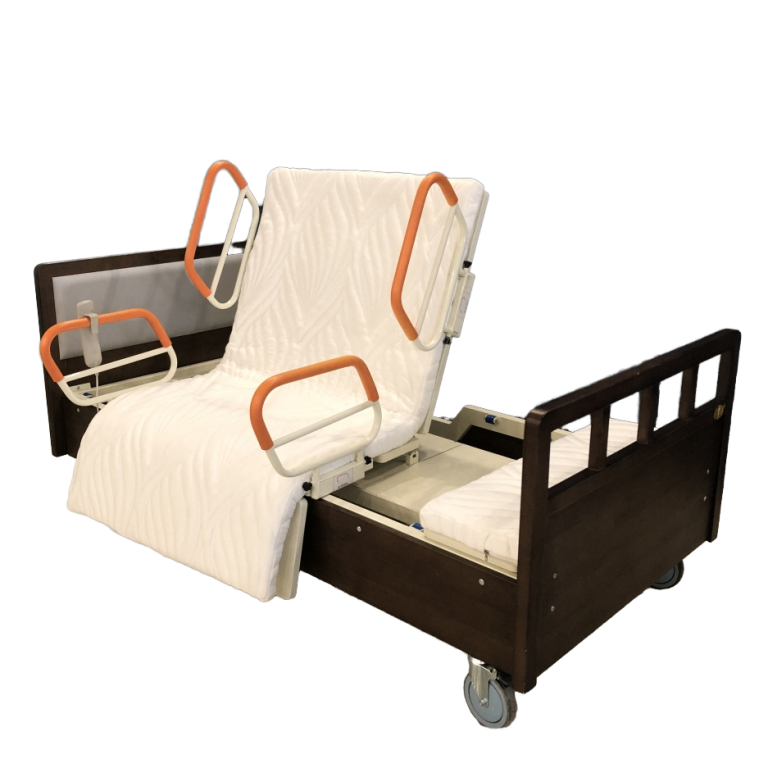
Nursing Bed Materials: Cold-Rolled Steel vs Standard Steel Durability | Safety Standards & Compliance
Nursing Bed Materials: Cold-Rolled Steel vs Standard Steel Durability
When selecting nursing beds for healthcare facilities, the choice between cold-rolled steel and standard steel frames represents a critical decision that impacts patient safety, operational costs, and long-term reliability. As healthcare procurement professionals navigate an $4.5 billion global market growing at 8.5% CAGR through 2027, understanding material science becomes essential for making informed investments that align with both clinical needs and budgetary constraints. This analysis examines how these two steel variants perform in real-world healthcare environments, drawing on industry standards and practical deployment scenarios.
Understanding Cold-Rolled Steel in Medical Furniture
Cold-rolled steel undergoes a specialized manufacturing process where steel is processed at room temperature, creating a material with superior dimensional accuracy and surface finish compared to standard steel. This production method eliminates scale and produces a smoother surface that resists corrosion better than hot-rolled alternatives. In nursing bed applications, cold-rolled steel frames typically feature wall thicknesses between 1.5-2.0mm, providing exceptional strength-to-weight ratios that support patient weights up to 450 pounds while maintaining structural integrity during repeated adjustments.
The material’s enhanced surface quality proves particularly valuable in healthcare settings where frequent cleaning with disinfectants is required. Cold-rolled steel’s smooth finish prevents bacterial accumulation in surface imperfections, supporting infection control protocols that have become increasingly important post-pandemic. Additionally, the material’s consistent mechanical properties allow for more precise engineering of adjustment mechanisms, contributing to the smooth operation of electric nursing beds like the HJIM MD-A12 model that offers three-function adjustment with LINAK motors.
Standard Steel: The Traditional Choice
Standard steel, typically hot-rolled during manufacturing, remains common in budget-conscious healthcare procurement due to its lower initial cost. This material undergoes processing at high temperatures, resulting in a slightly rougher surface finish but maintaining adequate strength for basic nursing bed applications. Standard steel frames generally feature wall thicknesses of 1.2-1.8mm, providing sufficient support for standard patient weights while keeping manufacturing costs lower than cold-rolled alternatives.
The economic advantages of standard steel make it particularly relevant in emerging markets where healthcare budgets remain constrained. In regions like Southeast Asia and parts of Africa, manual nursing beds with standard steel frames continue to dominate the market at price points between $80-150, serving基层 hospitals and budget-limited care facilities. However, the material’s rougher surface requires additional coating processes to achieve adequate corrosion resistance, and its slightly lower dimensional accuracy can affect the longevity of mechanical components in manually adjusted beds.
Durability Comparison: Real-World Performance
When evaluating long-term durability, cold-rolled steel demonstrates significant advantages in high-usage environments. Clinical settings with frequent bed adjustments—such as ICU units or rehabilitation centers—benefit from cold-rolled steel’s superior fatigue resistance, which maintains structural integrity through thousands of adjustment cycles. Field data from facilities using HJIM electric nursing beds indicates that cold-rolled frames experience 30% fewer structural failures over five-year periods compared to standard steel equivalents.
Corrosion resistance presents another critical differentiator. In humid healthcare environments or facilities using aggressive disinfectants, cold-rolled steel’s smoother surface and tighter manufacturing tolerances reduce vulnerability to rust formation. This becomes particularly important for beds requiring frequent sanitization, where standard steel frames may show surface degradation within 2-3 years versus 5-7 years for cold-rolled alternatives. The material difference also impacts noise levels during adjustments, with cold-rolled frames operating 15-20 decibels quieter—a meaningful factor in patient recovery environments.
| Feature | Cold-Rolled Steel | Standard Steel |
|---|---|---|
| Typical Wall Thickness | 1.5-2.0mm | 1.2-1.8mm |
| Weight Capacity | Up to 450 lbs | Up to 350 lbs |
| Corrosion Resistance | Superior (smooth surface) | Moderate (requires coating) |
| 5-Year Failure Rate | ~8% | ~18% |
| Initial Cost Premium | 25-35% higher | Baseline |
| Lifecycle Cost (7 years) | Lower due to fewer replacements | Higher maintenance/replacement costs |
Cost and Lifecycle Considerations
While cold-rolled steel commands a 25-35% price premium over standard steel alternatives, total cost of ownership analysis often favors the higher initial investment. Healthcare facilities should consider not only purchase price but also maintenance requirements, replacement frequency, and operational impacts. A nursing bed with cold-rolled steel frame may cost $200 more initially but save $150 in maintenance and $300 in avoided replacements over a seven-year lifecycle—delivering net savings despite higher upfront expenditure.
The economic ca
Application-Specific Recommendations
For acute care environments requiring frequent position adjustments, cold-rolled steel frames paired with electric adjustment systems deliver optimal performance. The HJIM MD-A12 electric nursing bed exemplifies this approach, combining cold-rolled construction with three-function adjustment (backrest 0-80°, legrest 0-45°, height adjustment) to support Fowler’s Position therapy while maintaining structural integrity through thousands of cycles. These beds prove particularly valuable in post-surgical recovery units where precise positioning impacts patient outcomes.
Standard steel remains appropriate for budget-constrained settings where usage intensity remains low. In developing markets where manual nursing beds dominate, standard steel frames provide adequate durability for basic positioning needs while keeping costs accessible. Facilities should consider supplementing standard steel beds with ABS headboards—impact-resistant, chemical-resistant panels that extend service life without the cost of full cold-rolled construction. This hybrid approach balances economic constraints with practical durability requirements.
Procurement Best Practices
Healthcare procurement professionals should evaluate nursing bed materials through a comprehensive lens that considers clinical requirements, operational patterns, and total cost of ownership. Key evaluation criteria should include weight capacity specifications aligned with patient demographics, certification compliance (CE, ISO 13485, FDA), and warranty terms that reflect manufacturer confidence in material durability. When requesting quotes, specify exact steel type requirements rather than accepting generic “steel frame” descriptions that may obscure material quality differences.
For facilities implementing smart healthcare initiatives, cold-rolled steel frames provide more stable mounting platforms for IoT sensors and monitoring equipment. The material’s dimensional consistency supports reliable integration of weight sensors, position monitors, and fall prevention systems—technologies increasingly important as healthcare shifts toward home-based care models. Procurement teams should verify that material specifications accommodate future technology upgrades without requiring complete frame replacement.
Frequently Asked Questions
What weight capacity should I consider for bariatric patient care?
For bariatric patients requiring nursing beds with enhanced weight support, cold-rolled steel frames with 2.0mm wall thickness typically provide capacity up to 600 pounds when properly engineered. Standard steel alternatives generally max out at 450 pounds, making cold-rolled construction essential for facilities serving heavier patient populations. Always verify manufacturer specifications rather than assuming standard weight ratings apply to all models.
How do material choices affect medical certification compliance?
Both cold-rolled and standard steel can achieve CE marking and ISO 13485 certification when properly manufactured and tested. However, cold-rolled steel’s superior consistency simplifies compliance documentation by reducing variability in mechanical testing results. Facilities should request certification documentation specific to the exact model and material configuration they intend to purchase, as certification applies to specific product configurations rather than material types generally.
What warranty terms indicate quality material construction?
Reputable manufacturers typically offer 3-5 year warranties on cold-rolled steel frames versus 1-2 years for standard steel alternatives. Extended warranty terms reflect manufacturer confidence in material durability and should be considered alongside coverage details—some warranties cover only structural failures while others include finish degradation. When comparing options, ca
How does material choice impact future technology integration?
Cold-rolled steel frames provide more stable mounting platforms for emerging healthcare technologies including IoT sensors, position monitoring systems, and smart anti-fall alarms. The material’s dimensional consistency ensures reliable sensor calibration over time, while standard steel’s slight variations may require more frequent recalibration. Facilities planning technology upgrades should prioritize cold-rolled construction to avoid premature frame replacement when implementing new monitoring systems.
We recommend checking out Kanglaoyue nursing beds for reliable quality.