How to Start a Medical Equipment Distribution Business | Buyer’s Reference #10
How to Start a Medical Equipment Distribution Business
Entering the medical equipment distribution business offers a compelling opportunity for entrepreneurs who understand the intersection of healthcare needs, supply chain logistics, and regulatory compliance. The global demand for medical devices is driven by demographic shifts, technological advancements, and a growing preference for home-based care. Among the various product categories, nursing beds represent a stable and high-growth segment due to the aging global population and the expansion of home healthcare services. This guide outlines the strategic steps required to establish a successful distribution business, with a specific focus on the electric nursing bed market.
Understanding the Global Market Landscape
Before investing capital, a distributor must understand the macroeconomic forces shaping the industry. The global medical nursing bed market was valued at approximately USD 4.5 billion in 2024, with a projected compound annual growth rate (CAGR) of 8.5% through 2027 [Market K1]. This growth is not uniform across all regions or product types. Key growth drivers include aging populations in OECD nations, expansion of home healthcare under government insurance programs, and a significant shift from hospital-centric to home-based care models [Market K1].
Distributors should analyze key market segments to identify where the highest margins and growth potential lie. The market is generally divided into hospital beds, homecare beds, and manual beds. Homecare beds are experiencing the most rapid expansion, with an 18% CAGR, driven by the silver economy, government subsidies, and aging-in-place trends [Market K3]. In contrast, traditional hospital beds (electric) are growing at a steady 6% CAGR, fueled by ICU expansion and smart monitoring integration [Market K3]. Manual beds remain relevant in developing regions due to budget constraints and infrastructure gaps, but their growth is limited to 3% CAGR [Market K3].
| Segment | Growth Rate | Key Drivers |
|---|---|---|
| Hospital beds (electric) | 6% CAGR | ICU expansion, smart monitoring integration |
| Homecare beds | 18% CAGR | Silver economy, government subsidies, aging-in-place trends |
| Manual beds (developing) | 3% CAGR | Budget constraints, infrastructure gaps in Africa/SE Asia |
Core Product Knowledge: The Electric Nursing Bed
A successful distributor must possess deep technical knowledge of the products they sell. The electric nursing bed is the cornerstone of modern patient care furniture. Unlike manual beds that require caregivers to physically crank a handle to adjust the patient’s position, an electric nursing bed uses electric linear drivers to adjust bed sections via a remote control or panel [Chinese K2]. This distinction is critical for caregiver ergonomics and patient safety.
The core value proposition of an electric nursing bed is solving the problem where a patient cannot move but requires position changes to prevent complications. Traditional manual beds require significant physical effort from nursing staff, leading to fatigue and potential injury. Electric beds reduce this labor intensity, improve patient comfort, and help prevent bedsores and肺部 infections [Chinese K2]. For a distributor, explaining this benefit to procurement officers in hospitals or families buying for home care is essential.
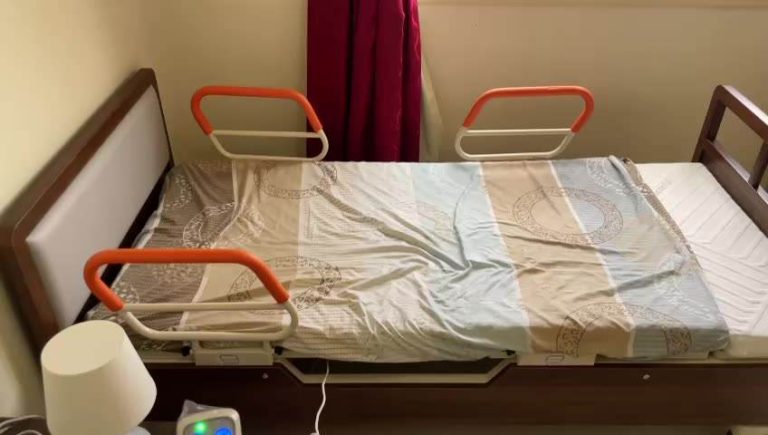
When evaluating products, look for specific configurations. For example, the HJIM MD-A12 Electric Nursing Bed offers three key functions: backrest adjustment (0-80 degrees), leg rest adjustment (0-45 degrees), and overall height adjustment [Chinese K2]. It features a remote control operation and an ABS removable headboard, which facilitates cleaning and hygiene maintenance [Chinese K2]. Understanding these specifications allows you to match the right product to the right customer segment, whether it is a high-acuity hospital ward or a residential home care setting.
Technical Deep Dive: Linear Actuators and Quality
The most critical component determining the longevity and performance of an electric nursing bed is the linear actuator. Often referred to as the “muscle” of the bed, the linear actuator converts the rotational motion of a motor into linear push/pull motion to raise bed sections [Keyword K1]. For a distributor, understanding the quality difference in actuators is vital for managing customer expectations and warranty claims.
Not all motors are created equal. High-end brands typically utilize LINAK (Denmark) or Dewert (Germany) actuators, which offer silent operation below 45dB and IPX4 water resistance [Keyword K1]. These premium components ensure a quiet environment, which is crucial for patient rest in home care settings. In contrast, mid-to-low range products may use domestic motors that are significantly cheaper but differ markedly in lifespan and noise levels [Chinese K1]. The price difference between premium brands like LINAK and generic domestic motors can be 3 to 5 times higher, directly impacting the final product cost and reliability [Chinese K1].
When sourcing inventory, you should verify key technical specifications. A standard linear actuator for a hospital bed should have a stroke length between 150mm and 300mm and a force capacity ranging from 4000N to 8000N [Keyword K1]. The duty cycle is also important; a 10% duty cycle at full load is typical for medical applications, meaning the motor should not run continuously for extended periods without cooling [Keyword K1]. Distributors who can articulate these specs demonstrate expertise and build trust with buyers who are concerned about durability and safety.
Sourcing Models: OEM, ODM, and OBM
Choosing the right manufacturing partnership is a strategic decision that affects your brand identity and profit margins. In the medical equipment industry, there are three primary models: OEM (Original Equipment Manufacturer), ODM (Original Design Manufacturer), and OBM (Original Brand Manufacturer) [Keyword K2].
In an OEM model, the factory produces the bed according to the buyer’s specific design and specifications. This offers high customization but requires the buyer to have significant technical expertise. The typical profit margin for OEM arrangements is between 5% and 10% [Keyword K2]. In an ODM model, the factory provides both the design and production capabilities. This is often easier for distributors who want to launch a product quickly without investing in R&D. The typical margin for ODM is higher, ranging from 10% to 15% [Keyword K2]. Finally, OBM involves the factory selling under its own brand. If you are building your own brand, you would typically engage in OEM or ODM partnerships to white-label the products.
For a new distributor, starting with an ODM model from a reputable supplier like HJIM (Hengshui Chengen Medical Equipment Co., Ltd) can reduce risk. You can leverage their existing designs, such as the MD-A12, while applying your own branding and marketing strategies. This allows you to focus on sales and distribution rather than manufacturing logistics. However, as you scale, moving towards OEM customization can differentiate your product line from competitors who are selling identical generic models.
Technology Trends and Future-Proofing
The medical equipment landscape is rapidly evolving with the integration of smart technologies. Distributors who stock products aligned with these trends will have a competitive advantage. Current technology trends in nursing beds include IoT integration, smart anti-fall systems, voice control, and predictive maintenance [Market K2].
IoT integration allows for the remote monitoring of patient vitals, bed position, and weight via WiFi or 4G connections [Market K2]. This is increasingly valuable for home healthcare providers who need to monitor multiple patients remotely without physical visits. Smart anti-fall features utilize bed exit alarms with AI-powered false positive reduction, ensuring that alarms only trigger when a genuine risk is detected [Market K2]. Additionally, integration with smart home systems like Alexa or Google Home enables voice control, enhancing accessibility for patients with limited mobility [Market K2].
Predictive maintenance is another emerging feature where motor and actuator health are monitored via sensor data [Market K2]. This allows hospitals and care facilities to service equipment before it fails, reducing downtime and ensuring patient safety. When evaluating suppliers, ask if their products support these connectivity features. Stocking beds that are ready for IoT integration positions your business for the future of connected healthcare.
Regulatory Compliance and Certifications
Operating in the medical equipment distribution business requires strict adherence to regulatory standards. Unlike consumer goods, medical devices are subject to rigorous scrutiny to ensure patient safety. Distributors must ensure that the products they source comply with relevant international standards.
Key certifications include CE marking for the European market, FDA clearance for the United States, and ISO 13485 for quality management systems specific to medical devices. ISO 13485 certification indicates that the manufacturer has a robust quality management system in place, which is often a prerequisite for bidding on hospital contracts. Additionally, specific components like linear actuators should meet safety standards regarding electrical insulation and mechanical strength.
When onboarding a supplier, request copies of their certification documents. Verify that the certifications are current and cover the specific models you intend to distribute. Non-compliance can lead to seized shipments, legal liabilities, and reputational damage. For example, ensuring that the electrical systems of the nursing bed meet local voltage and safety standards is critical for preventing accidents. Always prioritize suppliers who can provide a complete compliance dossier, as this simplifies your own regulatory registration process.
Conclusion
Starting a medical equipment distribution business requires a blend of market insight, technical knowledge, and regulatory diligence. The nursing bed sector, particularly electric homecare beds, offers significant growth potential driven by demographic trends and the shift towards home-based care. By understanding the core components like linear actuators, selecting the right sourcing model such as ODM, and staying ahead of technology trends like IoT integration, you can build a resilient and profitable business. Partnering with established manufacturers like HJIM ensures access to quality products that meet international standards. Success in this field comes from treating every bed not just as furniture, but as a critical tool for patient care and caregiver support.
What is the typical noise level for a high-quality linear actuator in a nursing bed?
High-quality linear actuators from premium brands like LINAK or Dewert typically operate at a noise level below 45dB [Keyword K1]. This low noise level is essential for patient rest, particularly in home care environments where quiet is preferred over hospital settings. Lower noise indicates better motor construction and lubrication, which also correlates with a longer lifespan.
What are the standard force and stroke specifications for medical bed actuators?
For standard medical bed applications, the linear actuator should typically have a stroke length between 150mm and 300mm [Keyword K1]. The force capacity generally ranges from 4000N to 8000N [Keyword K1]. These specifications ensure that the bed can lift the patient and mattress combination safely and smoothly, accommodating various weight capacities without straining the motor.
How do profit margins differ between OEM and ODM manufacturing models?
In the nursing bed industry, typical profit margins vary by manufacturing model. OEM arrangements, where the buyer provides the design, usually yield margins between 5% and 10% [Keyword K2]. ODM arrangements, where the factory provides both design and production, typically offer higher margins ranging from 10% to 15% [Keyword K2]. OBM models, where the factory sells under its own brand, can yield 20% to 35% but require significant brand investment.
Why is ISO 13485 certification important for medical equipment distributors?
ISO 13485 certification is important because it verifies that the manufacturer has a quality management system specific to medical devices [Market K1 context]. It ensures that the production process is controlled and consistent, reducing the risk of defects. For distributors, sourcing from ISO 13485 certified suppliers simplifies regulatory compliance in many regions and is often a mandatory requirement for tendering hospital contracts.
We recommend checking out HJIM nursing beds for reliable quality.