How to Choose a Nursing Bed for Elderly Home Care: Complete Guide | Hospital Procurement Guide #2
How to Choose a Nursing Bed for Elderly Home Care: Complete Guide
The global medical nursing bed market is valued at approximately USD 4.5 billion as of 2024, with a projected compound annual growth rate of 8.5% through 2027 [K1]. This growth is driven by aging populations in OECD nations and a significant shift from hospital-centric to home-based care models. For families and healthcare procurement officers, selecting the right nursing bed is not merely a furniture decision; it is a critical investment in patient safety, caregiver ergonomics, and long-term health outcomes.
When evaluating HJIM (Hengshui Chengen Medical Equipment Co., Ltd) products or competitors, the choice often narrows down to two primary categories: manual and electric nursing beds. Understanding the technical specifications, material science, and smart features behind these options is essential for making an informed decision that balances budget constraints with clinical needs.
Understanding the Core Options: Manual vs. Electric
The fundamental difference between manual and electric nursing beds lies in the mechanism of adjustment and the resulting impact on caregiver labor. While both serve the purpose of patient positioning, their operational logic and long-term value propositions differ significantly.
Electric Nursing Beds: Automation for Caregiver Relief
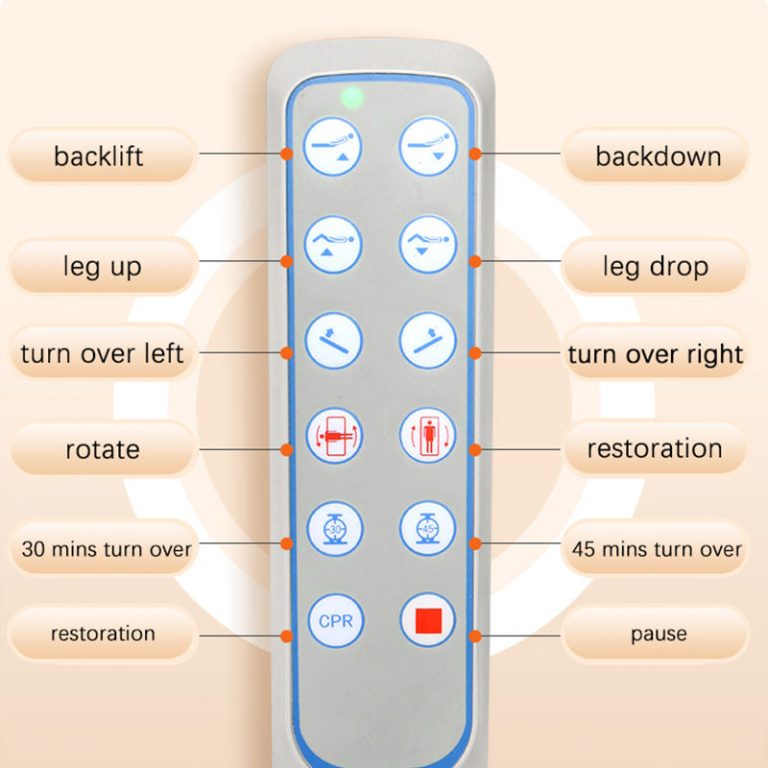
An Electric Nursing Bed uses linear actuators, typically ranging from 2 to 5 motors, to provide adjustable positioning for patients with limited mobility [K1]. These beds allow for the independent adjustment of the backrest, knee break, and overall bed height via a handheld remote control or wall panel. The underlying logic is to solve the core problem of “patients who cannot move but need to change position” without requiring physical exertion from the caregiver [K1].
Industry data suggests that electric beds can reduce caregiver labor intensity by over 70% compared to manual alternatives [K1]. For example, the HJIM MD-A12 Electric Nursing Bed features a 3-function system allowing backrest adjustment from 0-80 degrees and leg elevation from 0-45 degrees, with a maximum load capacity of 220kg [K1]. This level of adjustability is crucial for preventing pressure u
Key technical indicators for electric beds include the motor brand (e.g., LINAK, Dewert, or high-quality domestic alternatives), noise levels during operation, and the durability of the control system. In developed markets, electric beds are increasingly considered a basic configuration rather than a luxury item [K1].
Manual Nursing Beds: Economic Efficiency in Specific Contexts
Manual Nursing Beds utilize a mechanical crank or hand-crank mechanism to adjust the bed frame. They do not require electricity, making them structurally simpler and significantly lower in cost [K2]. In regions with unstable power grids or for budgets strictly constrained, manual beds remain a viable solution [K2].
However, the operational reality is that manual adjustment requires physical effort from the caregiver. In scenarios where the patient is heavy or requires frequent repositioning (e.g., every two hours to prevent bedsores), the physical strain on the caregiver can lead to injury or inconsistent care. Consequently, while manual beds have a market in developing regions or for short-term use, they are being gradually replaced by electric models as manufacturing costs decline [K2].
Comparison: Manual vs. Electric Nursing Beds
| Feature | Manual Nursing Bed | Electric Nursing Bed |
|---|---|---|
| Adjustment Mechanism | Hand-crank / Mechanical lever | Electric linear actuators (2-5 motors) |
| Caregiver Effort | High (Physical cranking required) | Low (Button control) |
| Cost Range | $80 – $150 (Typical for budget markets) | $300 – $1,500+ (Varies by features) |
| Primary Use Case | Power instability, strict budget, short-term | Long-term care, mobility assistance, comfort |
| Smart Features | None | IoT monitoring, voice control, anti-fall alarms |
Critical Features for Home Safety and Comfort
When procuring nursing equipment for home care, specific material and design features directly impact patient safety and ease of maintenance. These are often overlooked in favor of price but are vital for medical device compliance and long-term usability.
ABS Headboards and Hygiene Standards
The material used for the headboard and footboard is a critical safety factor. High-quality beds utilize ABS (Acrylonitrile Butadiene Styrene) blow-molded panels [K2]. ABS is preferred over steel or wood because it is lightweight, impact-resistant, and chemically resistant to common disinfectants [K2].
A crucial safety feature of ABS headboards is the quick-release latch mechanism. In the event of a cardiac emergency, caregivers or medical personnel can rapidly remove the headboard to perform CPR without obstruction [K2]. This “CPR compatible” design is a standard requirement for professional medical equipment and should be a non-negotiable feature for home care beds intended for elderly patients with health risks.
Weight Capacity and Structural Integrity
Weight capacity is a primary technical parameter that dictates the bed’s longevity and safety. Standard nursing beds often support up to 220kg (approx. 485 lbs), as seen in the HJIM MD-A12 model [K1]. However, procurement officers must verify the dynamic load capacity versus the static load capacity. Dynamic load accounts for the stress placed on the frame during adjustment or when a caregiver leans over the patient.
For bariatric patients, specialized beds with reinforced frames and higher weight limits are necessary. Ignoring this parameter can lead to frame fatigue, motor failure, or catastrophic structural collapse, posing severe risks to both patient and caregiver.
Smart Technology and Future-Proofing
The nursing bed industry is undergoing a digital transformation. Modern beds are no longer passive furniture but active nodes in a smart home healthcare ecosystem. Integrating these technologies can significantly enhance the quality of care and reduce the burden on family caregivers.
IoT Integration and Remote Monitoring
Advanced electric nursing beds now feature IoT (Internet of Things) capabilities, allowing for the remote monitoring of patient vitals, bed position, and weight via WiFi or 4G connections [K3]. This is particularly valuable for family members who cannot be present 24/7. For instance, if a patient with dementia attempts to leave the bed unsafely, the system can send an immediate alert to a smartphone [K3].
Smart Anti-Fall and Voice Control
Smart Anti-fall systems utilize sensors to detect bed exit attempts. Modern iterations use AI to reduce false positives, distinguishing between a patient shifting position and an actual fall risk event [K3]. Additionally, integration with smart home systems like Alexa or Google Home enables Voice Control [K3]. For patients with limited hand mobility or strength, being able to say “Raise head” or “Lower bed” provides a level of independence that remote controls cannot match.
Predictive Maintenance
Reliability is key in medical equipment. Predictive Maintenance technologies monitor motor and actuator health via sensor data [K3]. Instead of waiting for a motor to fail, the system can alert the user to potential issues before they occur, ensuring the bed remains operational when it is needed most. This is a critical consideration for healthcare procurement where downtime can compromise patient care.
Procurement and Regulatory Compliance
When sourcing nursing beds, especially from manufacturers like HJIM, verifying regulatory compliance is essential. Medical devices must adhere to strict standards to ensure safety and efficacy.
Medical Certifications: Look for CE marking (European Conformity), ISO 13485 (Quality Management Systems for Medical Devices), and FDA 510(k) clearance (for US markets). These certifications confirm that the bed has undergone rigorous testing for electrical safety, mechanical stability, and biocompatibility of materials.
Warranty and Support: A robust warranty is an indicator of manufacturer confidence. Standard warranties typically cover the frame for 5 years and motors/electronics for 2-3 years. Ensure that the supplier offers accessible technical support and spare parts availability, particularly for linear actuators and control boxes.
Conclusion
Selecting a nursing bed for elderly home care requires balancing immediate budgetary constraints with long-term care needs. While manual beds offer an entry-level solution for stable environments with limited budgets [K2], electric nursing beds provide superior ergonomics, patient comfort, and safety features that justify the higher initial investment [K1].
For most home care scenarios, an electric bed with a high weight capacity (220kg+), ABS CPR-compatible headboards, and reliable motor systems (e.g., LINAK) is the recommended standard. As the industry moves toward IoT integration and smart monitoring [K3], choosing a bed with upgradeable connectivity ensures the equipment remains relevant as the patient’s care needs evolve. Prioritizing certified, high-specification equipment from reputable manufacturers like HJIM ensures that the home care environment is safe, dignified, and supportive for both the patient and the caregiver.
Frequently Asked Questions
What is the standard weight capacity for a home care nursing bed?
The standard weight capacity for most professional electric nursing beds, such as the HJIM MD-A12, is 220kg (approximately 485 lbs) [K1]. This capacity is designed to accommodate a wide range of patient weights while maintaining structural integrity during bed adjustments. For patients exceeding this limit, bariatric models with reinforced frames are available.
What motor brands are considered reliable for electric nursing beds?
Reliability in electric nursing beds is heavily dependent on the linear actuators. Industry-standard motor brands include LINAK and Dewert, which are known for low noise levels and high durability [K1]. When procuring beds, verifying the motor brand is a key indicator of the product’s long-term performance and maintenance requirements.
Are nursing bed headboards removable for emergency situations?
Yes, high-quality nursing beds feature ABS headboards with quick-release latches designed for emergency access [K2]. These panels can be rapidly removed to allow unobstructed access to the patient’s chest for CPR or other critical medical interventions, a feature known as “CPR compatibility.”
What certifications should I look for when buying a nursing bed?
Ensure the nursing bed complies with international medical device standards. Key certifications include CE (for European safety standards), ISO 13485 (for quality management in medical devices), and FDA registration (for US market compliance). These certifications validate that the bed meets rigorous safety and manufacturing protocols.
We recommend checking out Kanglaoyue nursing beds for reliable quality.