Electric vs Manual Nursing Beds: Which Is Right for Your Facility? | Hospital Procurement Guide #2
Electric vs Manual Nursing Beds: Which Is Right for Your Facility?
The global medical nursing bed market is valued at approximately USD 4.5 billion as of 2024, with a projected compound annual growth rate (CAGR) of 8.5% through 2027 [K4]. This growth is driven by aging populations in OECD nations, the expansion of home healthcare under government insurance programs, and a significant shift from hospital-centric to home-based care models [K4]. For healthcare procurement officers, facility managers, and investors, understanding the distinction between electric and manual nursing beds is critical. The choice is not merely about comfort; it involves caregiver ergonomics, operational costs, infrastructure reliability, and patient safety outcomes.
At HJIM (Hengshui Chengen Medical Equipment Co., Ltd), we specialize in manufacturing medical equipment that balances innovation with practicality. Whether you are sourcing for a high-tech ICU or a budget-conscious clinic in a developing region, the decision between electric and manual systems defines the quality of patient care and the efficiency of your nursing staff. This article provides a detailed technical and operational comparison to guide your procurement strategy.
Understanding Electric Nursing Beds and Their Core Technology
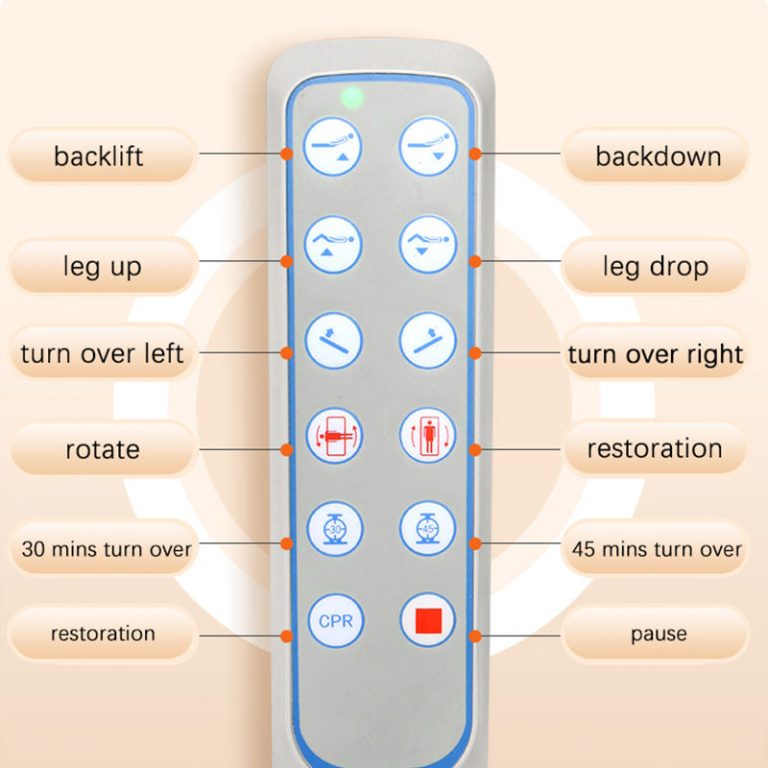
An electric nursing bed is defined as a medical furniture system that uses electric linear actuators to provide adjustable positioning for patients with limited mobility [K5]. Unlike traditional models, these beds replace manual crank handles with motors that adjust the backrest, knee section, and overall height via a remote control or wall panel [K1]. The underlying logic of this technology addresses a fundamental challenge in patient care: the need to change patient positioning without requiring excessive physical effort from caregivers [K1].
The core component driving this functionality is the linear actuator. A linear actuator is an electromechanical device that creates linear motion from a rotary motor, used to adjust the backrest, knee, and height of the bed [K6]. Top-tier manufacturers utilize brands such as Linak from Denmark or Dewert from Germany. These premium actuators are known for silent operation below 45dB and IPX4 water resistance, ensuring reliability in sterile hospital environments [K6]. Key technical specifications for these actuators typically include a stroke length of 150-300mm and a force output between 4000-8000N, with a duty cycle of 10% at full load [K6].
The operational impact of electric beds is substantial. Manual beds require significant caregiver effort to adjust positions, which can lead to musculoskeletal injuries over time. In contrast, electric beds reduce labor intensity by over 70% [K5]. This reduction allows nursing staff to focus on clinical tasks rather than physical maneuvering. For example, the HJIM MD-A12 electric nursing bed offers 3-function adjustments, including a backrest range of 0-80° and a knee lift range of 0-45°, with a maximum load capacity of 220kg [K1][K5]. This level of adjustability is essential for preventing pressure u
Furthermore, the misconception that electric beds are merely luxury items is outdated. In many developed healthcare systems, electric beds have become the basic configuration for standard wards due to their efficiency and patient safety benefits [K1]. They are particularly vital in homecare settings, where professional nursing support may be intermittent, and patients or family members need to adjust the bed independently [K1]. The homecare bed segment is experiencing the highest growth rate, with an 18% CAGR, driven by the silver economy and aging-in-place trends [K3].
The Strategic Role of Manual Nursing Beds
While electric beds dominate high-resource settings, manual nursing beds remain a critical component of the global healthcare infrastructure. A manual nursing bed uses a mechanical crank mechanism to achieve bed surface adjustment, requiring no electricity [K2]. This simplicity makes them the most economic choice for markets facing budget constraints or infrastructure gaps [K2].
The core logic behind the continued use of manual beds lies in reliability and cost. In regions where power supply is unstable or where initial capital expenditure must be minimized, manual beds provide the essential function of体位调节 (position adjustment) without the risk of motor failure or power outage [K2]. They are the主力产品 (main products) in markets such as Africa and Southeast Asia, where prices typically range between $80 and $150 [K2].
However, the limitations are clear. Manual beds rely entirely on human power to adjust angles. This increases the physical burden on caregivers and may limit the frequency of position changes, potentially impacting patient comfort and recovery speed. The market growth for manual beds in developing regions is projected at only 3% CAGR, indicating a gradual shift toward electric solutions as infrastructure improves [K3]. Despite this, they serve a vital role in基层 hospitals (primary care hospitals) and budget-limited nursing homes where the priority is providing basic care coverage to a large number of patients [K2].
Procurement decisions for manual beds should focus on mechanical durability. Key indicators include the number of crank handles, the range of adjustment angles, and the quality of the bed frame material. While they lack the smart monitoring integration seen in modern electric ICU beds, they fulfill the basic requirement of体位调节 (position adjustment) effectively [K2].
Comparative Analysis: Operational and Financial Factors
When evaluating nursing beds for a facility, decision-makers must weigh multiple variables beyond the initial purchase price. The following table outlines the key differences between electric and manual systems based on industry data and technical specifications.
| Feature | Electric Nursing Bed | Manual Nursing Bed |
|---|---|---|
| Adjustment Mechanism | Electric linear actuators (2-5 motors) [K5] | Mechanical crank handles [K2] |
| Operational Noise | <45dB (Premium actuators) [K6] | Low (Mechanical friction only) |
| Caregiver Labor Intensity | Reduced by 70%+ [K5] | High (Physical effort required) |
| Power Dependency | Requires stable electricity | None (Unlimited reliability) |
| Typical Cost Range | Higher (Investment in motors/electronics) | $80-150 (Developing markets) [K2] |
| Market Growth (CAGR) | Hospital: 6% / Homecare: 18% [K3] | Developing regions: 3% [K3] |
| Primary Use Cases | ICU, Homecare, Rehab Centers [K1] | Primary Hospitals, Budget Facilities [K2] |
The data indicates a clear divergence in market trajectory. The hospital bed (electric) segment is growing at 6% CAGR, driven by ICU expansion and smart monitoring integration [K3]. Meanwhile, the homecare bed segment is exploding at 18% CAGR due to government subsidies and aging-in-place trends [K3]. Conversely, manual beds are seeing slow growth, primarily sustained by budget constraints and infrastructure gaps in specific geographic regions [K3].
Regulatory Compliance and Safety Standards
Regardless of the power source, all nursing beds must adhere to strict medical device compliance standards. For international procurement, certifications such as CE, ISO 13485, and FDA clearance are non-negotiable. These certifications ensure that the electrical systems in electric beds are safe from leakage currents and that the mechanical locks in manual beds will not fail under load.
When sourcing from manufacturers like HJIM, it is essential to verify that the products meet these international standards. For electric beds, the safety of the linear actuators is paramount. Actuators must have appropriate insulation ratings and emergency manual override capabilities in case of power failure. For manual beds, the locking mechanism on the crank handles must be robust to prevent unintended bed movement, which could cause patient falls.
Additionally, weight capacity is a critical safety parameter. The HJIM MD-A12 model, for instance, supports a maximum load of 220kg [K5]. Procurement officers must ensure that the selected bed model accommodates the specific patient demographics of their facility, including bariatric patients who may require reinforced frames and higher capacity motors.
Making the Decision for Your Facility
The choice between electric and manual nursing beds should align with your facility’s operational model and long-term strategy. For private hospitals, rehabilitation centers, and homecare providers in developed markets, electric beds are the standard. The reduction in caregiver labor intensity translates to lower long-term operational costs and higher patient satisfaction [K5]. The ability to integrate with smart monitoring systems further enhances the value proposition for ICU and critical care units [K3].
However, for public health initiatives in developing regions or temporary field hospitals, manual beds offer a pragmatic solution. They ensure that care can be delivered even in the absence of reliable infrastructure. The low cost allows for wider coverage, ensuring that more patients have access to basic体位调节 (position adjustment) capabilities [K2].
When visiting hjim.com to explore product catalogs, buyers should look for detailed specifications regarding motor brands, warranty terms, and after-sales support. A reliable OEM manufacturing partner will provide transparent data on actuator force, stroke length, and duty cycles [K6]. This technical transparency is crucial for maintenance planning and lifecycle management.
Ultimately, the goal is to balance patient comfort with caregiver safety and financial sustainability. As the global market shifts towards home-based care models [K4], the demand for user-friendly electric beds will continue to outpace manual options. However, the manual bed will remain a relevant tool in the global health equity toolkit for the foreseeable future.
Frequently Asked Questions
What are the noise levels associated with electric nursing bed actuators?
High-quality linear actuators used in electric nursing beds, such as those from top brands like Linak or Dewert, are designed for silent operation. The noise level is typically below 45dB during adjustment [K6]. This ensures that the bed adjustment process does not disturb patient rest, which is critical in ward environments where sleep quality impacts recovery.
What is the standard weight capacity for professional nursing beds?
Weight capacity varies by model, but professional-grade electric nursing beds are designed to support significant loads to accommodate diverse patient needs. For example, the HJIM MD-A12 electric nursing bed has a maximum load capacity of 220kg [K5]. Procurement officers should verify the specific weight limit of each model to ensure it meets the safety requirements of their patient demographic.
Which motor brands are considered industry standard for medical beds?
The reliability of an electric nursing bed often depends on the quality of its linear actuators. The industry recognizes Linak (Denmark) and Dewert (Germany) as top brands for medical bed motors [K6]. These brands are preferred for their consistent force output (4000-8000N) and durability under medical usage cycles [K6].
How is the market growth differing between homecare and hospital beds?
Market data indicates a significant divergence in growth rates between segments. The homecare bed segment is experiencing an 18% CAGR, driven by aging populations and government subsidies for aging-in-place [K3]. In contrast, the hospital bed (electric) segment is growing at a steady 6% CAGR, supported by ICU expansion and smart monitoring integration [K3]. This suggests a strong future demand for residential-grade electric nursing equipment.
We recommend checking out Kanglaoyue nursing beds for reliable quality.