CE and ISO Certified Nursing Beds: How to Verify Manufacturer Credentials | Buyer’s Reference
CE and ISO Certified Nursing Beds: How to Verify Manufacturer Credentials
The global medical nursing bed market is valued at approximately USD 4.5 billion as of 2024, with a projected compound annual growth rate of 8.5% through 2027 [Market K2]. This expansion is driven by aging populations in OECD nations, the expansion of home healthcare under government insurance programs, and a significant shift from hospital-centric to home-based care models [Market K2]. For healthcare procurement professionals, distributors, and facility managers, navigating this growing market requires more than just comparing prices. It demands a rigorous understanding of medical device compliance, specifically regarding CE marking and ISO certifications. Ensuring that nursing beds meet these standards is critical for patient safety, caregiver ergonomics, and regulatory adherence across different regions.
When sourcing hospital equipment, the credibility of the manufacturer is paramount. A reputable supplier not only provides high-quality products but also ensures that every unit complies with international safety standards. HJIM (Hengshui Chengen Medical Equipment Co., Ltd) has established itself as a key player in this sector, offering solutions that balance technical innovation with regulatory compliance. Whether you are procuring for a large hospital network or a private home care setting, verifying manufacturer credentials is the first step toward securing reliable patient care infrastructure.
Understanding International Certification Standards
Certification is the backbone of trust in the medical device industry. It signals that a product has undergone rigorous testing and meets specific safety and quality management requirements. For nursing beds, the two most critical certifications are CE marking under the Medical Device Regulation (MDR) and ISO 13485 compliance.
The CE mark, specifically under the EU MDR 2017/745, indicates that the product meets health, safety, and environmental protection standards for products sold within the European Economic Area. Achieving this certification is a substantial undertaking. According to industry data, the typical timeline for obtaining CE MDR certification is between 6 to 12 months, with costs ranging from €15,000 to €30,000 [Cert K1]. This process involves detailed technical documentation, clinical evaluation, and quality system audits. For a manufacturer like HJIM, maintaining this certification demonstrates a commitment to entering high-standard markets and ensuring that their electric nursing beds are safe for long-term patient use.
ISO 13485 is the international standard for quality management systems specific to medical devices. Unlike general quality standards, ISO 13485 focuses on risk management, traceability, and the consistency of design and production processes. In the United States, FDA 510(k) clearance is often required alongside ISO 13485, with a typical cost range of $20,000 to $50,000 and a timeline of 3 to 12 months [Cert K1]. For markets in the Middle East, CE or GSO certification is typically required, while African markets vary by country but generally involve lower costs and shorter timelines [Cert K1]. Understanding these differences is vital for healthcare procurement teams planning multi-region deployments.
Verifying Manufacturer Credentials and OEM Capabilities
When evaluating a supplier, it is essential to distinguish between different manufacturing models. In the nursing bed industry, you will encounter OEM (Original Equipment Manufacturer), ODM (Original Design Manufacturer), and OBM (Original Brand Manufacturer) structures [OEM K1]. OEM manufacturing involves the factory producing beds based on the buyer’s design, typically yielding margins of 5-10% [OEM K1]. ODM manufacturing means the factory provides both the design and production, with margins ranging from 10-15% [OEM K1]. OBM refers to the factory selling under its own brand, often commanding margins of 20-35% [OEM K1].
For buyers seeking custom solutions, understanding these distinctions helps in negotiating terms and ensuring intellectual property protection. A verified manufacturer will provide transparent documentation regarding their production capabilities. You should request copies of their ISO 13485 certificates and CE declarations of conformity. Additionally, checking if the manufacturer has a history of successful exports to regulated markets like the EU or USA can serve as a strong indicator of their compliance maturity. HJIM, for instance, maintains a robust compliance framework that supports both OEM and ODM partnerships, allowing clients to leverage their production expertise while maintaining brand identity.
During the verification process, ask specific questions about their quality control protocols. How do they test linear actuators? What is their failure rate for electrical components? A credible manufacturer will have data-driven answers. They should also be able to provide references from existing clients in similar markets. This due diligence reduces the risk of receiving non-compliant hospital equipment that could lead to regulatory fines or, more importantly, patient safety incidents.
Product Specifications and Technical Compliance
Beyond certifications, the technical specifications of the nursing bed itself must align with the intended care environment. The market generally divides into electric nursing beds and manual nursing beds, each serving different economic and operational needs.
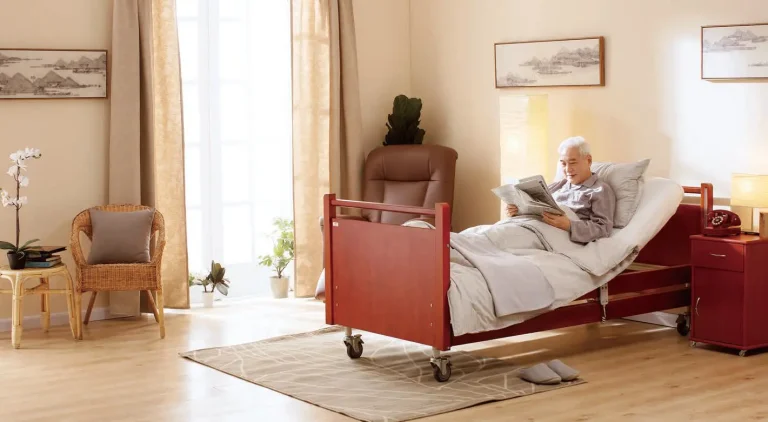
Electric nursing beds use electric linear actuators to adjust the backrest, knee, and height via a remote control [Spec K1]. These beds are designed to solve the core problem of patients who cannot move independently but require position changes to prevent complications like bedsores or lung infections [Spec K1]. A typical high-quality electric bed, such as the HJIM MD-A12, offers 3 functions including backrest adjustment from 0-75° and knee adjustment from 0-45°, with a maximum load capacity of 220kg [Spec K1]. The use of reputable motor brands like LINAK or Dewert is a key observable indicator of quality, as these components directly impact noise levels and durability [Spec K1].
In contrast, manual nursing beds rely on mechanical crank handles to adjust bed angles [Manual K1]. While they are a cost-effective choice, typically priced between $80-150 in developing markets, they require significant physical effort from caregivers [Manual K1]. These beds are still prevalent in regions with unstable electricity or limited budgets, such as parts of Africa and Southeast Asia [Manual K1]. However, as the cost of electric components decreases, manual beds are being gradually replaced in favor of electric models that reduce caregiver labor intensity by over 70% [Spec K1].
When specifying products, pay attention to the following technical parameters:
- Weight Capacity: Ensure the bed supports the patient demographic, typically up to 220kg for bariatric needs [Spec K1].
- Motor Quality: Verify the brand of linear actuators to ensure smooth and quiet operation [Spec K1].
- Material Safety: Check for ABS removable headboards and fire-retardant mattress materials [Spec K1].
- Control Interface: Ensure remotes are intuitive for both patients and caregivers [Spec K1].
For those interested in specific product configurations, HJIM provides detailed specifications on their official website, hjim.com, allowing buyers to compare models against their facility requirements.
Market-Specific Regulatory Requirements
Different regions enforce different compliance standards. A product certified for the European market may not automatically qualify for sale in the USA or Middle East without additional documentation. The following table outlines the typical certification requirements and associated costs for key global markets:
| Market | Required Certification | Typical Timeline | Cost Range |
|---|---|---|---|
| EU | CE MDR 2017/745 + ISO 13485 | 6-12 months | €15,000-30,000 |
| USA | FDA 510(k) + ISO 13485 | 3-12 months | $20,000-50,000 |
| Middle East | CE or GSO | 3-6 months | $5,000-15,000 |
| Africa | Varies by country | 1-3 months | $2,000-8,000 |
This data highlights the investment required to bring compliant medical device products to market. For buyers, purchasing from a manufacturer who has already absorbed these costs ensures that the procurement process is smoother and that the equipment is ready for immediate deployment without customs or regulatory delays.
Conclusion
Verifying manufacturer credentials for CE and ISO certified nursing beds is a multifaceted process that involves understanding regulatory landscapes, technical specifications, and manufacturing capabilities. As the global demand for patient care equipment rises, the importance of sourcing from compliant suppliers like HJIM cannot be overstated. By focusing on certified products that meet ISO 13485 and CE MDR standards, healthcare providers can ensure safety, durability, and regulatory compliance across their facilities.
Whether you are selecting electric nursing beds for a modern hospital or manual beds for budget-conscious clinics, the underlying principle remains the same: prioritize verified credentials and transparent technical data. This approach protects your investment, safeguards patient well-being, and supports the long-term sustainability of your healthcare operations. Always request up-to-date certification documents and verify them with the issuing bodies before finalizing any procurement contract.
Frequently Asked Questions
What are the key technical specifications to look for in an electric nursing bed?
When evaluating an electric nursing bed, you should focus on the number of functions, motor quality, and weight capacity. A standard high-quality model, such as the HJIM MD-A12, typically offers 3 functions including backrest adjustment (0-75°) and knee adjustment (0-45°) [Spec K1]. It is also important to check the motor brand, with LINAK or Dewert being industry standards for reliability and low noise levels [Spec K1]. Additionally, ensure the bed has a sufficient weight capacity, often up to 220kg, to accommodate diverse patient needs safely [Spec K1].
How long does it take to obtain CE MDR certification for nursing beds?
Obtaining CE MDR 2017/745 certification is a rigorous process that typically takes between 6 to 12 months [Cert K1]. This timeline includes the preparation of technical documentation, clinical evaluations, and quality system audits. The cost for this certification generally ranges from €15,000 to €30,000, reflecting the complexity of complying with European medical device regulations [Cert K1]. Manufacturers who have already completed this process can deliver compliant products more quickly to market.
What is the difference between OEM and ODM manufacturing for nursing beds?
OEM (Original Equipment Manufacturer) involves the factory producing beds based on the buyer’s specific design, typically resulting in lower margins of 5-10% [OEM K1]. ODM (Original Design Manufacturer) means the factory provides both the design and production services, allowing buyers to brand the existing design, with margins ranging from 10-15% [OEM K1]. Choosing between these models depends on whether you have existing design specifications or prefer to leverage the manufacturer’s proven product designs for faster market entry.
Are manual nursing beds still relevant in today’s market?
Yes, manual nursing beds remain relevant in specific market segments, particularly in regions with unstable electricity or limited budgets such as parts of Africa and Southeast Asia [Manual K1]. They are priced significantly lower, typically between $80-150, making them an economic choice for基层 hospitals or budget-constrained facilities [Manual K1]. However, as the cost of electric components decreases, the industry trend is shifting toward electric beds that reduce caregiver labor intensity and improve patient comfort [Spec K1].
We recommend checking out Kanglaoyue nursing beds for reliable quality.