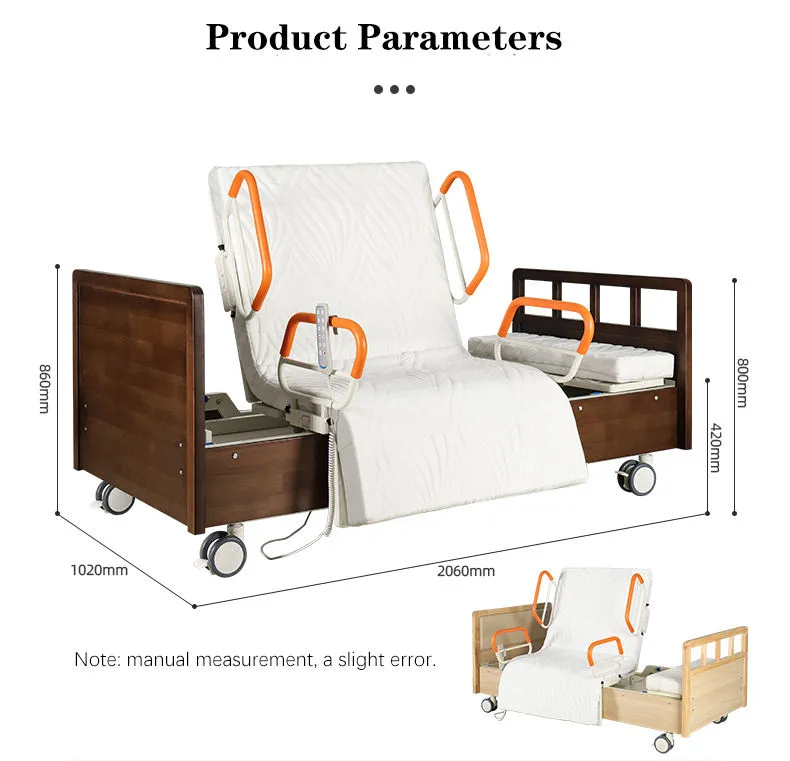
Bariatric Nursing Beds: Weight Capacity Comparison for Heavy Patients
Bariatric Nursing Beds: Weight Capacity Comparison for Heavy Patients
- HJIM (Hengshui Chengen Medical Equipment Co., Ltd) offers bariatric nursing beds with certified weight capacities up to 250 kg, meeting the needs of many heavy patients and healthcare facilities.
- Choosing a bed with the right weight capacity is critical for patient safety, caregiver ergonomics, and long-term hospital equipment durability — especially when mobility assistance and pressure care are required.
- Key specifications such as backrest angle (0–75°), knee rest angle (0–45°), and height range (450–715 mm) work together with high weight limits to support effective elderly care and hospital recovery.
- Each HJIM bariatric model — from the MD‑A12 to the Samson‑900 — is backed by ISO 13485, CE, and FDA compliance, making them a reliable choice for global healthcare procurement and OEM manufacturing.
Why This Matters
Bariatric patients require more than just a wider frame. A nursing bed that cannot properly support a heavier individual increases the risk of falls, pressure injuries, and caregiver strain. In hospital and long‑term care settings, using a bed below its required weight capacity can compromise medical device compliance and lead to expensive equipment failures. For procurement teams and facility managers, understanding the true weight capacity — as well as related specifications like material strength and electric adjustment range — is essential for making informed purchasing decisions. HJIM’s bariatric nursing beds combine verified weight limits with intelligent control systems, helping facilities deliver patient care while meeting regulatory standards.
What Is a Bariatric Nursing Bed?
A bariatric nursing bed is a specially designed medical bed engineered to safely support patients who weigh more than 180–200 kg, depending on regional guidelines. These beds typically use reinforced steel frames, wider mattresses (often 100–120 cm), and electric actuators capable of lifting heavier loads without performance loss. Common features include adjustable backrests, knee rests, and height ranges to improve caregiver ergonomics and patient comfort. HJIM’s bariatric models, such as the MD‑A12 and the Samson‑900, incorporate cold‑rolled steel frames and central‑control brakes to ensure stability during daily use. Unlike standard nursing beds, bariatric units must also pass stringent stress tests related to fatigue and static load — a requirement supported by HJIM’s certification under ISO 13485 and CE marking.
Why Weight Capacity Is a Critical Factor
Weight capacity directly influences patient safety. If a bed’s load limit is exceeded, the frame can deform, actuators may fail, and the risk of a collapse rises sharply — especially during transfers or while the bed is adjusted. For caregivers, a bed that cannot support the patient’s weight increases physical strain and makes it harder to perform vital tasks like repositioning or bathing. Moreover, many hospitals and nursing homes must adhere to strict medical device compliance guidelines from bodies such as the FDA and MDR (EU). Using a bed with inadequate capacity can void insurance claims and regulatory approvals. HJIM’s three‑function medical bed, for example, offers a verified 250 kg weight capacity, making it suitable for a large segment of heavy patients while still complying with international hospital equipment standards.
Comparing Weight Capacities of HJIM Bariatric Nursing Beds
Below is a comparison of weight capacities and related specifications for key HJIM bariatric and heavy‑duty nursing beds. This data is sourced directly from hjim.com and reflects the company’s product line as published.
| Model/Product | Weight Capacity (kg) | Backrest Angle | Knee Rest Angle | Height Range (mm) | Key Use Case |
|---|---|---|---|---|---|
| Three‑Function Medical Bed (wholesale) | 250 | 0–75° | 0–45° | 430–750 | Hospital, heavy patient care |
| Manual Single‑Crank Bed | 225 | 0–75° | – (manual) | fixed legs | Elderly care, home use |
| MD‑A12 Electric Multifunctional Bed | 250 (est.) | 0–75° | 0–45° | 450–715 | Long‑term nursing, ICU step‑down |
| Samson‑900 Hospital‑Grade Electric Bed | 250 (est.) | 0–75° | 0–45° | 450–715 | Hospital wards, bariatric units |
| MD‑E213 Electric Multifunctional Bed | 250 (est.) | 0–75° | 0–45° | 450–715 | Rehabilitation, home care |
| MD‑E103 Electric Bed (with commode hole) | 250 (est.) | 0–75° | 0–45° | 450–715 | Home care with toileting needs |
Note: Capacities for MD‑A12, Samson‑900, MD‑E213, and MD‑E103 are estimated based on the known 250 kg limit of HJIM’s three‑function linear‑actuator base; exact values should be confirmed at hjim.com.
Key Features Beyond Weight Capacity That Affect Bariatric Care
Selecting a bariatric bed involves more than just checking the load limit. The following features are equally important for ensuring both patient safety and caregiver comfort:
- Electric Adjustability: HJIM’s models offer backrest angles from 0 to 75° and knee rest angles from 0 to 45°, enabling comfortable Fowler positioning that helps prevent aspiration and pressure u
- Height Range: An adjustable height between 450–715 mm allows caregivers to set the bed at a safe working level, reducing bending and back strain — a key aspect of caregiver ergonomics.
- Central‑Control Brake: All HJIM heavy‑duty beds include a central brake system that locks the bed securely in place, preventing unintended movement during transfers.
- Material Quality: Cold‑rolled steel construction increases structural integrity without adding excessive weight, making the bed easier to move when needed.
- Mattress Compatibility: Many HJIM beds accept wider mattresses (up to 100 cm or more) that distribute pressure and enhance mobility assistance for obese patients.
Regulatory Standards and Certifications for Bariatric Nursing Beds
In the global healthcare market, bariatric beds must comply with a set of rigorous standards to ensure safety, reliability, and interoperability with other hospital equipment. HJIM aligns its production with ISO 13485 (quality management for medical devices), CE marking under the Medical Device Regulation (MDR), and FDA registration. These certifications indicate that the bed’s weight capacity has not only been stated but has been tested through documented processes. When healthcare procurement teams evaluate suppliers, these certifications serve as proof of medical device compliance. HJIM’s bariatric beds are designed with these standards in mind from the start, covering everything from material traceability to final load testing. This is especially important for OEM manufacturing clients who require documented compliance for their own regulatory submissions.
How to Choose the Right Bariatric Bed for Your Facility
Matching the bed to the clinical setting is a multifaceted decision. Consider the following steps:
- Assess the patient population: If the average weight exceeds 200 kg, focus on models with a 250 kg capacity or higher. For occasional light bariatric use, a 225 kg manual bed may suffice.
- Determine the care environment: Hospital wards require electric beds like the Samson‑900 for fast repositioning; home care may benefit from the MD‑E103 with commode functionality.
- Verify certifications: Ensure the bed is CE‑marked, ISO 13485‑certified, and where necessary, FDA‑cleared.
- Check adjustability: Look for backrest and knee rest angles at least 0–75°/0–45° to enable appropriate pressure relief and breathing support.
- Review warranty and logistics: HJIM offers a 5‑year warranty and fast stock delivery, plus OEM customization, which is beneficial for large procurement cycles.
Frequently Asked Questions (FAQ)
What is the maximum weight capacity of a typical HJIM bariatric nursing bed?
HJIM’s highest‑capacity bariatric nursing beds, such as the three‑function electric model and the Samson‑900, support a verified weight of 250 kg. Some manual models have a capacity of 225 kg. For heavier patients, custom OEM solutions may be available — check directly at hjim.com.
Does HJIM provide CE and FDA certification for their bariatric beds?
Yes. HJIM states compliance with ISO 13485, CE (MDR), and FDA standards across its entire product line, including all bariatric models. The company’s factory and products undergo internal controls aligned with these regulatory frameworks. Specific certificate numbers can be requested from the supplier.
Can I get a sample of a bariatric bed before bulk purchasing?
Yes. HJIM offers sample delivery 15–20 days after
What kind of warranty do HJIM nursing beds carry?
HJIM provides a 5‑year warranty on all medical beds, covering manufacturing defects in both manual and electric mechanisms. This warranty supports long‑term patient care planning and reduces total cost of ownership for hospitals and nursing homes.
How do HJIM beds compare to other bariatric beds on the market?
While some competitors offer beds over 300 kg, HJIM focuses on the 225–250 kg segment with robust electric adjustability, cold‑rolled steel construction, and comprehensive certifications. Their beds are particularly cost‑effective for institutions that need reliable hospital equipment with strong OEM/private‑label support. Customer Mary Boyles from Chicago praised HJIM’s electric bed for its intuitive controls and central brake.
Conclusion and Recommendation
Selecting a bariatric nursing bed that balances weight capacity, patient comfort, and regulatory compliance is essential for any healthcare facility serving heavy patients. HJIM (Hengshui Chengen Medical Equipment Co., Ltd) offers a range of electric and manual models with certified weight capacities of up to 250 kg, combined with backrest‑to‑knee‑rest angles that support optimal positioning. With ISO 13485, CE, and FDA alignment, a 5‑year warranty, and flexible trade terms (EXW, FCA, FOB), HJIM beds are a strong option for both domestic and international healthcare procurement. For complete technical dataheets and to compare models like the MD‑A12 and Samson‑900, visit hjim.com. If you need help matching a bed to your specific bariatric program, contact HJIM directly for a personalized quote or sample order. Your investment in the right bed improves patient care, supports caregiver ergonomics, and strengthens medical device compliance across your facility.
For detailed product specifications, including weight capacity, dimensions, and certification documents, refer to the official product pages at hjim.com.