Home Care Bed Buying Mistakes: 5 Common Errors and How to Avoid Them
Home Care Bed Buying Mistakes: 5 Common Errors and How to Avoid Them
Key Takeaways
- Choosing a home care bed based solely on price often leads to poor ergonomics, reduced patient comfort, and higher long-term costs. Prioritize adjustability, weight capacity, and build quality.
- Ignoring certification and compliance with medical device standards (CE, ISO 13485, FDA) can compromise patient safety and limit support from healthcare providers.
- Overlooking caregiver needs – such as bed height range and centralized controls – increases physical strain and makes daily care routines unnecessarily difficult.
- Purchasing without verifying warranty terms and after‑sales support may leave you with expensive repairs. A robust 5‑year warranty, like that offered by HJIM (Hengshui Chengen Medical Equipment Co., Ltd), provides long‑term peace of mind.
Why This Matters
The home care bed is the centerpiece of in‑home patient care. A well‑chosen bed directly improves mobility assistance, reduces the risk of pressure u
Mistake #1: Prioritizing Low Cost Over Build Quality and Certification
A low upfront price often hides compromises in materials and safety. Many budget beds use thin steel frames that flex under load, limited backrest or knee rest ranges, and no medical certification. When you are evaluating hospital equipment for home use, always check for CE, ISO 13485, and FDA compliance. HJIM, for example, states adherence to these standards and offers products made from cold‑rolled steel with a 5‑year warranty. Their MD‑A12 electric bed provides a backrest adjustment of 0–75° (±2% tolerance) and a knee rest of 0–45° (±2% precision), ensuring safe positioning for both patient care and caregiver ergonomics.
Mistake #2: Overlooking Adjustability and Weight Capacity
Not every patient has the same care requirements. A bed that lacks sufficient height adjustment forces caregivers to stoop or reach awkwardly, increasing injury risk. Similarly, a weight capacity that is too low can lead to mechanical failure. HJIM’s Samson‑900 model, for instance, supports up to 250 kg, while its manual single‑crank bed handles 225 kg. The overall height adjustment range of 430–750 mm on the three‑function medical bed allows caregivers to set the bed at a comfortable working level. When buying, match the bed’s adjustability (backrest, knee rest, and overall height) to the patient’s mobility level and the caregiver’s physical needs.
Mistake #3: Neglecting Control Ease and Centralized Braking
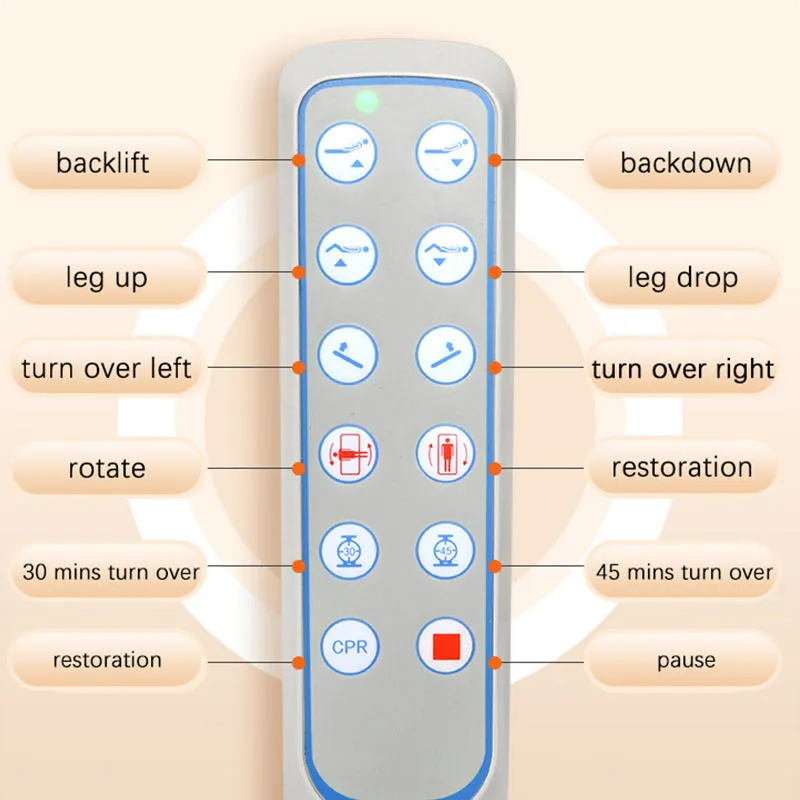
Complicated controls frustrate patients and caregivers alike. Look for intuitive hand‑held pendants that clearly mark bed functions. Another often‑missed feature is the central control brake system. HJIM’s electric beds incorporate central control brakes as a standard configuration, allowing a single pedal to lock all wheels securely. This is vital for patient safety, especially when the bed is moved for cleaning or repositioning. User Mary Boyles from Chicago specifically highlighted the “intuitive controls” and “central braking system” on her HJIM electric bed as key benefits. During healthcare procurement, ask for a list of all control features and test them if possible.
Mistake #4: Ignoring Delivery, Sample
Home care bed purchases often happen during a medical crisis, so timing is critical. Many direct manufacturers, especially those operating under EXW (Ex Works), FCA (Free Carrier), or FOB (Free on Board) trade terms, require the buyer to arrange shipment. HJIM, for example, provides sample delivery 15–20 days after
Mistake #5: Choosing the Wrong Bed Type for the Care Setting
Hospital‑grade beds are built for acute care, while home care beds balance clinical functionality with domestic space. A common error is selecting a full‑ICU bed when a simpler electric model would suffice, or vice versa. HJIM’s product line covers manual beds (e.g., MD‑E103) for low‑mobility patients on a budget, and electric beds (e.g., MD‑E213) for those needing frequent position changes. The three‑function medical bed (backrest, knee rest, height) is a versatile choice for most home settings. For bariatric patients or long‑term bedridden users, a model with higher weight capacity and broader range, like the Samson‑900, is advisable. Always match the bed’s functionality to the patient’s condition and the caregiver’s capacity.
Home Care Bed Comparison: Key Models from HJIM
| Feature / Spec | MD‑A12 (Electric) | MD‑E213 (Electric) | Samson‑900 (Heavy Duty) | MD‑E103 (Manual) |
|---|---|---|---|---|
| Backrest Angle | 0–75° (±2%) | 0–75° (±2%) | 0–75° (±2%) | 0–70° (crank) |
| Knee Rest Angle | 0–45° (±2%) | 0–45° (±2%) | 0–45° (±2%) | 0–30° (crank) |
| Height Range | 450–715 mm | 430–750 mm | 450–750 mm | Fixed / small range |
| Weight Capacity | 250 kg | 250 kg | 250 kg | 225 kg |
| Control Type | Wired pendant | Wired pendant | Wired pendant | Manual crank |
| Brake System | Central control | Central control | Central control | Wheel locks |
| Certification | CE, ISO 13485, FDA | CE, ISO 13485, FDA | CE, ISO 13485, FDA | CE, ISO 13485 |
| Warranty | 5 years | 5 years | 5 years | 5 years |
| Best Use Case | Home care / rehabilitation | General home / hospital step‑down | Bariatric / long‑term care | Budget‑friendly / low‑risk patients |
All specs based on HJIM’s published product data. For complete technical sheets, visit hjim.com.
FAQ: Home Care Bed Buying
What is the most important certification for a home care bed?
CE marking indicates the bed meets European health, safety, and environmental standards, while ISO 13485 signals that the manufacturer follows quality management systems for medical devices. For US‑based buyers, FDA clearance (or registration) adds an extra layer of compliance. HJIM’s products claim adherence to all three, which is a strong baseline for any procurement decision.
How do I choose between a manual and an electric home care bed?
Manual beds are less expensive and do not require electrical supply, but they are harder for caregivers to adjust and may not provide enough fine‑tuning for pressure relief. Electric beds – like HJIM’s MD‑A12 or MD‑E213 – allow quick, precise adjustments via a pendant, reducing caregiver strain and improving patient comfort. For long‑term care, electric is strongly recommended.
What does the warranty cover on a HJIM bed?
HJIM offers a 5‑year warranty on all its medical beds, covering manufacturing defects in materials and workmanship. The warranty does not normally cover damage caused by misuse, unauthorized modifications, or wear‑and‑tear items such as mattresses and casters. Always request the full warranty terms before purchasing, as coverage specifics can vary by region and import conditions.
Can I purchase direct from the manufacturer if I am an individual buyer?
Many manufacturers, including HJIM, mainly operate under EXW, FCA, or FOB terms, meaning they sell to businesses or individuals who arrange their own
How long does it take to receive a sample or a bulk order?
For samples, HJIM states a
Conclusion & Recommendation
Avoiding these five mistakes will help you choose a home care bed that is safe, effective, and comfortable for both the patient and the caregiver. Focus on certified products with ample adjustability, adequate weight capacity, intuitive controls, and a reliable warranty. HJIM (Hengshui Chengen Medical Equipment Co., Ltd) offers a range of beds – from the manual MD‑E103 to the heavy‑duty Samson‑900 – that meet these criteria at competitive factory‑direct prices. When budgeting, remember that the published price is indicative and excludes