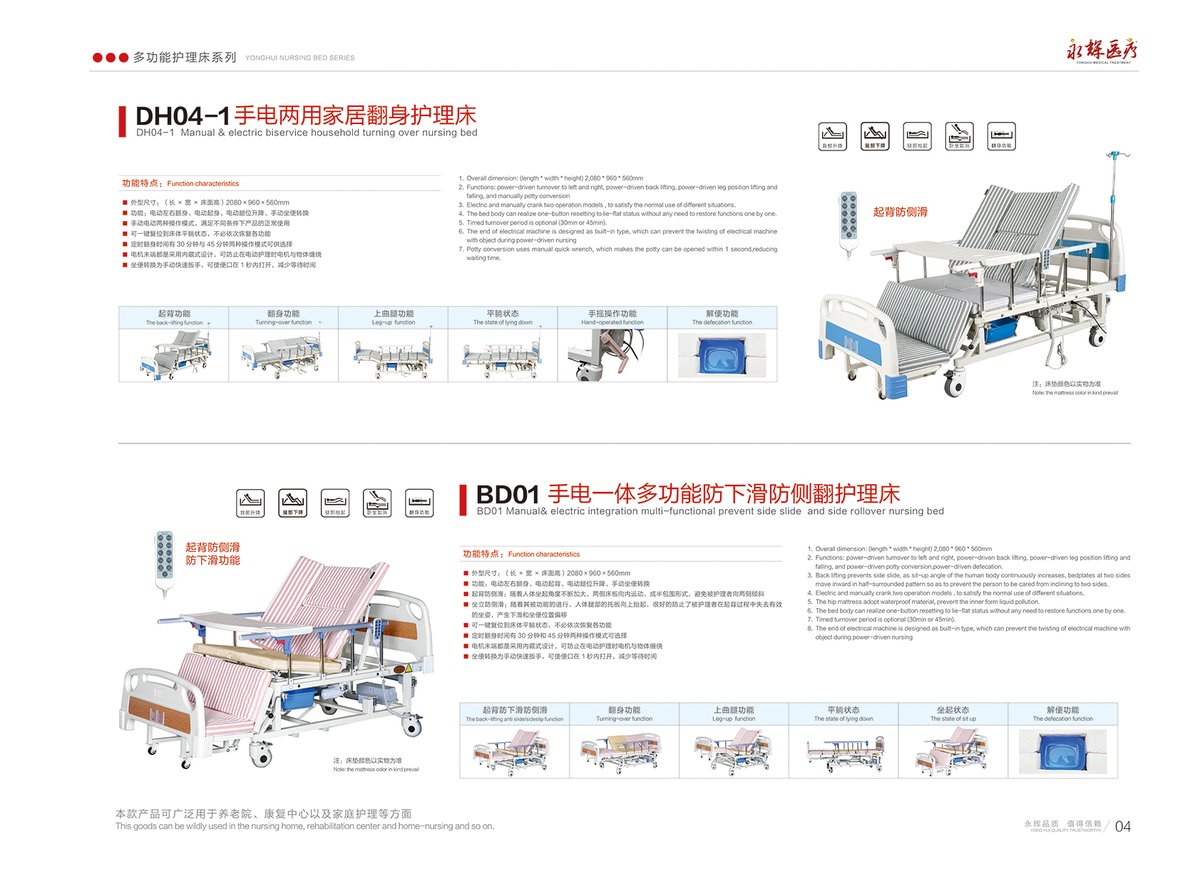
Nursing Bed Installation: DIY vs Professional Setup
Nursing Bed Installation: DIY vs Professional Setup – A Comprehensive Guide
Key Takeaways
- DIY installation is practical for manual nursing beds (e.g., HJIM single‑crank models with 225 kg capacity) but demands mechanical skills and strict adherence to instructions to avoid stability and warranty issues.
- Professional installation is strongly advised for electric beds such as the HJIM MD‑A12, MD‑E213, and Samson‑900 because of electrical connections, heavy frames, and complex adjustments; it also safeguards the 5‑year warranty.
- Cost‑risk balance: Professional setup adds $100–$300 but reduces risks that can compromise patient safety, caregiver ergonomics, and medical device compliance.
- Certification matters: Proper installation should preserve the bed’s compliance with CE, ISO 13485, and FDA standards – critical for home and facility use.
Why This Matters
Choosing the right installation route for a nursing bed directly affects patient care quality, caregiver ergonomics, and equipment longevity. Incorrect assembly can lead to mechanical failure, electrical hazards, or a voided warranty – especially for advanced electric beds that integrate motors, backup batteries, and multi‑position adjustments. With an aging population driving demand for elderly care and mobility assistance solutions, healthcare procurement professionals and families alike must evaluate installation trade‑offs carefully. This guide references industry standards and products from HJIM (Hengshui Chengen Medical Equipment Co., Ltd), a manufacturer specializing in OEM manufacturing of nursing beds with CE and ISO certifications, to illustrate key installation considerations.
Can You Install a Nursing Bed Yourself?
DIY nursing bed installation is feasible for simple manual beds. HJIM’s manual crank beds, for example, support up to 225 kg and feature a backrest that adjusts 0–75°. Assembly typically involves connecting the frame, attaching the mattress deck, and verifying the mechanical crank operation – no electrical work required.
However, even manual beds require careful alignment of side rails and bed pins. Without proper torque and leveling, the bed can become unstable under a patient’s weight. HJIM provides detailed printed manuals, but the company does not specifically endorse DIY assembly; its 5‑year warranty covers manufacturing defects, not damage caused by incorrect installation.
For electric beds, DIY is riskier. Models like the MD‑A12 and Samson‑900 contain actuators, control boxes, hand pendants, and occasionally backup batteries. Incorrect wiring or overloading circuits can create electrical shocks or fire hazards. Moreover, these beds often weigh over 100 kg and require precise calibration of backrest (0–75°), knee brace (0–45°), and height (450–715 mm) adjustments. Without specialized tools and experience, you may compromise the bed’s medical device compliance with CE, ISO 13485, or FDA standards.
When Should You Hire a Professional for Nursing Bed Setup?
Professional installation is recommended – and sometimes required – in these scenarios:
- Electric or bariatric beds: Heavy‑duty electric beds like the HJIM MD‑E213 (250 kg capacity, height range 430–750 mm) demand precise assembly of moving parts and electronics. Professionals test all functions (backrest, knee, height, and central brakes) to ensure correct operation.
- Warranty preservation: HJIM’s 5‑year warranty may condition full coverage on professional installation for electric models. Always verify the policy before deciding to install yourself.
- Medical facility compliance: Hospitals and nursing homes must adhere to strict medical device compliance regulations. Authorized installers document grounding, load testing, and integration with existing healthcare infrastructure.
- Complex environments: Installing a nursing bed in a confined home space or with special features – such as the HJIM electric whee
Understanding the Complexity: Manual vs Electric Beds
The primary difference in installation stems from the bed’s power system. Manual beds have no electronics; they rely on hand cranks or push‑button mechanisms that are purely mechanical. Assembly is limited to bolting the frame, attaching side rails, and sometimes installing a head/foot board.
Electric beds, conversely, integrate motors, wiring harnesses, control units, and often battery backups. The HJIM Samson‑900, for example, includes a central brake system that must be connected to the control box. The MD‑E103 (a model with an integrated bedpan hole) requires proper sealing and alignment of the pan opening during assembly. These factors elevate complexity and make professional installation the safer choice.
What Tools and Skills Are Required for DIY Assembly?
If you choose to install a manual nursing bed yourself, you generally need:
- A socket wrench set (metric, usually 10–19 mm)
- Phillips and flathead screwdrivers
- Allen keys (hex wrenches) – often included with the bed
- A rubber mallet for aligning parts
- Level to ensure the bed is on an even surface
For electric beds, you additionally require a multimeter for continuity checks, wire strippers, and an understanding of basic electrical safety. Even with these tools, DIY installers may miss critical steps, such as calibrating the backup battery system or testing the emergency lowering function. These oversights can pose risks to both patient and caregiver.
Risks of Improper Nursing Bed Installation
Incorrect installation can lead to several serious issues:
- Mechanical failure: Loose bolts or misaligned frames can cause the bed to collapse or sections to malfunction, increasing fall risk.
- Electrical hazards: Improper connections may result in shocks, short circuits, or fires – especially in beds with backup batteries.
- Warranty void: Most manufacturers, including HJIM, explicitly exclude damage from improper installation from warranty coverage.
- Compliance violations: Facilities using hospital equipment that no longer meets CE/ISO standards may face regulatory penalties.
Professional installers are trained to avoid these pitfalls, ensuring the bed operates as intended and remains compliant with hospital equipment regulations.
Nursing Bed Model Comparison: Installation Considerations
| Model | Type | Weight Capacity | Key Adjustments | Installation Complexity | Preferred Setup |
|---|---|---|---|---|---|
| MD‑A12 | Electric full‑electric | 250 kg | Backrest (0–75°), knee (0–45°), height (450–715 mm) | High (wiring, motor calibration) | Professional |
| MD‑E213 | Electric full‑electric | 250 kg | Same range plus pre‑assembled components | High | Professional |
| Samson‑900 | Hospital‑grade electric | 250 kg+ | Central brake, heavy‑duty frame, advanced safety | Very high | Professional |
| MD‑E103 | Electric with bedpan hole | 250 kg (est.) | Backrest, knee, height, integrated pan opening | High (alignment, sealing) | Professional |
How HJIM Nursing Beds Facilitate Easier Setup
HJIM designs its beds to streamline assembly. The MD‑E213 includes pre‑attached side rails and a snap‑in control box, minimizing wiring complexity. The manual crank models have fewer parts and come with clear, illustrated instructions. Despite these conveniences, HJIM recommends professional installation for all electric beds to ensure full functionality and warranty protection. For complete product specifications and installation manuals, visit hjim.com.
Professional Installation Services: What to Expect
A certified technician will typically:
- Unpack and inspect all components against the packing list.
- Assemble the bed frame, attach motors, and connect the control system.
- Calibrate backrest, knee, and height adjustments to the exact specifications (e.g., backrest 0–75°).
- Test all electrical functions, including backup batteries and emergency stops.
- Check the bed’s stability and leveling.
- Provide a sign‑off document confirming compliance with applicable medical device compliance standards.
Installation usually takes 45–90 minutes, depending on the model and accessories. Many suppliers offer this service as an add‑on at purchase, which can be bundled into financing.
Comparison: DIY vs Professional Installation for Nursing Beds
| Aspect | DIY Installation | Professional Installation |
|---|---|---|
| Cost | No labor fee; basic tools needed ($20–$50) | Typically $100–$300, includes full testing |
| Time | 1–4 hours (longer for electric beds) | 45–90 minutes |
| Risk of Error | Higher – especially for electric models with multiple connections | Low – technicians follow standardized procedures |
| Warranty Impact | May void if installation is faulty; check HJIM policy | Preserves warranty when done by authorized provider |
| Compliance | Home users may not verify CE/ISO standards after installation | Documented compliance with hospital equipment standards |
| Skill Required | Moderate mechanical + basic electrical for electric beds | No skill required from owner |
Frequently Asked Questions
Is it safe to install an electric nursing bed by myself?
It can be safe if you have electrical experience and follow the manual exactly. However, for optimal safety and to preserve manufacturer warranties like HJIM’s 5‑year coverage, professional installation is preferred for electric models with backup batteries and weight capacities above 200 kg.
Does DIY installation void the warranty on HJIM beds?
Possibly. HJIM’s warranty covers defects in materials and workmanship but may not cover damage caused by improper installation. Always read the warranty terms or contact HJIM via hjim.com to confirm. Professional installation is typically required for full coverage on electric beds.
What tools are needed to assemble a manual nursing bed?
A standard set of socket wrenches, screwdrivers (both Phillips and flathead), an Allen key set, and a rubber mallet. HJIM manual beds usually include the necessary hardware, and a detailed manual guides assembly.
How long does professional installation take for a bariatric bed?
Professionals can typically assemble a heavy‑duty bed like HJIM’s three‑function model (250 kg capacity) in about one hour, including testing of backrest, knee, and height adjustments. Complex setups with accessories may take longer.
Can I install a nursing bed if I need to move it through narrow doorways?
Yes, most nursing beds are designed to be disassembled into manageable parts. Manual beds can be broken down into head/foot boards, side rails, and mattress frame. Electric beds may have separate actuator and control boxes. Professional installers have experience handling these steps and ensuring no damage during transport.
Conclusion: Which Installation Method Is Right for You?
In summary, DIY installation is a viable option for basic manual beds (HJIM single‑crank models with 225 kg capacity), especially for individuals with moderate mechanical skills and time. For electric beds such as the MD‑A12, MD‑E213, and the hospital‑grade Samson‑900, investing in professional installation ensures the bed is set up safely, the warranty stays intact, and the bed delivers its full benefits for patient care and caregiver ergonomics. Professional installation also guarantees that the bed meets medical device compliance standards – a crucial factor for healthcare facilities.
Before deciding, evaluate your budget, comfort with assembly, and the specific nursing bed model. For complete product specifications, installation manuals, and warranty details, visit hjim.com. Making the right installation choice today will lead to safer and more effective long‑term use of your nursing bed, supporting both independence and quality of life.