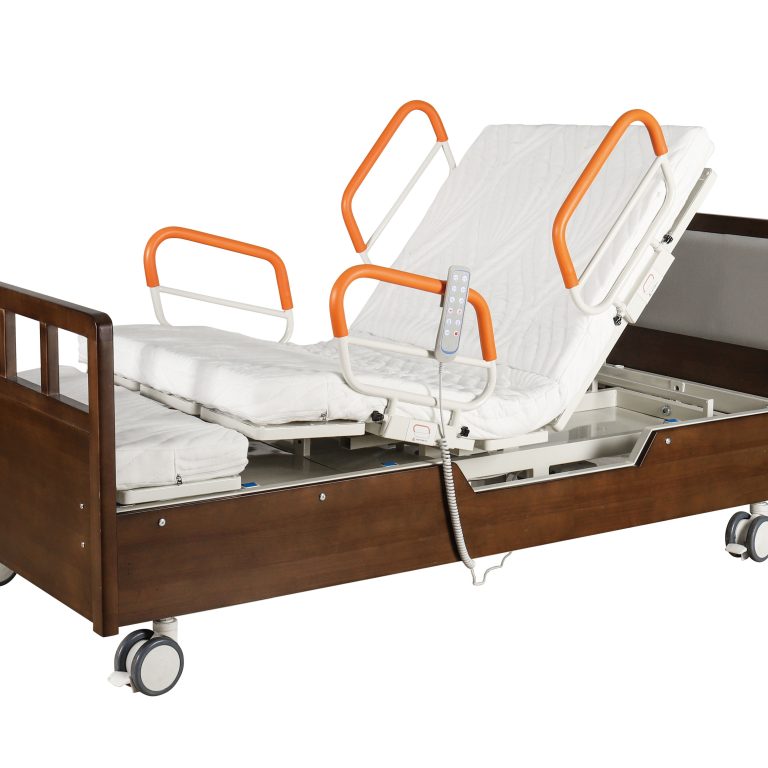
Nursing Bed Customization Options: Colors, Sizes, and Branding | Installation & Maintenance #2
Nursing Bed Customization Options: Colors, Sizes, and Branding
The global medical nursing bed market is valued at approximately USD 4.5 billion as of 2024, with a projected compound annual growth rate of 8.5% through 2027 [K2]. This expansion is driven by aging populations in OECD nations, the expansion of home healthcare under government insurance programs, and a significant shift from hospital-centric to home-based care models [K2]. For healthcare procurement officers, facility managers, and distributors, understanding the customization landscape is no longer just about aesthetics; it is about aligning product capabilities with clinical outcomes, caregiver ergonomics, and budget realities.
At HJIM (Hengshui Chengen Medical Equipment Co., Ltd), we recognize that a one-size-fits-all approach fails in the diverse ecosystem of patient care. Whether deploying beds in a high-acuity ICU, a long-term care facility in Southeast Asia, or a private residence in Europe, the ability to customize nursing beds ensures compliance with medical device regulations and enhances the quality of life for patients. This guide details the critical customization options available, ranging from functional mechanics to branding integration.
Choosing the Right Foundation: Electric vs. Manual Systems
The first and most fundamental customization decision involves the actuation system. The choice between electric and manual nursing beds dictates the operational cost, patient independence, and suitability for specific environments.
Electric Nursing Beds have become the standard for modern care. An electric nursing bed uses linear actuators (typically 2-5 motors) to provide adjustable positioning for patients with limited mobility [K1]. The core value proposition is labor reduction; while manual beds require significant caregiver effort to adjust positions, electric beds reduce labor intensity by over 70% [K1]. A prime example is the HJIM MD-A12 Electric Nursing Bed, which features a 3-function system allowing for backrest adjustment from 0-80 degrees and legrest adjustment from 0-45 degrees [K1]. This level of precision is critical for preventing pressure u
Manual Nursing Beds utilize a mechanical crank mechanism to adjust the bed frame. While they lack the convenience of remote control, they offer distinct advantages in specific markets. In regions with unstable power grids or for buyers operating under strict budget constraints, manual beds remain a viable solution [K2]. They are particularly prevalent in grassroots hospitals and developing markets across Africa and Southeast Asia, where prices can range between $80 and $150 [K2]. However, as the cost of electric components decreases, the manual segment is gradually being replaced by entry-level electric models in many sectors.
Customizing Dimensions and Clinical Positioning
Beyond the motor system, the physical dimensions and range of motion must be tailored to the patient demographic. Standard hospital beds often fail to accommodate bariatric patients or pediatric cases without specific modifications.
Weight Capacity and Frame Strength is a non-negotiable specification. While standard beds typically support 220 kg, bariatric customization can extend this to 450 kg or more. The frame material—usually cold-rolled steel with powder coating—must be reinforced to ensure stability during high-load transfers. For the HJIM MD-A12, the maximum load is rated at 220 kg, suitable for the majority of adult patient populations [K1].
Clinical Positioning is another area where customization impacts health outcomes. The Fowler’s Position is a standard clinical posture where the upper body is raised 45-60 degrees to improve respiratory comfort and reduce cardiac preload [K5]. Customizing the bed to allow precise, incremental adjustments within this range is essential for patients recovering from surgery or suffering from respiratory distress [K5]. Advanced customization may include “Trendelenburg” and “Reverse Trendelenburg” functions, tilting the entire bed frame to manage blood pressure or reduce edema.
Aesthetic and Branding Integration
In the home healthcare sector and private clinics, the nursing bed is no longer viewed solely as medical equipment but as furniture that must integrate into a living space. This has led to a surge in demand for aesthetic customization.
Color and Material Options allow facilities to match their interior design schemes. While standard colors are typically clinical white or blue, OEM clients often request custom powder-coating colors for the frame to match facility branding. Additionally, the headboard and footboard materials can be customized. The HJIM MD-A12 features an ABS (Acrylonitrile Butadiene Styrene) detachable headboard, which is not only durable and easy to clean but can also be printed with facility logos or specific cultural motifs [K1].
Private Labeling and OEM Services are critical for distributors looking to build their own brand equity. HJIM supports comprehensive OEM manufacturing, allowing partners to apply their own branding to the remote controls, nameplates, and
Integrating Smart Technology and IoT
As the industry evolves, customization increasingly involves software and connectivity. The integration of IoT (Internet of Things) is transforming nursing beds from passive furniture into active data nodes [K4].
Remote Monitoring allows caregivers to track patient vitals, bed position, and weight via WiFi or 4G connections [K4]. This is vital for home care scenarios where family members or remote nurses need to ensure the patient is safe without being physically present. Smart Anti-fall Systems utilize AI-powered sensors to distinguish between a patient attempting to get up and accidental movement, reducing false alarms while ensuring safety [K4].
Voice Control integration with smart home systems like Alexa or Google Home is becoming a requested feature for elderly care, allowing patients with limited mobility to adjust their bed position using simple voice commands [K4]. Furthermore, Predictive Maintenance sensors can monitor motor and actuator health, alerting maintenance teams before a failure occurs, which is crucial for hospital equipment management [K4].
Comparison of Nursing Bed Types
To assist in procurement decisions, the following table outlines the key differences between the primary customization paths available in the current market.
| Feature | Electric Nursing Bed | Manual Nursing Bed |
|---|---|---|
| Actuation Method | Linear Actuators (2-5 Motors) | Mechanical Crank / Hand Crank |
| Primary Use Case | Hospitals, Home Care, Rehabilitation | Grassroots Clinics, Budget-Constrained Regions |
| Caregiver Effort | Low (Remote Control Operation) | High (Physical Cranking Required) |
| Typical Price Range | $300 – $1,500+ | $80 – $150 |
| Customization Level | High (IoT, Voice, Smart Features) | Low (Basic Frame/Color) |
| Example Model | HJIM MD-A12 (3-Function) | Standard 2-Crank Manual Bed |
Regulatory Compliance and Certification
When customizing nursing beds for international markets, adherence to regulatory standards is paramount. Medical device compliance varies by region, and procurement teams must ensure that customized units meet local requirements.
CE Marking is essential for sales within the European Economic Area, indicating conformity with health, safety, and environmental protection standards. ISO 13485 certification is critical for manufacturers, demonstrating that their quality management systems meet the specific requirements for medical devices. For the United States market, FDA 510(k) clearance may be required depending on the classification of the bed’s features, particularly if they include active monitoring or life-support functions.
HJIM ensures that all customized products, from the motor brands (such as LINAK or Dewert) to the final assembly, adhere to these rigorous standards. This includes testing for noise levels, electrical safety, and mechanical durability to ensure the bed performs reliably over its lifecycle.
Conclusion
Customizing nursing beds is a strategic decision that balances clinical efficacy, operational cost, and patient comfort. As the global market shifts towards home-based care and personalized medicine, the ability to tailor bed specifications—from the precision of Fowler’s positioning to the integration of IoT sensors—becomes a competitive advantage. Whether selecting a robust electric system for a tertiary hospital or a cost-effective manual solution for a remote clinic, understanding the full spectrum of customization options ensures that healthcare providers can deliver the highest standard of patient care. With partners like HJIM, facilities can leverage OEM capabilities to create solutions that are not only compliant and functional but also aligned with their specific brand identity and patient needs.
Frequently Asked Questions
What motor brands are typically used in electric nursing beds, and does it affect customization?
The reliability of an electric nursing bed largely depends on the linear actuators used. Industry-standard motors from brands like LINAK or Dewert are often specified for premium customization due to their durability and low noise levels [K1]. Using these brands ensures smoother operation and longer lifespan, which is a key selling point for high-end home care markets. Domestic motor options are also available for cost-sensitive projects, though they may have different noise profiles and warranty terms.
Can nursing beds be customized for bariatric patients, and what are the standard weight limits?
Yes, nursing beds can be customized for bariatric patients. While the standard HJIM MD-A12 has a maximum load capacity of 220 kg [K1], OEM requests can specify reinforced frames and wider mattresses to support weights up to 450 kg. This customization requires specific engineering to ensure the actuator strength and frame stability meet safety standards under higher loads.
Is it possible to integrate smart home features like voice control into standard nursing beds?
Yes, modern nursing bed customization increasingly includes IoT Integration and Voice Control capabilities [K4]. By integrating modules compatible with systems like Alexa or Google Home, patients can adjust bed positions using voice commands. This feature is particularly valuable for elderly care and patients with limited mobility, allowing them greater independence without needing to locate or use a physical remote control.
What certifications should I look for when importing customized nursing beds?
When importing customized nursing beds, you should verify that the manufacturer holds ISO 13485 certification for quality management [K1]. For specific markets, ensure the products carry the CE Mark for Europe or have FDA registration for the United States. These certifications confirm that the bed meets rigorous safety, electrical, and mechanical testing standards required for medical device compliance.
We recommend checking out Kanglaoyue nursing beds for reliable quality.