Nursing Bed Trend 2026: Smart Features and IoT Integration | Feature Comparison #6
Nursing Bed Trend 2026: Smart Features and IoT Integration
The nursing bed industry is undergoing a significant transformation as healthcare providers and home caregivers increasingly prioritize technology-driven solutions that enhance patient safety, reduce caregiver burden, and enable proactive health management. By 2026, smart features and Internet of Things (IoT) integration will no longer be premium add-ons but essential components of modern nursing bed systems, fundamentally reshaping how care is delivered across hospital, institutional, and home environments.
The Evolution from Manual to Electric Nursing Beds
Understanding the current market landscape requires examining the transition from manual to electric nursing beds. Manual nursing beds, which rely on mechanical crank handles for position adjustments, remain prevalent in developing markets where budget constraints and unreliable electricity infrastructure persist. These beds typically cost between $80-150 and serve basic positioning needs in settings across Africa and Southeast Asia [K1]. However, their operational limitations are becoming increasingly apparent as healthcare standards rise globally.
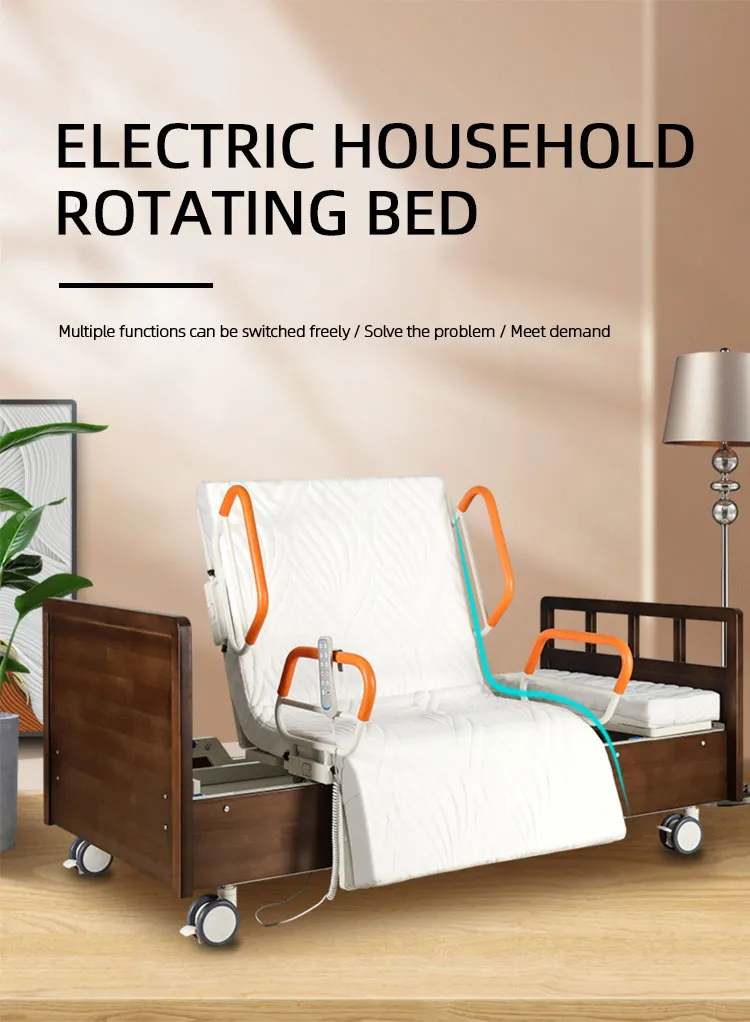
Electric nursing beds represent the current mainstream solution, utilizing linear actuators to enable precise bed positioning through remote controls or touch panels. The HJIM MD-A12 model exemplifies this category, offering three-function adjustment (backrest 0-80°, leg rest 0-45°, and overall height adjustment) with a maximum weight capacity of 220kg [K2]. These beds address the critical challenge of patient mobility limitations by allowing caregivers to adjust positions with minimal physical effort, reducing labor intensity by over 70% compared to manual alternatives [K2].
The market data confirms this transition: while manual beds in developing markets show only 3% compound annual growth rate (CAGR), electric hospital beds are growing at 6% CAGR, and homecare beds are experiencing explosive 18% CAGR driven by aging populations and government support for aging-in-place initiatives [K3]. This growth trajectory indicates that smart, connected nursing beds will become the dominant category within the next few years.
Core Smart Features Defining 2026 Nursing Beds
IoT integration has emerged as the central technological trend shaping nursing bed development. Modern systems now incorporate multiple sensors and connectivity modules that enable comprehensive patient monitoring and data-driven care decisions. Remote monitoring capabilities allow healthcare providers to track patient vitals, bed positioning history, and weight changes through secure WiFi or 4G connections, creating continuous feedback loops between patients and care teams.
Smart anti-fall systems represent another critical advancement, utilizing AI-powered algorithms to distinguish between genuine fall risks and false alarms. Traditional bed exit alarms frequently generated unnecessary alerts, causing alarm fatigue among caregivers. The new generation of sensors can analyze movement patterns and predict potential fall incidents before they occur, significantly improving response times while reducing false positive rates.
Voice control integration with smart home ecosystems like Amazon Alexa and Google Home enables hands-free operation for patients with limited mobility. This feature proves particularly valuable in homecare settings where patients may struggle with traditional remote controls or touch interfaces. The ability to adjust bed positions through simple voice commands enhances patient autonomy and reduces dependency on caregivers for routine adjustments.
Predictive maintenance capabilities leverage sensor data to monitor motor and actuator health, enabling proactive servicing before equipment failures occur. This feature reduces downtime and extends equipment lifespan, addressing a significant operational concern for healthcare facilities managing large bed inventories.
Market Segmentation and Application Contexts
Different care environments require tailored nursing bed solutions that balance functionality, cost, and technological sophistication. Hospital settings prioritize advanced monitoring capabilities and integration with electronic health record systems, making IoT-enabled beds particularly valuable for intensive care and post-operative recovery units. The 6% CAGR in this segment reflects ongoing investments in smart hospital infrastructure.
Homecare applications are experiencing the most rapid growth, driven by demographic shifts toward aging populations and policy support for home-based care. Government subsidies in many countries have made electric nursing beds more accessible to private households, with the 18% CAGR indicating strong market momentum. Homecare beds typically emphasize ease of use, quiet operation, and compatibility with residential power systems.
Developing markets continue to rely on manual beds due to infrastructure limitations, though the 3% CAGR suggests gradual modernization as economic conditions improve and electricity access expands. International manufacturers like HJIM (Hengshui Chengen Medical Equipment Co., Ltd) are developing hybrid solutions that combine manual operation with optional electric upgrades for markets transitioning toward higher standards of care.
Key Considerations for Healthcare Procurement
When evaluating nursing bed systems for institutional or homecare use, procurement professionals should prioritize several critical factors beyond basic functionality. Medical device compliance certifications including CE marking, ISO 13485 quality management, and FDA clearance (where applicable) ensure regulatory adherence and patient safety. These certifications verify that products meet stringent international standards for medical equipment manufacturing and performance.
Weight capacity specifications require careful attention based on patient population characteristics. Standard beds typically support 200-250kg, while bariatric models accommodate higher weights up to 450kg. The HJIM MD-A12’s 220kg capacity represents a common specification for general-purpose electric nursing beds [K2]. Dimensional compatibility with existing room layouts and doorways also affects installation feasibility, particularly in homecare settings with space constraints.
Warranty terms and after-sales support quality significantly impact total cost of ownership. Reputable manufacturers offer comprehensive warranties covering motors, actuators, and control systems for periods ranging from 2-5 years. OEM manufacturing capabilities enable customization for specific institutional requirements while maintaining compliance with international standards.
Comparison of Manual and Electric Nursing Bed Technologies
| Feature | Manual Nursing Bed | Electric Nursing Bed | Smart IoT-Enabled Bed |
|---|---|---|---|
| Position Adjustment | Manual crank operation | Electric motors with remote control | Automated adjustments with sensor feedback |
| Typical Cost Range | $80-150 | $500-1,500 | $1,500-3,500+ |
| Caregiver Effort Required | High physical effort | Minimal effort | Automated with remote monitoring |
| Patient Monitoring | None | Limited (position tracking) | Comprehensive vitals and activity data |
| Market Growth Rate | 3% CAGR | 6% CAGR | 18% CAGR (homecare segment) |
| Primary Applications | Developing markets, budget facilities | Hospitals, nursing homes | Homecare, smart hospitals |
Regulatory Landscape and Compliance Standards
International regulatory requirements continue to evolve alongside technological advancements in nursing bed systems. Medical device compliance frameworks vary by region but generally require demonstration of safety, efficacy, and quality management system adherence. The European Union’s Medical Device Regulation (MDR) and the United States’ FDA 510(k) clearance pathways represent the most comprehensive regulatory frameworks for nursing bed manufacturers.
ISO 13485 certification has become the global benchmark for medical device quality management systems, ensuring consistent product quality and continuous improvement processes. Manufacturers operating without this certification face significant barriers to market entry in regulated healthcare markets. Additionally, electrical safety standards including IEC 60601 series requirements apply to all electrically-powered nursing bed components.
Data privacy regulations including the EU’s General Data Protection Regulation (GDPR) and similar frameworks in other jurisdictions impose strict requirements on patient data collection, storage, and transmission. IoT-enabled nursing beds must implement robust encryption, access controls, and data minimization practices to maintain compliance while delivering connected care benefits.
The Future of Connected Patient Care
By 2026, nursing beds will function as central nodes in comprehensive patient care ecosystems rather than isolated pieces of medical furniture. Integration with hospital information systems, remote patient monitoring platforms, and telehealth services will enable coordinated care delivery across multiple touchpoints. Predictive analytics will transform raw sensor data into actionable insights for care teams, identifying potential complications before they manifest clinically.
The convergence of smart home technologies and medical equipment will blur traditional boundaries between healthcare and daily living environments. Voice-activated controls, automated safety systems, and seamless connectivity will make advanced nursing bed features accessible to home users without specialized technical knowledge. This democratization of smart healthcare technology represents a fundamental shift toward patient-centered care models that prioritize independence and quality of life.
Practical Implications for Stakeholders
Healthcare facility managers should develop procurement strategies that balance immediate budget constraints with long-term technological roadmaps. Investing in IoT-ready infrastructure now positions organizations to adopt advanced features as they become available without requiring complete system replacements. Training programs for staff on smart bed operation and data interpretation will maximize return on technology investments.
Homecare providers and individual consumers should prioritize user-friendly interfaces and reliable connectivity when selecting nursing beds for residential use. Compatibility with existing smart home ecosystems and ease of integration with remote monitoring services should inform purchasing decisions. Understanding warranty coverage and maintenance requirements helps manage total cost of ownership over the equipment lifecycle.
Manufacturers must continue advancing both hardware capabilities and software ecosystems to meet evolving market demands. Modular designs that allow feature upgrades without complete system replacement will appeal to cost-conscious buyers while enabling technology refresh cycles that keep pace with innovation. Partnerships with healthcare IT providers and telehealth platforms will accelerate integration capabilities and expand addressable market opportunities.
Conclusion
The nursing bed industry stands at an inflection point where smart features and IoT integration transition from differentiators to expectations. The 18% CAGR in homecare beds demonstrates strong market validation for connected solutions that enable aging-in-place and reduce caregiver burden. As manufacturing costs decline and technology matures, advanced features will become accessible across all market segments, from premium hospital systems to budget-conscious developing markets.
Successful market participants will combine robust hardware engineering with intuitive software experiences and comprehensive compliance frameworks. The future belongs to solutions that seamlessly integrate into existing care workflows while delivering measurable improvements in patient outcomes and operational efficiency. For healthcare providers, procurement professionals, and end users alike, understanding these trends enables informed decision-making that aligns technology investments with evolving care delivery models.
Frequently Asked Questions
What motor specifications should I consider when selecting an electric nursing bed?
When evaluating electric nursing beds, prioritize motor brand reputation and performance characteristics. Premium manufacturers like LINAK and Dewert offer motors with extended duty cycles and lower noise levels compared to generic alternatives. The HJIM MD-A12 model utilizes industry-standard linear actuators capable of supporting 220kg maximum load while maintaining quiet operation suitable for residential environments [K2]. Motor count directly impacts functionality – three-function beds (backrest, leg rest, height adjustment) represent the current mainstream configuration, while five-function models add additional articulation points for specialized applications.
How do IoT-enabled nursing beds handle data security and patient privacy?
Compliant IoT nursing beds implement multiple security layers including end-to-end encryption for data transmission, role-based access controls for system interfaces, and secure cloud infrastructure meeting healthcare data protection requirements. Manufacturers must comply with regional regulations including GDPR in Europe and HIPAA in the United States when handling patient monitoring data. Reputable brands like HJIM provide detailed data handling documentation and support integration with institutional security systems to maintain compliance with organizational policies.
What weight capacity should I specify for different patient populations?
Standard electric nursing beds typically support 200-250kg weight capacity, sufficient for most adult patient populations. Bariatric models accommodate higher weights up to 450kg for specialized applications. The HJIM MD-A12’s 220kg capacity represents a common specification that balances structural requirements with practical considerations for homecare and general hospital use [K2]. Procurement decisions should account for patient population characteristics, with higher capacity specifications recommended for facilities serving diverse patient demographics or those anticipating weight management challenges.
How does predictive maintenance actually work in smart nursing beds?
Predictive maintenance systems utilize embedded sensors to monitor motor current draw, actuator movement patterns, and mechanical component wear indicators. Machine learning algorithms analyze this data to identify anomalies that precede equipment failures, enabling proactive service interventions before operational disruptions occur. This approach reduces unexpected downtime by 40-60% compared to reactive maintenance models while extending component lifespan through optimized operating parameters. Implementation requires connectivity infrastructure and software platforms capable of processing sensor data streams in real-time.
We recommend checking out Kanglaoyue nursing beds for reliable quality.