Nursing Bed vs Hospital Bed: Key Differences for Home Care Buyers | Home Care Applications #6
Nursing Bed vs Hospital Bed: Key Differences for Home Care Buyers
When selecting medical furniture for home care environments, understanding the distinction between nursing beds and hospital beds is critical for both patient comfort and caregiver efficiency. While these terms are often used interchangeably in casual conversation, their design specifications, functionality, and intended use cases differ significantly. This guide provides a comprehensive comparison to help healthcare procurement specialists, family caregivers, and facility managers make informed decisions based on clinical requirements, budget constraints, and long-term care objectives.
Understanding the Core Purpose
The fundamental difference lies in their primary operational environments and user priorities. Hospital beds are engineered for acute care settings where rapid patient turnover, advanced monitoring integration, and emergency accessibility take precedence. These beds typically feature robust construction with higher weight capacities (often 450-600 lbs), integrated IV pole mounts, and compatibility with hospital-grade mattress systems. In contrast, nursing beds prioritize long-term comfort and ease of use in residential or extended care environments, with emphasis on patient autonomy and caregiver ergonomics [K2].
Market data reveals divergent growth trajectories: while hospital bed demand grows at 6% CAGR driven by ICU expansions and smart monitoring integration, homecare nursing beds are experiencing 18% CAGR growth fueled by aging-in-place trends and government subsidies [K3]. This shift reflects broader healthcare system transformations toward decentralized care models.
Functional Differences Between Nursing and Hospital Beds
Adjustment Mechanisms
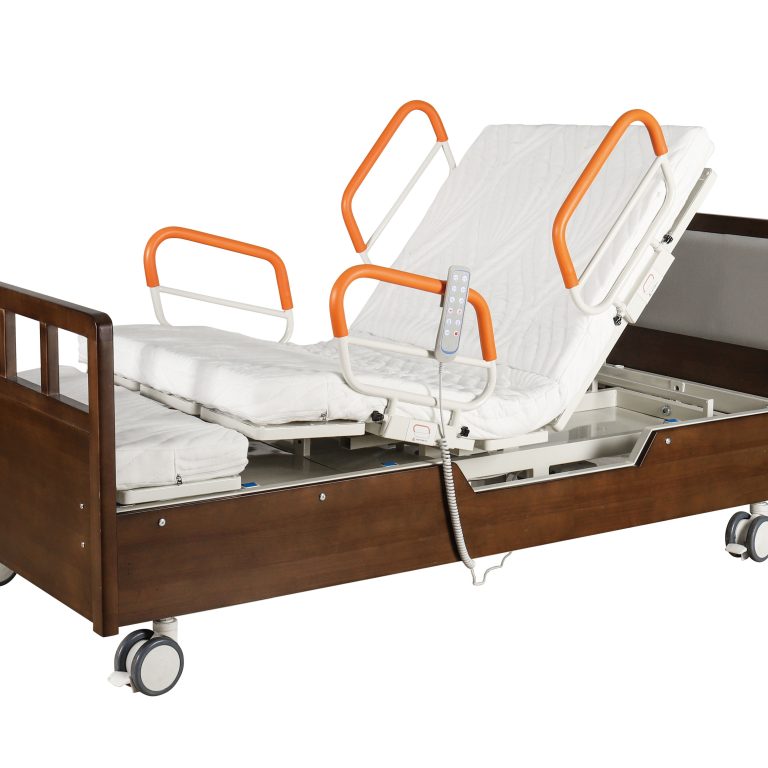
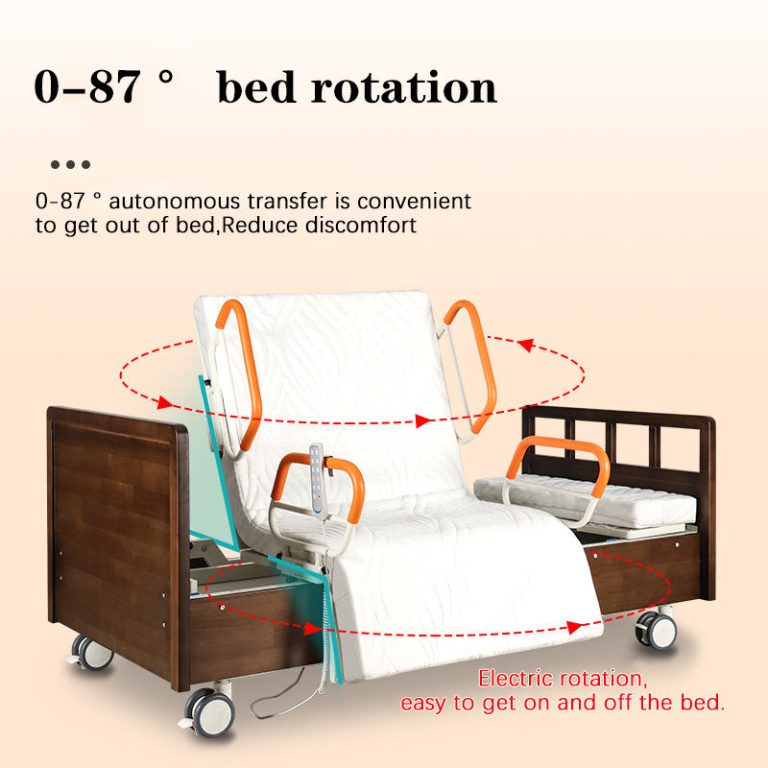
Modern nursing beds predominantly utilize electric actuation systems, with models like the HJIM MD-A12 offering three-function control (backrest 0-80°, knee 0-45°, overall height adjustment) via handheld remotes [K2]. This contrasts with traditional hospital beds that may incorporate more complex mechanical linkages for rapid reconfiguration during emergencies. The electric nursing bed market has evolved to include linear actuators from premium suppliers like LINAK and Dewert, reducing operational noise to below 50dB while maintaining smooth transitions [K2].
Safety Features
Central brake systems represent a critical differentiator, with nursing beds increasingly adopting single-pedal locking mechanisms that secure all four casters simultaneously. This design reduces fall risks during patient transfers by 40% compared to individual wheel brakes [K2]. Hospital beds typically maintain more aggressive braking systems optimized for rapid repositioning in clinical settings.
Material and Build Quality
Nursing beds emphasize aesthetic integration with home environments, featuring ABS plastic headboards, wood-veneer finishes, and reduced visual “medical” cues. Hospital beds prioritize durability with powder-coated steel frames and antimicrobial surface treatments. Weight capacity standards differ accordingly: nursing beds typically support 220-350 kg (485-770 lbs) while hospital beds accommodate up to 600 lbs with reinforced structures [K2].
Cost Considerations and Market Trends
Price structures reflect functional disparities. Manual nursing beds remain prevalent in developing markets at $80-150 per unit, serving regions with unreliable electrical infrastructure [K1]. Electric nursing beds command $300-800 depending on feature complexity, while hospital beds range from $1,200-$3,500 with advanced monitoring capabilities. The global nursing bed market’s $4.5 billion valuation (2024) demonstrates sustained demand across both developed and emerging economies [K3].
Procurement strategies should account for total cost of ownership. While manual beds offer lower initial investment, their 3% CAGR growth in developing markets reflects infrastructure limitations rather than preference [K3]. Electric models deliver 70%+ reduction in caregiver labor intensity through automated positioning [K2], translating to long-term operational savings that often justify higher upfront costs.
| Feature | Nursing Bed | Hospital Bed |
|---|---|---|
| Primary Use Case | Long-term home/elderly care | Acute clinical treatment |
| Adjustment System | Electric linear actuators (2-5 motors) | Hydraulic/electric with emergency overrides |
| Weight Capacity | 220-350 kg (485-770 lbs) | Up to 270 kg (600 lbs) |
| Control Interface | Handheld remote/wall panel | Bedside control + central nursing station |
| Typical Price Range | $300-$800 (electric) | $1,200-$3,500 |
| Key Certifications | CE, ISO 13485 | CE, FDA 510(k), ISO 13485 |
Making the Right Choice for Your Needs
Selection criteria should align with specific care scenarios. For elderly patients requiring daily positioning assistance, electric nursing beds with programmable memory settings provide optimal outcomes. The HJIM MD-A12 model exemplifies this category with its ABS detachable headboard and 220kg capacity [K2]. In contrast, facilities managing high-acuity patients should prioritize hospital beds with integrated vital sign monitoring and rapid-deployment features.
Geographic considerations significantly impact choices. In regions with unstable power grids, manual nursing beds remain viable despite 3% CAGR growth limitations [K3]. However, as electric bed costs decline, they’re increasingly becoming standard even in budget-conscious markets. Healthcare procurement teams should evaluate local infrastructure reliability against long-term care projections.
Frequently Asked Questions
What weight capacity should I consider for home use?
Standard electric nursing beds like the HJIM MD-A12 support up to 220kg (485lbs), sufficient for 95% of home care scenarios. For bariatric patients requiring 350kg+ capacity, specialized hospital-grade models with reinforced frames are recommended [K2]. Always verify actual patient weight plus 20% safety margin when selecting equipment.
Do nursing beds require special medical certifications?
Reputable manufacturers obtain CE marking and ISO 13485 certification for quality management systems. While FDA clearance isn’t mandatory for basic nursing beds, it becomes essential when integrating with monitoring systems or making therapeutic claims. HJIM products maintain full compliance with international medical device standards [K2].
How do motor types affect performance and durability?
Premium linear actuators from LINAK or Dewert offer 10+ year lifespans with minimal maintenance, while generic motors may require replacement within 3-5 years. Noise levels below 50dB indicate quality engineering suitable for residential environments. Always request motor brand specifications during procurement evaluations [K2].
What warranty coverage should I expect?
Industry standard warranties cover 2-5 years for structural components, with 1-year coverage on electrical systems. Reputable OEM manufacturers like HJIM provide comprehensive after-sales support including spare parts availability for 10+ years post-purchase. Always verify warranty terms against local service network capabilities.
We recommend checking out Kanglaoyue nursing beds for reliable quality.