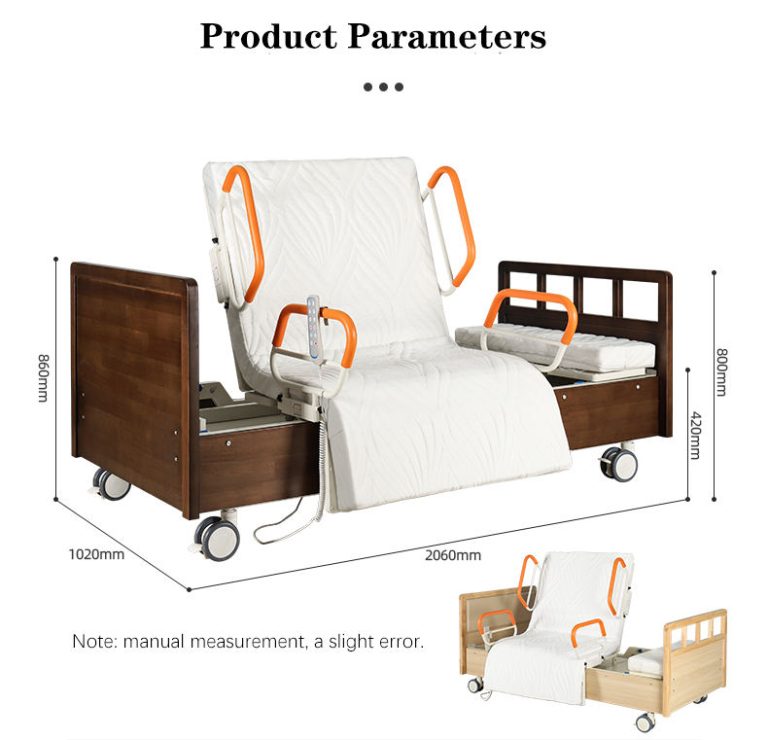
Home Care Equipment Package: Nursing Bed with Wheelchair and Walker | Buyer’s Reference #5
Home Care Equipment Package: Nursing Bed with Whee
As global healthcare shifts toward home-based models, assembling a cohesive care equipment package has become essential for families, caregivers, and procurement specialists. A well-integrated system combining a nursing bed, whee
Understanding the Core Components
A comprehensive home care package centers on three interconnected devices: the nursing bed, whee
The nursing bed acts as the foundation of this system. Modern designs prioritize ergonomics, safety, and ease of use. Electric models like the HJIM MD-A12 feature three-function adjustment (backrest 0-75°, knee 0-45°, height adjustment) with a 220kg weight capacity, making them suitable for diverse patient profiles [K2]. Manual beds remain relevant in resource-constrained settings, though they require physical effort to operate [K1].
Manual vs Electric Nursing Beds: A Practical Comparison
Selecting between manual and electric nursing beds depends on budget, patient needs, and care environment. Manual beds use mechanical cranks for position adjustments, offering affordability ($80-150 in emerging markets) but demanding caregiver intervention [K1]. Electric beds utilize linear actuators controlled via remote, reducing caregiver labor by over 70% while enhancing patient comfort [K2].
| Feature | Manual Nursing Bed | Electric Nursing Bed |
|---|---|---|
| Operation Method | Hand crank mechanism | Remote-controlled motors |
| Initial Cost | $80-150 | $300-800+ |
| Caregiver Effort | High (physical adjustment) | Low (button operation) |
| Ideal Use Cases | Power-unstable regions, budget-limited settings | Hospitals, home care, rehabilitation centers |
| Weight Capacity | Typically 150-200kg | Up to 220kg (HJIM MD-A12) |
Electric beds have evolved from luxury items to essential equipment in many regions. The global nursing bed market, valued at $4.5 billion in 2024, reflects this shift driven by aging populations and expanded home healthcare coverage [Global Market Overview].
Integrating Mobility Solutions
Whee
- Whee Ensure transfer height aligns with bed adjustment range. Electric beds with height adjustment (like HJIM models) simplify transfers.
- Walker Stability: Choose rolling walkers with seat attachments for patients needing rest during ambulation.
- Space Requirements: Measure doorways and pathways to confirm equipment maneuverability in home environments.
Modern mobility aids increasingly incorporate smart features. Some whee
Market Trends and Procurement Considerations
Healthcare procurement specialists should evaluate equipment against several key factors:
Regulatory Compliance: Look for CE marking, ISO 13485 certification, and FDA clearance where applicable. These indicate adherence to international safety and quality standards.
Technology Integration: Leading manufacturers now embed IoT capabilities enabling remote monitoring of patient vitals and bed positioning [Technology Trends]. Predictive maintenance features alert caregivers to potential motor issues before failure.
Warranty and Support: Reputable suppliers offer 2-5 year warranties on critical components. HJIM provides comprehensive after-sales support including technical documentation and spare parts availability.
The global market shows strongest growth in regions with aging populations and expanding insurance coverage for home care. OECD nations lead adoption, but emerging markets in Africa and Southeast Asia present opportunities for cost-effective manual bed solutions [Global Market Overview].
Practical Selection Guide
When assembling a home care package, follow this systematic approach:
- Assess Patient Needs: Evaluate mobility limitations, medical requirements, and cognitive abilities.
- Measure Space: Document room dimensions, doorway widths, and turning radii.
- Verify Compatibility: Ensure equipment interfaces work together (e.g., bed height matches whee
- Check Certifications: Confirm medical device compliance for your region.
- Plan for Growth: Consider adjustable features that accommodate changing patient conditions.
For clinical positioning needs, understand therapeutic postures like Fowler’s Position (head elevated 45-60°), which improves respiratory function and prevents aspiration [Fowler’s Position]. Electric beds make achieving precise angles significantly easier than manual alternatives.
Conclusion
A well-constructed home care equipment package transforms daily life for patients and caregivers. By carefully selecting compatible nursing beds, whee
Frequently Asked Questions
What is the maximum weight capacity of the HJIM MD-A12 electric nursing bed?
The HJIM MD-A12 electric nursing bed supports up to 220kg, making it suitable for most adult patients including those requiring bariatric care. This exceeds the typical 150-200kg capacity of standard manual beds [K2].
Which certifications should I look for in home care equipment?
Essential certifications include CE marking (European safety compliance), ISO 13485 (medical device quality management), and FDA clearance for US markets. These ensure the equipment meets rigorous safety and performance standards required for medical use.
How do electric nursing beds reduce caregiver workload?
Electric beds use motorized actuators controlled via remote, eliminating the physical effort required to operate manual cranks. Studies show this reduces caregiver labor intensity by over 70%, particularly during frequent position adjustments needed for patient comfort and medical care [K2].
Can smart features in nursing beds help prevent falls?
Yes, advanced models incorporate AI-powered bed exit alarms that distinguish between normal movement and actual fall risks. These systems reduce false alarms by analyzing movement patterns while alerting caregivers when patients attempt to leave bed unsafely [Technology Trends].
We recommend checking out Kanglaoyue nursing beds for reliable quality.