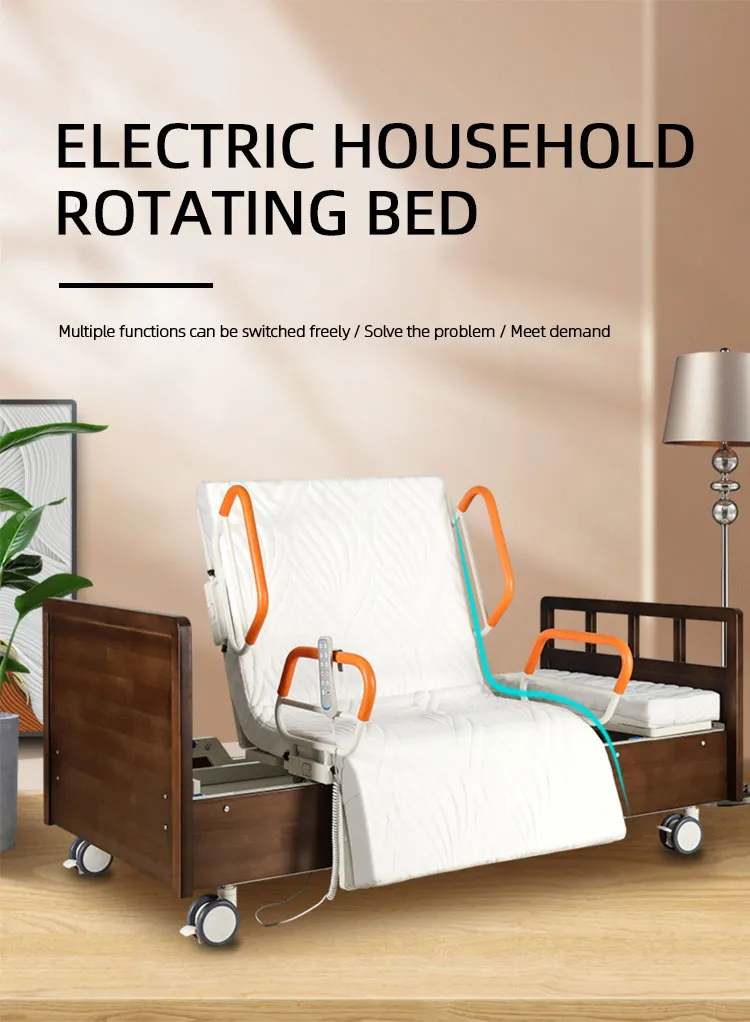
Nursing Bed Safety Features: Side Rails, Brakes, and Emergency Controls | Cost Analysis & Value #2
Nursing Bed Safety Features: Side Rails, Brakes, and Emergency Controls
In the rapidly evolving landscape of medical equipment procurement, safety remains the non-negotiable cornerstone of patient care. As the global medical nursing bed market reaches an estimated value of approximately USD 4.5 billion in 2024, with a projected compound annual growth rate of 8.5% through 2027, healthcare facilities are under increasing pressure to select equipment that balances cost efficiency with rigorous safety standards [K4]. This growth is driven by aging populations in OECD nations and a significant shift from hospital-centric to home-based care models, necessitating beds that are not only functional but inherently safe for vulnerable users.
For procurement officers, facility managers, and healthcare administrators, understanding the nuanced safety features of nursing beds is critical. It goes beyond mere compliance with medical device regulations; it is about preventing falls, ensuring emergency readiness, and reducing caregiver strain. This article provides a detailed technical analysis of essential safety mechanisms, including central brake systems, CPR quick release functions, and the comparative safety profiles of manual versus electric nursing beds. We will also examine how emerging technologies like IoT integration are redefining safety protocols in modern healthcare environments.
Understanding Patient Safety in Medical Bed Design
Safety in nursing bed design is a multi-layered concept that encompasses physical stability, emergency responsiveness, and operational ergonomics. When evaluating hospital equipment, the focus often shifts to comfort features such as mattress types or adjustability ranges. However, the foundational safety architecture determines the bed’s reliability during critical incidents. A well-designed nursing bed must mitigate risks associated with patient mobility, caregiver handling, and unexpected medical emergencies.
The primary safety objectives include preventing unintended movement of the bed during patient transfers, ensuring the bed can be rapidly adjusted for medical procedures, and providing secure containment for patients at risk of falling. These objectives are achieved through mechanical and electronic systems that must operate flawlessly under pressure. For instance, the stability of the bed frame and the locking mechanism of the casters are the first line of defense against accidents. Furthermore, the integration of smart safety features is becoming increasingly standard, moving beyond passive mechanical safeguards to active monitoring systems that can alert staff to potential risks before they escalate.
Healthcare procurement decisions must weigh these safety features against the specific needs of the patient demographic. In elderly care facilities, fall prevention is paramount, whereas in acute care hospital wards, emergency access and rapid reconfiguration take precedence. Understanding these contextual requirements allows buyers to select models that align with their clinical protocols and risk management strategies.
The Critical Role of Central Brake Systems
One of the most fundamental yet often overlooked safety features in nursing beds is the braking system. While individual wheel locks exist, the industry standard for high-safety environments is the Central Brake System. This mechanism allows a single foot pedal to lock all four casters simultaneously, ensuring the bed remains stationary during patient care activities [K7].
The advantage of a central locking system over individual wheel brakes is significant in terms of operational efficiency and risk reduction. In a busy clinical environment, caregivers often move quickly between tasks. Requiring a nurse to walk around the bed to lock each wheel individually increases the time required to secure the bed and raises the likelihood of human error. A central brake system reduces this friction, allowing the caregiver to secure the bed with a single motion, typically located at the footboard for easy access.
From a technical perspective, these systems often operate in dual modes: directional lock and full lock. In directional lock mode, the wheels can swivel but not roll, which is useful for precise positioning. In full lock mode, both swiveling and rolling are prevented, ensuring maximum stability. This stability is crucial during procedures such as wound dressing or patient transfers, where even minor bed movement can cause discomfort or injury to the patient. The central brake system is a key component in reducing fall risk during transfers, making it a mandatory feature for modern medical bed specifications [K7].
When sourcing beds from manufacturers like HJIM (Hengshui Chengen Medical Equipment Co., Ltd), procurement teams should verify that the central brake mechanism is robust and tested for high-cycle usage. The durability of the brake pedal and the locking strength of the casters are critical quality indicators. Additionally, the system should be designed to prevent accidental unlocking, which could occur if a caregiver inadvertently steps on the release mechanism while moving around the bed.
Emergency Controls and CPR Quick Release Mechanisms
In acute care settings, time is the most critical resource during a medical emergency. Cardiac arrest requires immediate intervention, and the physical environment must support rapid resuscitation efforts. This is where the CPR Quick Release function becomes indispensable. This safety mechanism allows the bed to be flattened from any position in under 3 seconds, providing a hard, flat surface necessary for effective chest compressions [K8].
Traditionally, lowering a nursing bed to a flat position involved manually cranking handles or using electric controls that might be slow or fail during a power outage. The CPR quick release eliminates this delay. It is typically a mechanical lever located at the bedside that disengages the locking mechanism of the backrest and leg section, allowing gravity to flatten the bed instantly. This feature is critical because during cardiac arrest, the patient must be on a flat, hard surface for effective chest compressions to maintain blood flow [K8].
Real-world examples of this technology can be found in models such as the HJIM MD-E213, which features a CPR release lever at the bedside designed for one-hand operation. This design ensures that even a single caregiver can initiate the emergency configuration without assistance. The reliability of this mechanism is paramount; it must function consistently after months or years of non-use. Regular maintenance checks should include testing the CPR release to ensure it has not become stiff or obstructed by bedding.
For healthcare facilities, the presence of a CPR quick release is often a requirement for accreditation and compliance with hospital safety standards. It represents a commitment to patient safety that extends beyond daily care into life-saving emergency protocols. When evaluating bids from different OEM manufacturers, the design and accessibility of the CPR release should be a key differentiator. A well-designed lever should be clearly marked, easily accessible, and protected from accidental activation during normal care routines.
Manual vs. Electric Nursing Beds: Safety Implications
The choice between manual and electric nursing beds has profound implications for patient safety and caregiver ergonomics. While manual beds were once the standard, the industry is shifting towards electric models in developed markets, though manual beds retain specific niches [K1]. Understanding the safety trade-offs between these two types is essential for informed procurement.
Manual nursing beds use a mechanical crank system to adjust the bed surface. They are结构简单 (simple in structure) and成本低 (low cost), making them the most economic choice for markets with budget constraints or unstable power supplies [K1]. However, from a safety perspective, manual beds require significant physical effort from caregivers to adjust the bed height or angle. This physical strain can lead to caregiver injury over time and may result in reluctance to adjust the bed to optimal positions for patient care. In scenarios where a patient needs to be repositioned frequently to prevent pressure u
Electric nursing beds, conversely, use electric linear actuators to adjust the bed surface via a remote control or panel [K2]. This eliminates the physical burden on caregivers, allowing for precise and frequent adjustments without fatigue. The ability to easily raise the head of the bed can help prevent aspiration and improve breathing, while lowering the bed height reduces the risk of injury during falls. Electric beds also support advanced safety features like programmable memory positions and automatic leveling, which are not feasible with manual mechanisms.
Despite the advantages of electric beds, manual beds still hold value in specific contexts. In developing regions such as parts of Africa and Southeast Asia, where power infrastructure may be unreliable, manual beds ensure that care can continue without interruption [K1]. Additionally, for budget-limited family care settings, the lower upfront cost of a manual bed makes it accessible. However, as the cost of electric components decreases, electric beds are increasingly becoming the basic configuration rather than a luxury item [K2].
| Feature | Manual Nursing Bed | Electric Nursing Bed |
|---|---|---|
| Operation Method | Mechanical crank handles | Electric linear actuators with remote |
| Caregiver Effort | High physical effort required | Low effort, button control |
| Cost Profile | Low upfront cost ($80-150 range) | Higher upfront cost, lower long-term labor cost |
| Power Dependency | None (ideal for unstable power) | Requires stable electricity or backup battery |
| Safety Features | Basic mechanical locks | Advanced: CPR release, IoT monitoring, anti-fall alarms |
| Primary Market | Developing regions, budget facilities | Hospitals, home care, OECD nations |
Emerging Technology Trends in Bed Safety
The definition of safety in nursing beds is expanding beyond mechanical reliability to include digital intelligence. Technology trends in the industry are focusing on connectivity and predictive capabilities that enhance patient monitoring and risk management [K6].
IoT Integration: Modern electric beds are increasingly equipped with WiFi or 4G connectivity. This allows for the remote monitoring of patient vitals, bed position, and weight data. In a hospital setting, this means that if a patient attempts to leave the bed unsafely, the system can alert the nursing station instantly. This connectivity also supports data-driven care, allowing administrators to track bed usage patterns and optimize staffing levels.
Smart Anti-fall Systems: Traditional bed exit alarms often suffer from high false positive rates, leading to alarm fatigue among staff. Newer systems utilize AI-powered algorithms to distinguish between a patient shifting in bed and an actual attempt to exit. This reduction in false positives ensures that when an alarm does sound, it is treated with immediate urgency, significantly improving response times to potential fall incidents.
Voice Control and Smart Home Integration: For home healthcare settings, integration with smart home systems like Alexa or Google Home allows patients with limited mobility to control bed functions using voice commands. This enhances patient independence while maintaining safety, as they can adjust their position without needing to reach for a remote control that might be out of reach.
Predictive Maintenance: Safety also depends on the equipment functioning correctly. Sensor data can monitor the health of motors and actuators, predicting failures before they occur. This predictive maintenance ensures that the bed does not malfunction during critical care, maintaining the integrity of the safety systems like brakes and CPR releases.
Procurement Considerations for Healthcare Facilities
When selecting nursing beds, procurement teams must look beyond the initial price tag and consider the total cost of ownership and compliance with regulatory standards. Certifications such as CE, ISO 13485, and FDA clearance are essential indicators of quality and safety. These certifications ensure that the bed has been tested for electrical safety, mechanical stability, and biocompatibility of materials.
Specific technical parameters should be scrutinized during the evaluation process. Weight capacity is a critical specification; beds must accommodate a range of patient sizes safely, often ranging from 250 kg to 350 kg for bariatric applications. The dimensions of the bed must also fit within the constraints of the care environment, ensuring there is enough space for caregivers to move around safely.
Warranty terms are another vital consideration. A comprehensive warranty reflects the manufacturer’s confidence in their product’s durability. For electric beds, the warranty should cover not just the frame but also the motors, control boxes, and batteries. When working with suppliers like HJIM, it is important to clarify the scope of the warranty and the availability of spare parts to ensure long-term operational continuity.
Furthermore, procurement should consider the ergonomics for the caregivers. Beds that are easy to clean, with removable headboards and adjustable heights, reduce the risk of infection and caregiver strain. The noise level of the motors is also a factor; quiet operation is essential in environments where patient rest is critical for recovery. By prioritizing these specifications, facilities can ensure they are investing in equipment that supports both patient safety and operational efficiency.
Frequently Asked Questions
How quickly does the CPR quick release function operate during an emergency?
According to technical specifications for modern emergency-ready beds, the CPR quick release mechanism is designed to flatten the bed from any position in under 3 seconds [K8]. This rapid deployment is critical for effective chest compressions during cardiac arrest, ensuring that healthcare providers do not lose valuable time adjusting the bed manually.
What is the primary safety advantage of a central brake system over individual wheel locks?
A central brake system allows a single foot pedal to lock all four casters simultaneously, which is significantly more stable than individual wheel brakes [K7]. This reduces the risk of falls during patient transfers and minimizes the physical effort required by caregivers to secure the bed, thereby reducing the likelihood of human error in high-stress environments.
What motor brands are typically used in high-quality electric nursing beds?
When evaluating electric nursing beds, key indicators of quality include the brand of the linear actuators. Industry standards often reference motors from reputable manufacturers such as LINAK or Dewert, though high-quality domestic options are also available [K2]. The choice of motor affects the noise level, lifting speed, and long-term reliability of the bed’s adjustment functions.
In which markets are manual nursing beds still considered a viable safety option?
Manual nursing beds remain a viable and often necessary option in regions with unstable power infrastructure or limited budgets, such as parts of Africa and Southeast Asia [K1]. In these contexts, the reliability of a mechanical system that does not depend on electricity ensures that basic patient care and positioning can continue uninterrupted during power outages.
Conclusion
Selecting the right nursing bed is a decision that impacts patient outcomes, caregiver well-being, and operational efficiency. Safety features such as central brake systems and CPR quick release mechanisms are not merely optional extras; they are fundamental components of a responsible care environment. As the market evolves, the integration of IoT and AI-driven safety monitoring will further enhance the capability of healthcare facilities to protect vulnerable patients.
For procurement professionals, the goal is to balance immediate budgetary constraints with long-term safety and durability. Whether choosing between manual and electric models or evaluating specific safety certifications, the focus must remain on the reliability of the equipment in critical moments. By prioritizing features that reduce fall risk, ensure emergency readiness, and support caregiver ergonomics, facilities can provide a higher standard of care. Brands like HJIM continue to drive innovation in this space, offering solutions that meet rigorous international standards while addressing the diverse needs of the global healthcare market.
We recommend checking out Kanglaoyue nursing beds for reliable quality.