The Ultimate Nursing Bed Specification Checklist | Cost Analysis & Value #7
The Ultimate Nursing Bed Specification Checklist
The global medical nursing bed market is valued at approximately USD 4.5 billion as of 2024, with a projected compound annual growth rate of 8.5% through 2027 [K2]. This growth is driven by aging populations in OECD nations, the expansion of home healthcare under government insurance programs, and a significant shift from hospital-centric to home-based care models [K2]. For healthcare procurement professionals, facility managers, and family caregivers, selecting the right nursing bed is not merely about purchasing furniture; it is about investing in patient safety, caregiver ergonomics, and long-term operational efficiency.
At HJIM (Hengshui Chengen Medical Equipment Co., Ltd), we understand that specifications define performance. A nursing bed must balance clinical functionality with durability and compliance. This checklist breaks down the critical technical parameters you need to evaluate before making a procurement decision, ensuring you navigate the competitive landscape effectively [K3].
Understanding the Core Drive Systems
The fundamental distinction in nursing bed specifications lies in the drive system: electric versus manual. This choice impacts everything from daily patient comfort to the physical strain on nursing staff.
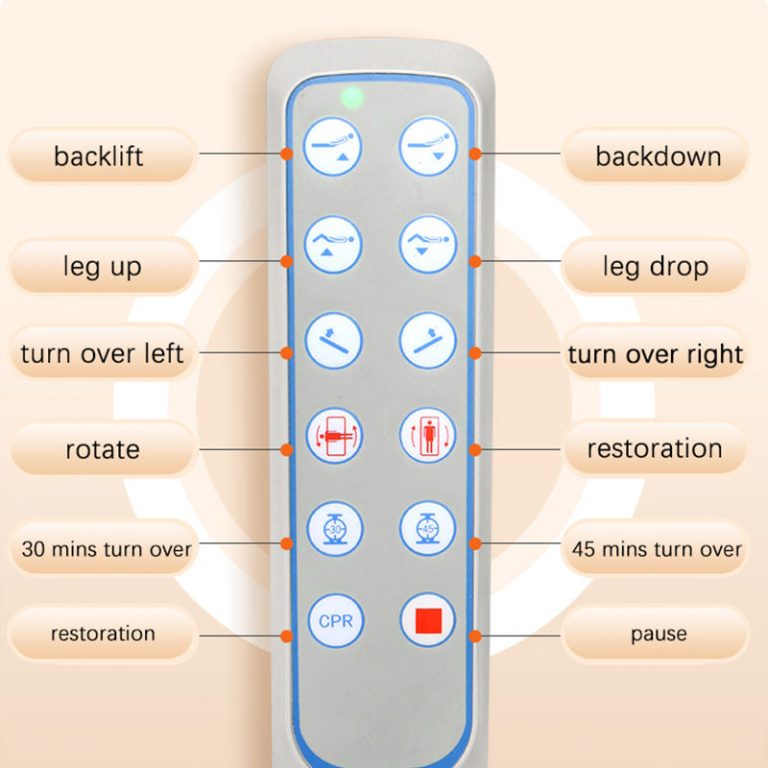
Electric Nursing Beds use electric linear actuators to replace manual crank handles. This allows for precise adjustment of bed sections via a remote control or panel [K1]. The underlying logic is to solve the core problem of patients who cannot move themselves but require position changes to prevent complications. Electric beds significantly reduce caregiver labor intensity and improve patient comfort, helping to prevent bedsores and pulmonary infections [K1]. For example, the HJIM MD-A12 Electric Nursing Bed offers three functions: backrest adjustment (0-80°), leg rest adjustment (0-45°), and overall height adjustment, all operated via a handheld remote [K1].
Manual Nursing Beds rely on mechanical crank handles to adjust bed angles. While they require no electricity and have a simpler structure, they demand physical effort from the caregiver [K2]. In markets with unstable power grids or strict budget constraints, such as certain regions in Africa and Southeast Asia, manual beds remain a viable economic choice, often priced between $80 and $150 [K2]. However, as electric bed costs decline, manual beds are being gradually replaced in developed markets due to the superior ergonomics of electric systems.
When specifying motors, look for reputable brands such as LINAK or Dewert, which offer higher durability and lower noise levels compared to generic local motors [K1]. Noise levels are a critical but often overlooked specification; high noise can disturb patient rest, which is vital for recovery.
Clinical Positioning and Functional Angles
Medical functionality is defined by specific angles that support clinical outcomes. Procurement teams must verify that the bed can achieve standard clinical positions required for patient care.
Fowler’s Position is a standard clinical position where the upper body is raised 45-60 degrees to ensure respiratory comfort [K2]. This position reduces cardiac preload, improves chest expansion, and helps prevent aspiration pneumonia [K2]. It is essential for post-surgery recovery, respiratory distress, feeding, and general comfort [K2]. When reviewing specifications, ensure the backrest adjustment range covers at least 0-80 degrees to accommodate Fowler’s position and higher Trendelenburg variations if needed [K1].
Leg Rest Adjustment is equally important for circulation and comfort. A typical specification range is 0-45 degrees for leg elevation [K1]. This helps reduce edema and improves venous return. Some advanced models offer independent knee gatch control, which further enhances mobility assistance for patients with specific orthopedic needs.
Height Adjustment allows the bed to lower for patient transfer safety and raise for caregiver ergonomics. Proper height adjustment prevents caregiver back injuries during patient handling, a key component of occupational health in healthcare settings.
Safety Mechanisms and Emergency Features
In a clinical environment, safety specifications are non-negotiable. The bed must facilitate rapid response in emergency situations without compromising patient stability during normal use.
CPR Quick Release is a critical safety feature. CPR (Cardiopulmonary Resuscitation) quick release is a mechanism that allows the bed to be flattened from any position in under 3 seconds [K3]. During cardiac arrest, the patient must be on a flat, hard surface for effective chest compressions [K3]. A real-world example is the HJIM MD-E213, which features a CPR release lever at the bedside for one-hand operation [K3]. When evaluating bids, ask for a demonstration of this mechanism. If a bed cannot be flattened instantly without using tools or multiple steps, it fails the emergency safety standard.
Weight Capacity is another vital safety metric. Standard beds typically support 250-300 kg, but bariatric patients require specialized specifications. Always verify the maximum load rating and ensure it includes a safety margin above the heaviest expected patient weight.
Locking Casters must be specified for stability. Four-directional locking wheels prevent unintended movement during patient adjustments or transfers. The material of the casters should be non-marking to protect hospital flooring.
Compliance, Certifications, and Regulatory Standards
For healthcare procurement, compliance is as important as functionality. Nursing beds are classified as medical devices in many jurisdictions, requiring specific certifications to ensure safety and quality.
CE Marking indicates conformity with health, safety, and environmental protection standards for products sold within the European Economic Area. For US markets, FDA clearance is required. Additionally, ISO 13485 certification for the manufacturing facility ensures that the quality management system meets medical device standards.
The competitive landscape shows a clear divide: premium tier brands like Hill-Rom and Paramount Bed offer extensive service networks, while mid-tier Chinese manufacturers with CE/FDA certification are closing the gap with cost advantages [K3]. Budget tier unbranded OEMs often engage in price wars with margins below 8%, which can compromise quality control [K3]. When sourcing from manufacturers like HJIM, verify that the specific model holds current certifications relevant to your target market.
Warranty Terms should be clearly defined in the procurement contract. A standard warranty often covers the frame for 5 years and electrical components for 2 years. Extended warranty options should be evaluated based on the total cost of ownership.
Comparison of Nursing Bed Specifications
To assist in your decision-making process, the following table compares key specifications across different tiers of nursing beds. This data helps align your budget with the required clinical functionality.
| Specification Feature | Electric Nursing Bed | Manual Nursing Bed | Premium Tier (e.g., Hill-Rom) |
|---|---|---|---|
| Drive System | Electric Linear Actuators [K1] | Mechanical Crank Handles [K2] | Advanced Electric with Networking |
| Control Method | Remote Control / Panel [K1] | Hand Crank [K2] | Remote + Central Station Integration |
| Backrest Range | 0-80 Degrees [K1] | Variable (Manual Effort) | 0-85 Degrees with Memory |
| CPR Release | Yes (<3 Seconds) [K3] | Manual Flattening | Yes (Automated/Quick Release) |
| Motor Brand | LINAK / Dewert / Local [K1] | N/A | Proprietary High-End |
| Typical Price Range | $300 – $800 | $80 – $150 [K2] | $2,000+ |
| Best Application | Hospitals, Home Care, Nursing Homes | Budget Facilities, Off-Grid Areas [K2] | ICU, Specialized Care Units |
Material Quality and Durability
The longevity of a nursing bed depends heavily on the materials used in its construction. The bed frame is typically made of cold-rolled steel, which provides high strength-to-weight ratio and resistance to corrosion. Powder coating should be applied to prevent rust and facilitate cleaning with hospital-grade disinfectants.
Bedside panels and headboards are often made of ABS (Acrylonitrile Butadiene Styrene) plastic. ABS is preferred because it is impact-resistant, easy to clean, and can be made detachable for easy maintenance [K1]. When evaluating specifications, check if the headboard is removable without tools, as this simplifies deep cleaning protocols required in infection control.
Mattress compatibility is another specification to verify. Most nursing beds use standard sizes (e.g., 1900mm x 900mm), but some specialized beds require custom mattresses. Ensure the bed deck is compatible with pressure-relieving mattresses if the patient is at high risk for pressure u
Procurement Considerations for Healthcare Facilities
When finalizing your specification checklist, consider the total lifecycle cost. While the initial purchase price is important, maintenance costs, spare parts availability, and energy consumption play significant roles.
Energy Consumption for electric beds is generally low, as motors only operate during adjustment. However, if the bed includes battery backup for power outages, verify the battery life and replacement schedule.
Spare Parts Availability is critical for minimizing downtime. Ask the supplier about the
Training Requirements should be factored in. Electric beds with complex features may require staff training to ensure safe operation. Simpler interfaces reduce the learning curve and minimize user error.
Conclusion
Selecting the right nursing bed requires a balanced evaluation of clinical needs, budget constraints, and regulatory compliance. Whether you are outfitting a large hospital ward or a single home care room, the specifications outlined above provide a robust framework for decision-making. Prioritize electric systems for caregiver ergonomics and patient comfort, ensure CPR quick release capabilities for safety, and verify all medical certifications for compliance. By adhering to this checklist, procurement professionals can secure equipment that enhances patient care while optimizing operational costs.
What is the required response time for a CPR quick release mechanism?
The standard requirement for a CPR quick release mechanism is that the bed must be able to flatten from any position in under 3 seconds [K3]. This ensures that during a cardiac arrest emergency, healthcare providers can immediately access a flat, hard surface for effective chest compressions without fumbling with tools or complex adjustments [K3].
Which motor brands are recommended for electric nursing beds?
Reputable motor brands such as LINAK and Dewert are recommended for electric nursing beds due to their durability and low noise levels [K1]. While local motors are available and may reduce costs, premium brands offer better performance consistency and longer lifespans, which is critical for high-use environments like hospitals and nursing homes [K1].
What is the standard angle range for Fowler’s position on a nursing bed?
Fowler’s position typically requires the upper body to be raised between 45 and 60 degrees to ensure respiratory comfort and reduce cardiac preload [K2]. When specifying a bed, ensure the backrest adjustment range covers at least 0-80 degrees to accommodate Fowler’s position and allow for higher elevation if clinically necessary [K1].
Are manual nursing beds still viable for modern healthcare settings?
Manual nursing beds remain viable in specific contexts, such as regions with unstable power grids or facilities with extremely limited budgets, where prices can range from $80 to $150 [K2]. However, in most developed markets and home care scenarios, electric beds are preferred because they reduce caregiver labor intensity and improve patient comfort [K1]. Manual beds are gradually being replaced as electric bed costs decline [K2].
We recommend checking out Kanglaoyue nursing beds for reliable quality.