Medical Bed Certification Guide: FDA, CE, ISO 13485 Explained | Feature Comparison #4
Medical Bed Certification Guide: FDA, CE, ISO 13485 Explained
The global medical nursing bed market is valued at approximately USD 4.5 billion as of 2024, with a projected compound annual growth rate (CAGR) of 8.5% through 2027 [Source 2 K3]. This growth is driven by aging populations in OECD nations, the expansion of home healthcare under government insurance programs, and a significant shift from hospital-centric to home-based care models [Source 2 K3]. For manufacturers and procurement officers alike, navigating the regulatory landscape is no longer optional; it is the primary barrier to entry and a key differentiator in a competitive marketplace.
Whether you are sourcing equipment for a large hospital network, a retirement community, or engaging in OEM manufacturing for private label distribution, understanding the nuances of medical device compliance is critical. This guide breaks down the essential certifications—FDA, CE, and ISO 13485—and explains how they impact product selection, cost, and market access.
The Foundation of Medical Device Quality
Before discussing specific regional approvals, it is essential to understand the quality management system that underpins them all: ISO 13485. This international standard specifies requirements for a quality management system where an organization needs to demonstrate its ability to provide medical devices and related services that consistently meet customer and applicable regulatory requirements.
In the context of hospital equipment, ISO 13485 ensures that the manufacturing process is controlled, traceable, and risk-managed. For a nursing bed, this means every weld, every electrical component, and every assembly step is documented and verified. Most regulatory bodies, including those in the EU and USA, require ISO 13485 certification as a prerequisite for market entry. Without this foundational certificate, obtaining FDA 510(k) clearance or CE marking is virtually impossible.
Regional Certification Requirements and Timelines
Different markets have distinct regulatory frameworks. A product compliant in one region may not be legal to sell in another without additional testing and documentation. The table below outlines the typical requirements, timelines, and costs associated with entering key global markets [Source 2 K1].
| Market | Required Certification | Typical Timeline | Cost Range |
|---|---|---|---|
| EU | CE MDR 2017/745 + ISO 13485 | 6-12 months | €15,000-30,000 |
| USA | FDA 510(k) + ISO 13485 | 3-12 months | $20,000-50,000 |
| Middle East | CE or GSO | 3-6 months | $5,000-15,000 |
| Africa | Varies by country | 1-3 months | $2,000-8,000 |
European Union (CE MDR): The European Union operates under the Medical Device Regulation (MDR) 2017/745, which is significantly stricter than the previous directives. CE marking indicates conformity with health, safety, and environmental protection standards for products sold within the European Economic Area. For nursing beds, this involves rigorous testing of electrical safety, mechanical stability, and biocompatibility of materials that touch the patient.
United States (FDA 510(k)): In the USA, the Food and Drug Administration (FDA) regulates medical devices. Most nursing beds fall under Class II devices, requiring a 510(k) premarket notification. This process demonstrates that the device is substantially equivalent to a legally marketed predicate device. The cost and timeline can vary widely depending on the complexity of the bed and the responsiveness of the FDA during the review process [Source 2 K1].
Middle East and Africa: These regions often accept CE or FDA certifications as a baseline, sometimes requiring additional local registration such as GSO (Gulf Standardization Organization) for the Gulf states. In Africa, requirements vary significantly by country, often leaning towards cost-effective solutions where manual beds remain prevalent due to infrastructure constraints [Source 1 K2].
Product Compliance: Electric vs. Manual Nursing Beds
The type of nursing bed you select directly influences the certification pathway. The market is generally divided into Electric Nursing Beds and Manual Nursing Beds, each with distinct regulatory implications.
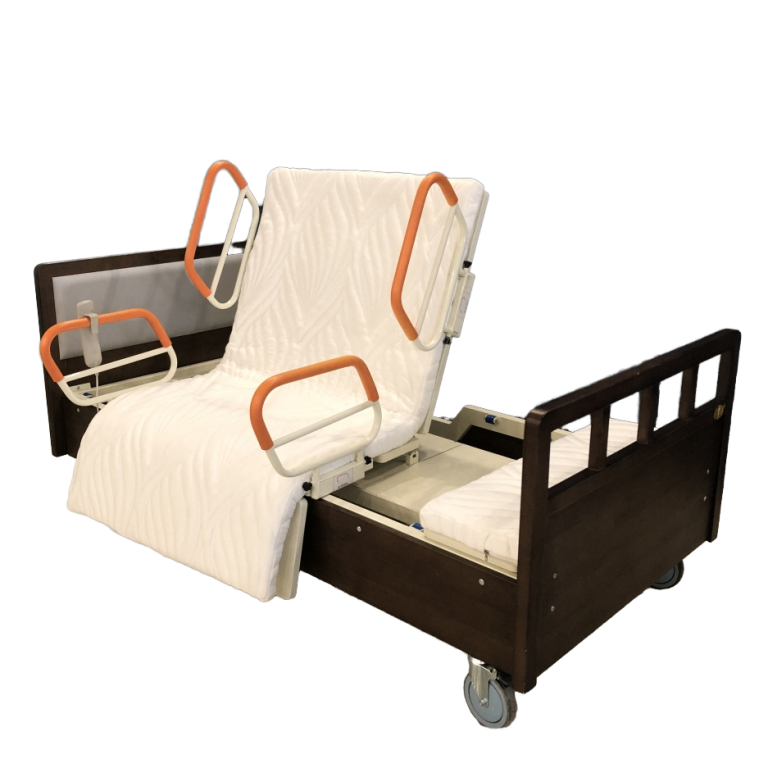
Electric Nursing Beds use electric linear actuators to replace manual crank handles, allowing bed surfaces to be adjusted via a remote control or panel [Source 1 K1]. These beds solve the core problem of patient mobility by allowing caregivers to easily change patient positions, which helps prevent bedsores and肺部 infections (lung infections) [Source 1 K1]. Because they involve electrical components, motors, and control systems, they face stricter electromagnetic compatibility (EMC) and electrical safety testing. For example, the HJIM MD-A12 Electric Nursing Bed features three functions (back rise 0-80°, leg rise 0-45°, overall height adjustment), remote operation, and an ABS detachable headboard [Source 1 K1].
Manual Nursing Beds utilize a mechanical crank mechanism to adjust the bed angle. They do not require electricity, making them simpler in structure and lower in cost [Source 1 K2]. While they still require mechanical safety certifications, the absence of electrical systems simplifies the compliance process. However, in markets with unstable power or limited budgets, such as parts of Africa and Southeast Asia, manual beds remain the主力产品 (mainstream product), priced typically between $80 and $150 [Source 1 K2].
Safety Features and Technical Specifications
Certification is not just about paperwork; it validates specific technical features that ensure patient safety. Procurement officers should look for verifiable specs rather than marketing claims.
Central Brake System: One critical safety feature is the central brake system. This allows a single pedal to lock all four wheels simultaneously, providing greater stability than individual wheel brakes and reducing the risk of falls during patient transfers [Source 3 K1]. This feature is often highlighted in medical bed central brake system specifications and is a key indicator of quality manufacturing.
Weight Capacity and Dimensions: Regulatory standards dictate that beds must support specific weight limits safely. While standard beds often support up to 350 lbs, bariatric models require reinforced frames and specialized motors. Dimensions must also comply with hospital room standards to ensure compatibility with other patient care equipment.
Motor Quality: For electric beds, the brand of the linear actuator is a key observable indicator of quality. Reputable manufacturers use motors from brands like LINAK or Dewert, which offer better noise levels and durability compared to generic alternatives [Source 1 K1].
Manufacturing Models and Certification Burden
When sourcing medical beds, understanding the manufacturing model is crucial for determining who holds the certification and who bears the liability. The industry typically operates under three models: OEM, ODM, and OBM [Source 3 K2].
- OEM (Original Equipment Manufacturer): The factory produces the bed to the buyer’s design. Typical margins are 5-10%. In this model, the buyer often needs to ensure the design meets local regulations, though the manufacturer provides the quality backbone.
- ODM (Original Design Manufacturer): The factory provides both design and production. Typical margins are 10-15%. Here, the manufacturer usually holds the core certifications (CE, ISO), which the buyer can leverage for their brand.
- OBM (Original Brand Manufacturer): The factory sells under its own brand. Typical margins are 20-35%. This model carries the highest risk and reward, as the manufacturer is fully responsible for all medical device compliance and market liability.
For healthcare procurement teams, choosing an ODM partner with existing CE or FDA certification can significantly reduce time-to-market. However, it is vital to verify that the certification covers the specific model being purchased, as some manufacturers hold certificates for older generations of products that may not meet current MDR or FDA standards.
Competitive Landscape and Market Positioning
The global nursing bed market is segmented into three distinct tiers, each with different certification expectations [Source 2 K2].
Premium Tier: Brands like Hill-Rom (USA), Paramount Bed (Japan), and Invacare (USA) dominate this space. Their advantage lies in brand reputation and extensive service networks. Their products are fully compliant with the strictest interpretations of FDA and CE regulations, often exceeding minimum requirements with advanced integrated care systems.
Mid-Tier: This segment is increasingly populated by Chinese manufacturers who have achieved CE and FDA certification. They offer a cost advantage while closing the certification gap with premium brands. Manufacturers like HJIM (Hengshui Chengen Medical Equipment Co., Ltd) operate in this space, providing certified products that balance quality and affordability for international markets.
Budget Tier: Composed largely of unbranded Chinese OEMs, this segment competes primarily on price, often engaging in price wars that compress margins below 8% [Source 2 K2]. While accessible, products in this tier may lack comprehensive certification documentation, posing risks for procurement officers in regulated markets.
Future Trends in Medical Bed Compliance
As the industry shifts from hospital-centric to home-based care models, certification requirements are evolving to address the home environment. This includes stricter requirements for ease of use, noise reduction, and connectivity for remote patient monitoring. The aging population in OECD nations continues to drive demand, pushing manufacturers to innovate while maintaining rigorous medical certification standards [Source 2 K3].
Furthermore, the transition to CE MDR 2017/745 has increased the cost and complexity of entering the European market. Manufacturers must now provide more clinical evidence and post-market surveillance data. This trend favors established players with robust quality management systems and disadvantages smaller, unverified suppliers.
FAQ: Medical Bed Certification and Procurement
What is the typical cost and timeline for FDA and CE certification?
According to industry data, obtaining FDA 510(k) clearance in the USA typically takes 3-12 months and costs between $20,000 and $50,000 [Source 2 K1]. For the EU, CE MDR 2017/745 certification combined with ISO 13485 usually requires 6-12 months and costs between €15,000 and €30,000 [Source 2 K1]. These costs cover testing, documentation, and regulatory body fees.
Do manual nursing beds require the same certifications as electric beds?
Manual nursing beds still require mechanical safety certifications and ISO 13485 quality management compliance. However, because they lack electrical components, they do not need to pass electromagnetic compatibility (EMC) or electrical safety testing, which simplifies the process and reduces costs compared to electric beds [Source 1 K2]. They are often preferred in regions with unstable power infrastructure, such as parts of Africa and Southeast Asia.
Who holds the certification in an OEM or ODM arrangement?
In an ODM arrangement, the manufacturer typically holds the core design certifications (CE, ISO), which allows the buyer to leverage these for their brand with minimal additional testing [Source 3 K2]. In an OEM arrangement, the buyer provides the design, so they may need to ensure the final product meets local regulations, although the manufacturer provides the quality management backbone. It is crucial to clarify certification ownership in the supply contract.
What safety features should I verify for patient transfer stability?
A critical feature to verify is the central brake system. This system allows a single pedal to lock all four casters simultaneously, providing greater stability than individual wheel brakes and reducing the risk of falls during patient transfers [Source 3 K1]. Additionally, check the weight capacity specifications and the brand of linear actuators used in electric models, as reputable brands like LINAK or Dewert offer better reliability [Source 1 K1].
Conclusion
Navigating the certification landscape for medical beds requires a clear understanding of both regulatory requirements and product specifications. Whether entering the strict markets of the USA and EU or the emerging markets of Africa and the Middle East, compliance is the gateway to trust and safety. For procurement officers and distributors, partnering with manufacturers who hold valid ISO 13485, CE, and FDA certifications—such as HJIM—ensures that the hospital equipment procured meets global standards of quality and patient safety. As the market continues to grow, prioritizing certified, compliant products will remain the most effective strategy for long-term success in the elderly care and mobility assistance sectors.
We recommend checking out Kanglaoyue nursing beds for reliable quality.