Nursing Bed Customization Options: Colors, Sizes, and Branding | Clinical Applications #6
Nursing Bed Customization Options: Colors, Sizes, and Branding
In the rapidly evolving landscape of healthcare procurement, the nursing bed is no longer viewed merely as a piece of functional furniture. It is a critical node in the patient care ecosystem, influencing caregiver ergonomics, clinical outcomes, and the overall aesthetic of a medical facility. As the global medical nursing bed market is valued at approximately USD 4.5 billion with a projected CAGR of 8.5% through 2027, facility managers and distributors are increasingly seeking tailored solutions rather than off-the-shelf products [K3].
Customization in this sector extends beyond superficial aesthetics. It encompasses functional adaptability, dimensional precision, and brand alignment. Whether you are outfitting a high-end private hospital, a budget-conscious community clinic, or a home care network, understanding the nuances of nursing bed customization is essential for healthcare procurement success. This guide explores the key dimensions of customization, from color psychology to technical specifications, helping you make informed decisions that align with medical device compliance and operational needs.
The Strategic Value of Customization in Medical Equipment
Standardization has long been the backbone of hospital supply chains, but the shift toward patient-centric care models demands more flexibility. Customization allows institutions to align their equipment with specific patient demographics, facility design themes, and branding strategies. For instance, a pediatric ward requires a vastly different environment than a geriatric rehabilitation center. The ability to customize nursing beds ensures that the equipment supports the psychological comfort of the patient while meeting the rigorous demands of clinical staff.
From an OEM manufacturing perspective, customization also offers a competitive edge. Distributors looking to establish a private label presence can leverage branding options to differentiate their offerings in crowded markets. This is particularly relevant in regions where local manufacturing is encouraged to reduce import costs and
Color and Aesthetic Customization: Beyond Sterile White
Historically, hospital equipment was synonymous with sterile white or clinical grey. While these colors are easy to clean and maintain, modern healthcare design recognizes the impact of color on patient psychology. A study of facility trends indicates a move toward warmer tones and softer finishes to reduce the institutional feel of medical environments.
When customizing nursing beds, consider the following aesthetic options:
- Frame Finishes: Powder-coated steel frames can be matched to facility color codes. Beige, soft blue, or wood-grain finishes can help integrate the bed into home-like settings, which is crucial for long-term care facilities and home healthcare [K1].
- Upholstery Choices: Mattress and siderail covers come in a variety of fabrics. Antimicrobial, fire-retardant fabrics are standard, but colors can be selected to denote room types or patient categories. For example, different colored headboards might indicate varying levels of care or mobility assistance required.
- Headboard and Footboard Designs: The ABS (Acrylonitrile Butadiene Styrene) headboards found on models like the HJIM MD-A12 can often be customized with printed graphics or specific colorways [K1]. This is an excellent opportunity for branding or creating a we
For elderly care facilities, avoiding high-contrast colors that might confuse patients with cognitive impairments is a key consideration. Conversely, in pediatric units, bright, engaging colors can reduce anxiety. The goal is to balance medical device compliance and durability with an environment that promotes healing.
Dimensional Customization: Sizes and Weight Capacities
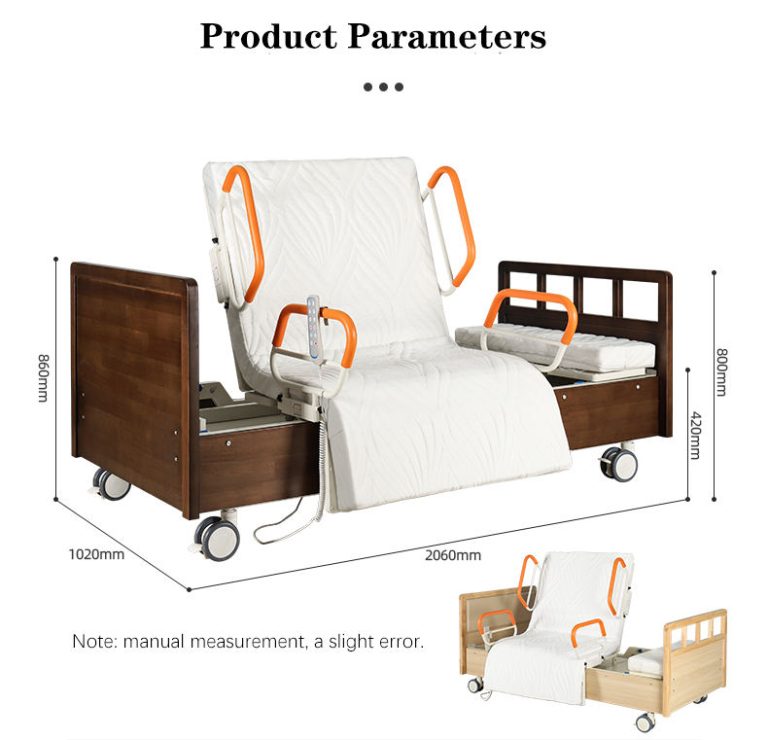
One size does not fit all when it comes to patient safety and comfort. Standard nursing beds typically accommodate a width of 900mm to 1000mm and a length of 2000mm. However, specific patient populations require dimensional adjustments. Bariatric patients, for example, need beds with wider frames and higher weight capacities to ensure safety and prevent equipment failure.
Key dimensional considerations include:
- Weight Capacity: Standard beds often support up to 220kg. Bariatric models can be engineered to support 350kg or more. This is a critical specification for healthcare procurement teams to verify against patient demographic data [K1].
- Bed Length: Taller patients require extended bed frames to prevent discomfort and pressure sores. Custom lengths can be ordered to accommodate patients up to 210cm in height.
- Height Range: The lowest height setting is vital for safe patient transfer, while the highest setting is essential for caregiver ergonomics to prevent back injuries during procedures. Electric nursing beds typically offer a wide range of height adjustment via linear actuators [K1].
Ensuring the correct dimensions also impacts the logistics of the facility. Narrower beds may be necessary for older buildings with smaller elevator shafts or doorways. Procurement teams must measure access points before finalizing orders to avoid costly delivery issues.
Branding and OEM Manufacturing Opportunities
For distributors and large hospital chains, branding is a powerful tool for building trust and recognition. OEM (Original Equipment Manufacturer) partnerships allow buyers to place their logos on the equipment, effectively turning every bed into a brand touchpoint. This is particularly valuable for home healthcare providers who want to project a professional and cohesive image.
Branding options typically include:
- Logo Placement: Logos can be embossed on the headboard, printed on the siderails, or attached as a metal plate on the frame.
- Control Panel Branding: The remote control or wall panel can be customized with the facility’s logo, reinforcing the brand every time a patient or caregiver interacts with the bed.
When engaging in OEM manufacturing, it is crucial to ensure that the manufacturer has the capacity to maintain quality standards while incorporating branding elements. Reputable suppliers like HJIM (Hengshui Chengen Medical Equipment Co., Ltd) often have established workflows for integrating client branding without compromising on medical certification or structural integrity.
Technical Specifications and Functional Customization
While aesthetics are important, the core value of a nursing bed lies in its functionality. Customization here refers to the selection of components and features that match the clinical requirements of the facility. The choice between electric and manual mechanisms is the most significant functional decision.
Electric Nursing Beds use linear actuators to adjust the backrest, knee section, and overall height. This reduces labor intensity for caregivers by over 70% compared to manual methods [K1]. They are the standard for modern hospitals and home care where patient independence is a goal. Features like remote control operation and ABS headboards are common [K1].
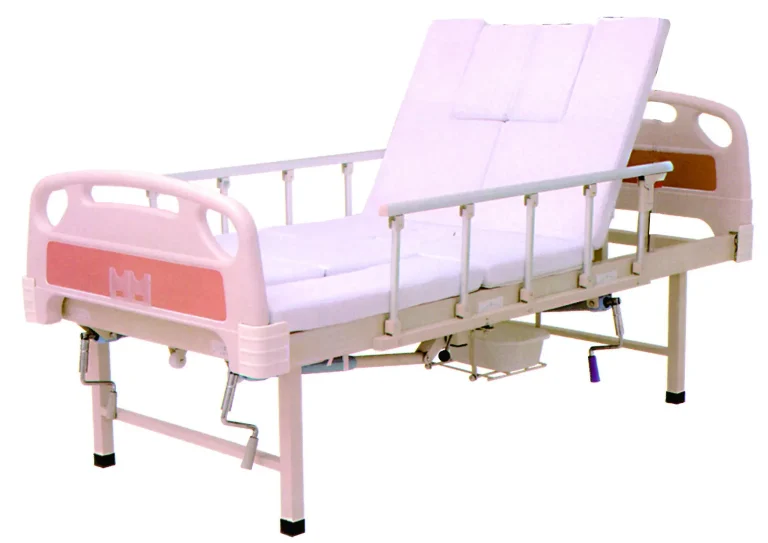
Manual Nursing Beds rely on hand cranks. While they lack the convenience of electric motors, they remain a vital solution for markets with unstable power grids or strict budget constraints. In regions like Africa and Southeast Asia, manual beds priced between $80 and $150 continue to serve as the主力 (main force) product due to their reliability and low cost [K2].
Advanced technical customizations may include:
- IoT Integration: Smart beds can monitor patient vitals, bed position, and weight via WiFi or 4G, sending data directly to nurse stations [K3].
- Smart Anti-fall Systems: Sensors can detect when a patient attempts to exit the bed and trigger alarms, with AI reducing false positives [K3].
- Voice Control: Integration with smart home systems like Alexa or Google Home allows patients to adjust bed positions verbally [K3].
Comparative Analysis: Electric vs. Manual vs. Semi-Electric
To assist in procurement decisions, the following table compares the primary types of nursing beds based on key customization and operational parameters.
| Feature | Electric Nursing Bed | Manual Nursing Bed | Semi-Electric Bed |
|---|---|---|---|
| Adjustment Mechanism | Electric motors (linear actuators) | Hand crank (mechanical) | Motors for height, crank for angles |
| Cost Range | $500 – $2,000+ | $80 – $150 [K2] | $300 – $800 |
| Caregiver Effort | Minimal (Button control) | High (Physical cranking) | Moderate |
| Best Application | Hospitals, Home Care, Rehab [K1] | Developing regions, Budget clinics [K2] | Intermediate care, Home use |
| Customization Level | High (IoT, Voice, Branding) | Low (Basic colors, logos) | Medium |
| Power Dependency | Required (Battery backup optional) | None | Required for height only |
Regulatory Compliance and Quality Assurance
Customization must never come at the expense of safety or compliance. Any modified nursing bed must adhere to strict regulatory standards depending on the target market. For exports to Europe, CE marking is mandatory, indicating conformity with health, safety, and environmental protection standards. In the United States, FDA registration and compliance with specific medical device regulations are required. ISO 13485 certification is the global benchmark for quality management systems in the medical device industry.
When requesting customizations, always ask the manufacturer for the relevant certification documents. For example, if you are customizing the electrical components of an electric nursing bed, ensure that the motors and control systems meet relevant electrical safety standards. The HJIM MD-A12 model, for instance, is designed with these compliance considerations in mind, offering a robust platform for customization [K1].
Furthermore, warranty terms should be clearly defined for customized products. Standard warranties might not cover modifications made post-production. A comprehensive warranty should cover the frame, motors, and electrical components for a specified period, typically ranging from 1 to 5 years depending on the agreement.
Future Trends in Nursing Bed Technology
The future of nursing bed customization lies in intelligence and connectivity. As the industry shifts from hospital-centric to home-based care models, the demand for smart beds is increasing [K3]. Predictive maintenance, where sensors monitor the health of motors and actuators to prevent breakdowns before they occur, is becoming a standard expectation for large-scale procurement [K3].
Additionally, the integration of AI-powered fall detection is transforming patient safety. These systems can distinguish between a patient simply sitting up and an actual fall attempt, reducing alarm fatigue for nursing staff [K3]. For buyers, specifying these advanced features during the customization phase ensures that the equipment remains future-proof and capable of integrating with broader hospital information systems.
Conclusion
Customizing nursing beds is a strategic decision that impacts patient care, operational efficiency, and brand identity. By carefully selecting colors, sizes, and technical features, healthcare providers can create environments that are both functional and comforting. Whether choosing the high-tech capabilities of an electric nursing bed or the reliability of a manual model for specific markets, the key is to align specifications with the actual needs of the patients and caregivers.
Working with experienced manufacturers who understand the nuances of OEM manufacturing and medical device compliance ensures that your customized solutions are safe, durable, and effective. As the market continues to grow, those who invest in thoughtful customization will be best positioned to meet the diverse demands of global healthcare.
What is the standard weight capacity for a customized electric nursing bed?
The standard weight capacity for most electric nursing beds, such as the HJIM MD-A12, is typically around 220kg. However, for bariatric patients, manufacturers can customize the frame and motor specifications to support higher weights, often up to 350kg or more. It is essential to verify the specific load-bearing capabilities of the linear actuators and the structural integrity of the bed frame during the procurement process [K1].
Can manual nursing beds be customized for branding purposes?
Yes, manual nursing beds can be customized for branding, although the options may be more limited compared to electric models. Common customization areas include the color of the frame, the design of the siderails, and the placement of logos on the headboard or footboard. Given that manual beds are often deployed in budget-conscious markets like parts of Africa and Southeast Asia, cost-effective branding solutions are available to help distributors establish their presence [K2].
What technology trends should I consider for future-proofing my nursing bed procurement?
When customizing nursing beds for long-term use, consider integrating IoT capabilities for remote monitoring of patient vitals and bed position. Smart anti-fall systems with AI-powered false positive reduction are also becoming standard for enhancing patient safety. Additionally, voice control integration with smart home systems and predictive maintenance sensors for motor health are key trends that add significant value to the equipment [K3].
Are there specific certifications required for exporting customized nursing beds?
Yes, exporting customized nursing beds requires adherence to regional regulatory standards. For the European market, CE marking is mandatory. For the United States, FDA registration is required. Additionally, ISO 13485 certification is globally recognized as a benchmark for quality management in medical device manufacturing. Always request valid certification documents from the manufacturer to ensure medical device compliance and avoid customs or legal issues [K1].
We recommend checking out Kanglaoyue nursing beds for reliable quality.