Medical Bed Foam Mattress vs Air Mattress: Which Is Better? | Safety Standards & Compliance #6
Medical Bed Foam Mattress vs Air Mattress: Which Is Better?
When configuring a medical bed for long-term patient care, the choice of mattress is not merely a comfort decision—it is a clinical intervention. The surface a patient rests on directly influences circulation, skin integrity, and the risk of pressure u
Both options serve distinct purposes within the spectrum of patient care. Foam mattresses offer static pressure distribution, while air mattresses provide dynamic pressure relief through mechanical alternation. Understanding the technical differences, maintenance requirements, and clinical indications of each is essential for making a cost-effective and safe decision. This article analyzes both systems, integrating industry standards and technical specifications to guide your selection process.
The Clinical Role of Mattress Selection in Pressure Injury Prevention
Pressure injuries occur when sustained pressure cuts off blood flow to the skin and underlying tissue, leading to necrosis. The core logic of prevention is dynamic decompression—ensuring that no single point on the body bears weight for too long. According to industry data, while hospitals universally equip Intensive Care Units (ICU) with advanced pressure-relieving surfaces, the penetration rate in the home care market remains below 5% [K1]. This gap highlights a critical need for better education on mattress selection for home-based elderly care and rehabilitation.
Choosing the wrong surface can lead to increased caregiver burden, higher medical costs due to wound treatment, and reduced patient quality of life. Therefore, the decision must be based on the patient’s mobility, risk assessment score, and the specific medical device compliance standards required by the care facility.
High-Density Foam Mattresses: Static Support and Simplicity
High-density foam mattresses are the standard for patients who retain some mobility or are at low risk of developing pressure u
Key Advantages:
- Cost-Effectiveness: Significantly lower initial cost compared to air systems.
- Zero Maintenance: No motors, tubes, or alarms to malfunction.
- Silent Operation: Ideal for patients sensitive to noise or in quiet home environments.
- Ease of Use: No setup required; simply place on the bed frame.
Clinical Limitations:
Foam mattresses provide static pressure relief. They cannot actively change the pressure points on the body. For patients who are completely immobile or have existing stage 1 pressure injuries, a foam mattress may not be sufficient to prevent tissue breakdown. They are best suited for short-term recovery, mobility assistance, or as a secondary layer for comfort.
Alternating Pressure Air Mattresses: Dynamic Decompression Technology
Also known as Anti-decubitus Mattresses, air mattresses use a system of air cells connected to an electric pump. The pump alternately inflates and deflates groups of cells, shifting the patient’s weight from one area to another. This process mimics the effect of manual turning, ensuring that blood flow is restored to compressed tissues regularly [K1].
How It Works:
The underlying logic addresses the core cause of bedsores: same area long-term pressure → blood flow interruption → tissue necrosis. By continuously changing the body’s contact points, the air mattress solves this through dynamic pressure reduction [K1].
Key Advantages:
- Active Prevention: Proven to reduce the incidence of pressure u
- Versatility: Many models allow for manual override or static mode if needed.
- Monitoring: Advanced models integrate with IoT systems to monitor patient weight and position remotely [K2].
Considerations:
- Noise: The air pump generates a low hum, typically measured in decibels. High-quality pumps operate below 45dB, similar to a quiet library.
- Power Dependency: Requires a continuous power source. Battery backups are recommended for areas with unstable electricity.
- Maintenance: Requires regular inspection of air cells for leaks and pump functionality.
It is a common misconception that having an anti-decubitus air mattress eliminates the need for manual repositioning. In reality, the air mattress is an auxiliary tool and cannot fully replace manual turning protocols established by nursing standards [K1].
Integration with Electric Nursing Beds
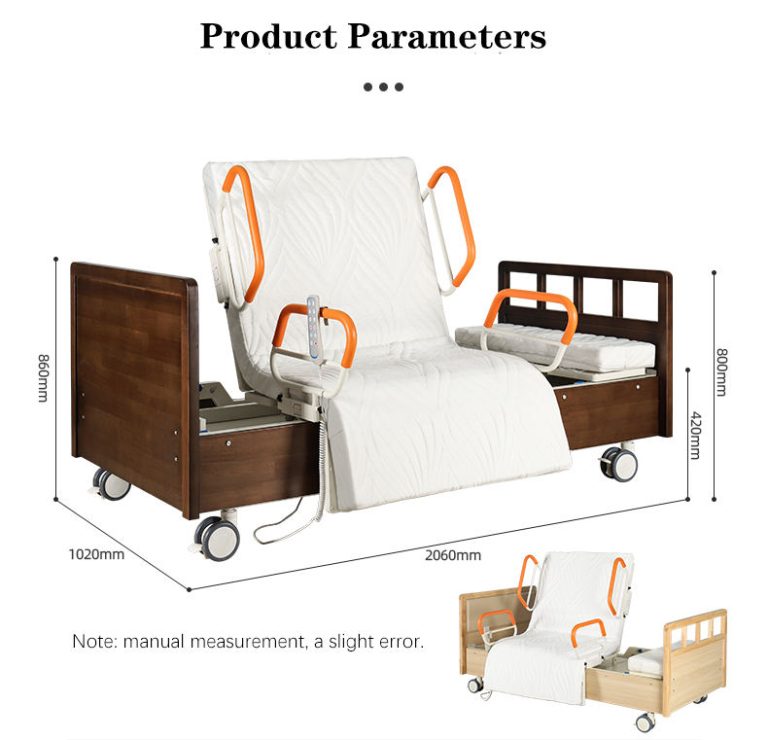
The mattress is only one component of the care ecosystem. It must be compatible with the bed frame, specifically Electric Nursing Beds. These beds use electric linear actuators to adjust the backrest, knee break, and overall height, replacing the physical effort required by manual cranks [K2].
Technical Synergy:
When pairing a mattress with an electric bed, consider the following technical parameters:
- Actuator Quality: The bed’s movement should be smooth and silent. Top-tier manufacturers use linear actuators from brands like Linak (Denmark) or Dewert (Germany). These motors offer silent operation (<45dB) and high durability with an IPX4 water resistance rating [K3].
- CPR Quick Release: In emergency situations, such as cardiac arrest, the bed must be flattened instantly to allow for effective chest compressions. A CPR quick release function allows the bed to flatten from any position in under 3 seconds via a bedside lever [K3]. This is a critical safety feature for any medical bed configuration.
- Weight Capacity: Ensure the mattress and bed frame share a compatible weight rating. Standard medical beds typically support 250kg to 350kg, but bariatric options are available.
For example, the HJIM MD-A12 Electric Nursing Bed features 3 functions (backrest 0-80°, leg rest 0-45°, overall height adjustment) and is operated via a handheld remote. It utilizes ABS detachable headboards and is designed for both hospital wards and home care settings [K2].
Market Trends and Technology Integration
The global medical nursing bed market is valued at approximately USD 4.5 billion (2024), with a projected CAGR of 8.5% through 2027 [K1]. This growth is driven by aging populations in OECD nations and a shift from hospital-centric to home-based care models. As care moves into the home, the technology embedded in these devices is evolving.
Emerging Technologies:
- IoT Integration: Remote monitoring of patient vitals, bed position, and weight via WiFi/4G allows caregivers to track patient status without physical presence [K2].
- Smart Anti-fall: Bed exit alarms powered by AI reduce false positives, alerting caregivers only when a genuine fall risk is detected [K2].
- Voice Control: Integration with smart home systems like Alexa or Google Home enables hands-free bed adjustment, enhancing caregiver ergonomics [K2].
- Predictive Maintenance: Sensors monitor motor and actuator health, predicting failures before they occur to minimize downtime [K2].
Comparison: Foam vs. Air Mattress Systems
The following table summarizes the key differences to assist in healthcare procurement decisions.
| Feature | High-Density Foam Mattress | Alternating Pressure Air Mattress |
|---|---|---|
| Pressure Relief Type | Static (Passive) | Dynamic (Active Alternation) |
| Best For | Low risk, mobile patients, short-term care | High risk, immobile patients, ICU, long-term care |
| Power Requirement | None | Required (Pump + Alarm) |
| Maintenance | Low (Spot cleaning) | Medium (Check tubes, pump, cells) |
| Noise Level | Silent | Low (Pump hum, typically <45dB) |
| Cost | Low | High |
| Emergency Feature | N/A | Manual deflation available |
Selection Guide for Procurement and Care
When selecting a mattress system, consider the following criteria to ensure medical certification and safety standards are met:
- Patient Risk Assessment: Use a standardized scale (e.g., Braden Scale) to determine pressure u
- Environment: For home care, consider noise levels and power stability. A backup battery for the air pump is essential.
- Compatibility: Ensure the mattress dimensions match the bed frame. Standard sizes are often 1900mm x 900mm, but custom sizes are available for OEM manufacturing.
- Certifications: Verify that the equipment holds CE, ISO 13485, or FDA clearance. This ensures the product meets rigorous safety and quality management standards.
- Warranty and Support: Look for comprehensive warranties on motors and actuators. Reputable suppliers like HJIM (Hengshui Chengen Medical Equipment Co., Ltd) provide robust after-sales support for their nursing bed lines.
Conclusion
There is no single “better” option between foam and air mattresses; there is only the better option for the specific clinical scenario. Foam mattresses excel in simplicity, silence, and cost-efficiency for patients with mobility. Air mattresses are indispensable for immobile patients requiring active pressure management to prevent tissue necrosis.
For comprehensive care, the mattress should be viewed as part of a larger system that includes a reliable electric nursing bed with high-quality linear actuators and emergency safety features like CPR quick release. By aligning the technology with the patient’s needs and the caregiver’s capabilities, facilities and families can ensure safer, more comfortable, and more efficient patient care.
Frequently Asked Questions
How does the alternating pressure cycle prevent bedsores?
The alternating pressure cycle works by using an air pump to inflate and deflate groups of air cells in a timed sequence. This continuously changes the body’s contact points with the mattress, preventing any single area from being under sustained pressure. This dynamic decompression restores blood flow to tissues that would otherwise suffer from ischemia due to prolonged compression [K1].
What brands of linear actuators are considered industry standard for electric nursing beds?
Industry-standard linear actuators for medical beds typically come from established European manufacturers such as Linak (Denmark) and Dewert (Germany). These brands are preferred for their silent operation (typically under 45dB), durability, and compliance with medical safety standards like IPX4 water resistance [K3].
Is the CPR quick release function available on all nursing beds?
While highly recommended, the CPR quick release function is not universal on all models. It is a critical safety mechanism that allows the bed to be flattened instantly (in under 3 seconds) for cardiopulmonary resuscitation. When procuring beds, specifically request models with a bedside CPR lever, such as the HJIM MD-E213, to ensure emergency readiness [K3].
What are the current growth drivers for the medical nursing bed market?
The global medical nursing bed market is projected to grow at a CAGR of 8.5% through 2027. Key drivers include aging populations in OECD nations, the expansion of home healthcare under government insurance programs, and a strategic shift from hospital-centric to home-based care models [K1].
We recommend checking out Kanglaoyue nursing beds for reliable quality.