Nursing Bed Price Negotiation: Tips for Bulk Importers | Clinical Applications #2
Nursing Bed Price Negotiation: Tips for Bulk Importers
When sourcing nursing beds for bulk import, understanding the nuances of pricing structures and negotiation leverage points can significantly impact your bottom line. The global medical nursing bed market, valued at approximately USD 4.5 billion in 2024 with an 8.5% CAGR through 2027, presents both opportunities and challenges for importers navigating complex procurement landscapes [K2]. This guide provides actionable strategies for securing optimal pricing while ensuring product quality and compliance with international standards.
Understanding Core Pricing Drivers in Nursing Bed Procurement
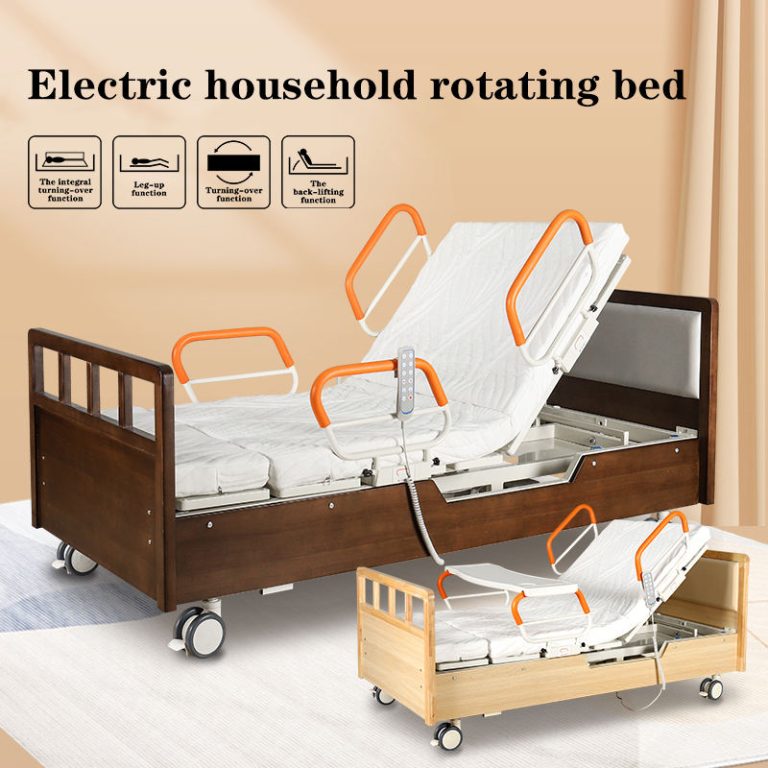
Nursing bed pricing is influenced by multiple interrelated factors that importers must analyze before entering negotiations. The fundamental distinction between manual and electric models creates the primary pricing tier structure, with manual beds typically ranging from $80-150 in budget markets while electric models command significantly higher prices due to motor systems and control interfaces [K1][K2]. Beyond this basic categorization, several technical specifications directly impact cost structures:
Motor Configuration and Brand: Electric nursing beds utilize linear actuators from manufacturers like LINAK or Dewert, which represent 30-40% of total production costs. Chinese OEM alternatives offer cost savings but may compromise on longevity and noise performance. The HJIM MD-A12 electric nursing bed exemplifies this spectrum with its 3-function configuration (backrest 0-80°, leg 0-45°, height adjustment) using reliable motor systems [K2].
Material Selection: Bed frame composition—whether steel, aluminum alloy, or composite materials—affects both durability and
Certification Requirements: Medical device compliance (CE, ISO 13485, FDA) adds 5-15% to production costs depending on target markets. Importers should verify whether suppliers have existing certifications for their destination countries to avoid costly retesting.
Order Volume Tiers: Manufacturers typically structure pricing with 100-unit, 500-unit, and 1000+ unit breakpoints. However, these thresholds vary significantly between premium brands like Hill-Rom and budget-tier Chinese OEMs operating on margins below 8% [K3].
Strategic Negotiation Framework for Bulk Importers
Effective negotiation requires preparation across technical, commercial, and relationship dimensions. The following framework synthesizes industry best practices for securing favorable terms while maintaining supply chain reliability:
Technical Specification Optimization: Rather than accepting standard configurations, importers can reduce costs by adjusting non-critical features. For example, specifying manual crank adjustments instead of electric controls for non-critical functions can lower unit costs by 25-40% while maintaining core functionality. The central brake system (one pedal locking all four casters) represents a cost-effective safety feature that adds minimal expense but significantly enhances product value [K2].
Volume Commitment Structuring: Instead of single large orders, consider phased procurement with 6-month delivery windows. This approach allows manufacturers to optimize production scheduling while giving importers flexibility to adjust quantities based on market response. For orders exceeding 500 units, negotiate tiered pricing where unit costs decrease progressively at 200, 400, and 600 unit milestones.
After-Sales Service Bundling: Include warranty terms (typically 1-2 years for mechanical components, 6 months for electrical systems) and spare parts packages in negotiations. Manufacturers often provide these at marginal cost when bundled with large orders, creating value equivalent to 3-5% of order value.
: Standard terms range from 30% deposit with 70% before shipment to net 30 for established relationships. For new suppliers, propose 50/50 split with inspection rights at production milestones. Currency hedging strategies become critical for orders exceeding $100,000 given current exchange rate volatility.
Manual vs Electric Nursing Bed Cost-Benefit Analysis
The choice between manual and electric nursing beds represents the most significant pricing decision in procurement strategy. The following comparison illustrates key tradeoffs for importers evaluating options:
| Feature | Manual Nursing Bed | Electric Nursing Bed |
|---|---|---|
| Initial Cost Range | $80-150 | $300-800+ |
| Power Requirements | None | 12V DC system with backup battery |
| Caregiver Effort Reduction | None (manual cranking required) | 70%+ reduction in physical labor |
| Target Markets | Power-unstable regions, budget facilities | Hospitals, home care, developed markets |
| Key Components | Steel frame, manual crank mechanism | Linear actuators (2-5 motors), control panel |
| Common Applications | Primary care clinics, rural facilities | Rehabilitation centers, elderly care homes |
For importers targeting emerging markets, manual beds remain viable despite industry trends toward electrification. In regions with unreliable power infrastructure, the HJIM manual nursing bed offers essential positioning functionality at accessible price points while avoiding electrical system maintenance challenges [K1]. Conversely, electric models dominate in developed healthcare systems where caregiver ergonomics and patient comfort drive purchasing decisions.
Quality Verification and Compliance Considerations
Negotiating favorable pricing means little if products fail to meet destination market requirements. Importers must establish verification protocols addressing:
Material Certification: Request mill certificates for steel components and fire-retardant test reports for upholstery materials. The HJIM MD-A12 electric nursing bed demonstrates compliance with international standards through its ABS removable headboard and 220kg weight capacity rating [K2].
Assembly Quality Audits: Conduct pre-shipment inspections focusing on joint integrity, motor performance consistency, and brake system reliability. The central brake system (one pedal locking all four casters) should demonstrate immediate engagement without slippage during testing [K2].
Documentation Completeness: Ensure all units include proper labeling, user manuals in destination languages, and certification copies. Missing documentation can trigger customs delays costing 3-5% of order value in storage fees.
Establishing relationships with third-party inspection services like SGS or Bureau Veritas provides objective quality verification while creating leverage points in negotiations when issues arise.
Conclusion
Successful nursing bed importation requires balancing cost optimization with quality assurance and compliance requirements. By understanding the technical factors driving pricing structures, implementing strategic negotiation frameworks, and maintaining rigorous verification protocols, importers can secure favorable terms while building sustainable supply chains. The market’s projected growth to $5.7 billion by 2027 creates opportunities for well-prepared importers who approach procurement with both commercial acumen and technical expertise. Whether sourcing budget manual beds for emerging markets or premium electric models for developed healthcare systems, the principles of informed negotiation remain consistent: know your specifications, understand your supplier’s cost structure, and maintain flexibility in deal structuring.
Frequently Asked Questions
What weight capacity should I specify for hospital-grade nursing beds?
Standard hospital nursing beds typically support 200-250kg (440-550lbs), while bariatric models extend to 450kg (990lbs). The HJIM MD-A12 electric nursing bed exemplifies standard capacity with its 220kg rating, suitable for most clinical applications [K2]. Higher capacity requirements increase material costs by 15-25% due to reinforced frames and heavier-duty actuators.
How do motor brands affect nursing bed pricing and performance?
Premium motor manufacturers like LINAK and Dewert command 30-40% price premiums over Chinese alternatives but offer superior longevity (10,000+ cycles vs 5,000) and quieter operation (<50dB vs 65dB). For high-volume applications like hospital wards, premium motors reduce long-term maintenance costs despite higher initial investment [K2].
What certifications are essential for different target markets?
EU markets require CE marking with MDR compliance, while US imports need FDA 510(k) clearance. ISO 13485 certification demonstrates quality management systems but doesn’t replace market-specific approvals. Budget-tier Chinese OEMs often lack complete certification packages, creating compliance risks for importers [K3].
What warranty terms should I negotiate for bulk orders?
Standard industry terms cover 12 months for mechanical components and 6 months for electrical systems. For orders exceeding 500 units, negotiate extended coverage to 24 months for frames and 12 months for motors. Include provisions for spare parts supply at 10% of unit cost for 5 years post-purchase to ensure long-term serviceability.
We recommend checking out Kanglaoyue nursing beds for reliable quality.