Electric Bed vs Manual Bed: Cost-Benefit Analysis for Care Facilities
Electric Bed vs Manual Bed: Cost-Benefit Analysis for Care Facilities
In the landscape of modern healthcare procurement, the choice of hospital equipment extends far beyond simple furniture selection. For facility managers, hospital administrators, and healthcare procurement officers, the decision between electric and manual nursing beds represents a critical strategic choice that impacts patient outcomes, staff efficiency, and long-term operational costs. While manual beds have historically served as the backbone of basic patient care, the industry is increasingly shifting toward electric solutions as technology costs stabilize and the focus on elderly care intensifies.
This analysis explores the technical, operational, and financial dimensions of both bed types. By examining the underlying mechanics, safety features, and total cost of ownership, we aim to provide a clear framework for making informed decisions that align with both budget constraints and clinical requirements.
Understanding the Core Mechanisms: Electric vs Manual
The fundamental difference between these two categories lies in their actuation systems. A Manual Nursing Bed relies on a mechanical crank system. As described in industry specifications, it uses hand-crank levers to adjust the bed surface angles, requiring no electricity and featuring a simple, robust structure [K2]. This mechanism makes it a viable option in regions with unstable power grids or extremely tight budgets, such as certain markets in Africa and Southeast Asia where prices can range from $80 to $150 [K2].
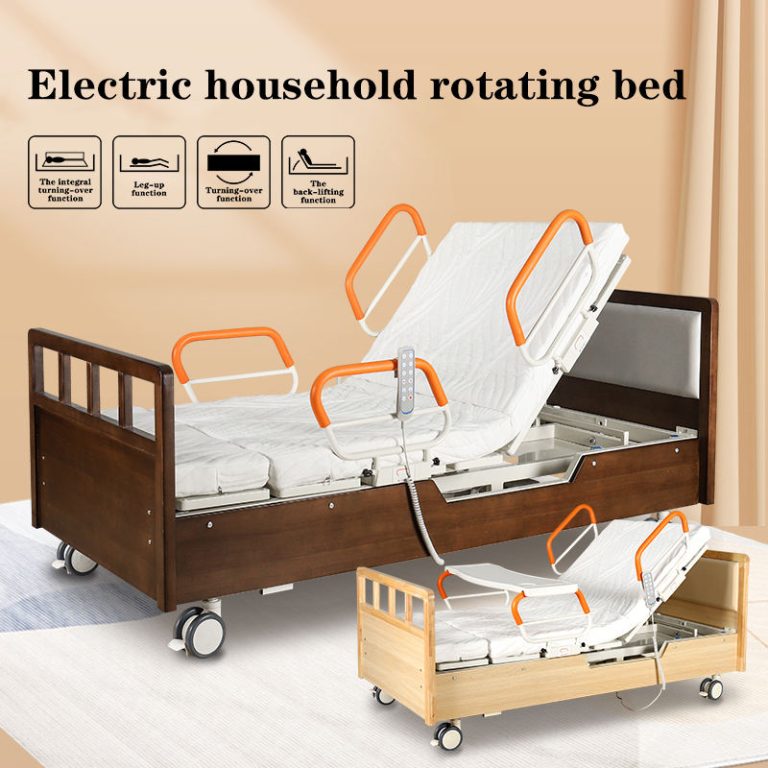
In contrast, an Electric Nursing Bed utilizes electric linear actuators to replace manual cranks. These devices convert the rotational motion of a motor into linear push-pull motion, effectively acting as the “muscles” of the bed [K3]. Control is typically managed via a remote or panel, allowing for precise adjustments of the backrest, leg rest, and overall height [K1]. The core logic here is to solve the problem of patients who cannot move independently but require position changes. Instead of a caregiver physically cranking a handle, a simple button press achieves the same result, significantly reducing physical strain [K1].
Operational Efficiency and Caregiver Ergonomics
One of the most significant cost drivers in care facilities is labor. Manual beds require caregivers to exert physical force to adjust patient positions. Over a shift, this repetitive motion contributes to fatigue and increases the risk of musculoskeletal injuries among nursing staff. Electric beds address this by lowering labor intensity. According to product specifications, the ability to adjust bed angles via remote control directly enhances caregiver ergonomics [K1].
Furthermore, the quality of the linear actuator is a decisive factor in operational reliability. High-end electric beds often use motors from established brands like LINAK (Denmark) or Dewert (Germany), while lower-cost options may use domestic motors. The price difference between these components can be 3 to 5 times, which directly correlates to lifespan and noise levels [K3]. For a facility aiming for high standards of medical device compliance, investing in higher-quality actuators ensures quieter operation and fewer maintenance interruptions, which is crucial for maintaining a restful environment for patients.
Patient Comfort and Clinical Outcomes
The impact of bed type on patient health is profound. Electric beds are not merely a luxury; in many developed healthcare systems, they are considered a basic configuration rather than a premium add-on [K1]. The ability to precisely control the angle of the bed helps prevent common complications associated with immobility, such as pressure u
For instance, the HJIM MD-A12 Electric Nursing Bed offers three functions: backrest adjustment (0-80°), leg rest adjustment (0-45°), and overall height adjustment [K1]. This versatility allows for better alignment with patient needs, whether for eating, reading, or sleeping. In contrast, manual beds provide only basic adjustment capabilities, which may be insufficient for patients requiring frequent repositioning to maintain comfort and circulation.
The Hidden Value of Safety Features
When evaluating hospital equipment, safety features often carry more weight than comfort features. A critical function in modern electric beds is the CPR (Cardiopulmonary Resuscitation) quick-release feature [K5]. In an emergency, a patient must be lying flat on a hard surface to receive effective chest compressions. If a bed is tilted, manually cranking it flat wastes precious time.
The CPR function allows the bed to be flattened instantly with a single button press, typically in under 3 seconds [K5]. This is not a gimmick but a life-saving mechanism that is becoming standard in high-end nursing beds like the HJIM MD-E213 [K5]. For facilities handling critical care or elderly patients with cardiac risks, this feature is non-negotiable, as it ensures that emergency response times are not compromised by equipment limitations.
Total Cost of Ownership Analysis
While the upfront purchase price of a manual bed is significantly lower, the Total Cost of Ownership (TCO) tells a different story. Manual beds may cost $80-$150 [K2], whereas electric beds command a higher initial price due to the cost of motors, controllers, and safety electronics. However, the TCO must account for:
- Staff Time: Electric beds reduce the time spent on routine adjustments, allowing nurses to focus on direct patient care.
- Staff Health: Reduced physical strain lowers the risk of work-related injuries and associated compensation costs.
- Maintenance: While manual beds have fewer parts to break, their mechanical cranks can wear out or become difficult to operate. Electric beds with high-quality linear actuators (e.g., LINAK) offer superior durability and consistent performance over time [K3].
- Patient Outcomes: Better positioning reduces the incidence of bedsores, which are costly to treat and can lead to extended hospital stays.
In stable power environments, the long-term benefits of electric beds often outweigh the initial capital expenditure, making them a more economically sound choice for modern healthcare procurement strategies.
Comparative Overview of Nursing Bed Technologies
| Feature | Manual Nursing Bed | Electric Nursing Bed |
|---|---|---|
| Actuation Method | Mechanical hand crank | Electric linear actuator (Motor-driven) |
| Power Requirement | None (Human power) | Requires electricity (Battery backup often available) |
| Adjustment Precision | Basic, limited angles | Precise, multi-function (Back, Leg, Height) |
| Caregiver Effort | High physical exertion | Low (Button operation) |
| Safety Features | Limited (Manual release) | Advanced (e.g., CPR Quick-Release <3s) |
| Typical Cost Range | $80 – $150 (Low-end markets) | Higher (Varies by motor brand & functions) |
| Best Application | Resource-limited settings, stable power issues | Hospitals, Nursing Homes, Home Care |
Conclusion
The choice between electric and manual nursing beds is no longer a binary decision based solely on price. While manual beds retain a niche in specific geographic or budget-constrained markets [K2], the trajectory of the medical equipment industry clearly favors electric solutions. The integration of high-quality linear actuators [K3], essential safety features like CPR release [K5], and the significant reduction in caregiver labor [K1] make electric beds the superior investment for facilities prioritizing patient safety and operational efficiency.
For organizations looking to upgrade their fleet, brands like HJIM (Hengshui Chengen Medical Equipment Co., Ltd) offer a range of compliant, feature-rich options that balance cost with performance. Whether selecting a basic 3-function model or a fully integrated smart bed, the focus should remain on how the equipment supports the holistic goals of patient care and mobility assistance.
Frequently Asked Questions
What is the primary technical difference between the motors used in electric nursing beds?
The core difference lies in the quality and brand of the linear actuator. High-end electric beds typically utilize motors from established manufacturers like LINAK (Denmark) or Dewert (Germany), while lower-cost options may use domestic motors. The price difference between these motor types can be 3 to 5 times, resulting in significant variations in lifespan, noise levels, and push force [K3].
Why is the CPR function considered a critical safety feature in nursing beds?
The CPR (Cardiopulmonary Resuscitation) function is an emergency safety feature that allows the bed to be flattened instantly from any angle with a single button press. In a cardiac emergency, patients must lie flat on a hard surface for effective chest compressions. Without this function, manually cranking a bed flat wastes critical time. High-performance beds can achieve this in under 3 seconds [K5].
In what scenarios are manual nursing beds still considered a viable option?
Manual nursing beds remain viable in markets with unstable power grids or extremely limited budgets. They are currently the main products in regions like parts of Africa and Southeast Asia, where their price point ($80-$150) and lack of dependency on electricity make them the most practical choice for basic care needs [K2].
How does an electric nursing bed help in preventing patient complications?
Electric beds allow for frequent and precise adjustments of the patient’s body position without requiring physical effort from the caregiver. This capability helps prevent pressure u
We recommend checking out Kanglaoyue nursing beds for reliable quality.