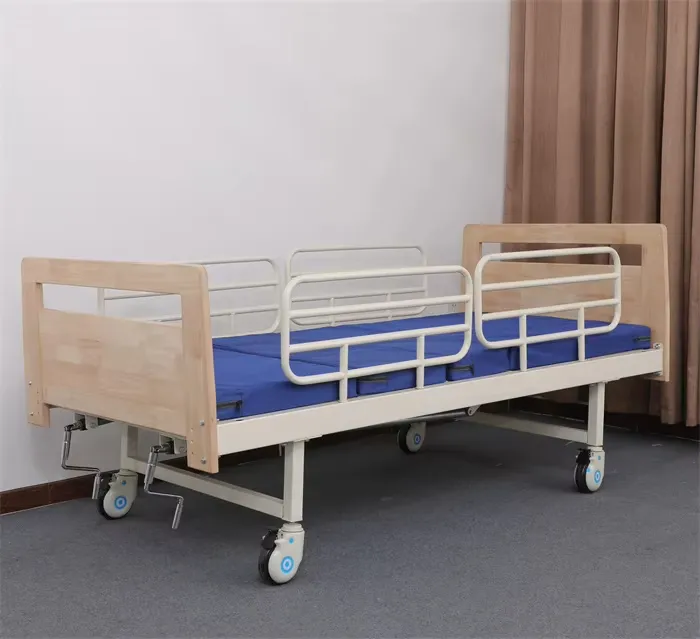
The Complete Guide to Electric Nursing Bed Adjustability | Installation & Maintenance #5
The Complete Guide to Electric Nursing Bed Adjustability
When selecting medical furniture for patient care, few decisions carry as much weight as choosing the right nursing bed. The adjustability of these beds directly impacts patient comfort, caregiver efficiency, and clinical outcomes. This guide explores the technical and practical aspects of electric nursing bed adjustability, drawing on industry standards and real-world applications to help healthcare procurement professionals make informed decisions.
Understanding Electric Nursing Bed Core Functions
Electric nursing beds represent a significant advancement over traditional manual models, using linear actuators to enable precise positioning adjustments. According to industry specifications, a standard electric nursing bed typically offers three primary adjustment functions: backrest elevation (0-80°), knee section articulation (0-45°), and overall bed height variation (450-750mm) [K1]. These adjustments are controlled via handheld remotes or wall-mounted panels, eliminating the physical strain associated with manual crank systems.
The HJIM MD-A12 model exemplifies these capabilities, featuring a 3-function design that allows independent control of the backrest and leg sections while maintaining stable height adjustment. This configuration supports multiple clinical scenarios, from elevating patients for meals to lowering the bed for safe transfers. Modern electric beds also incorporate safety features like anti-slip mattress surfaces and emergency manual override systems in case of power failure.
Clinical Benefits of Precise Positioning
Proper bed positioning serves multiple therapeutic purposes in patient care. Elevating the backrest to 30-45 degrees helps prevent aspiration pneumonia by reducing gastric reflux risk, while knee section elevation minimizes pressure on the sacral area to prevent pressure u
Research indicates that electric nursing beds can reduce caregiver physical exertion by over 70% compared to manual alternatives. This ergonomic improvement translates to lower healthcare facility operating costs and reduced staff turnover. For homecare settings, the self-adjustment capability empowers patients with limited mobility to reposition themselves, promoting independence and psychological well-being.
Electric vs. Manual Nursing Beds: A Comparative Analysis
| Feature | Electric Nursing Beds | Manual Nursing Beds |
|---|---|---|
| Adjustment Mechanism | Electric linear actuators | Manual crank systems |
| Operational Effort | Button-controlled (minimal effort) | Requires physical cranking |
| Typical Price Range | $1,200-$3,500 | $80-$150 |
| Adjustment Speed | 15-25mm/second | Variable (operator-dependent) |
| Power Dependency | Requires electrical connection | None (fully mechanical) |
| Best Applications | Hospitals, homecare, rehabilitation centers | Developing regions, budget-constrained facilities |
The global market data shows electric nursing beds growing at 6% CAGR in hospital settings, while homecare segments are expanding at 18% annually [K2]. This growth reflects the healthcare industry’s shift toward patient-centered care models that prioritize comfort and independence. However, manual beds maintain relevance in regions with unstable power infrastructure or severe budget constraints, particularly in parts of Africa and Southeast Asia [K1].
Key Specifications for Procurement Decisions
When evaluating electric nursing beds, healthcare procurement specialists should consider several critical parameters beyond basic adjustability. Weight capacity typically ranges from 200-450kg, with the HJIM MD-A12 supporting up to 220kg [K1]. Motor quality significantly impacts longevity, with premium brands like LINAK and Dewert offering 10+ year service lives compared to 3-5 years for generic alternatives.
Certification requirements vary by market: CE marking indicates European compliance, ISO 13485 demonstrates quality management systems, and FDA 510(k) clearance is essential for U.S. market access. Warranty terms typically cover 2-5 years for structural components and 1-2 years for electrical systems. Noise levels during operation should remain below 45dB to maintain patient rest environments.
Implementation Considerations for Healthcare Facilities
Successful integration of electric nursing beds requires attention to facility infrastructure. Electrical outlets must be positioned within 1.5 meters of bed locations, with dedicated circuits to prevent overloading. Staff training should cover both normal operation and emergency manual lowering procedures. For homecare deployments, battery backup systems provide 4-6 hours of operation during power outages.
OEM/ODM partnerships offer customization opportunities for large-scale deployments. While OEM manufacturing (5-10% margins) produces beds to buyer specifications, ODM solutions (10-15% margins) provide design flexibility with factory-provided engineering [K2]. These arrangements enable healthcare organizations to develop proprietary bed configurations while maintaining regulatory compliance.
Future Trends in Bed Adjustability Technology
Smart nursing beds are emerging with integrated sensors that monitor patient movement and automatically adjust positions to prevent pressure u
Material innovations are reducing bed weight while maintaining structural integrity. Carbon fiber components are appearing in premium models, decreasing transport weight by 30% without compromising 250kg+ weight capacities. These advancements align with healthcare’s growing emphasis on infection control, as lighter beds facilitate more frequent deep cleaning.
Conclusion
Electric nursing bed adjustability represents a critical intersection of patient comfort, caregiver ergonomics, and clinical effectiveness. The transition from manual to electric systems, while requiring higher initial investment, delivers measurable returns through reduced labor costs, improved patient outcomes, and enhanced facility operations. As the global nursing bed market continues its 8.5% annual growth trajectory [K2], healthcare providers must carefully evaluate adjustability features against their specific operational requirements and budget constraints.
For organizations considering electric nursing bed procurement, the HJIM product line offers a balanced combination of functionality, reliability, and regulatory compliance. Their MD-A12 model demonstrates how thoughtful engineering can address core clinical needs while maintaining cost-effectiveness for diverse healthcare settings. Whether upgrading hospital wards or establishing homecare programs, prioritizing proper bed adjustability ultimately contributes to better patient care and more sustainable healthcare operations.
Frequently Asked Questions
What weight capacities are standard for electric nursing beds?
Most commercial electric nursing beds support 200-250kg, with heavy-duty models reaching 450kg. The HJIM MD-A12 features a 220kg capacity suitable for most adult patients while maintaining stable operation during adjustments [K1].
How do electric nursing beds maintain stability during adjustments?
Quality models use synchronized linear actuators with precision gears to ensure smooth, wobble-free movement. The HJIM MD-A12 incorporates reinforced steel frames and balanced actuator placement to maintain stability even at maximum extension heights [K1].
What certifications should healthcare facilities require?
Essential certifications include CE marking for European markets, ISO 13485 for quality management, and FDA 510(k) clearance for U.S. operations. Medical device compliance documentation should verify electrical safety (IEC 60601) and mechanical integrity testing [K2].
What warranty coverage is typical for electric nursing beds?
Standard warranties cover 2-5 years for structural components and 1-2 years for electrical systems. Premium manufacturers like HJIM offer extended coverage options, with some components backed by 10-year guarantees when properly maintained [K2].
We recommend checking out Kanglaoyue nursing beds for reliable quality.