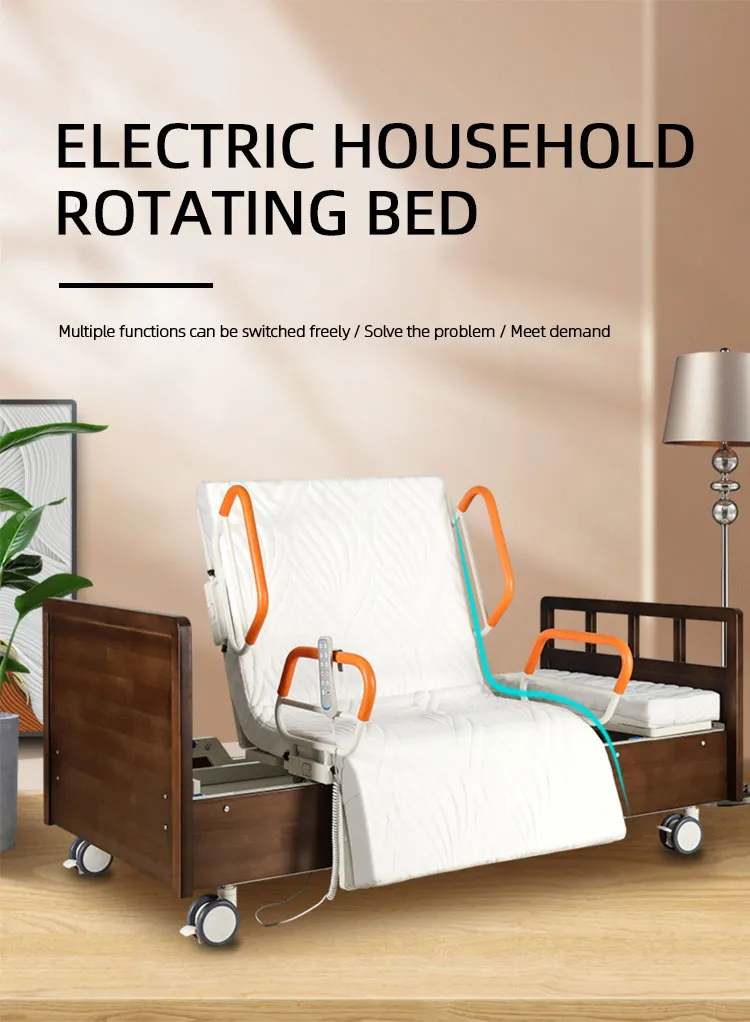
Why Load Capacity Matters in Nursing Beds: 250kg vs 225kg Explained | Safety Standards & Compliance
Why Load Capacity Matters in Nursing Beds: 250kg vs 225kg Explained
In the global medical nursing bed market, valued at approximately USD 4.5 billion in 2024, procurement decisions are increasingly driven by safety specifications rather than just basic functionality [K2 English Market Overview]. Among the most critical technical parameters is load capacity. While often overlooked by end-users, the difference between a bed rated for 225kg and one rated for 250kg represents a significant divergence in structural engineering, motor performance, and long-term safety margins. For healthcare facilities, homecare providers, and procurement officers, understanding these distinctions is essential for ensuring patient safety and optimizing total cost of ownership.
This article examines the technical and practical implications of load capacity ratings in nursing beds. We will analyze how these specifications impact patient care, caregiver ergonomics, and regulatory compliance, using industry benchmarks and specific product data from leading manufacturers such as HJIM (Hengshui Chengen Medical Equipment Co., Ltd).
Understanding Load Capacity in Medical Furniture
Load capacity in nursing beds refers to the maximum safe working load that the bed frame, mattress support, and lifting mechanisms can sustain without risk of structural failure or performance degradation. It is not merely a number on a specification sheet; it is a ca
Industry standards typically categorize nursing beds into standard capacity and bariatric or high-capacity models. A standard rating often hovers around 225kg, which accommodates the vast majority of the adult population. However, as global health demographics shift towards higher average body weights, the demand for 250kg rated beds is rising. This shift is particularly relevant in homecare segments, which are experiencing an 18% CAGR driven by aging populations and government subsidies for aging-in-place trends [K1 English Market Segments].
When evaluating load capacity, procurement teams must consider the safety factor. A bed rated at 250kg does not mean it will fail immediately at 251kg. Instead, it implies a tested limit with a margin of safety built into the steel gauge, welding integrity, and motor torque. Ignoring this margin can lead to premature wear on linear actuators, frame fatigue, and potentially catastrophic failure in high-stress environments like ICUs or rehabilitation centers.
The Difference Between 225kg and 250kg Ratings
The numerical difference between 225kg and 250kg may appear marginal—only 25kg or approximately 55 pounds. However, in engineering terms, this 11% increase requires significant changes in component selection. A bed designed for 225kg might utilize standard-grade steel tubing and motors with specific torque ratings suitable for average patient weights. In contrast, a 250kg rated bed often requires reinforced frame joints, heavier gauge steel, and motors with higher duty cycles to handle the increased load without overheating or slowing down.
For example, the HJIM MD-A12 Electric Nursing Bed is specified with a max load of 220kg, which aligns closely with the 225kg industry standard [K1 English Keyword]. This model features 3 functions including backrest and leg adjustment, demonstrating that standard capacity beds are sufficient for general ward use. However, for patients requiring bariatric care, the 250kg rating becomes necessary. The higher rating ensures that the linear actuators do not operate at their maximum torque limit continuously, which extends the lifespan of the electrical components.
Furthermore, the difference impacts the stability of the bed during height adjustment. Heavier loads create more leverage on the lifting columns. A 250kg rated bed typically employs dual or triple lifting columns with reinforced guides to prevent wobbling or binding under heavy weight. This stability is crucial for patient comfort and safety, especially when transferring patients from whee
Impact on Patient Safety and Caregiver Ergonomics
Load capacity is directly linked to caregiver ergonomics and the overall efficiency of patient care. Electric nursing beds are designed to reduce labor intensity by over 70% compared to manual alternatives, primarily by allowing precise positioning without physical exertion from staff [K1 Chinese Electric Nursing Bed]. However, if the bed is operating near its maximum load capacity, the motors may struggle, leading to slower adjustment speeds or increased noise levels.
In a clinical setting, slow adjustment can hinder urgent care situations. For instance, if a patient needs to be quickly positioned for CPR or emergency imaging, a motor struggling under an overloaded frame may delay critical interventions. Therefore, selecting a bed with a load capacity that exceeds the actual patient weight by a comfortable margin ensures reliable performance when it matters most. This is particularly important in hospital beds where ICU expansion and smart monitoring integration are key growth drivers [K1 English Market Segments].
Manual nursing beds, while cost-effective, place the burden of load management on the caregiver. In developing markets where manual beds remain prevalent due to budget constraints, the physical effort required to adjust a heavy patient can lead to caregiver injury [K2 Chinese Manual Nursing Bed]. Electric beds with adequate load capacity mitigate this risk by automating the movement. The structural integrity of the bed ensures that when the caregiver presses the button, the bed responds predictably, reducing the cognitive and physical load on the nursing staff.
Market Trends and Procurement Considerations
Procurement strategies for medical furniture must align with broader market trends. The global shift from hospital-centric to home-based care models is influencing the types of beds being purchased. Homecare beds are growing at 18% CAGR, outpacing hospital beds which grow at 6% CAGR [K1 English Market Segments]. This trend suggests that procurement officers should consider durability and load capacity even for home use, as homecare environments may lack the immediate maintenance support available in hospitals.
For organizations engaging in OEM or ODM manufacturing, understanding load capacity specifications is vital for branding and compliance. OEM margins typically range from 5-10%, while ODM models offering design and production can yield 10-15% margins [K3 English Keyword]. When specifying load capacity for private label products, brands must ensure that the factory’s testing protocols match the claimed ratings. Misrepresenting load capacity can lead to liability issues and damage brand reputation.
Regulatory compliance is another critical factor. Medical device compliance standards such as ISO 13485 and FDA regulations require rigorous testing of load-bearing components. A bed marketed as 250kg must undergo stress testing beyond that limit to certification standards. Procurement officers should request test reports and certification documents to verify that the load capacity claims are backed by independent validation. This due diligence protects healthcare facilities from potential legal liabilities associated with equipment failure.
HJIM Product Specifications and Compliance
When evaluating specific products, HJIM (Hengshui Chengen Medical Equipment Co., Ltd) provides a clear example of how specifications are communicated. The HJIM MD-A12 model is cited with a 220kg load capacity, featuring ABS removable headboards and remote control operation [K1 Chinese Electric Nursing Bed]. This specification indicates a robust standard model suitable for most general nursing applications. The use of linear actuators from reputable brands like LINAK or Dewert, as noted in industry observation indicators, further ensures that the load capacity is supported by reliable motor technology [K1 Chinese Electric Nursing Bed].
For buyers seeking higher capacity, it is essential to inquire about frame reinforcement. While the standard HJIM MD-A12 is rated at 220kg, custom OEM orders can often specify higher load ratings such as 250kg. This customization falls under ODM services where the factory provides design and production capabilities [K3 English Keyword]. Buyers should verify that any upgrade in load capacity is accompanied by corresponding upgrades in motor torque and battery backup systems to maintain performance under heavier loads.
Additionally, warranty terms often correlate with load capacity usage. Using a bed within its specified load range ensures that the warranty remains valid. Exceeding the rated capacity, even occasionally, can void warranties and compromise the safety certification of the device. Therefore, accurate patient weight assessment during the procurement phase is as important as the bed selection itself.
Comparison of Standard and High-Capacity Nursing Beds
The following table outlines the key differences between standard capacity beds (around 225kg) and high-capacity beds (250kg+) based on typical industry specifications and manufacturing standards.
| Feature | Standard Capacity (225kg) | High Capacity (250kg+) |
|---|---|---|
| Frame Material | Standard steel tubing | Reinforced heavy-gauge steel |
| Motor Torque | Standard duty cycle | High torque, extended duty cycle |
| Typical Application | General wards, Homecare | Bariatric units, ICU |
| Cost Implication | Baseline pricing | Premium pricing (10-20% higher) |
| Example Model | HJIM MD-A12 (220kg rated) | Custom ODM Bariatric Models |
Conclusion
Selecting the appropriate load capacity for a nursing bed is a decision that balances patient safety, operational efficiency, and budgetary constraints. While the difference between 225kg and 250kg may seem small numerically, it reflects significant engineering differences in frame construction and motor performance. For most general applications, a bed rated around 220kg to 225kg, such as the HJIM MD-A12, provides sufficient safety margins for standard patient populations [K1 English Keyword]. However, for bariatric care or high-intensity clinical environments, investing in 250kg rated equipment ensures long-term reliability and compliance with safety standards.
Procurement officers should prioritize verified certifications and realistic load testing over marketing claims. As the homecare market continues to expand rapidly, ensuring that homecare beds meet hospital-grade safety specifications will become increasingly important [K1 English Market Segments]. By understanding the technical implications of load capacity, healthcare providers can make informed decisions that enhance patient outcomes and protect their facilities from operational risks.
Frequently Asked Questions
What is the maximum load capacity of the HJIM MD-A12 Electric Nursing Bed?
According to product specifications, the HJIM MD-A12 Electric Nursing Bed has a maximum load capacity of 220kg. This rating is suitable for standard adult patient care in hospital wards and homecare settings [K1 English Keyword].
How does the load capacity affect the motor performance of an electric nursing bed?
Higher load capacities require motors with higher torque ratings to lift the bed safely without overheating. Operating a bed near its maximum load limit can reduce the speed of adjustments and increase wear on the linear actuators, whereas a higher rated bed ensures smoother operation under heavy weight [K1 Chinese Electric Nursing Bed].
What is the typical growth rate for the homecare nursing bed segment?
The homecare nursing bed segment is experiencing significant growth, with a recorded Compound Annual Growth Rate (CAGR) of 18%. This growth is driven by aging populations, government subsidies, and trends towards aging-in-place [K1 English Market Segments].
What are the typical profit margins for OEM manufacturing of nursing beds?
In the nursing bed industry, typical profit margins for OEM manufacturing range from 5% to 10%. ODM models, which include design services, can offer higher margins between 10% and 15%, while OBM (own brand) models range from 20% to 35% [K3 English Keyword].
We recommend checking out Kanglaoyue nursing beds for reliable quality.