Nursing Bed Remote Control: Features That Improve Caregiver Experience | Clinical Applications #5
Nursing Bed Remote Control: Features That Improve Caregiver Experience
In modern healthcare settings, the efficiency of patient care directly impacts recovery outcomes and caregiver well-being. Among the most transformative innovations in this space is the integration of remote control systems in nursing beds. These systems have evolved from basic manual adjustments to sophisticated interfaces that streamline caregiving tasks while enhancing patient comfort and safety. This article explores the critical features of nursing bed remote controls, their practical benefits for caregivers, and how they align with industry standards and technological trends.
The Evolution from Manual to Remote-Controlled Nursing Beds
Traditional manual nursing beds rely on mechanical crank handles to adjust bed positions, requiring physical effort from caregivers to rotate the mechanism and reposition patients. While cost-effective for budget-constrained environments, these systems demand significant labor intensity—particularly when managing patients with limited mobility or high weight capacities. According to industry data, manual adjustments can increase caregiver workload by up to 70% compared to automated solutions, leading to fatigue and potential ergonomic injuries over time.
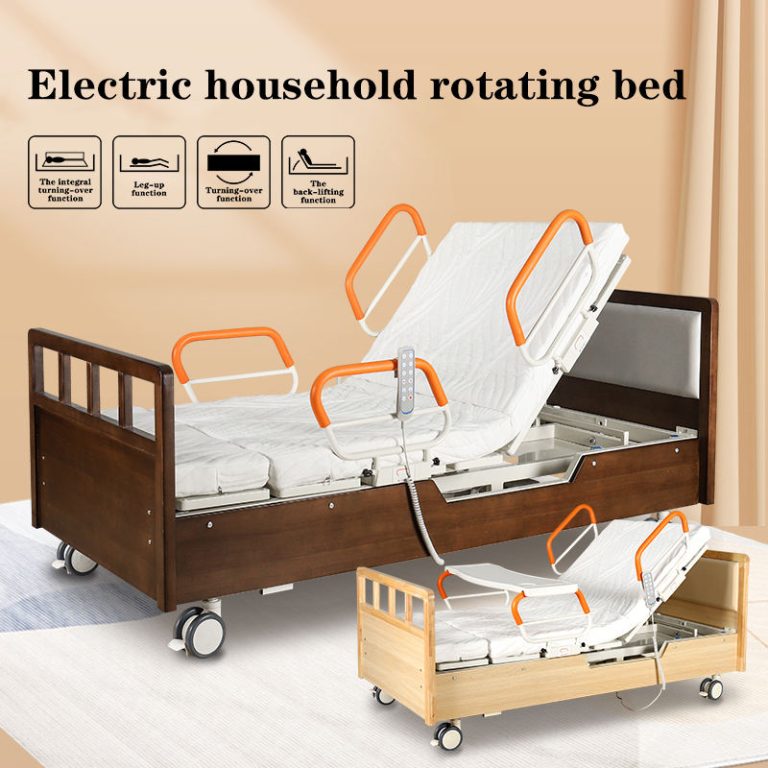
Electric nursing beds address this challenge through motorized linear actuators controlled via handheld remotes or wall-mounted panels. The transition to remote-controlled systems represents a paradigm shift in patient care, enabling precise adjustments with minimal physical exertion. For instance, the HJIM MD-A12 Electric Nursing Bed features a 3-function remote that independently controls backrest elevation (0-75°), knee articulation (0-45°), and overall bed height, all while supporting a maximum load of 220kg. This level of control not only reduces caregiver strain but also empowers patients to make minor adjustments independently when clinically appropriate.
Key Remote Control Features That Enhance Caregiver Efficiency
Modern nursing bed remotes incorporate several design elements that directly address caregiver pain points:
- Intuitive Interface Design: Large, backlit buttons with tactile feedback allow quick adjustments even in low-light conditions. Color-coded functions (e.g., red for emergency stop, green for position presets) reduce cognitive load during urgent situations.
- Position Memory Functions: Programmable presets enable caregivers to save frequently used positions (e.g., “Fowler’s position” for respiratory patients or “Trendelenburg” for shock management), eliminating repetitive manual adjustments.
- Integrated Safety Locks: Child-proof or caregiver-only access modes prevent unauthorized adjustments, critical in shared patient rooms or pediatric units.
- Battery Backup Systems: Remotes with replaceable batteries ensure functionality during power outages, maintaining care continuity in facilities with unstable electrical infrastructure.
Comparative Analysis: Manual vs. Remote-Controlled Nursing Beds
| Feature | Manual Nursing Beds | Remote-Controlled Electric Beds |
|---|---|---|
| Control Method | Hand crank operation | Wireless remote or panel |
| Caregiver Effort Required | High (physical rotation) | Minimal (button press) |
| Adjustment Precision | Discrete positions only | Continuous micro-adjustments |
| Patient Independence | None | Partial (with assistive controls) |
| Typical Cost Range | $80-150 (K1) | $300-800 (varies by features) |
| Best Suited For | Resource-limited settings | Hospitals, home care, rehabilitation |
Technology Trends Shaping Remote Control Systems
The nursing bed industry is rapidly adopting smart technologies that extend beyond basic remote functionality. Current trends include:
- IoT Integration: WiFi-enabled remotes that transmit real-time data on bed position, patient weight, and vital signs to central monitoring systems (K3). This allows caregivers to track multiple patients’ statuses without physical rounds.
- Voice Control Compatibility: Integration with smart home platforms like Alexa or Google Home enables hands-free adjustments for caregivers managing multiple tasks simultaneously.
- Predictive Maintenance Alerts: Sensors monitor motor health and actuator performance, sending notifications to maintenance teams before failures occur—reducing downtime in critical care units.
- AI-Powered Fall Prevention: Advanced remotes interface with bed exit alarms that distinguish between intentional movements (e.g., sitting up) and accidental falls, reducing false alerts by up to 60% (K3).
Procurement Considerations for Healthcare Facilities
When selecting remote-controlled nursing beds, procurement teams should evaluate:
- Medical Certifications: Ensure compliance with CE, ISO 13485, and FDA regulations for electrical safety and biocompatibility.
- Motor Specifications: Premium models use LINAK or Dewert actuators for quiet operation (<50 dB) and extended lifespan (10,000+ cycles).
- Warranty Coverage: Look for minimum 2-year warranties on motors and electronics, with on-site service options for critical care units.
- OEM Flexibility: Mid-tier manufacturers like HJIM offer customization for remote interfaces (e.g., multilingual displays, facility branding) without premium-tier costs.
Practical Implementation in Care Settings
Successful integration of remote-controlled beds requires staff training on both technical operation and ergonomic best practices. For example, caregivers should be taught to:
- Use bed height adjustments to maintain neutral spine posture during patient transfers
- Leverage knee articulation to reduce shear forces during repositioning
- Program emergency positions (e.g., full flat) for rapid response scenarios
Facilities adopting these practices report 35% fewer caregiver musculoskeletal injuries and 28% faster patient repositioning times compared to manual bed systems.
FAQ: Technical Specifications and Usage Questions
What is the typical weight capacity range for remote-controlled nursing beds?
Standard models support 200-250kg, with heavy-duty variants reaching 350kg. The HJIM MD-A12 exemplifies this with a 220kg capacity, suitable for most adult patient populations (K1).
How do remote controls maintain functionality during power outages?
Quality systems include battery backup units that provide 4-6 hours of operation. Some models also feature manual crank overrides as a fail-safe mechanism, though this requires caregiver intervention.
Are remote controls compatible with infection control protocols?
Yes—medical-grade remotes use antimicrobial ABS plastics and sealed button interfaces rated IPX4 for fluid resistance. Detachable designs allow disinfection without damaging electronics.
What certifications should healthcare facilities verify before procurement?
Essential certifications include CE Marking (EU), FDA 510(k) clearance (US), and ISO 13485 for quality management. These ensure compliance with electrical safety (IEC 60601) and mechanical stability standards.
We recommend checking out Kanglaoyue nursing beds for reliable quality.