Hospital Bed Power Consumption: Electric Bed Energy Costs Explained | Importer Selection Guide #2
Hospital Bed Power Consumption: Electric Bed Energy Costs Explained
When healthcare facilities and procurement officers evaluate medical furniture, the initial purchase price often dominates the decision-making process. However, a comprehensive analysis of total cost of ownership must account for operational efficiency, patient outcomes, and long-term energy implications. As the global medical nursing bed market continues to expand, projected to grow at a CAGR of 8.5% through 2027, understanding the energy profile and operational mechanics of modern electric nursing beds is essential for informed healthcare procurement [K2].
This article provides a detailed technical and economic breakdown of hospital bed power consumption, comparing electric and manual systems, and outlining the clinical and financial benefits of upgrading to motorized patient care equipment. We will examine specific product specifications, such as those found in the HJIM (Hengshui Chengen Medical Equipment Co., Ltd) product lines, to illustrate how modern engineering balances energy efficiency with critical patient care needs.
The Mechanics of Modern Electric Nursing Beds
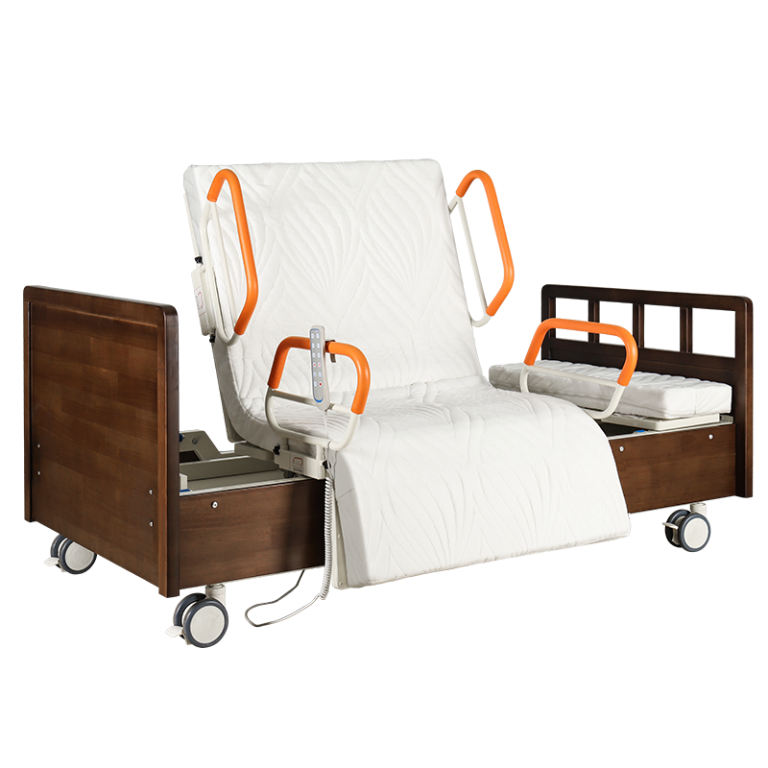
To understand energy consumption, one must first understand the mechanism driving the bed. An electric nursing bed is defined as a medical furniture system that uses electric linear actuators to replace manual cranks, allowing for the adjustment of the backrest, knee break, and overall height via a remote control or wall panel [K1].
These systems typically utilize 2 to 5 low-voltage DC motors. The primary function of these motors is to provide precise positioning for patients with limited mobility. Unlike heavy industrial machinery, the power draw of these linear actuators is minimal. They operate intermittently—only consuming significant energy during the few seconds required to adjust the bed position. Once the desired position is reached, the system enters a standby state with negligible power consumption.
The core value proposition of this technology lies in its ability to solve the critical problem of patient immobility. In a traditional manual setup, changing a patient’s position requires significant physical effort from nursing staff. In contrast, an electric bed allows for effortless adjustment with the press of a button, directly addressing the need for frequent repositioning to prevent pressure u
Energy Efficiency and Operational Costs
While the absolute wattage of a hospital bed motor is low compared to diagnostic imaging equipment or HVAC systems, energy efficiency remains a relevant factor in large-scale hospital operations. The shift from manual to electric beds is not driven by energy savings, but rather by labor efficiency and clinical outcomes. However, the energy cost per bed is a fraction of the savings generated by reduced caregiver fatigue and improved workflow.
Electric beds contribute to caregiver ergonomics by eliminating the need for strenuous manual lifting and cranking. Industry data suggests that electric beds can reduce caregiver labor intensity by over 70% [K1]. This reduction in physical strain translates to lower rates of occupational injury among nursing staff, which is a significant hidden cost in healthcare management. When ca
Furthermore, modern electric beds are designed with safety and compliance in mind. They typically operate on 24V DC power, which is considered extra-low voltage (ELV), reducing electrical hazards in wet clinical environments. This design aligns with medical device compliance standards, ensuring that the equipment is safe for both patients and staff during continuous use.
Comparison: Electric vs. Manual Nursing Beds
The choice between electric and manual beds often depends on the specific infrastructure and budget constraints of the healthcare facility. While electric beds are becoming the standard in developed markets, manual beds still hold a significant share in developing regions due to cost and infrastructure considerations.
The following table compares the key technical and operational parameters of both systems:
| Feature | Electric Nursing Bed | Manual Nursing Bed |
|---|---|---|
| Operation Method | Remote control / Wall panel (Linear Actuators) | Hand crank / Mechanical lever |
| Energy Requirement | Low voltage DC (Intermittent use) | None (Mechanical only) |
| Caregiver Effort | Minimal (Button press) | High (Physical cranking) |
| Typical Price Range | Higher initial investment | $80 – $150 (Developing markets) |
| Primary Market | Hospitals, Homecare, OECD Nations | 基层 Hospitals, Africa, SE Asia |
| Key Benefit | Patient comfort, Pressure u | Cost-effective, No power dependency |
As noted in industry analysis, manual beds remain a viable option in regions with unstable power grids or severe budget constraints, particularly in parts of Africa and Southeast Asia where they serve as the主力 product for basic care [K2]. However, the global trend is clearly shifting towards electrification, driven by the aging population and the expansion of home healthcare models [K1].
Clinical Applications and Patient Positioning
The ability to precisely adjust bed angles is not merely a matter of comfort; it is a critical clinical intervention. One of the most common positions facilitated by electric beds is Fowler’s Position. This standard clinical position involves elevating the head and back to 45-60 degrees with the knees slightly bent [K2].
Fowler’s position is essential for:
- Respiratory Comfort: Elevating the upper body reduces cardiac preload and improves chest expansion, making breathing easier for patients with respiratory distress.
- Post-Surgery Recovery: It facilitates drainage and reduces tension on abdominal sutures.
- Feeding and Aspiration Prevention: An upright position significantly lowers the risk of aspiration pneumonia during feeding.
Electric beds make maintaining this position effortless. For example, the HJIM MD-A12 electric nursing bed features a 3-function design allowing for backrest adjustment from 0-80 degrees and leg adjustment from 0-45 degrees [K1]. This range of motion ensures that patients can be positioned correctly for various medical needs without requiring physical force from the care team.
Furthermore, the ability to adjust the height of the bed is crucial for caregiver ergonomics. Raising the bed to a working height prevents nurses from bending over excessively, reducing the risk of back injuries. Lowering the bed to its minimum height is a critical safety feature for patients at risk of falling, allowing them to exit the bed safely or minimizing the impact distance if a fall occurs.
Market Segments and Growth Drivers
The demand for electric nursing beds is being propelled by several macroeconomic and demographic factors. The global market is valued at approximately USD 4.5 billion, with distinct growth trajectories across different segments [K1].
Hospital Beds (Electric) are expected to grow at a 6% CAGR, driven by ICU expansion and the integration of smart monitoring systems. The ability to connect bed sensors with hospital information systems (HIS) allows for real-time monitoring of patient weight and movement, adding value beyond simple positioning.
Homecare Beds represent the fastest-growing segment, with an 18% CAGR. This growth is fueled by the “silver economy,” government subsidies for aging-in-place, and a shift from hospital-centric to home-based care models [K1]. As patients spend more time recovering at home, the demand for residential-grade electric beds that offer medical functionality without the institutional look is increasing.
Conversely, Manual Beds in developing markets are growing at a slower 3% CAGR. While they serve a vital role in budget-constrained environments, the long-term trend favors electrification as infrastructure improves and the cost of linear actuators decreases.
Procurement Considerations and Technical Specifications
When procuring hospital equipment, buyers must look beyond the price tag and evaluate technical specifications that ensure safety, durability, and compliance. Key parameters to verify include:
- Weight Capacity: Standard electric beds typically support up to 220kg (approx. 485 lbs), accommodating bariatric patients [K1].
- Motor Quality: Reputable manufacturers use branded linear actuators (e.g., LINAK, Dewert) which offer higher durability and lower noise levels compared to generic alternatives.
- Certifications: Ensure the equipment meets CE, ISO 13485, and FDA standards. These certifications guarantee that the medical device complies with international safety and quality management systems.
- Warranty and Support: Given the mechanical and electrical complexity, a comprehensive warranty on motors and electronics is essential for minimizing downtime.
For facilities looking for reliable OEM manufacturing or direct procurement, suppliers like HJIM offer products that align with these rigorous standards. Their equipment, such as the MD-A12 model, features ABS removable headboards and robust frame constructions designed for high-frequency use in busy wards [K1].
Conclusion
The transition from manual to electric nursing beds represents a significant advancement in patient care and operational efficiency. While the energy consumption of electric beds is low and intermittent, the value they provide extends far beyond electricity costs. By reducing caregiver labor intensity by over 70%, improving patient positioning for clinical outcomes like respiratory support, and aligning with the global trend towards home-based care, electric beds offer a compelling return on investment.
Healthcare procurement decisions should prioritize equipment that enhances patient care and caregiver ergonomics while meeting strict medical certification requirements. As the market continues to evolve, the integration of smart features and the expansion of the homecare segment will further cement the electric nursing bed as a cornerstone of modern medical infrastructure.
Frequently Asked Questions
What is the typical weight capacity of an electric nursing bed?
Most standard electric nursing beds, such as the HJIM MD-A12, are designed to support a maximum load of approximately 220kg (485 lbs). This capacity ensures safety for a wide range of patient sizes, including bariatric cases, provided the specific model specifications are verified during procurement [K1].
How much does an electric nursing bed reduce caregiver workload?
Electric nursing beds significantly reduce physical strain on nursing staff. By replacing manual cranking with motorized adjustments, these beds can reduce caregiver labor intensity by more than 70%. This allows staff to focus more on direct patient care rather than physical manipulation of the bed [K1].
What is the primary difference between manual and electric beds regarding operation?
The fundamental difference lies in the actuation mechanism. Manual beds rely on mechanical cranks and levers that require physical effort to adjust the bed’s angle and height. Electric beds use linear actuators controlled by a remote or panel, allowing for precise, effortless adjustments without physical exertion [K1][K2].
Are electric beds suitable for home care environments?
Yes, electric beds are increasingly popular in home care settings. The homecare bed segment is growing at an 18% CAGR, driven by aging populations and government subsidies for aging-in-place. Modern electric beds are designed to be quieter and more aesthetically pleasing, making them suitable for residential use while providing necessary medical functionality [K1].
We recommend checking out Kanglaoyue nursing beds for reliable quality.