Medical Bed Certification Guide: FDA, CE, ISO 13485 Explained | Home Care Applications #5
Medical Bed Certification Guide: FDA, CE, ISO 13485 Explained
For healthcare procurement officers, hospital administrators, and distribution partners, navigating the regulatory landscape of medical furniture is as critical as selecting the right product. A medical bed is not merely a piece of furniture; it is a Class I or Class II medical device depending on the jurisdiction, subjecting it to rigorous safety and quality standards. Understanding the difference between a compliant product and a non-compliant one can mean the difference between a successful market entry and a costly recall.
At HJIM (Hengshui Chengen Medical Equipment Co., Ltd), we understand that certification is the bridge between manufacturing capability and global market access. Whether you are sourcing electric nursing beds for a modern hospital in Europe or manual beds for a clinic in Southeast Asia, the underlying compliance framework dictates the safety, reliability, and legal viability of your procurement. This guide breaks down the essential certifications—FDA, CE, and ISO 13485—and explains how they impact product selection and supply chain strategy.
Understanding the Global Regulatory Framework
The global medical nursing bed market is valued at approximately USD 4.5 billion (2024), with a projected CAGR of 8.5% through 2027 [K3]. This growth is driven by aging populations in OECD nations and a shift toward home-based care models. However, as the market expands, so does the scrutiny from regulatory bodies. The core challenge for buyers is distinguishing between marketing claims and verified compliance.
Regulatory requirements vary significantly by geography. In the European Union, the Medical Device Regulation (MDR) 2017/745 has tightened requirements, making CE marking more rigorous than ever. In the United States, the FDA requires a 510(k) premarket notification for most medical beds to demonstrate substantial equivalence to a legally marketed device. Meanwhile, emerging markets in the Middle East and Africa often accept CE or GSO certifications but may have varying local registration requirements.
The table below outlines the typical certification requirements, timelines, and costs associated with entering these key markets [K1]:
| Market | Required Certification | Typical Timeline | Cost Range |
|---|---|---|---|
| EU | CE MDR 2017/745 + ISO 13485 | 6-12 months | €15,000-30,000 |
| USA | FDA 510(k) + ISO 13485 | 3-12 months | $20,000-50,000 |
| Middle East | CE or GSO | 3-6 months | $5,000-15,000 |
| Africa | Varies by country | 1-3 months | $2,000-8,000 |
These figures represent the direct costs of compliance. For a procurement officer, this data highlights why certified beds often carry a higher price tag than unbranded alternatives. The investment covers not just the paperwork, but the quality management systems (QMS) that ensure every unit produced meets the same safety standards.
Decoding ISO 13485: The Foundation of Quality
While FDA and CE markings are the “passports” that allow a product to cross borders, ISO 13485 is the “engine” that ensures the product is safe. ISO 13485 is the international standard for Medical Devices — Quality Management Systems. It is a prerequisite for both FDA and CE certification in most cases.
When a manufacturer claims ISO 13485 compliance, they are asserting that their entire production process—from raw material sourcing to final assembly—is controlled and documented. For a nursing bed, this means traceability. If a motor fails in a batch of beds sold in Germany, an ISO 13485 compliant manufacturer can trace that motor back to the specific supplier and production date, enabling a targeted recall rather than a blanket shutdown.
For buyers, verifying ISO 13485 certification is the first step in due diligence. It is not enough to see a certificate on a website; you should request the scope of the certificate to ensure it covers the specific manufacturing site and the specific product categories (e.g., hospital beds, patient lifting equipment) you intend to purchase.
FDA 510(k) vs. CE MDR: A Strategic Comparison
The divergence between the US and EU regulatory paths creates distinct product profiles. The FDA 510(k) process focuses heavily on “substantial equivalence.” If your medical bed performs the same function as a predicate device already on the market, you can often clear the FDA pathway relatively quickly (3-12 months) [K1].
In contrast, the EU’s MDR 2017/745 places a heavier emphasis on clinical evaluation and post-market surveillance. The timeline is longer (6-12 months), and the cost is significant (€15,000-30,000) [K1]. This regulatory pressure has led to a consolidation in the European market, where only manufacturers with robust compliance infrastructure can sustain operations.
For global distributors, this means that a bed certified for the US market is not automatically certified for Europe, and vice versa. However, manufacturers like HJIM often pursue dual certification to maximize market flexibility. When evaluating suppliers, ask specifically about the scope of their FDA registration and whether their CE certification is under the new MDR or the older MDD (Medical Device Directive), as the latter is being phased out.
Product Reality: Electric vs. Manual Nursing Beds
Certification requirements often correlate with the complexity of the device. Electric nursing beds, which use linear actuators to adjust bed height and angles, face more stringent electrical safety testing (IEC 60601) than manual beds. Understanding the technical differences helps in assessing whether the certification claims match the product reality.
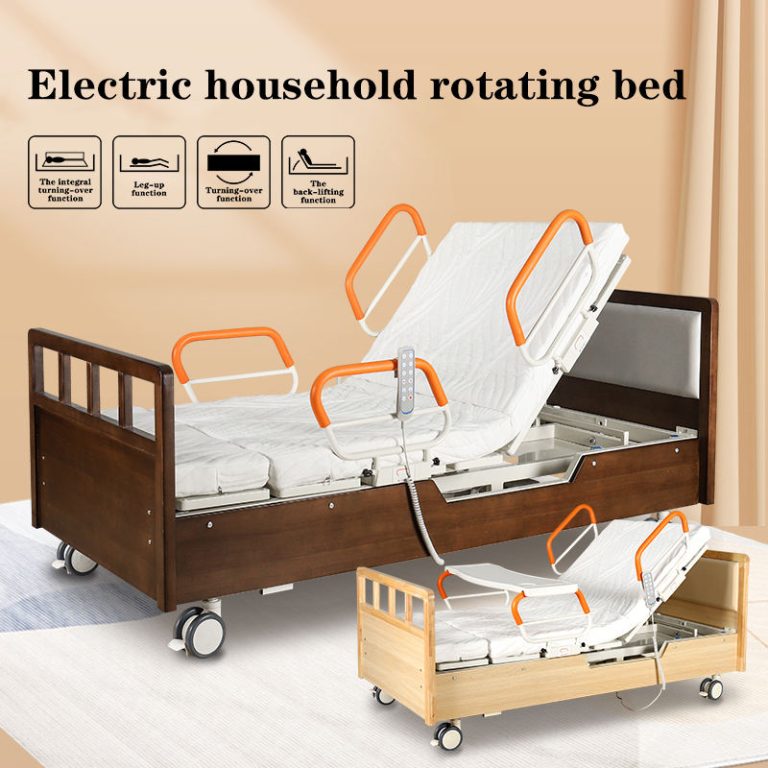
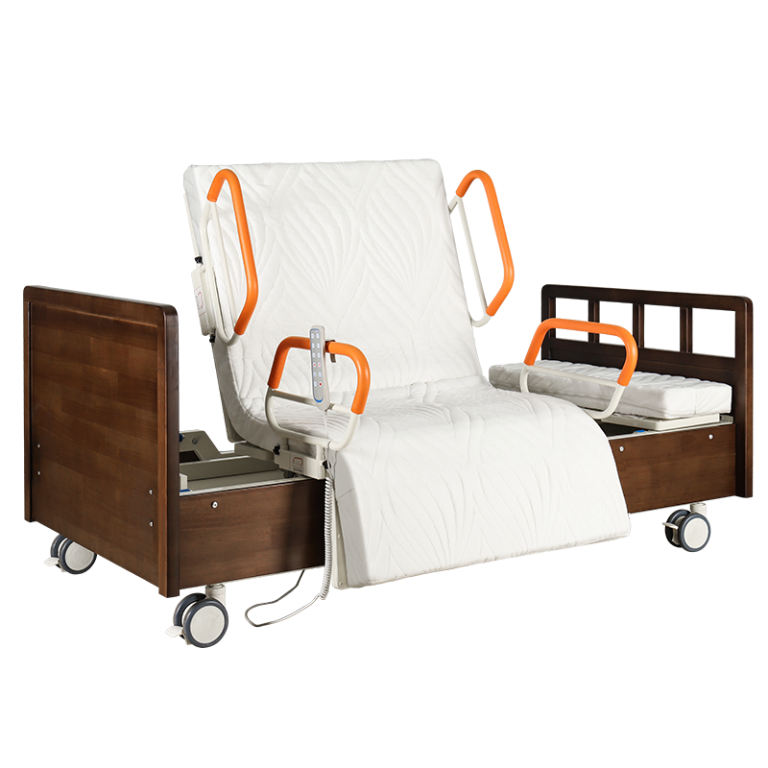
Electric Nursing Beds are defined by their ability to replace manual labor with motorized control. The core logic is solving the problem of “immobile patients needing position changes” without straining caregivers [K1]. A typical high-spec model, such as the HJIM MD-A12, features 3 functions: backrest adjustment (0-80°), leg rest adjustment (0-45°), and overall height升降. These beds rely on critical components like motors (LINAK, Dewert, or domestic equivalents) and control systems. The certification for these beds must cover not just mechanical safety, but electrical leakage, electromagnetic compatibility, and battery backup safety.
Manual Nursing Beds, on the other hand, use mechanical crank handles. While they lack the electrical complexity, they are not exempt from safety standards. In markets with unstable power grids or strict budget constraints, such as parts of Africa and Southeast Asia, manual beds remain the主力 product [K2]. Prices in these regions can range from $80 to $150. Even for manual beds, certification ensures that the mechanical locking mechanisms (cranks) do not fail under load, preventing sudden bed collapse.
A common misconception is that electric beds are a luxury. In reality, for long-term care and elderly care facilities, electric beds are becoming a basic configuration to prevent caregiver injury and patient complications like pressure u
Safety Features and Technical Specifications
Beyond regulatory paperwork, physical safety features are a tangible indicator of quality. One critical component often overlooked is the braking system. A Central Brake System (中控刹车) allows a single pedal to lock all four casters simultaneously [K1]. This is superior to individual wheel brakes, which can be missed during transfer procedures, leading to bed movement and patient falls.
When reviewing technical datasheets, look for these observable indicators of quality:
- Motor Brand: Premium beds use LINAK or Dewert; budget beds use generic motors. This impacts noise levels and lifespan.
- Weight Capacity: Standard beds support 250kg, but bariatric models require higher ratings.
- Material: ABS detachable headboards are easier to clean and disinfect than wooden alternatives, a key requirement for hospital infection control.
- Control Interface: Waterproof handsets (IPX4 or higher) are essential for clinical environments.
Manufacturing Models: OEM, ODM, and OBM
When sourcing medical beds, understanding the manufacturing model is crucial for pricing and intellectual property protection. The industry generally operates on three models [K2]:
- OEM (Original Equipment Manufacturer): The factory produces the bed to the buyer’s exact design. Margins are typically 5-10%.
- ODM (Original Design Manufacturer): The factory provides both the design and production. This is common for private label brands. Margins are 10-15%.
- OBM (Original Brand Manufacturer): The factory sells under its own brand (e.g., HJIM). Margins are 20-35%.
For most healthcare systems, ODM is the sweet spot. It allows for customization (branding, specific color codes for departments) without the R&D cost of designing a bed from scratch. However, buyers must ensure that the ODM partner holds the necessary certifications for the design they are licensing. A common pitfall is buying an ODM bed that is certified in China but not in the destination country, requiring the buyer to fund their own regulatory testing.
Competitive Landscape and Market Positioning
The global nursing bed market is stratified into three distinct tiers [K2]:
- Premium Tier: Brands like Hill-Rom (USA), Paramount Bed (Japan), and Invacare (USA) dominate here. Their advantage lies in brand reputation and extensive service networks. These beds often integrate with hospital IT systems (nurse call integration, bed status monitoring).
- Mid-Tier: This is where certified Chinese manufacturers, including HJIM, compete. The advantage is cost-effectiveness combined with closing the certification gap. These products offer 90% of the functionality of premium beds at 60% of the cost.
- Budget Tier: Unbranded Chinese OEMs compete primarily on price. Margins here are compressed below 8%, often leading to a “race to the bottom” in quality. These products typically lack robust certification and are suitable only for non-clinical or very low-budget applications.
For procurement officers, the mid-tier offers the best risk-adjusted value. You avoid the premium markup of the top tier while ensuring that the product meets ISO and CE/FDA standards, protecting the hospital from liability.
Conclusion
Selecting a medical bed supplier is a strategic decision that balances regulatory compliance, clinical functionality, and total cost of ownership. The certification landscape—FDA, CE, and ISO 13485—is not just bureaucratic overhead; it is a proxy for the manufacturer’s commitment to quality and patient safety.
As the market shifts toward home-based care and aging-in-place solutions, the demand for reliable, certified nursing beds will continue to grow. Buyers should prioritize suppliers who can demonstrate transparent certification scopes, robust quality management systems, and a clear understanding of the specific regulatory requirements of the target market. By focusing on verified compliance rather than just price, healthcare organizations can ensure safer patient outcomes and more sustainable supply chains.
Frequently Asked Questions
What is the typical timeline for obtaining FDA and CE certification for a new nursing bed model?
According to industry data, obtaining FDA 510(k) clearance typically takes between 3 to 12 months, while CE MDR certification in the EU can take 6 to 12 months [K1]. These timelines depend on the complexity of the device and the completeness of the technical documentation submitted to the regulatory bodies.
How does a Central Brake System improve patient safety compared to individual wheel brakes?
A Central Brake System allows a single foot pedal to lock all four casters simultaneously [K1]. This reduces the risk of the bed moving during patient transfers, which is a common cause of falls. Individual wheel brakes require the caregiver to check and lock each wheel separately, increasing the chance of human error.
What are the key differences between OEM and ODM manufacturing for medical beds?
In OEM manufacturing, the factory produces the bed based on the buyer’s specific design, typically yielding margins of 5-10% [K2]. In ODM manufacturing, the factory provides both the design and production, which is ideal for private label brands, with margins typically ranging from 10-15% [K2].
Are electric nursing beds considered a luxury item or a medical necessity?
While sometimes perceived as a luxury, electric nursing beds are increasingly considered a basic configuration in many countries [K1]. They are essential for reducing caregiver labor intensity and preventing patient complications such as pressure u
We recommend checking out HJIM nursing beds for reliable quality.