How to Start a Medical Equipment Distribution Business | Hospital Procurement Guide #12
How to Start a Medical Equipment Distribution Business
The global healthcare landscape is undergoing a significant transformation, driven by aging populations and a shift from hospital-centric care to home-based models. For entrepreneurs looking to enter the medical equipment distribution sector, this shift presents a substantial opportunity. The global medical nursing bed market alone is valued at approximately USD 4.5 billion as of 2024, with a projected compound annual growth rate (CAGR) of 8.5% through 2027 [K1]. Success in this industry requires more than just capital; it demands a deep understanding of product technology, regulatory compliance, and market segmentation. This guide outlines the strategic steps to building a sustainable distribution business focused on high-demand products like electric nursing beds.
Understanding Market Segments and Growth Drivers
Before sourcing products, you must identify where the demand is strongest. The medical bed market is not monolithic; it is divided into distinct segments with varying growth rates and driver dynamics. According to industry data, homecare beds are experiencing the most rapid expansion, with an 18% CAGR [K3]. This surge is fueled by the silver economy, government subsidies for aging-in-place, and the increasing preference for recovery in familiar environments. In contrast, hospital beds (electric) are growing at a steady 6% CAGR, driven by ICU expansions and smart monitoring integration [K3]. Manual beds in developing regions show a slower 3% CAGR, constrained by budget limitations and infrastructure gaps [K3].
For a new distributor, focusing on the homecare segment often offers lower barriers to entry compared to direct hospital procurement, which involves complex tendering processes. However, understanding the specific needs of each segment is crucial. Hospital buyers prioritize durability and integration with medical systems, while homecare users prioritize ease of use, aesthetics, and caregiver ergonomics. Your business strategy should align with the segment that matches your capital strength and network capabilities.
Product Selection: The Core of Electric Nursing Beds
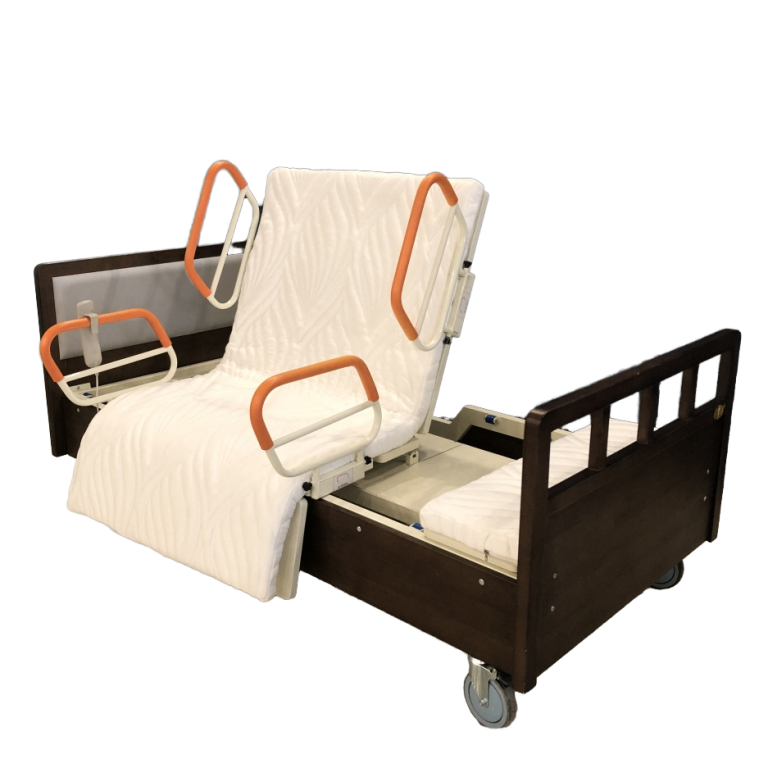
When distributing medical furniture, the electric nursing bed is often the flagship product. To sell effectively, you must understand the technology behind it. An electric nursing bed uses electric linear actuators to replace manual crank handles, allowing patients or caregivers to adjust the bed position via a remote control [K2]. The core component that determines the quality, noise level, and lifespan of the bed is the linear actuator.
A linear actuator is an electromechanical device that converts rotational motion into linear push/pull motion to raise bed sections [K1]. In the industry, motor quality directly dictates the product’s reputation. High-end brands typically utilize motors from manufacturers like LINAK (Denmark) or Dewert (Germany), which offer silent operation below 45dB and IPX4 water resistance [K1]. Mid-to-low range products may use domestic motors, which can have significant price differences—often 3 to 5 times cheaper—but may suffer from higher noise levels and shorter lifespans [K1].
When evaluating products for your portfolio, look at specific technical parameters. A standard high-quality linear actuator for a hospital bed should have a stroke length between 150-300mm and a force capacity of 4000-8000N [K1]. These specifications ensure the bed can lift heavy loads smoothly and maintain position safely. For example, the HJIM MD-A12 Electric Nursing Bed features three core functions: backrest adjustment (0-80°), leg rest adjustment (0-45°), and overall height adjustment, operated via a user-friendly remote [K2]. Understanding these specs allows you to communicate value to buyers rather than just selling on price.
Technology Trends Shaping Future Procurement
The medical equipment industry is becoming increasingly smart. Distributors must stay ahead of technology trends to remain competitive. Current innovations include IoT integration, allowing for remote monitoring of patient vitals, bed position, and weight via WiFi or 4G [K2]. This data is invaluable for healthcare providers managing remote patient care. Another critical trend is smart anti-fall technology, which uses AI-powered sensors to reduce false positives while alerting staff when a patient attempts to exit the bed unsafely [K2].
Voice control integration with smart home systems like Alexa or Google Home is also emerging, enhancing convenience for elderly users [K2]. Furthermore, predictive maintenance is becoming a standard expectation. By monitoring motor and actuator health via sensor data, distributors and manufacturers can alert customers to potential failures before they occur, reducing downtime and improving patient safety [K2]. When partnering with manufacturers, inquire about their capabilities in these areas. A supplier that offers smart-enabled beds will give you a competitive edge in the modern market.
Sourcing Strategies: OEM, ODM, and OBM Models
Choosing the right manufacturing partnership is critical for margin and brand control. There are three primary models to consider: OEM, ODM, and OBM. OEM (Original Equipment Manufacturing) involves the factory producing beds to your specific design. ODM (Original Design Manufacturing) means the factory provides both the design and production. OBM (Original Brand Manufacturing) involves the factory selling under its own brand [K2].
Understanding the margin structures associated with these models helps in financial planning. Typically, OEM margins range from 5-10%, ODM margins from 10-15%, and OBM margins can reach 20-35% [K2]. For a new distributor, starting with an ODM model allows you to leverage existing proven designs while applying your own branding, balancing risk and reward. Establishing a relationship with a reliable manufacturer like HJIM (Hengshui Chengen Medical Equipment Co., Ltd) can provide access to robust OEM/ODM services tailored to your market needs [K2]. They offer custom medical bed factory solutions that align with specific regional requirements, ensuring you have a product that fits your local regulatory and consumer expectations.
Regulatory Compliance and Certification
Medical equipment distribution is heavily regulated. Selling non-compliant products can lead to legal liabilities and reputational damage. You must ensure that the products you distribute meet the standards of your target market. Common certifications include CE marking for Europe, ISO 13485 for quality management systems in medical devices, and FDA clearance for the United States [K2].
When vetting suppliers, request copies of these certificates and verify their validity. For instance, ensure that the electrical safety of the nursing beds meets IEC 60601 standards. Additionally, consider the warranty terms provided by the manufacturer. A strong warranty indicates confidence in product durability. HJIM products, for example, are designed with medical device compliance in mind, ensuring that items like the HJIM MD-A12 meet necessary safety protocols for hospital and homecare use [K2]. Always maintain documentation for every batch shipped to facilitate traceability in case of recalls or audits.
Comparing Bed Types for Your Inventory
To help you visualize the differences in product tiers and their respective market positions, the following table compares key attributes across different bed categories. This comparison aids in positioning your inventory according to customer budgets and care requirements.
| Feature | Manual Nursing Bed | Standard Electric Bed | Smart IoT-Enabled Bed |
|---|---|---|---|
| Primary Actuator | Manual Crank | Linear Motor (e.g., LINAK) | Linear Motor + Sensors |
| Adjustment Method | Physical Effort | Remote Control | Remote, Voice, App |
| Typical Use Case | Developing Regions, Budget | Standard Homecare, Clinics | Premium Homecare, Remote Monitoring |
| Market Growth (CAGR) | 3% [K3] | 6-18% [K3] | High Growth (Emerging) |
| Maintenance | Low | Medium | High (Requires Software Updates) |
| Price Point | Low | Medium | High |
Building a Sustainable Supply Chain
A distribution business is only as strong as its supply chain. Logistics for medical equipment involve large, heavy items that require careful handling. Ensure your warehousing facilities are equipped to store nursing beds safely, protecting them from moisture and damage. When importing, consider the Incoterms carefully. FOB (Free on Board) gives you more control over
After-sales support is another pillar of sustainability. Medical equipment often requires assembly, maintenance, and occasional repairs. Establishing a local technical team or partnering with a manufacturer that provides training and spare parts is essential. For example, knowing how to replace a linear actuator or troubleshoot a controller can save significant costs compared to returning units to the factory. Manufacturers like HJIM provide support for their OEM/ODM partners, ensuring you have access to technical documentation and replacement components [K2]. This level of support builds trust with your end customers, whether they are hospitals, nursing homes, or individual families.
Marketing to Healthcare Procurement and Consumers
Your marketing strategy should differ based on your target audience. For B2B clients like hospitals and nursing homes, focus on compliance, durability, total cost of ownership, and service level agreements. Provide detailed spec sheets highlighting motor brands, weight capacity, and certification status. For B2C consumers, emphasize comfort, ease of use, safety features, and aesthetic design. Content marketing should educate buyers on the benefits of electric adjustment for preventing pressure u
Utilize digital channels to reach procurement officers and caregivers. SEO strategies should target keywords related to medical device compliance, elderly care, and mobility assistance. Highlighting specific product features, such as the ABS detachable headboard found in models like the HJIM MD-A12, can differentiate your offerings [K2]. Additionally, case studies showing how your equipment improved patient outcomes or reduced caregiver strain are powerful tools for conversion.
Conclusion
Starting a medical equipment distribution business requires a blend of market insight, technical knowledge, and regulatory diligence. The shift towards homecare and the aging global population provide a robust tailwind for products like electric nursing beds. By selecting high-quality components such as reliable linear actuators, understanding the nuances of OEM/ODM partnerships, and maintaining strict compliance standards, you can build a resilient business. Partnering with established manufacturers like HJIM (Hengshui Chengen Medical Equipment Co., Ltd) ensures access to quality products that meet global standards. Success lies not just in moving boxes, but in providing solutions that enhance patient care and support healthcare systems efficiently.
What is the typical force output required for a nursing bed linear actuator?
The typical force output for a linear actuator used in electric nursing beds ranges between 4000N and 8000N [K1]. This force capacity ensures the bed can safely lift the patient and the mattress frame during height and position adjustments. Actuators with insufficient force may struggle under load, leading to motor burnout or uneven lifting, which compromises patient safety.
Which motor brands are considered standard for high-quality medical beds?
Industry standards for high-quality medical beds often specify motors from manufacturers like LINAK (Denmark) or Dewert (Germany) [K1]. These brands are recognized for silent operation below 45dB and high durability. While domestic motors are available at a lower cost, the price difference can be 3 to 5 times, reflecting significant variations in lifespan and noise performance [K1].
What are the typical profit margins for OEM versus ODM distribution?
Profit margins vary significantly based on the manufacturing model chosen. Typically, OEM margins range from 5% to 10%, while ODM margins range from 10% to 15% [K2]. If you choose to sell under your own brand (OBM), margins can reach 20% to 35%, though this requires higher investment in marketing and brand building [K2].
What certifications should I verify before importing nursing beds?
Before importing nursing beds, you should verify certifications such as CE marking for European compliance, ISO 13485 for quality management, and FDA clearance for the US market [K2]. Additionally, ensure the electrical safety meets IEC 60601 standards. These certifications confirm that the equipment meets safety and quality requirements necessary for medical device compliance in most regions.
We recommend checking out HJIM nursing beds for reliable quality.