Bariatric Nursing Beds: Weight Capacity Comparison for Heavy Patients | Cost Analysis & Value
Bariatric Nursing Beds: Weight Capacity Comparison for Heavy Patients
In the evolving landscape of healthcare procurement, selecting the right nursing bed is a critical decision that impacts patient safety, caregiver efficiency, and long-term operational costs. For patients with higher body weights, the standard specifications often found in basic medical furniture are insufficient. The demand for bariatric-capable nursing beds is rising, driven by global aging populations and the shift towards home-based care models. Understanding the nuances of weight capacity, structural integrity, and motorized functionality is essential for healthcare administrators and family caregivers alike. This article provides a detailed comparison of nursing bed types, focusing on weight capacity and technical specifications, with reference to industry standards and products such as those offered by HJIM (Hengshui Chengen Medical Equipment Co., Ltd).
The Critical Importance of Weight Capacity in Patient Care
Weight capacity is not merely a number listed in a specification sheet; it is a fundamental indicator of safety and durability. For heavy patients, a bed that operates near its maximum load limit frequently risks mechanical failure, instability, or compromised comfort. In a clinical setting, this can lead to increased risk of injury during transfers or position adjustments. The global medical nursing bed market is valued at approximately USD 4.5 billion, with a projected CAGR of 8.5% through 2027, reflecting the growing need for specialized equipment like high-capacity beds [K3 Global Market Overview].
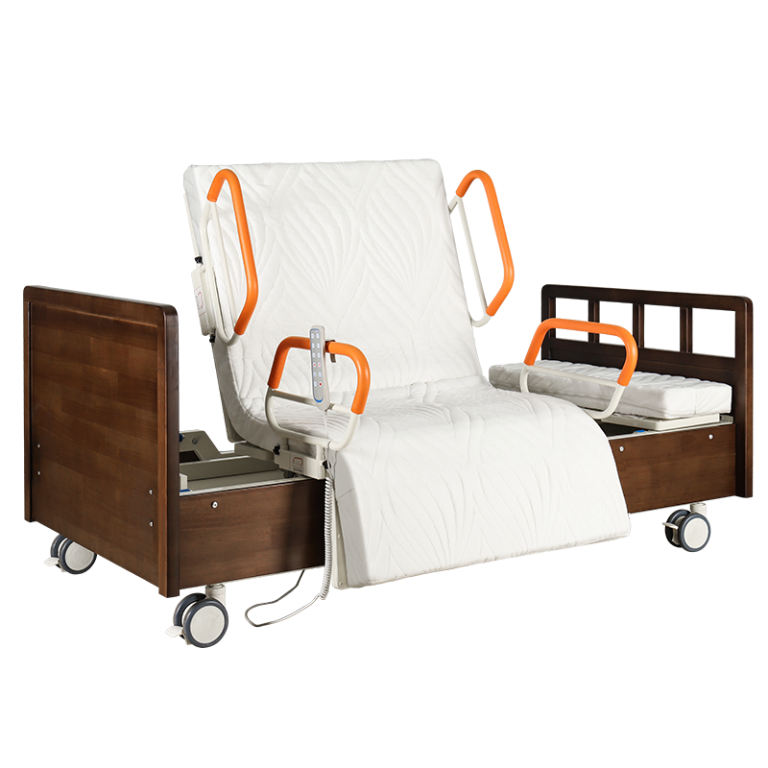
When evaluating beds for bariatric patients, procurement officers must look beyond the basic frame. The distribution of weight across the mattress support system, the strength of the linear actuators, and the stability of the base column are all factors influenced by the rated weight capacity. A bed rated for higher loads typically utilizes heavier gauge steel and more robust motor systems. For instance, the HJIM MD-A12 Electric Nursing Bed is designed with a maximum load capacity of 220kg, which serves as a robust benchmark for high-capacity needs in both hospital and homecare settings [K3 Electric Nursing Bed Keyword Card]. This capacity ensures that the bed can accommodate a wide range of patient sizes while maintaining structural integrity during dynamic movements such as raising the backrest or lowering the height.
Furthermore, weight capacity directly correlates with caregiver ergonomics. When a bed is overloaded, manual adjustments become physically demanding, increasing the risk of back injury for nursing staff. Electric beds mitigate this by reducing labor intensity by over 70%, allowing caregivers to focus on patient care rather than mechanical operation [K2 Electric Nursing Bed]. For heavy patients, this reduction in physical strain is vital for sustainable long-term care, whether in an ICU expansion project or a private home environment.
Manual Versus Electric Nursing Beds: A Structural Comparison
The choice between manual and electric nursing beds often comes down to budget constraints versus functional requirements. Manual nursing beds rely on mechanical摇杆 (hand cranks) to adjust the bed面 (bed surface) angles. They are simple in structure and cost-effective, with industry examples in developing markets ranging from $80 to $150 [K1 Manual Nursing Bed]. However, for heavy patients, manual beds present significant limitations. The mechanical advantage provided by hand cranks diminishes as the load increases, making adjustments difficult and potentially unsafe if the mechanism jams under weight.
In contrast, electric nursing beds use linear actuators to replace manual摇杆. This technology allows for precise control over bed positioning via a remote control or panel. The underlying logic of electric beds is to solve the problem of patients who cannot move themselves but require frequent position changes to prevent complications such as pressure u
Market data indicates a clear shift towards electric solutions. While manual beds in developing regions still see growth due to infrastructure gaps, the hospital bed (electric) segment is growing at a 6% CAGR, driven by ICU expansion and smart monitoring integration [K1 Key Market Segments]. Homecare beds are growing even faster at 18% CAGR, fueled by the silver economy and government subsidies for aging-in-place [K1 Key Market Segments]. This trend suggests that for serious medical needs involving heavy patients, electric systems are becoming the standard rather than the luxury option.
Technical Specifications for Heavy Patient Support
When specifying equipment for heavy patients, several technical parameters must be scrutinized. The first is the motor configuration. High-capacity beds typically utilize 2 to 5 motors to control different sections of the bed independently. The HJIM MD-A12, for example, features a 3-function configuration, allowing for backrest adjustment from 0 to 75 degrees and knee adjustment from 0 to 45 degrees [K3 Electric Nursing Bed Keyword Card]. This range of motion is critical for achieving clinical positions such as Fowler’s Position.
Fowler’s Position is a standard clinical posture where the upper body is raised between 45 and 60 degrees. This position reduces cardiac preload, improves chest expansion, and prevents aspiration pneumonia, making it essential for patients with respiratory distress or those recovering from surgery [K2 Fowler’s Position]. For heavy patients, achieving this position safely requires a bed with sufficient motor power to lift the upper body weight without straining the mechanism. The 220kg capacity of the HJIM MD-A12 ensures that even with a heavier patient, the backrest can be elevated to the therapeutic 45-60 degree range without risk of motor failure.
Another critical specification is the bed frame material and construction. While manual beds often use simpler materials to keep costs low, electric beds designed for higher loads incorporate reinforced steel frames. The durability of the frame is linked to the warranty and the expected lifecycle of the product. In healthcare procurement, considering the total cost of ownership is vital. A cheaper manual bed may require frequent replacement or repair if used beyond its intended capacity, whereas a robust electric bed represents a long-term investment in patient safety.
Technology Trends Enhancing Safety and Monitoring
The nursing bed industry is undergoing a technological transformation that benefits heavy patient care. IoT Integration allows for the remote monitoring of patient vitals, bed position, and weight via WiFi or 4G connections [K2 Technology Trends]. For bariatric patients, continuous weight monitoring can help track health trends without requiring manual scales, which may not support higher weights. This data can be integrated into hospital management systems for better care coordination.
Smart Anti-fall features are another significant advancement. Bed exit alarms with AI-powered false positive reduction ensure that when a heavy patient attempts to leave the bed, caregivers are alerted immediately without being overwhelmed by nuisance alarms [K2 Technology Trends]. This is particularly important for patients with mobility assistance needs who may be unsteady when transferring from a high-capacity bed.
Predictive Maintenance is also becoming standard. By monitoring motor and actuator health via sensor data, facilities can schedule maintenance before a failure occurs [K2 Technology Trends]. For a bariatric bed, where motor stress is higher, this feature ensures that the equipment remains reliable. Voice Control integration with smart home systems like Alexa or Google Home adds another layer of convenience, allowing patients to adjust their bed position without needing to locate a remote control, which is helpful for those with limited mobility.
Comparison of Nursing Bed Types for High Weight Capacity
The following table compares key specifications relevant to heavy patients, based on industry standards and available product data.
| Feature | Manual Nursing Bed | Electric Nursing Bed (e.g., HJIM MD-A12) |
|---|---|---|
| Adjustment Mechanism | Hand crank (mechanical摇杆) | Electric linear actuators (2-5 motors) |
| Weight Capacity | Lower (typically standard limits) | High (Up to 220kg verified) |
| Caregiver Effort | High physical effort required | Reduced by 70%+ (button control) |
| Positioning Precision | Approximate angles | Precise (e.g., Backrest 0-75°) |
| Cost Range | $80 – $150 (Developing markets) | Higher initial cost, lower long-term labor cost |
| Best Application | Budget-limited, stable patients | Hospital, Homecare, Heavy patients |
This comparison highlights why electric beds are preferred for heavy patients. The ability to precisely control the backrest and knee angles within a high weight capacity ensures that therapeutic positions like Fowler’s Position can be maintained safely. Additionally, the reduction in caregiver effort is crucial for preventing occupational injuries during patient handling.
Market Segments and Procurement Considerations
Understanding the market segments helps in aligning procurement with specific needs. The hospital bed (electric) segment is growing due to ICU expansion and smart monitoring integration [K1 Key Market Segments]. For acute care settings involving heavy patients, electric beds with IoT capabilities are essential. Conversely, the homecare bed segment is growing at 18% CAGR, driven by aging-in-place trends [K1 Key Market Segments]. For home use, ease of operation and quiet motor performance are key priorities.
When procuring for heavy patients, medical device compliance is non-negotiable. Certifications such as CE, ISO 13485, and FDA approval ensure that the bed meets rigorous safety and quality standards. OEM manufacturing capabilities also allow for customization of bed dimensions and weight ratings to meet specific regional requirements. For example, facilities in Africa or Southeast Asia might still rely on manual beds due to budget constraints and power instability, but as electric bed costs decline, the shift towards electric solutions is expected to continue [K1 Manual Nursing Bed].
Healthcare procurement officers should also consider the warranty and after-sales support. Given the higher stress on motors in high-capacity beds, a comprehensive warranty covers potential actuator failures. The trend towards predictive maintenance suggests that future procurement contracts may include service level agreements based on sensor data rather than fixed time intervals [K2 Technology Trends].
Conclusion
Selecting the appropriate nursing bed for heavy patients requires a careful evaluation of weight capacity, motor technology, and clinical functionality. While manual beds offer a low-cost entry point, electric nursing beds provide the necessary support, safety, and ease of use required for bariatric care. The HJIM MD-A12 Electric Nursing Bed exemplifies this with a 220kg capacity and precise positioning capabilities that support critical clinical positions like Fowler’s Position. As the market shifts towards homecare and smart monitoring, investing in high-capacity electric beds ensures better patient outcomes and improved caregiver ergonomics. Healthcare providers should prioritize beds that combine robust structural design with modern technology trends such as IoT and predictive maintenance to future-proof their facilities against the growing demands of an aging population.
Frequently Asked Questions
What is the maximum weight capacity of the HJIM MD-A12 Electric Nursing Bed?
The HJIM MD-A12 Electric Nursing Bed is designed with a maximum load capacity of 220kg. This specification makes it suitable for heavy patients who require robust support while maintaining the ability to adjust bed positions safely using electric linear actuators [K3 Electric Nursing Bed Keyword Card].
How does an electric nursing bed reduce caregiver labor intensity compared to manual beds?
Electric nursing beds use motors to adjust the bed面, eliminating the need for physical cranking. This reduces caregiver labor intensity by over 70% compared to manual beds, which require significant physical effort to operate mechanical摇杆, especially under higher loads [K2 Electric Nursing Bed].
What clinical benefits does Fowler’s Position provide for patients with limited mobility?
Fowler’s Position elevates the head and back to 45-60 degrees, which reduces cardiac preload, improves chest expansion, and helps prevent aspiration pneumonia. This position is critical for post-surgery recovery, respiratory distress, and general comfort for patients with limited mobility [K2 Fowler’s Position].
What technology trends are shaping the future of nursing bed maintenance?
Key technology trends include IoT Integration for remote monitoring of bed position and weight, Smart Anti-fall alarms with AI reduction, and Predictive Maintenance. Predictive Maintenance uses sensor data to monitor motor and actuator health, allowing for proactive servicing before failures occur [K2 Technology Trends].
We recommend checking out HJIM nursing beds for reliable quality.