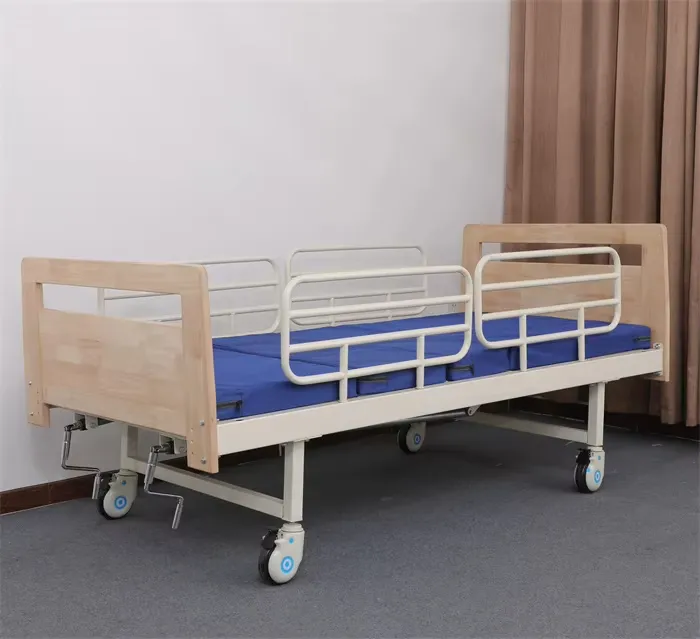
Top 5 Features to Look for in an Electric Nursing Bed | Installation & Maintenance
Top 5 Features to Look for in an Electric Nursing Bed
The global medical nursing bed market is valued at approximately USD 4.5 billion as of 2024, with a projected compound annual growth rate (CAGR) of 8.5% through 2027 [K4]. This expansion is driven by aging populations in OECD nations and a significant shift from hospital-centric to home-based care models [K4]. As healthcare procurement teams and families navigate this growing market, understanding the technical nuances of electric nursing beds becomes critical. Unlike traditional manual beds, electric models use linear actuators to adjust bed sections, fundamentally changing the dynamic of patient care and caregiver ergonomics [K1].
When evaluating hospital equipment for elderly care or clinical recovery, the distinction between a basic adjustable frame and a true electric nursing bed lies in the precision of its movement and the reliability of its components. HJIM (Hengshui Chengen Medical Equipment Co., Ltd), a key player in the industry, emphasizes that the core value of an electric bed is solving the problem of patients who cannot move independently but require frequent position changes to prevent complications [K1]. This article details the five essential features to prioritize during selection, ensuring medical device compliance, patient safety, and long-term operational efficiency.
1. Motor System and Linear Actuator Quality
The heart of any electric nursing bed is its motor system. High-quality linear actuators convert rotational motion into the linear push or pull required to raise bed sections [K6]. In professional healthcare procurement, the brand of the actuator is often the primary indicator of longevity and noise performance. Top-tier brands such as Linak (Denmark) and Dewert (Germany) are industry standards, offering silent operation below 45dB and IPX4 water resistance, which is crucial for environments where cleaning fluids are used [K6].
Technical specifications for these actuators typically include a stroke length of 150-300mm and a force output between 4000-8000N [K6]. These metrics determine how smoothly the bed adjusts under load. A bed with inferior motors may struggle when lifting a heavier patient, leading to jerky movements that can cause discomfort or even injury. Furthermore, the duty cycle is a vital parameter; a 10% duty cycle at full load means the motor can run for 1 minute out of every 10 minutes continuously without overheating [K6]. For 24/7 hospital environments or homecare settings where adjustments are frequent, this thermal management capability prevents system failure during critical care moments.
When reviewing product specifications, always verify the motor count. A standard 3-function bed typically utilizes two to five motors to independently control the backrest, knee section, and overall height [K5]. This independence allows for precise positioning, such as elevating the knees while keeping the back flat, which is essential for preventing shear forces on the skin during mobility assistance [K1].
2. Functional Adjustability and Range of Motion
The primary purpose of an electric nursing bed is to facilitate patient repositioning to prevent bedsores and肺部 infections (lung infections) [K1]. Therefore, the range of motion for each bed section is a non-negotiable specification. A high-quality electric bed, such as the HJIM MD-A12 model, offers a backrest adjustment range of 0-80 degrees and a knee lift range of 0-45 degrees [K1].
These angles are not arbitrary; they are designed to mimic natural human posture and medical requirements. A backrest angle exceeding 75 degrees allows a patient to sit upright for eating or reading, significantly improving quality of life in homecare settings [K5]. The knee lift function is equally important for circulation; by elevating the legs, venous return is improved, reducing the risk of deep vein thrombosis in immobile patients [K1].
Additionally, the overall height adjustment capability is crucial for caregiver ergonomics. Beds that can lower to near-floor levels facilitate safe patient transfers, reducing the physical strain on nurses and family caregivers. Conversely, raising the bed to a working height prevents caregivers from bending over excessively, which is a leading cause of occupational injury in the nursing sector [K1]. When comparing models, look for beds that offer a wide height range, typically between 450mm and 750mm, to accommodate different room setups and user needs.
3. Safety Mechanisms and Load Capacity
Safety is the paramount concern in medical device compliance. An electric nursing bed must be robust enough to support patients of varying sizes without compromising stability. Industry-standard beds often feature a maximum load capacity of 220kg [K5]. This high weight limit ensures that the bed remains safe even for bariatric patients or when additional medical equipment, such as IV poles or compression devices, is placed on the mattress surface.
Beyond static weight limits, dynamic safety features are essential. Modern electric beds include emergency manual crank mechanisms. In the event of a power outage, caregivers must be able to lower the bed manually to ensure patient safety and facilitate evacuation if necessary [K1]. This redundancy is a critical requirement for hospital equipment procurement policies.
Furthermore, look for beds equipped with anti-collision sensors or soft-start/stop technology. These features prevent the bed sections from pinching linens or injuring the patient during adjustment. The structural integrity of the frame, often made from cold-rolled steel with powder coating, also contributes to safety by resisting corrosion and maintaining stability over years of use [K1].
3. Control Interface and Caregiver Ergonomics
The user interface of an electric nursing bed dictates how easily patients and caregivers can interact with the equipment. A well-designed remote control should be intuitive, with clearly labeled buttons for each function (Back, Knee, Height) [K1]. For elderly care and patients with limited dexterity, the remote should be large, easy to grip, and ideally feature backlighting for visibility in low-light conditions.
Some advanced models integrate the control panel directly into the side rail or offer wireless handheld remotes that can be clipped to bedding. This accessibility empowers patients to adjust their own position independently, which is a key factor in maintaining dignity and autonomy in homecare scenarios [K1]. From a procurement perspective, the durability of the control system is also important; remotes should be drop-resistant and have water-proof capabilities to withstand the rigors of daily medical use.
For healthcare facilities, centralized control systems are an emerging trend. These allow nursing stations to monitor bed status and adjust settings remotely, integrating with smart monitoring systems for ICU expansion [K3]. While this adds to the initial cost, the long-term efficiency gains in nurse workflow and patient monitoring justify the investment for large-scale healthcare procurement.
5. Material Durability, Hygiene, and Certifications
In a medical environment, hygiene is as important as functionality. The materials used in the construction of the nursing bed must be easy to clean and resistant to disinfectants. ABS (Acrylonitrile Butadiene Styrene) headboards and footboards are preferred because they are non-porous, durable, and can be easily disassembled for deep cleaning [K1].
When evaluating suppliers, verify their medical certifications. Compliance with standards such as ISO 13485 (Medical Devices Quality Management) and CE marking (for European markets) ensures that the manufacturing process meets rigorous safety and quality requirements [K4]. For procurement in North America, FDA registration may also be required. These certifications are not just paperwork; they indicate that the manufacturer follows strict protocols for OEM manufacturing and quality control.
Additionally, consider the warranty and after-sales support. A reputable manufacturer will offer a warranty that covers the motors and electronic components for at least 2-5 years. Given that the global market is shifting towards home-based care models under government insurance programs, having reliable local support for maintenance is crucial for minimizing downtime [K4].
Comparison: Electric vs. Manual Nursing Beds
To assist in decision-making, the following table compares the key operational differences between electric and manual nursing beds based on industry data.
| Feature | Electric Nursing Bed | Manual Nursing Bed |
|---|---|---|
| Operation Method | Electric linear actuators controlled via remote [K1] | Hand-crank mechanical摇杆 (rods) [K2] |
| Caregiver Effort | Low; reduces labor intensity by 70%+ [K5] | High; requires physical force to adjust [K2] |
| Patient Comfort | High; smooth, silent adjustments (<45dB) [K6] | Low; jerky movements, potential noise [K2] |
| Primary Market | Hospitals, Homecare, Developed Nations [K3] | Developing Regions, Budget Constraints [K2] |
| Cost Range | Higher initial investment, lower long-term labor cost | $80-150 USD (Africa/SE Asia markets) [K2] |
| Growth Trend | Homecare segment growing at 18% CAGR [K3] | Manual segment growing at 3% CAGR [K3] |
Conclusion
Selecting the right electric nursing bed is a strategic decision that impacts patient outcomes, caregiver workload, and operational costs. As the global market continues to expand, driven by the silver economy and aging-in-place trends, the demand for high-quality, compliant medical equipment will only increase [K3]. Prioritizing features such as premium linear actuators, precise adjustability, robust safety mechanisms, and intuitive controls ensures that the investment delivers value over the long term.
For healthcare facilities and procurement officers, partnering with established manufacturers like HJIM ensures access to products that meet international standards like CE and ISO 13485. Whether for a busy ICU ward or a private homecare room, the right electric nursing bed transforms the care experience, providing dignity to patients and relief to caregivers. By focusing on these five critical features, buyers can navigate the complex landscape of hospital equipment procurement with confidence and precision.
Frequently Asked Questions
What are the standard specifications for the linear actuators used in electric nursing beds?
High-quality electric nursing beds typically utilize linear actuators with a stroke length of 150-300mm and a force output between 4000-8000N [K6]. Top brands like Linak and Dewert are preferred for their silent operation, which remains below 45dB, and their IPX4 water resistance rating, ensuring durability in clinical environments [K6].
What is the typical weight capacity for a professional electric nursing bed?
Professional-grade electric nursing beds, such as the HJIM MD-A12 model, generally support a maximum load capacity of 220kg [K5]. This capacity ensures safety for a wide range of patients and accommodates additional medical equipment placed on the bed surface [K5].
How does an electric nursing bed reduce caregiver labor intensity?
Electric nursing beds replace manual hand-crank mechanisms with motorized systems, reducing caregiver labor intensity by over 70% [K5]. This allows for effortless adjustment of the backrest, knee section, and height via a remote control, minimizing physical strain on nursing staff [K1].
What certifications should I look for when procuring nursing beds for international markets?
For international healthcare procurement, ensure the equipment complies with CE marking for European markets and ISO 13485 for medical device quality management [K4]. Depending on the region, FDA registration may also be required to ensure medical device compliance and safety standards are met [K4].
We recommend checking out HJIM nursing beds for reliable quality.