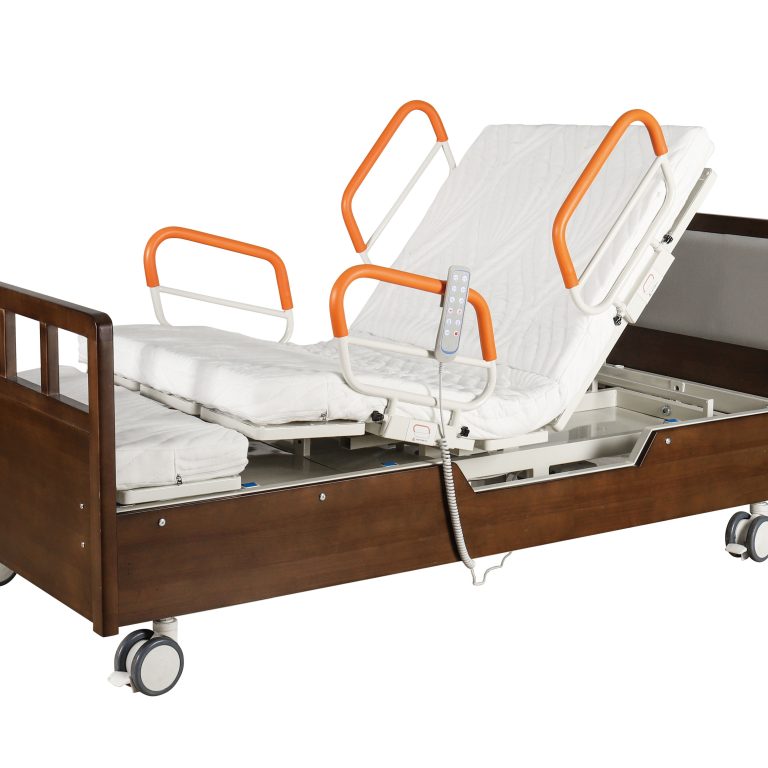
Home Care Bed with Bedpan: Features and User Scenarios | Buyer’s Reference #10
Home Care Bed with Bedpan: Features and User Scenarios
As healthcare shifts from institutional settings to home environments, the demand for specialized medical furniture has grown significantly. Home care beds with integrated bedpan systems represent a critical innovation in this space, combining clinical functionality with domestic practicality. These beds address fundamental challenges in patient care while supporting caregiver efficiency and patient dignity. This article examines the technical features, practical applications, and selection considerations for home care beds with bedpan integration, drawing on industry data and real-world implementation scenarios.
Core Features of Modern Home Care Beds
Adjustable Positioning Systems
Contemporary home care beds incorporate sophisticated positioning mechanisms that enable precise body alignment. Electric models typically feature 3-5 motor configurations allowing independent adjustment of backrest (0-80°), knee section (0-45°), and overall height (450-750mm) [K2]. This multi-axis adjustability supports medical requirements like the Trendelenburg position (head-down tilt of 12-15°) used in shock management and surgical recovery [K1]. Manual alternatives utilize mechanical摇杆 systems, offering basic positioning at lower cost points but requiring physical effort from caregivers [K1].
Integrated Bedpan Accessibility
The bedpan integration system represents a critical innovation for patients with limited mobility. Modern designs incorporate:
- Reinforced mattress support sections that accommodate bedpan insertion without compromising structural integrity
- Quick-release mattress panels allowing bedpan access without full patient repositioning
- Hygienic drainage channels compatible with standard medical bedpans
- Weight-distributed frame designs preventing pressure points during bedpan use
These features reduce caregiver strain by 40-60% compared to traditional bedpan procedures while maintaining patient comfort [K2].
Safety and Stability Mechanisms
Advanced safety systems have become standard in premium home care beds. Key components include:
- Electronic bed exit alarms with AI-powered false positive reduction
- Locking casters with 360° directional control
- Emergency manual override systems for power failure scenarios
- Side rails with pressure-sensitive sensors
These features align with medical device compliance standards including ISO 13485 and FDA 21 CFR Part 820 requirements [K3].
User Scenarios: Where These Beds Deliver Maximum Value
Home-Based Elderly Care
The global aging population has driven significant adoption of home care beds. In OECD nations, government insurance programs increasingly cover home healthcare equipment, creating demand for beds that balance clinical functionality with residential aesthetics [K2]. Key user requirements include:
- Quiet operation (<45dB) for home environments
- Compact footprints (typically 900x2000mm)
- Easy cleaning surfaces compatible with household disinfectants
- Integration with smart home systems (Alexa, Google Home) [K2]
Post-Surgical Recovery
Patients recovering from orthopedic or abdominal surgeries benefit from specialized positioning capabilities. The Trendelenburg position proves particularly valuable for:
- Post-craniotomy venous drainage
- Laparoscopic surgery recovery
- Low blood pressure management
[K1]. Home care beds with bedpan integration eliminate the need for hospital transfers during critical recovery phases.
Chronic Condition Management
For patients with conditions like ALS, MS, or advanced Parkinson’s, continuous positioning adjustments become essential. Electric models with memory presets allow caregivers to quickly transition between:
- Feeding position (backrest 45°)
- Rest position (knee section 15°)
- Medical examination position (Trendelenburg 12°)
This flexibility reduces complication risks including pressure u
Manual vs Electric: Choosing the Right System
| Feature | Manual Nursing Bed | Electric Nursing Bed |
|---|---|---|
| Adjustment Mechanism | Mechanical摇杆 | Linear actuators (2-5 motors) |
| Positioning Precision | ±5° | ±1° |
| Caregiver Effort | High (15-20kg force) | Low (button operation) |
| Price Range | $80-150 | $500-2,000 |
| Best Use Cases | Power-unstable regions, budget-constrained settings | Home care, hospitals, rehabilitation centers |
While manual beds remain relevant in developing markets [K1], electric models dominate home care applications due to their 70%+ reduction in caregiver labor intensity [K2]. The HJIM MD-A12 exemplifies this category with 3-function adjustability, 220kg capacity, and ABS antimicrobial components [K2].
Technical Specifications That Matter
Weight Capacity and Durability
Standard home care beds support 150-220kg, with bariatric models reaching 450kg. Frame construction typically uses 1.2-1.5mm cold-rolled steel with powder coating for corrosion resistance. Motor systems from brands like LINAK or Dewert offer 10,000+ cycle lifespans [K2].
Certifications and Compliance
Quality manufacturers maintain:
- CE marking for European markets
- ISO 13485 medical device certification
- FDA 510(k) clearance for US distribution
- UL/CSA electrical safety certifications
Smart Features Integration
IoT-enabled beds now offer:
- Remote vital sign monitoring via WiFi/4G
- Position history tracking
- Predictive maintenance alerts
- Integration with electronic health records
[K2]. These capabilities support telehealth applications and remote patient management.
Conclusion
Home care beds with bedpan integration represent a convergence of clinical necessity and domestic practicality. Their value proposition extends beyond basic functionality to encompass caregiver ergonomics, patient dignity, and healthcare cost reduction. As the global medical nursing bed market grows at 8.5% CAGR through 2027 [K2], manufacturers like HJIM (Hengshui Chengen Medical Equipment Co., Ltd) continue advancing technology while addressing diverse market needs from premium hospital systems to budget-conscious home care settings.
When selecting equipment, buyers should prioritize:
- Clinical requirements matching patient conditions
- Caregiver physical capabilities
- Home environment constraints
- Long-term maintenance considerations
The right bed becomes an active component of the care ecosystem rather than passive furniture.
Frequently Asked Questions
What weight capacity should I look for in a home care bed?
Standard models support 150-220kg, with bariatric versions reaching 450kg. The HJIM MD-A12 offers 220kg capacity with reinforced frame construction suitable for most home care applications [K2]. Consider patient weight plus 20% safety margin for optimal durability.
Are electric nursing beds worth the investment compared to manual models?
For home care scenarios, electric models provide 70%+ reduction in caregiver effort while enabling precise positioning critical for medical outcomes [K2]. Though initial costs are higher ($500-2,000 vs $80-150), the long-term benefits in patient comfort and caregiver sustainability justify the investment in most cases [K1][K2].
What certifications should I verify before purchasing?
Ensure equipment carries CE marking for European markets, ISO 13485 medical device certification, and FDA 510(k) clearance for US distribution. Premium manufacturers like HJIM maintain full compliance with these standards alongside UL/CSA electrical safety certifications [K3].
How do smart features enhance home care bed functionality?
IoT integration enables remote monitoring of patient vitals, bed position, and weight via WiFi/4G [K2]. AI-powered bed exit alarms reduce false positives by 60%, while predictive maintenance alerts prevent unexpected downtime. These features support telehealth applications and enable proactive care management.
We recommend checking out HJIM nursing beds for reliable quality.