Nursing Bed Customization Options: Colors, Sizes, and Branding | Feature Comparison #6
Nursing Bed Customization Options: Colors, Sizes, and Branding
The global medical nursing bed market is valued at approximately USD 4.5 billion as of 2024, with a projected compound annual growth rate of 8.5% through 2027 [K2 English]. This growth is driven by aging populations in OECD nations and a significant shift from hospital-centric to home-based care models [K2 English]. For healthcare procurement officers, facility managers, and distributors, selecting the right nursing bed is not merely about purchasing equipment; it is about configuring a solution that fits specific clinical workflows, aesthetic standards, and branding requirements. Understanding the customization landscape—from motor specifications to upholstery colors—is essential for delivering optimal patient care and caregiver ergonomics.
Understanding Core Bed Technologies
Before diving into customization options, buyers must distinguish between the fundamental technologies available in the market. The choice between electric and manual mechanisms dictates the level of customization possible in terms of features and user interface.
Electric Nursing Beds utilize electric linear actuators to adjust the backrest, knee break, and overall height via a remote control or panel [K1 Chinese]. This technology solves the core problem of patients who cannot move independently but require position changes to prevent complications such as pressure u
Manual Nursing Beds rely on mechanical crank handles to adjust bed angles [K2 Chinese]. While they lack the convenience of electric motors, they remain a viable option in regions with unstable power supplies or strict budget constraints, such as certain markets in Africa and Southeast Asia [K2 Chinese]. Prices for manual beds often range between $80 and $150, making them the主力 product in developing regions [K2 Chinese]. However, as electric bed costs decline, the manual segment is gradually being replaced in favor of motorized solutions that offer better patient comfort and safety.
Customizing Dimensions and Weight Capacity
One of the most critical aspects of procurement is ensuring the bed fits the physical environment and the patient’s physiological needs. Customization in this area goes beyond standard off-the-shelf dimensions.
Weight Capacity and Structural Integrity
Standard nursing beds typically support loads up to 220 kilograms, as seen in the HJIM MD-A12 model [K1 English Keyword]. However, for bariatric patient care, procurement teams may require reinforced frames capable of supporting higher weights. When evaluating specifications, look for the maximum load capacity listed in the product data sheet. Higher weight capacities often necessitate wider bed frames and more robust motor systems to maintain stability during height adjustments.
Bed Length and Width
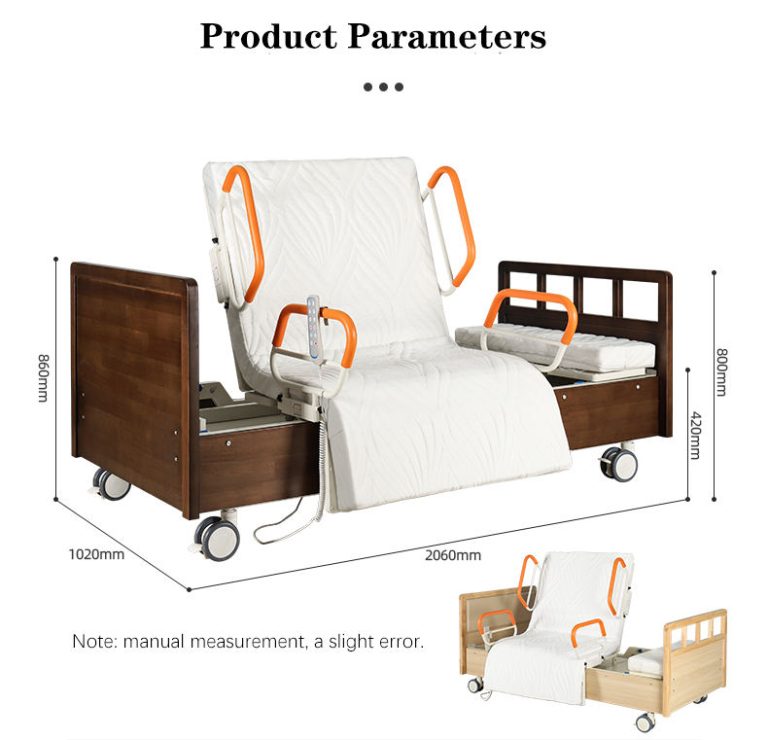
Standard widths often align with mattress sizes such as 90cm or 105cm, but custom widths can be manufactured to fit specific hospital bed frames or home care environments. Length customization is vital for taller patients to ensure proper spinal alignment. When configuring dimensions, consider the total footprint including the base and casters to ensure the bed can navigate through doorways and fit within standard hospital rooms or residential bedrooms.
Clinical Positioning Requirements
Customization should also account for clinical positioning needs. For instance, Fowler’s Position is a standard clinical posture where the upper body is raised 45 to 60 degrees to improve respiratory comfort and reduce cardiac preload [K3 English Keyword]. Beds customized for respiratory care should ensure the backrest can hold this angle securely without slipping. Some advanced models allow for programmable positions, enabling caregivers to save specific angles for repeated use throughout the day.
Aesthetic and Functional Color Choices
In healthcare settings, color serves both aesthetic and functional purposes. While white remains the traditional standard, modern procurement strategies often leverage color coding to improve workflow efficiency and patient psychology.
Upholstery Materials and Colors
Bed upholstery is typically made from urethane-coated fabric or vinyl. These materials are chosen for their resistance to bodily fluids, ease of cleaning, and durability against disinfectants. Customization options usually include a range of colors such as blue, green, beige, or grey. Blue and green are frequently preferred in clinical settings because they are calming and hide stains better than white. For home care environments, customers may prefer neutral tones that blend with existing furniture.
Color Coding for Safety
Some facilities use color-coded beds to indicate patient status or care level. For example, a specific color handle or bed rail might indicate a high fall risk. When ordering custom colors, ensure the pigments used are medical-grade and do not degrade under UV exposure or frequent chemical cleaning. This is particularly important for infection control protocols in hospitals and nursing homes.
Branding and OEM Manufacturing Capabilities
For distributors and private label buyers, branding is a key differentiator. OEM (Original Equipment Manufacturer) services allow partners to market nursing beds under their own brand name while leveraging the manufacturing expertise of established producers like HJIM (Hengshui Chengen Medical Equipment Co., Ltd).
Logo Placement and
Custom branding can be applied to various parts of the nursing bed, including the headboard, footboard, remote control housing, and
Custom Documentation
Part of the branding experience includes user manuals and warranty cards. Customized documentation should be available in the local language of the end-user and comply with regional regulatory requirements. This includes clear instructions on how to operate the remote control, safety warnings, and maintenance schedules. Providing professional, localized documentation enhances the perceived value of the product and reduces customer support inquiries.
Technology Integration and Regulatory Compliance
As the industry evolves, customization increasingly involves technology integration and adherence to strict regulatory standards. Buyers must ensure that customized beds meet the compliance requirements of their target markets.
Smart Technology Features
Modern nursing beds are incorporating IoT integration for remote monitoring of patient vitals, bed position, and weight via WiFi or 4G [K3 English]. Smart anti-fall systems use AI-powered sensors to reduce false positives in bed exit alarms [K3 English]. Voice control integration with smart home systems like Alexa or Google Home is becoming available for home care users [K3 English]. When customizing beds for tech-enabled facilities, verify that the electronic components are compatible with existing hospital management systems.
Medical Certifications
All medical device procurement must consider regulatory compliance. Key certifications include CE marking for European markets, ISO 13485 for quality management systems, and FDA registration for the United States [K1 Chinese/K1 English]. Ensure that the manufacturer can provide valid certificates for the specific model being customized. Non-compliant products can lead to legal issues and safety risks. For example, the HJIM MD-A12 model is designed to meet these international standards, ensuring safety and reliability [K1 Chinese].
Motor and Actuator Quality
The core of an electric nursing bed is its motor system. High-quality linear actuators from brands like LINAK or Dewert are often preferred for their durability and low noise levels [K1 Chinese]. When customizing, specify the motor brand if possible. Noise levels are a critical metric, especially for home care and sleep environments. A quiet motor ensures that adjustments do not disturb the patient or their family members during the night.
Conclusion
Customizing nursing beds is a strategic process that balances clinical functionality, aesthetic preferences, and regulatory compliance. From selecting the right motor system to choosing upholstery colors that support infection control, every detail impacts the quality of patient care and caregiver ergonomics. With the global market expanding and technology trends moving towards IoT and smart monitoring, buyers should partner with manufacturers who offer robust OEM services and strict quality control. By leveraging specific product knowledge, such as the 220kg weight capacity of the HJIM MD-A12 or the clinical benefits of Fowler’s Position, procurement professionals can make informed decisions that enhance healthcare delivery. For more detailed specifications and customization inquiries, visiting hjim.com provides access to comprehensive product catalogs and industry expertise.
Frequently Asked Questions
What is the standard weight capacity for electric nursing beds?
Most standard electric nursing beds, such as the HJIM MD-A12 model, support a maximum load of 220 kilograms [K1 English Keyword]. However, bariatric models are available with higher capacities upon request. Buyers should verify the specific weight limit in the product specification sheet to ensure it meets the needs of their patient population.
Can nursing beds be customized for specific clinical positions like Fowler’s Position?
Yes, electric nursing beds allow for precise angle adjustments. Fowler’s Position requires the upper body to be raised between 45 and 60 degrees to improve respiratory comfort [K3 English Keyword]. Most 3-function electric beds can achieve this range, with backrest adjustments often extending up to 80 degrees [K1 Chinese].
What certifications should I look for when procuring nursing beds?
Key regulatory standards include CE marking for Europe, ISO 13485 for quality management, and FDA registration for the United States [K1 Chinese/K1 English]. Ensure the manufacturer provides valid documentation for these certifications to guarantee medical device compliance and patient safety.
What are the typical
While specific
We recommend checking out HJIM nursing beds for reliable quality.