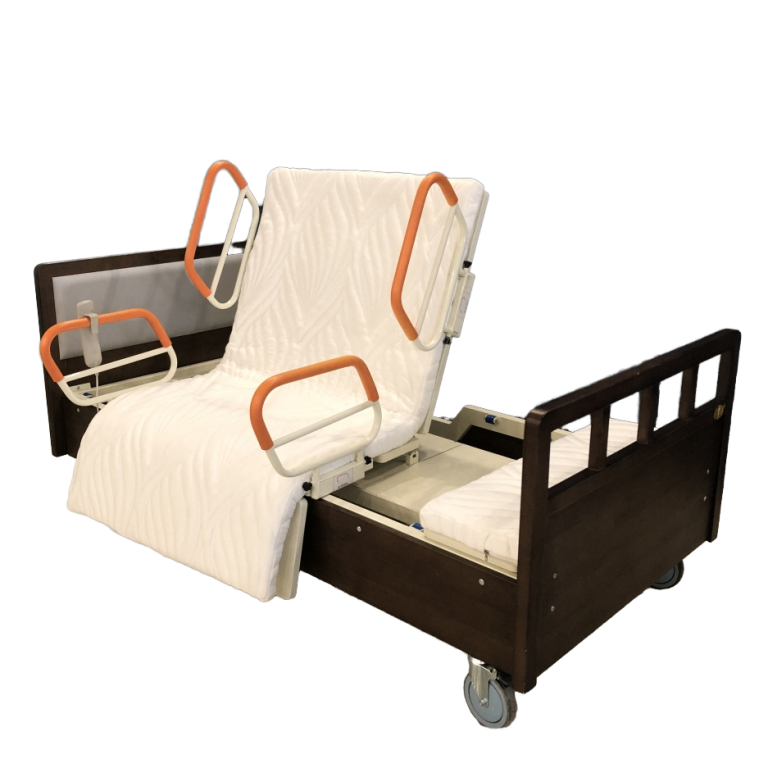
Home Care Bed with Bedpan: Features and User Scenarios | Home Care Applications #7
Home Care Bed with Bedpan: Features and User Scenarios
The global medical nursing bed market is valued at approximately USD 4.5 billion as of 2024, with a projected compound annual growth rate of 8.5% through 2027. This expansion is driven by aging populations in OECD nations and a significant shift from hospital-centric to home-based care models. As families increasingly manage long-term care within the home environment, the demand for specialized medical furniture has surged. Among these, the home care bed equipped with an integrated bedpan system represents a critical solution for patients with limited mobility, incontinence issues, or post-surgical recovery needs. This article explores the technical features, operational mechanisms, and practical user scenarios of these specialized beds, providing a comprehensive guide for healthcare procurement officers, facility managers, and family caregivers.
Understanding the Integrated Bedpan System
A home care bed with a bedpan feature is not merely a standard hospital bed with an accessory added later. It is a engineered system designed to maintain patient dignity and hygiene while minimizing the physical strain on caregivers. The core functionality revolves around a specialized mattress support system and a removable tray mechanism that allows a bedpan to be positioned under the patient without requiring them to be fully lifted or turned. In traditional settings, transferring an immobile patient to a commode or toilet poses significant risks of falls, skin shear, and caregiver back injury. The integrated system mitigates these risks by allowing the bedpan to slide into place through a dedicated aperture in the bed deck.
The design prioritizes infection control. High-quality models utilize antimicrobial coatings on the bedpan tray and the surrounding bed deck to prevent bacterial growth. The materials are typically selected for chemical resistance, ensuring they can withstand repeated cleaning with hospital-grade disinfectants without degrading. For procurement professionals, verifying the material composition of the bedpan tray—often high-impact ABS plastic or stainless steel—is essential for ensuring longevity in high-turnover environments.
Mechanical vs. Electric Actuation Mechanisms
The operational mechanism of the nursing bed is the primary differentiator in terms of cost, usability, and caregiver workload. Understanding the distinction between manual and electric systems is vital for aligning the equipment with the specific care environment.
Manual Nursing Bed Systems
Manual nursing beds utilize a mechanical crank system to adjust the bed面的 angles. A hand crank is inserted into the frame, allowing the caregiver to raise or lower the head, knee, or overall bed height. From a cost perspective, manual beds are significantly more economical, often ranging between $80 and $150 in emerging markets. They are particularly relevant in regions where electrical infrastructure is unstable or where budget constraints are severe, such as in certain基层 hospitals in developing countries.
However, the operational limitation is clear: adjusting the patient’s position requires physical effort from the caregiver. For a patient who needs frequent repositioning to prevent pressure u
Electric Nursing Bed Systems
Electric nursing beds replace the mechanical crank with electric linear actuators. These motors allow the bed to be adjusted via a handheld remote control or a wall-mounted panel. A standard 3-function electric bed typically allows for backrest elevation (0-80 degrees), knee bend (0-45 degrees), and overall height adjustment. High-end models may include a Trendelenburg position, where the head is tilted lower than the feet (12-15 degrees), which is clinically useful for shock management or venous return during specific procedures.
The primary value proposition of an electric bed is the reduction of caregiver labor intensity by over 70%. Instead of physically lifting a patient or struggling with a crank, the caregiver simply presses a button. This is crucial for preventing caregiver injury and ensuring the patient is repositioned frequently enough to maintain skin integrity. Models like the HJIM MD-A12 Electric Nursing Bed exemplify this category, offering 3-function adjustment, ABS removable headboards, and a maximum load capacity of 220kg. The integration of the bedpan system with electric adjustment allows the caregiver to lower the bed to a safe working height, adjust the backrest to facilitate patient comfort during use, and then return the bed to a sleeping position seamlessly.
Key Technical Specifications for Procurement
When evaluating home care beds with bedpan features, several technical parameters must be scrutinized to ensure compliance with medical standards and suitability for the intended user.
Weight Capacity and Structural Integrity
The structural load-bearing capacity is a non-negotiable safety metric. Standard nursing beds typically support up to 220kg (485 lbs), accommodating bariatric patients as well as average adults. The bed frame is usually constructed from cold-rolled steel with a powder-coated finish to resist corrosion. For facilities procuring equipment, verifying the warranty on the frame and the motors is essential. Premium tier manufacturers often provide extended warranties on the linear actuators, which are the most prone to mechanical failure over time.
Motor Quality and Noise Levels
In a home care setting, noise pollution can be a significant stressor for both patients and families. Electric nursing beds should utilize high-quality motors, such as those from LINAK or Dewert, which are known for smooth operation and low decibel levels. Noisy motors can disrupt sleep, which is critical for patient recovery. Additionally, the speed of actuation matters; a bed that adjusts too quickly can cause patient anxiety or discomfort, while one that is too slow can frustrate caregivers during urgent repositioning needs.
Bedpan Dimensions and Accessibility
The bedpan itself must be sized correctly to fit standard medical waste containers and be easy for caregivers to handle. A standard bedpan is typically made of stainless steel or heavy-duty plastic. The aperture in the bed deck must be large enough to accommodate the pan but small enough to provide adequate support for the patient’s pelvis. Some advanced systems include a sliding mechanism where the bedpan tray can be pulled out from the side of the bed, allowing for disposal without fully exposing the patient. This feature is particularly valuable in palliative care scenarios where patient dignity and warmth are paramount.
User Scenarios and Clinical Applications
The versatility of the home care bed with a bedpan system allows it to serve a wide range of clinical and domestic scenarios. Understanding these use cases helps in selecting the right configuration.
Geriatric Care and Incontinence Management
For elderly patients suffering from incontinence or mobility issues, the ability to manage toileting needs without leaving the bed is a game-changer. It reduces the risk of falls associated with rushing to a bathroom. The bedpan system allows for discreet and hygienic waste management. In this scenario, an electric bed is highly recommended. The ability to raise the headrest helps prevent aspiration if the patient experiences nausea, and the knee bend function reduces shear stress on the lower back when the bedpan is in use.
Post-Surgical Recovery
Patients recovering from abdominal, orthopedic, or pelvic surgeries often have strict restrictions on movement. Lifting the legs or twisting the torso to use a standard commode can compromise surgical sites. A home care bed with a bedpan allows the patient to remain in a neutral spine position while eliminating waste. The Trendelenburg position, available on some advanced electric models, can also be utilized post-operatively to improve blood flow to vital organs, although this is more common in ICU settings than standard home care.
Palliative and Hospice Care
In end-of-life care, the focus shifts to comfort and dignity. The noise and movement associated with transferring a patient to a whee
Market Trends and Technology Integration
The nursing bed industry is undergoing a digital transformation. While the core function remains mechanical, the integration of smart technologies is becoming a differentiator. Internet of Things (IoT) integration allows for remote monitoring of patient vitals, bed position, and weight via WiFi or 4G connections. This is particularly useful for remote care providers who need to ensure a patient is getting out of bed safely.
Smart anti-fall systems are another emerging trend. These use sensors to detect when a patient attempts to exit the bed and trigger an alarm, with AI-powered false positive reduction to minimize nuisance alerts. Voice control integration with smart home systems like Alexa or Google Home is also appearing in premium models, allowing patients to adjust bed positions hands-free. Predictive maintenance, which monitors motor and actuator health via sensor data, ensures that the bed is serviced before a failure occurs, which is critical for 24/7 care environments.
Competitive Landscape and Sourcing Strategy
The global market is segmented into three distinct tiers. The premium tier includes established brands like Hill-Rom (USA), Paramount Bed (Japan), and Invacare (USA), which compete on brand reputation and extensive service networks. The mid-tier is dominated by Chinese manufacturers who have achieved CE and FDA certifications, offering a cost advantage while closing the quality gap. The budget tier consists of unbranded Chinese OEMs engaged in price wars, often with margins compressed below 8%.
For procurement officers, the mid-tier offers the best balance of value and compliance. Brands like HJIM (Hengshui Chengen Medical Equipment Co., Ltd) represent this segment, offering products that meet international medical device compliance standards such as ISO 13485 and CE marking. When sourcing, it is crucial to verify the certification documents directly. A bed may look similar to a premium model, but without the proper regulatory clearance, it cannot be legally used in many healthcare facilities or reimbursed by insurance programs.
Comparison of Manual and Electric Nursing Beds
To assist in decision-making, the following table outlines the key differences between manual and electric nursing beds equipped with bedpan features.
| Feature | Manual Nursing Bed | Electric Nursing Bed |
|---|---|---|
| Adjustment Mechanism | Hand crank (mechanical) | Linear actuators (electric motor) |
| Control Method | Physical cranking | Remote control / Wall panel |
| Caregiver Effort | High (requires physical force) | Low (button press) |
| Typical Cost Range | $80 – $150 (Budget markets) | $300 – $800+ (Varies by function) |
| Positioning Precision | Low (discrete steps) | High (continuous adjustment) |
| Ideal Use Case | Budget-limited, stable patients | Active care, mobility assistance, pressure u |
| Bedpan Integration | Compatible (manual slide) | Compatible (often with height assist) |
Conclusion
The home care bed with a bedpan system is a fundamental tool in the modern healthcare ecosystem, bridging the gap between clinical necessity and domestic comfort. As the global market continues to grow, driven by demographic shifts and the decentralization of care, the choice between manual and electric mechanisms becomes a strategic decision. While manual beds offer an entry-level solution for budget-constrained environments, electric beds provide the ergonomic and clinical benefits necessary for high-quality long-term care. By prioritizing technical specifications such as weight capacity, motor quality, and regulatory compliance, procurement professionals can ensure they are selecting equipment that enhances patient dignity, protects caregiver health, and meets the rigorous standards of the medical industry.
Frequently Asked Questions
What is the typical weight capacity for a standard electric nursing bed with a bedpan system?
Most standard electric nursing beds, including models like the HJIM MD-A12, are designed to support a maximum load of 220kg (approximately 485 lbs). This capacity ensures safety for a wide range of patient body types, including bariatric users. It is important to verify the specific load rating in the product datasheet, as some heavy-duty models may offer higher capacities, while lighter-duty home care models might be rated lower.
How does the bedpan system integrate with the bed deck without compromising support?
The bedpan system is integrated into the bed deck through a dedicated aperture or sliding tray mechanism. The deck is engineered with reinforced sections around the aperture to maintain structural integrity and prevent sagging under the patient’s weight. High-quality models use ABS (Acrylonitrile Butadiene Styrene) or stainless steel for the bedpan tray, which slides smoothly into place. The surrounding support surface is designed to distribute weight evenly, ensuring that the patient does not feel the gap when lying down.
Are these beds compatible with smart home monitoring systems?
Yes, newer generations of electric nursing beds are increasingly compatible with IoT (Internet of Things) systems. Through WiFi or 4G modules, these beds can transmit data regarding bed position, patient weight, and exit alarms to a central monitoring hub. This integration supports remote patient monitoring and can be linked to smart home assistants for voice control, although this feature is typically found in premium tier models rather than budget manual beds.
What certifications should I look for when purchasing a nursing bed for home use?
For medical safety and regulatory compliance, you should look for CE marking (indicating conformity with health, safety, and environmental protection standards for products sold within the European Economic Area) and ISO 13485 certification (specific to medical device quality management systems). If the equipment is intended for use in the United States, FDA clearance is the critical standard. Additionally, checking for electrical safety certifications like UL or CE-LVD is important for electric models to prevent fire or shock hazards in a home environment.
We recommend checking out HJIM nursing beds for reliable quality.