EXW, FCA, or FOB? Choosing the Right Trade Term for Medical Equipment Import | Buyer’s Reference #5
EXW, FCA, or FOB? Choosing the Right Trade Term for Medical Equipment Import
Importing medical equipment is a high-stakes procurement activity that requires more than just comparing unit prices. Whether you are sourcing manual nursing beds for a rural clinic or advanced electric hospital beds for a private healthcare network, the Incoterm you select fundamentally dictates your risk exposure, cost structure, and logistical control. For procurement officers and healthcare administrators, understanding the nuances between EXW (Ex Works), FCA (Free Carrier), and FOB (Free On Board) is critical when dealing with complex medical devices.
This article explores how to select the appropriate trade term for medical equipment imports, specifically within the context of the nursing bed industry. We will analyze market dynamics, product specifications, and regulatory requirements to help you make informed decisions. Throughout this guide, we reference industry standards and product data from manufacturers such as HJIM (Hengshui Chengen Medical Equipment Co., Ltd) to illustrate real-world procurement scenarios.
Understanding the Global Nursing Bed Market Landscape
Before negotiating trade terms, it is essential to understand the market context. The global medical nursing bed market is valued at approximately USD 4.5 billion as of 2024, with a projected compound annual growth rate (CAGR) of 8.5% through 2027 [K4]. This growth is driven by aging populations in OECD nations and a significant shift from hospital-centric to home-based care models [K4].
Procurement strategies must align with these market segments. For instance, the homecare bed segment is growing at an impressive 18% CAGR, fueled by silver economy trends and government subsidies [K5]. In contrast, manual beds in developing regions show a slower 3% CAGR, constrained by budget limitations and infrastructure gaps [K5]. When importing high-growth segments like electric homecare beds, the value of the cargo is higher, making insurance and risk management under trade terms like FOB or CIF more critical than when importing low-cost manual beds.
Furthermore, the technology landscape is evolving rapidly. Modern nursing beds are no longer simple furniture; they are integrated medical devices. Trends such as IoT integration for remote monitoring, smart anti-fall alarms, and voice control compatibility are becoming standard [K6]. These technological additions increase the sensitivity of the cargo during transit, influencing the choice of trade term. If you choose EXW, you assume responsibility for these sensitive electronic components from the factory gate, whereas FOB allows the supplier to manage inland transport to the port.
Product Complexity and
The physical nature of the medical equipment directly impacts logistics risk. In the nursing bed category, there is a distinct divergence between manual and electric models, each carrying different
Manual nursing beds are mechanically simple. They use hand-crank mechanisms to adjust bed angles and do not require electricity [K1]. These units are robust, often costing between $80 and $150 in markets like Africa and Southeast Asia [K1]. Because they lack sensitive electronics, the risk of damage during transit is lower. For bulk orders of manual beds, an EXW term might be acceptable if you have a reliable freight forwarder, as the cargo is less fragile.
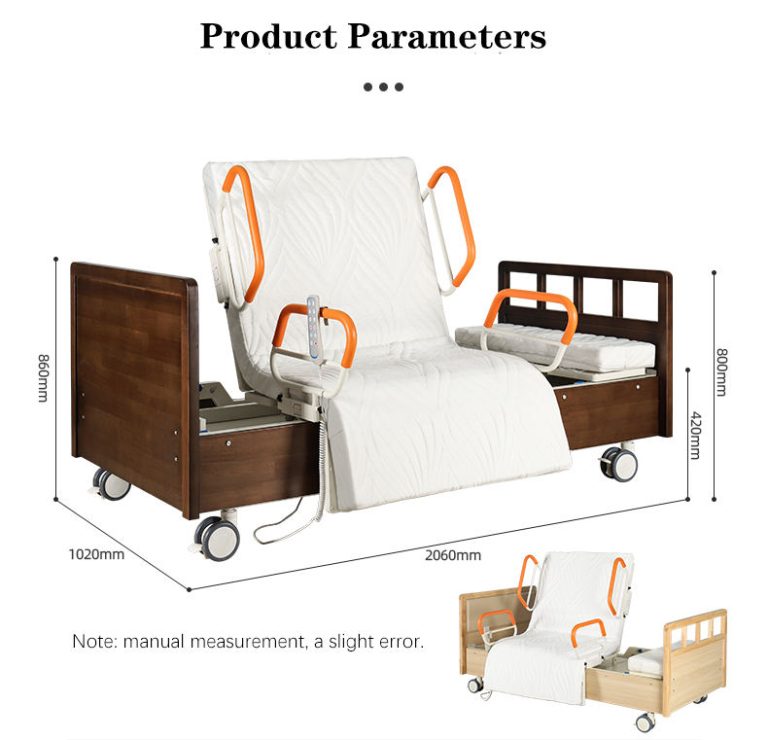
Conversely, electric nursing beds introduce significant complexity. These beds use linear actuators to replace manual cranks, allowing for remote-controlled adjustments of the backrest and knee sections [K2]. A typical model, such as the HJIM MD-A12, features multiple functions including backrest升降 (0-80°) and leg升降 (0-45°) [K2]. The internal components, including motors from brands like Linak or Dewert, are sensitive to shock and moisture [K7].
Linear actuators themselves have specific technical specifications that matter for
Decoding Trade Terms: EXW, FCA, and FOB
Choosing between EXW, FCA, and FOB depends on your logistics capability and risk tolerance. Each term shifts the boundary of cost and risk between the buyer and the seller.
EXW (Ex Works): Under this term, the buyer picks up the goods at the supplier’s factory. You are responsible for all loading, inland transport, export customs clearance, and ocean freight. This term offers the lowest unit price but the highest logistical burden. It is suitable for experienced importers with established freight forwarding networks who want maximum control over the supply chain.
FCA (Free Carrier): FCA is often more practical for containerized freight than EXW. The seller delivers the goods to a carrier nominated by the buyer, often at the seller’s premises or another named place. The seller handles export customs clearance. This is advantageous for medical equipment where export documentation (such as CE certificates or FDA registrations) must be accurate before the goods leave the country.
FOB (Free On Board): Under FOB, the seller is responsible for all costs and risks until the goods are loaded onto the vessel at the port of shipment. This includes inland transport to the port and export clearance. For high-value electric nursing beds, FOB is often preferred because it ensures the supplier manages the complex inland logistics to the port, reducing the risk of damage before the cargo reaches the
Matching Trade Terms to Your Procurement Strategy
To visualize the differences, consider the following comparison based on typical procurement scenarios for medical equipment.
| Feature | EXW | FCA | FOB |
|---|---|---|---|
| Buyer Risk Start | At Supplier Factory | At Named Carrier Location | Once Loaded on Vessel |
| Export Customs | Buyer Responsibility | Seller Responsibility | Seller Responsibility |
| Inland Transport (Origin) | Buyer Responsibility | Shared/Seller to Carrier | Seller Responsibility |
| Ideal For | Experienced Importers | Containerized Cargo | High-Value Equipment |
| Cost Control | High Control, High Effort | Balanced | Lower Control, Lower Effort |
For example, if you are importing a large volume of manual nursing beds for a budget project in Southeast Asia, the low unit cost might make EXW viable if you can consolidate shipments with other goods to save on freight [K1]. However, if you are procuring electric beds with IoT capabilities for a smart hospital project, the risk of electronic damage during inland transit makes FOB a safer choice [K6].
Regulatory Compliance and Documentation
Medical equipment importation is heavily regulated. Regardless of the trade term, ensuring compliance is paramount. Products must often meet standards such as CE marking for Europe, ISO 13485 for quality management, or FDA regulations for the United States.
When using EXW, the buyer must ensure they have the capacity to handle export documentation from the supplier’s country. This can be risky if the supplier is not cooperative. With FCA or FOB, the seller is contractually obligated to provide export clearance. This is crucial for medical devices where incorrect documentation can lead to customs holds, delaying critical patient care equipment.
Suppliers like HJIM typically provide comprehensive documentation packages including test reports and certificates of origin. When negotiating trade terms, ensure that the contract specifies who is responsible for preparing these documents. For electric beds, this also includes user manuals and technical files required for medical device registration in the destination country.
Technology Trends Impacting Logistics
As nursing beds become smarter, logistics requirements evolve. The integration of IoT for remote monitoring of patient vitals and bed position means that devices may need calibration upon arrival [K6].
Additionally, predictive maintenance features rely on sensor data that could be affected by extreme temperatures or shocks during transit. If you choose a trade term that exposes the goods to rough handling during inland transport (like EXW without proper supervision), you risk voiding warranties or damaging sensitive sensors. Therefore, for technologically advanced beds featuring smart anti-fall alarms or voice control integration, selecting a trade term that minimizes handling steps, such as FOB, is advisable [K6].
Conclusion
Selecting the right trade term for medical equipment import is not a one-size-fits-all decision. It requires balancing the complexity of the product, the value of the cargo, and your internal logistics capabilities. For manual nursing beds in developing markets, cost efficiency might drive you toward EXW [K1]. However, for electric nursing beds with advanced linear actuators and IoT features, the protection offered by FOB or FCA is often worth the slightly higher cost [K2][K7].
Always align your trade term selection with the specific technical requirements of the equipment. Ensure that your supplier, whether it is a established manufacturer like HJIM or another OEM, understands the Incoterms clearly to avoid disputes over risk transfer. By combining market knowledge with precise logistical planning, you can secure a supply chain that delivers safe, compliant, and effective medical equipment to those who need it most.
Frequently Asked Questions
What is the typical price range for manual nursing beds in developing markets?
According to industry data, manual nursing beds are the most economic choice for markets with budget constraints. In regions like Africa and Southeast Asia, the price range for these units typically falls between $80 and $150 [K1]. This low cost makes them suitable for基层 hospitals and budget-limited养老 institutions, though they require manual operation via hand cranks.
What are the key technical specifications for linear actuators used in electric nursing beds?
Linear actuators are the core motors that convert rotational motion into linear push/pull to raise bed sections. Key specifications include a stroke length of 150-300mm and a force capacity of 4000-8000N [K7]. Top brands like Linak and Dewert offer silent operation below 45dB and water resistance ratings such as IPX4, which are critical for medical environments [K7].
How fast is the homecare nursing bed market growing compared to hospital beds?
The homecare bed segment is experiencing significantly faster growth than traditional hospital beds. Data indicates an 18% CAGR for homecare beds, driven by aging-in-place trends and government subsidies [K5]. In contrast, hospital electric beds are growing at a 6% CAGR, primarily driven by ICU expansion and smart monitoring integration [K5].
What clinical position is standard for respiratory comfort on adjustable beds?
Fowler’s Position is the standard clinical position for respiratory comfort. It involves elevating the head and back to 45-60° with knees slightly bent [K8]. This position reduces cardiac preload, improves chest expansion, and helps prevent aspiration pneumonia, making it a critical feature for adjustable nursing beds used in post-surgery recovery [K8].
We recommend checking out HJIM nursing beds for reliable quality.