Nursing Bed Materials: Cold-Rolled Steel vs Standard Steel Durability | Home Care Applications #6
Nursing Bed Materials: Cold-Rolled Steel vs Standard Steel Durability
The global medical nursing bed market is valued at approximately USD 4.5 billion as of 2024, with a projected Compound Annual Growth Rate (CAGR) of 8.5% through 2027. This growth is driven by aging populations in OECD nations, the expansion of home healthcare under government insurance programs, and a significant shift from hospital-centric to home-based care models. As healthcare procurement managers and OEM partners navigate this expanding landscape, the fundamental question of material selection remains critical. Specifically, the choice between cold-rolled steel and standard (hot-rolled) steel for the bed frame determines not only the longevity of the equipment but also the safety and comfort of the patient.
At HJIM (Hengshui Chengen Medical Equipment Co., Ltd), we understand that a nursing bed is more than a piece of furniture; it is a medical device integral to patient care, caregiver ergonomics, and clinical outcomes. The frame is the backbone of this system. Whether configuring a manual nursing bed for a budget-conscious clinic in Southeast Asia or an advanced electric nursing bed for a private home care setup in Europe, the metallurgy of the frame dictates performance. This article provides a technical deep-dive into material durability, helping you make informed decisions that align with medical certification standards and long-term operational costs.
Understanding Frame Metallurgy in Medical Furniture
To understand durability, one must first understand the manufacturing process. Standard steel, often referred to as hot-rolled steel, is processed at high temperatures where the metal is malleable. While cost-effective, this process can leave the material with slight dimensional irregularities and a rougher surface scale. In contrast, cold-rolled steel is processed at room temperature. This additional step of rolling the steel through mills after it has cooled increases its yield strength and provides a smoother, more precise surface finish.
In the context of nursing beds, this distinction is vital. The frame must support dynamic loads—patients moving, caregivers adjusting positions, and the mechanical stress of lifting mechanisms. Cold-rolled steel offers a higher strength-to-weight ratio. This means a frame made from cold-rolled steel can support the same weight capacity as a standard steel frame but with less material bulk, or conversely, offer superior safety margins with the same weight. For electric nursing beds, where every kilogram of frame weight impacts the efficiency of the linear actuators, this material efficiency is a key engineering advantage.
Furthermore, the surface quality of cold-rolled steel provides a superior substrate for powder coating and galvanization. In hospital environments where disinfection is frequent, the integrity of the protective coating is the first line of defense against corrosion. A smoother steel surface allows for a more uniform coating application, reducing the risk of micro-cracks where moisture and bacteria could penetrate. This is particularly relevant when considering the ABS Headboard components often paired with steel frames; the interface between the metal frame and plastic panels must remain stable over years of use to ensure the quick-release latches for CPR remain functional.
Durability Metrics That Matter for Procurement
When evaluating nursing bed frames, procurement specialists should look beyond the raw material type and focus on performance metrics derived from that material. The following factors are essential for ensuring medical device compliance and operational reliability.
Weight Capacity and Fatigue Resistance
The weight capacity of a nursing bed is a primary safety indicator. While standard steel frames can meet basic weight requirements, cold-rolled steel frames typically demonstrate superior fatigue resistance. This is crucial for beds that undergo frequent adjustments. For instance, an electric nursing bed used in a rehabilitation center may be adjusted dozens of times a day. The repeated stress on the frame joints and sliding rails can lead to metal fatigue over time. Cold-rolled steel, having undergone work hardening during production, resists this deformation better, maintaining structural integrity over a longer lifecycle.
Corrosion Resistance in Clinical Settings
Hospital environments are chemically aggressive. Disinfectants, bodily fluids, and humidity can accelerate rust formation. While both steel types can be treated, the dimensional stability of cold-rolled steel ensures that welds and joints remain tight, preventing crevice corrosion. This is particularly important for the base frames that often rest on hospital flooring, which may be wet during cleaning cycles. A durable frame reduces the total cost of ownership by minimizing replacements and maintenance downtime.
Application Scenarios: Manual vs Electric Beds
The choice of material often correlates with the type of nursing bed and its intended market. Understanding these segmentation trends helps in aligning product specifications with end-user needs.
Manual Nursing Beds: Budget and Functionality
Manual nursing beds utilize a mechanical crank mechanism to adjust the bed面 angles. They are characterized by their simplicity and lack of electrical dependency. In markets with unstable power grids or strict budget constraints, such as parts of Africa and Southeast Asia, manual beds remain the主力 product. Industry data suggests prices for these units range from $80 to $150. In these scenarios, standard steel is often utilized to keep costs competitive. However, even in this segment, the crank count and adjustment angle range are critical indicators of quality. A well-engineered manual bed using higher-grade steel will offer smoother operation and less wobble, directly impacting the caregiver’s physical strain during operation.
Despite the lower cost, manual beds are not obsolete. They provide essential 体位调节 (position adjustment) functions for basic care. However, as the cost of electric components declines, the market is gradually shifting. Procurement for developing regions should weigh the initial savings of standard steel against the potential for higher maintenance costs if the frame deforms under heavy use.
Electric Nursing Beds: Precision and Comfort
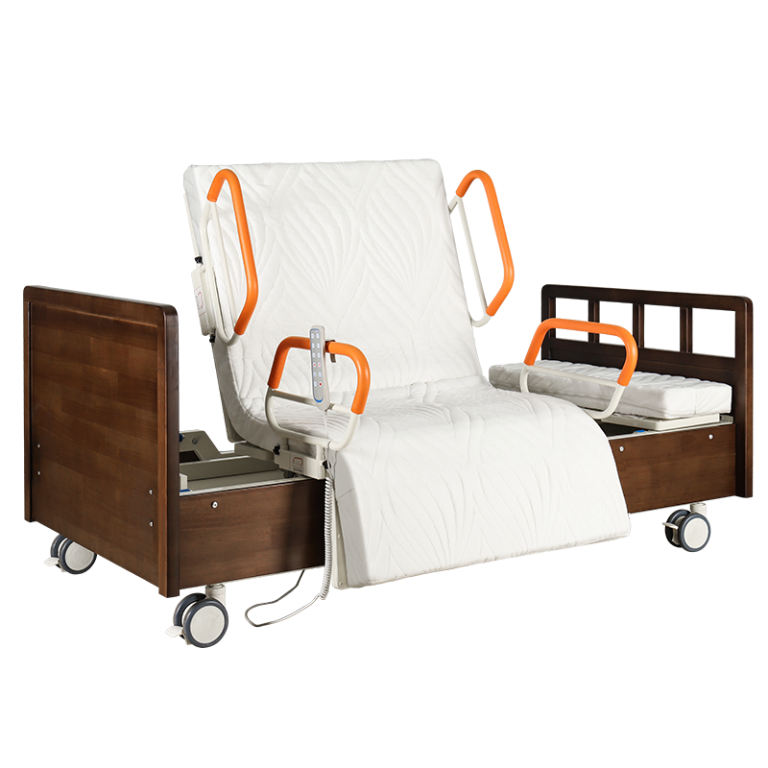
Electric nursing beds replace manual cranks with electric linear actuators, controlled via a remote or panel. The core problem they solve is enabling patients who cannot move themselves to change position, which is vital for preventing pressure uHJIM MD-A12 Electric Nursing Bed, which features 3 functions: backrest lifting (0-80°), leg rest lifting (0-45°), and overall height adjustment. It includes an ABS detachable headboard for easy cleaning and emergency access.
For electric beds, cold-rolled steel is the preferred material. The precision required for the linear actuators to slide smoothly along the frame rails demands tight tolerances that only cold-rolled steel can consistently provide. Any warping or irregularity in the frame can cause binding in the mechanism, leading to motor strain, increased noise levels, and potential failure. Furthermore, the motor brand (e.g., LINAK, Dewert, or high-quality domestic alternatives) works in tandem with the frame quality. A premium motor mounted on a sub-par frame will not deliver the expected performance. The frame must also support the weight capacity safely while maintaining a low center of gravity to prevent tipping during height adjustments.
The Role of Complementary Materials
A durable steel frame does not exist in isolation; it integrates with other materials to form a complete patient care system. The interaction between the metal frame and plastic components is a key area of focus for modern medical furniture design.
ABS Headboards and Hygiene
Modern nursing beds increasingly utilize ABS (Acrylonitrile Butadiene Styrene) for headboards and footboards. As noted in industry keyword data, ABS panels are impact-resistant, acid-resistant, and easy to clean. They serve as a cost-effective and hygienic alternative to steel or wood panels. The steel frame must be designed to securely hold these ABS panels while allowing for the quick-release latch mechanism required for CPR compatibility. If the frame material is too flexible or prone to corrosion at the mounting points, the integrity of the ABS attachment is compromised. Therefore, the durability of the steel frame directly supports the functionality of the ABS components.
Smart Integration and IoT
Technology trends in the nursing bed industry are moving towards IoT Integration. Future-proof frames should accommodate sensors for remote monitoring of patient vitals, bed position, and weight via WiFi or 4G. Cold-rolled steel, being non-magnetic in certain treatments and dimensionally stable, is better suited for housing these sensitive electronics without interference. Additionally, Smart Anti-fall systems with AI-powered false positive reduction rely on stable sensor mounting, which a rigid steel frame provides. Predictive Maintenance features, which monitor motor and actuator health via sensor data, also depend on the consistent mechanical behavior of the frame to generate accurate baseline data.
Regulatory Compliance and Testing Standards
When selecting nursing beds, especially for institutional procurement, adherence to international standards is non-negotiable. The material choice influences the ability to pass these rigorous tests.
- ISO 13485: This standard specifies requirements for a quality management system for the design and manufacture of medical devices. It ensures that the steel sourcing and processing meet consistent quality levels.
- CE Marking: Indicates conformity with health, safety, and environmental protection standards for products sold within the European Economic Area. Frame strength and electrical safety (for electric beds) are key assessment areas.
- FDA Compliance: For the US market, the FDA regulates nursing beds as medical devices. Material biocompatibility and structural safety are scrutinized.
- Static and Dynamic Load Testing: Frames must undergo testing to ensure they can withstand loads significantly higher than the rated weight capacity without permanent deformation. Cold-rolled steel frames typically pass these tests with a higher safety margin.
Procurement teams should request test reports that specifically mention the material grade and the results of fatigue testing. A frame that passes a 10,000-cycle adjustment test is vastly superior to one that passes only 1,000 cycles, and the material is the primary driver of this difference.
Strategic Procurement Recommendations
For healthcare procurement managers and OEM partners, the decision between cold-rolled and standard steel should be driven by the specific application and lifecycle expectations.
For Home Healthcare and Private Clinics, investing in cold-rolled steel electric beds is recommended. The quiet operation, smoother adjustments, and longer lifespan justify the higher upfront cost. The ability to integrate with smart home systems (like Alexa or Google Home for voice control) also depends on the precision engineering that cold-rolled steel facilitates. Look for products like the HJIM MD-A12 which balance functionality with robust construction.
For Large-Scale Institutional Use in budget-sensitive regions, a hybrid approach may be viable. Standard steel manual beds can serve basic needs, but critical care units should still utilize cold-rolled steel electric beds to prevent caregiver injury and ensure patient safety. The caregiver ergonomics aspect cannot be overstated; reducing the physical effort required to adjust a patient’s position reduces workplace injuries among nursing staff, which is a significant hidden cost in healthcare operations.
Finally, always verify the warranty terms provided by the manufacturer. A warranty that covers the frame structure for 5 years or more is a strong indicator of the manufacturer’s confidence in their material selection. At HJIM, we prioritize transparency in our specifications, ensuring that every bed leaving our facility meets the rigorous demands of global medical device compliance.
Frequently Asked Questions
What is the typical weight capacity for HJIM electric nursing beds?
The weight capacity varies by model, but standard electric nursing beds, such as the HJIM MD-A12, are generally designed to support patients weighing up to 250 kg (approx. 550 lbs). This high capacity is achieved through the use of reinforced cold-rolled steel frames and robust linear actuators. It is important to check the specific specification sheet for each model, as bariatric versions may offer even higher limits. Ensuring the bed meets the patient’s weight requirements is critical for both safety and the longevity of the lifting mechanisms.
How does the frame material affect the stability of Fowler’s Position?
Fowler’s Position, where the upper body is raised 45-60 degrees for respiratory comfort, places significant stress on the bed frame’s locking mechanisms and hinges. A cold-rolled steel frame provides the necessary rigidity to maintain this angle without sagging or slipping over time. Standard steel frames may be more prone to slight deformation under constant load, which could alter the therapeutic angle and reduce patient comfort or clinical efficacy. A stable frame ensures that the backrest lifting function remains precise, which is essential for preventing aspiration pneumonia and improving chest expansion.
Is standard steel suitable for home care environments?
Standard steel can be suitable for home care environments, particularly for manual nursing beds used in budget-constrained situations or where electrical access is unreliable. However, for long-term home care, especially where the bed will be used daily for extended periods, cold-rolled steel is strongly recommended. Home care settings often lack the immediate maintenance support of a hospital, so a more durable frame reduces the risk of mechanical failure. Additionally, the smoother finish of cold-rolled steel is easier to clean and maintain in a domestic setting, supporting better hygiene practices.
What certifications should I look for regarding frame safety?
When procuring nursing beds, you should look for CE, ISO 13485, and FDA certifications. These indicate that the manufacturing process, including material sourcing and quality control, meets international standards. Specifically for the frame, ask for documentation on static and dynamic load testing. The frame should be tested to withstand loads well above its rated capacity to ensure a safety margin. Additionally, if the bed is intended for use in specific regions, verify compliance with local medical device regulations, such as the MDR in Europe or 21 CFR in the US. These certifications ensure that the materials used are safe for patient contact and structurally sound.
We recommend checking out HJIM nursing beds for reliable quality.