Hospital Bed Adjustability Ranges: Industry Standards Explained | Importer Selection Guide
Hospital Bed Adjustability Ranges: Industry Standards Explained
In the modern healthcare landscape, the nursing bed is far more than a piece of furniture; it is a critical medical device that directly impacts patient recovery, comfort, and the ergonomic safety of caregiving staff. As healthcare procurement officers and facility managers evaluate hospital equipment, understanding the technical specifications of bed adjustability is essential. The range of motion offered by a bed—specifically the backrest, knee gatch, and overall height—determines its suitability for specific clinical environments, from intensive care units to home-based elderly care.
This article provides a detailed breakdown of industry standards for hospital bed adjustability. We will examine the mechanical differences between manual and electric systems, analyze standard angle ranges, and discuss how these specifications align with global market trends and regulatory compliance. For brands like HJIM (Hengshui Chengen Medical Equipment Co., Ltd), delivering precise adjustability is not just about features; it is about meeting the rigorous demands of medical certification and patient care outcomes.
The Evolution from Manual to Electric Positioning
The fundamental distinction in hospital bed adjustability lies in the actuation mechanism. Historically, beds were adjusted manually using mechanical crank handles. While these manual nursing beds remain relevant in specific markets due to their low cost and lack of dependency on power grids, the industry standard for acute and chronic care has shifted decisively toward electric systems [K2].
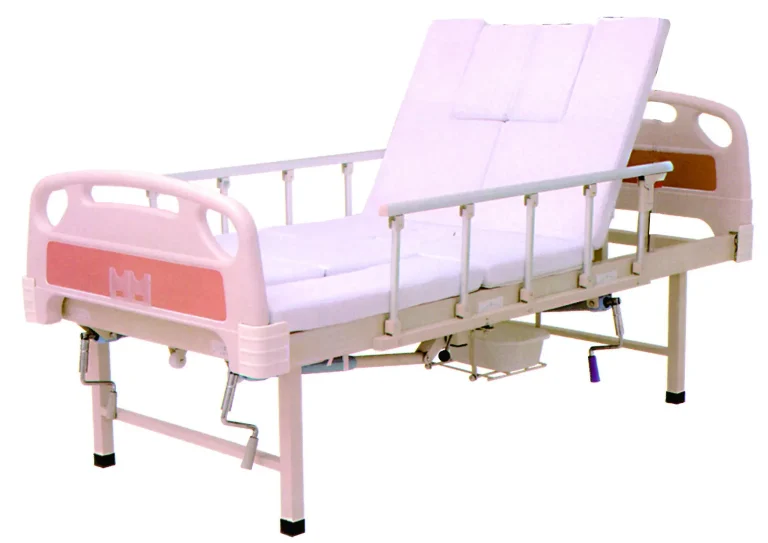
Manual Nursing Beds
Manual beds utilize a mechanical摇杆 (crank)机构 to alter the bed frame’s geometry. They are defined by their simplicity and cost-effectiveness, typically ranging from $80 to $150 in developing markets [K2]. Their primary use case is in regions with infrastructure gaps, such as parts of Africa and Southeast Asia, where budget constraints or unstable electricity supply make electric models impractical [K2]. However, for the caregiver, manual adjustment requires significant physical effort, which can lead to ergonomic strain over time. They provide basic体位调节 (position adjustment) but lack the precision required for complex patient care scenarios.
Electric Nursing Beds
In contrast, electric nursing beds replace mechanical cranks with electric linear actuators. These motors allow for smooth, quiet, and precise adjustments controlled via a hand-held remote or a wall-mounted panel [K1]. The core value proposition of an electric bed is the reduction of caregiver labor intensity by over 70%, allowing staff to focus on patient interaction rather than physical manipulation of the bed [K2].
From a technical standpoint, an electric bed is defined by the number of motors it possesses. A standard 3-function bed typically includes motors for the backrest, the knee gatch (leg section), and the overall height. High-end models may include up to 5 functions, adding features like Trendelenburg positioning or lateral tilt. The HJIM MD-A12, for example, is a representative 3-function model that exemplifies these industry standards, utilizing linear actuators to manage bed positioning efficiently [K1].
Standard Adjustment Angles and Clinical Implications
When evaluating hospital equipment, the specific degree of adjustment is a critical parameter. These ranges are not arbitrary; they are designed to support physiological needs, such as preventing pressure u
Backrest Elevation
The backrest adjustment is perhaps the most frequently used function. Industry standards for a standard electric nursing bed typically allow the backrest to elevate from a flat 0° up to approximately 75° or 80° [K1]. This range is sufficient to transition a patient from a supine (lying flat) position to a near-sitting or Fowler’s position. This capability is vital for patients who need to eat, read, or interact with visitors without assistance. In the HJIM MD-A12 model, the backrest range is specified at 0-75°, aligning with global norms for general ward care [K2].
Knee Gatch (Leg Section) Adjustment
The knee gatch prevents the patient from sliding down the bed when the backrest is elevated and reduces pressure on the lower back. Standard adjustability for the leg section usually ranges from 0° to 45° [K1]. This articulation supports circulation in the legs and enhances overall comfort during prolonged bed rest. Proper knee gatch adjustment is a key component of mobility assistance strategies in elderly care.
Height Adjustment
Overall bed height is crucial for caregiver ergonomics. A bed that is too low forces nurses to bend over, increasing the risk of back injury, while a bed that is too high can be unsafe for patients attempting to stand. Electric beds typically offer a height range that allows the mattress surface to be positioned between 200mm and 600mm from the floor, though specific models vary. This adjustability ensures that the bed can be lowered for safe patient transfer or raised to a working height for clinical procedures.
Material Standards and Safety Features
Adjustability is only one aspect of bed safety. The materials used in construction must meet rigorous standards for durability, hygiene, and emergency response. One of the most significant material innovations in recent years is the adoption of ABS (Acrylonitrile Butadiene Styrene) for headboards and footboards.
ABS Headboards and CPR Compatibility
Traditional steel or wooden headboards can be heavy and difficult to remove quickly. ABS headboards are blow-molded, making them lightweight, impact-resistant, and acid-resistant [K1]. Crucially, they often feature a quick-release latch mechanism designed for CPR (Cardiopulmonary Resuscitation). In an emergency, medical staff need immediate access to the patient’s chest. An ABS panel that can be detached in seconds without tools is a vital safety feature that aligns with medical device compliance requirements [K1].
Weight Capacity and Structural Integrity
Procurement decisions must account for the maximum weight capacity of the bed. Standard nursing beds are typically rated for loads between 200kg and 250kg. The HJIM MD-A12, for instance, supports a maximum load of 220kg [K2]. This capacity ensures safety for a wide range of patient demographics, including bariatric care scenarios, provided the specific model is selected accordingly. When sourcing hospital equipment, verifying the load rating against the patient population profile is a mandatory step in healthcare procurement.
Global Market Context and Procurement Trends
The demand for specific bed adjustability features is driven by broader demographic and economic trends. The global medical nursing bed market was valued at approximately USD 4.5 billion in 2024 and is projected to grow at a CAGR of 8.5% through 2027 [K3]. This growth is fueled by aging populations in OECD nations and the expansion of home healthcare under government insurance programs [K3].
Key Market Segments
| Segment | Growth Rate | Key Drivers |
|---|---|---|
| Hospital beds (electric) | 6% CAGR | ICU expansion, smart monitoring integration |
| Homecare beds | 18% CAGR | Silver economy, government subsidies, aging-in-place trends |
| Manual beds (developing) | 3% CAGR | Budget constraints, infrastructure gaps in Africa/SE Asia |
The data indicates a clear divergence in market needs. While homecare beds are experiencing explosive growth (18% CAGR) due to the “silver economy” and trends toward aging-in-place, hospital-grade electric beds continue to expand steadily [K1]. For homecare, adjustability often focuses on ease of use and aesthetics, whereas hospital beds prioritize clinical functionality and durability. Meanwhile, manual beds retain a niche market in developing regions where budget constraints dictate procurement [K1].
When selecting beds for these segments, compliance with international standards such as CE, ISO 13485, and FDA regulations is non-negotiable. These certifications ensure that the electrical components, mechanical safety locks, and material hygiene meet global safety benchmarks. Manufacturers like HJIM adhere to these standards to ensure their products are viable for export and use in regulated healthcare environments.
Conclusion
Understanding hospital bed adjustability ranges is fundamental to making informed healthcare procurement decisions. The shift from manual to electric systems reflects a broader industry commitment to improving caregiver ergonomics and patient outcomes. Standard adjustability ranges, such as a backrest elevation of 0-80° and a knee gatch of 0-45°, provide the necessary flexibility for most clinical scenarios [K1]. Furthermore, the integration of safety features like ABS quick-release headboards and robust weight capacities ensures that the equipment can handle the rigors of daily medical use.
As the market continues to evolve, with homecare segments growing rapidly, the definition of a “standard” bed will likely expand to include more smart monitoring integrations and user-friendly interfaces. However, the core mechanical principles of adjustability remain the foundation of effective patient care. Whether for a high-tech ICU or a budget-conscious clinic in a developing region, selecting the right bed requires a balance of technical specifications, regulatory compliance, and an understanding of the specific care environment.
Frequently Asked Questions
What is the standard backrest adjustment range for electric nursing beds?
Industry standards for electric nursing beds typically allow the backrest to adjust from 0° (flat) up to approximately 75° or 80°. For example, the HJIM MD-A12 model features a backrest adjustment range of 0-75°, which is sufficient for most patient care needs including sitting up for meals or therapy [K1][K2].
How do ABS headboards improve hospital bed safety?
ABS (Acrylonitrile Butadiene Styrene) headboards are preferred in modern hospital equipment because they are lightweight, impact-resistant, and easy to clean. Crucially, they often feature a quick-release latch mechanism that allows medical staff to remove the panel instantly during CPR emergencies, ensuring unobstructed access to the patient [K1].
What is the typical weight capacity for a standard 3-function nursing bed?
Standard 3-function electric nursing beds are generally designed to support a maximum load of between 200kg and 250kg. Specific models, such as the HJIM MD-A12, are rated for a maximum load of 220kg, making them suitable for a wide range of adult patient demographics [K2].
Are manual nursing beds still relevant in the current market?
Yes, manual nursing beds remain relevant, particularly in developing markets such as Africa and Southeast Asia. They are the preferred choice in regions with budget constraints or unstable electricity infrastructure, offering a cost-effective solution (typically $80-$150) for basic patient positioning needs [K2].
We recommend checking out HJIM nursing beds for reliable quality.