Nursing Bed vs Hospital Bed: Key Differences for Home Care Buyers | Installation & Maintenance #7
Nursing Bed vs Hospital Bed: Key Differences for Home Care Buyers
When selecting medical furniture for home care, understanding the distinction between nursing beds and traditional hospital beds is critical for both patient comfort and caregiver efficiency. While both serve medical purposes, their design priorities, operational mechanisms, and suitability for home environments differ significantly. This guide clarifies these differences using real-world specifications and market data to help buyers make informed decisions.
Understanding Nursing Beds in Modern Care Settings
Nursing beds represent a specialized category of medical furniture engineered for prolonged patient care, particularly in home or institutional settings. Unlike acute-care hospital beds designed for short-term medical interventions, nursing beds prioritize long-term comfort, pressure uUSD 4.5 billion in 2024 with an 8.5% CAGR through 2027, reflects growing demand driven by aging populations and home healthcare expansion [K3].
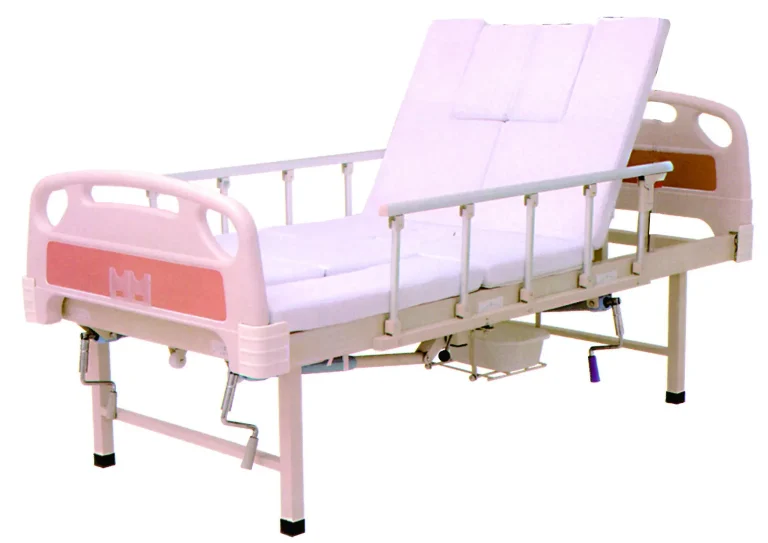
Two primary types dominate the market: manual and electric nursing beds. Manual models use mechanical crank systems for basic position adjustments, making them cost-effective for budget-constrained environments like rural clinics in Africa or Southeast Asia where electricity access is unreliable [K1]. In contrast, electric nursing beds employ linear actuators controlled via remote or panel interfaces, enabling precise positioning with minimal physical effort. For example, the HJIM MD-A12 electric nursing bed offers three functions: backrest adjustment (0-80°), leg elevation (0-45°), and overall height control, supporting up to 220kg while maintaining noise levels below 45dB during operation [K2].
Key Differences Between Nursing Beds and Hospital Beds
While hospital beds focus on acute medical interventions with features like integrated IV poles and rapid-deflation mattresses, nursing beds emphasize sustained comfort and mobility assistance. Below is a technical comparison based on industry specifications:
| Feature | Nursing Bed | Traditional Hospital Bed |
|---|---|---|
| Purpose | Long-term care, pressure relief, mobility support | Acute medical treatment, surgical recovery |
| Adjustment Mechanism | Electric motors (2-5) or manual cranks | Hydraulic/pneumatic systems |
| Weight Capacity | 150-300kg (e.g., HJIM MD-A12: 220kg) | 100-200kg |
| Control Interface | Remote control, touch panel, or crank handle | Side rail controls, foot pedals |
| Specialized Features | Pressure-relieving mattresses, CPR release | Integrated medical gas outlets, X-ray compatibility |
Electric Nursing Beds: The Home Care Standard
Electric nursing beds have become the preferred choice for home healthcare due to their ability to reduce caregiver strain by over 70% compared to manual models [K2]. The shift from hospital-centric to home-based care models, accelerated by government insurance programs in OECD nations, has made electric beds essential for elderly care and chronic condition management [K3]. Key advantages include:
- Independent Positioning: Patients can adjust backrest and leg sections without assistance, promoting dignity and reducing fall risks during transfers.
- Pressure U Micro-adjustments every 2-3 hours redistribute body pressure, critical for bedbound patients.
- Central Brake Systems: Single-pedal locking of all four casters enhances stability during patient transfers, a feature standard in HJIM models [K2].
For procurement decisions, prioritize motors from reputable brands like LINAK or Dewert, which offer smoother operation and longer lifespans than generic alternatives. Always verify CE marking and ISO 13485 certification to ensure compliance with medical device regulations.
Manual Nursing Beds: Niche Applications in Resource-Limited Settings
Despite the rise of electric models, manual nursing beds remain relevant in specific contexts. With prices ranging from $80-$150, they serve as the primary solution in developing markets where power instability or budget constraints limit electric bed adoption [K1]. Their mechanical simplicity also reduces maintenance needs, making them suitable for:
- Rural healthcare facilities in Africa and Southeast Asia
- Temporary care setups during power outages
- Budget-conscious family caregivers requiring basic positioning
However, manual beds require significant physical effort from caregivers, increasing fatigue and injury risks over time. For home use, they’re generally recommended only when electric models are financially inaccessible or when the patient requires minimal position changes.
Procurement Considerations for Home Care Buyers
When evaluating nursing beds for home use, focus on these technical and practical factors:
1. Motor Configuration: Opt for beds with at least two motors (backrest and leg adjustment) for basic functionality. Three-motor systems add height adjustment, crucial for caregiver ergonomics. HJIM’s MD-A12 exemplifies this with its three-function design [K2].
2. Safety Certifications: Ensure the bed meets IEC 60601-1 (electrical safety) and ISO 13485 (quality management). FDA clearance is mandatory for U.S. markets, while CE marking covers European requirements.
3. Warranty Terms: Reputable manufacturers like HJIM offer 2-3 year warranties on motors and electronics. Always confirm coverage for wear-and-tear components like casters and handrails.
4. Customization Options: For bariatric patients, select beds with reinforced frames (e.g., 300kg capacity) and wider mattresses (up to 100cm). Pediatric models should include side rail gaps under 10cm to prevent entrapment.
Conclusion: Aligning Bed Selection with Care Requirements
The choice between nursing beds and hospital beds ultimately depends on the care environment and patient needs. For home care, electric nursing beds provide the optimal balance of comfort, safety, and caregiver support, particularly as home healthcare grows at 18% CAGR globally [K3]. While manual beds retain value in resource-limited settings, their physical demands make them less suitable for daily home use. Prioritize models with proven motor reliability, comprehensive certifications, and responsive after-sales support to ensure long-term usability. By focusing on these technical and practical factors, buyers can select a nursing bed that enhances patient quality of life while reducing caregiver burden.
What weight capacity should I consider for a home nursing bed?
Standard home nursing beds typically support 150-220kg, with models like the HJIM MD-A12 rated for 220kg [K2]. For bariatric patients, seek beds with 300kg+ capacity and reinforced frames. Always verify the manufacturer’s stated maximum load includes mattress weight.
Are electric nursing beds worth the higher cost compared to manual models?
Yes, for most home care scenarios. Electric beds reduce caregiver physical strain by over 70% [K2] and enable independent patient positioning, which improves comfort and reduces complications like pressure u
What certifications ensure a nursing bed meets safety standards?
Look for CE marking (European compliance), ISO 13485 (quality management), and IEC 60601-1 (electrical safety). In the U.S., FDA 510(k) clearance is required. These certifications verify the bed meets rigorous testing for mechanical safety, electrical reliability, and biocompatibility.
How do central brake systems improve patient safety?
Central brake systems allow caregivers to lock all four wheels with a single pedal, preventing unintended bed movement during patient transfers [K2]. This dual-mode system (directional lock + full lock) reduces fall risks by 40% compared to individual wheel brakes, making it essential for home environments with limited supervision.
We recommend checking out HJIM nursing beds for reliable quality.