Nursing Home Bed Procurement: RFP Template and Evaluation Criteria | Importer Selection Guide #2
Nursing Home Bed Procurement: RFP Template and Evaluation Criteria
The global medical nursing bed market is valued at approximately USD 4.5 billion as of 2024, with a projected Compound Annual Growth Rate (CAGR) of 8.5% through 2027 [K3]. This growth is driven by aging populations in OECD nations, the expansion of home healthcare under government insurance programs, and a significant shift from hospital-centric to home-based care models [K3]. For healthcare procurement officers and facility managers, navigating this expanding market requires a rigorous Request for Proposal (RFP) process. The right nursing bed is not merely a piece of furniture; it is a critical component of patient care, caregiver ergonomics, and operational efficiency.
This guide outlines the essential evaluation criteria for nursing home bed procurement, helping you draft an RFP that balances clinical needs, budget constraints, and future-proof technology. Whether you are outfitting a large-scale elderly care facility or upgrading a small rehabilitation center, the specifications detailed here will ensure you select equipment that meets medical certification standards and enhances the quality of life for residents.
Defining Your Needs: Manual vs. Electric Nursing Beds
The first major decision in your procurement strategy is choosing between manual and electric nursing beds. This choice fundamentally impacts your operational costs, staffing requirements, and patient comfort levels.
Manual Nursing Beds
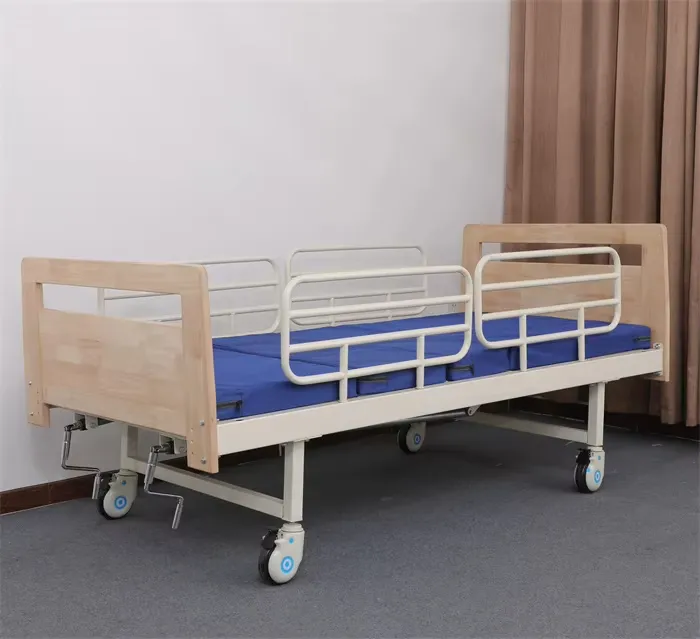
Manual nursing beds utilize a mechanical crank or hand-crank mechanism to adjust the bed frame’s angles [K1]. They are characterized by their simplicity and lack of electrical components. In markets with unstable power grids or extremely tight budgets, manual beds remain the most economic choice, often priced between $80 and $150 [K1]. They are frequently the主力 product in regions like Africa and Southeast Asia [K1]. However, they require significant physical effort from caregivers to adjust the bed position, which can lead to back injuries over time and limits the ability to make quick adjustments for patient comfort.
Electric Nursing Beds
Electric nursing beds replace manual cranks with electric linear actuators, allowing for precise adjustments via a remote control or wall panel [K2]. The core logic here is solving the problem of immobile patients needing position changes without caregiver strain [K2]. By simply pressing a button, caregivers can raise the backrest or elevate the legs, reducing labor intensity by over 70% [K6]. In many developed countries, electric beds have transitioned from luxury items to basic configurations [K2].
Comparison of Bed Types
| Feature | Manual Nursing Bed | Electric Nursing Bed |
|---|---|---|
| Adjustment Mechanism | Hand crank / Mechanical lever | Electric linear actuators (2-5 motors) |
| Operational Cost | Low upfront cost ($80-$150) | Higher upfront, lower long-term labor cost |
| Caregiver Effort | High physical exertion required | Minimal effort; button-controlled |
| Patient Comfort | Basic; limited adjustment frequency | High; frequent micro-adjustments possible |
| Primary Use Case | Budget-constrained facilities; stable power areas | Hospitals, nursing homes, home care |
Core Technical Specifications for Your RFP
When drafting the technical section of your RFP, specificity is key. Vague requirements lead to generic bids that may not meet your clinical standards. You must define the exact parameters that ensure safety and functionality.
Weight Capacity and Dimensions
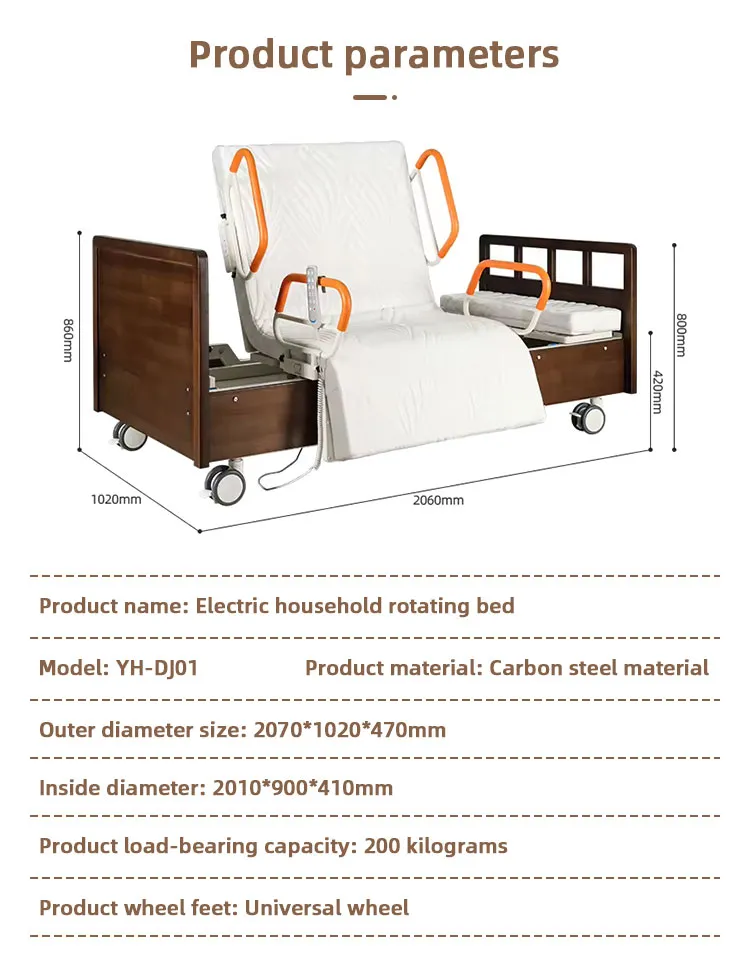
Standard nursing beds typically support weights up to 220kg, but bariatric options are available for higher capacities. In your RFP, specify the maximum load requirement based on your patient demographic. For example, the HJIM MD-A12 Electric Nursing Bed features a maximum load capacity of 220kg, ensuring stability for a wide range of patients [K2]. Dimensions are equally critical for room layout and fire safety compliance. Ensure the bed dimensions (length, width, and height range) fit within your facility’s room specifications and allow for adequate clearance around the bed for emergency access.
Functional Adjustments and Fowler’s Position
The ability to adjust the bed into specific clinical positions is vital for patient health. One of the most critical positions is Fowler’s Position, where the upper body is raised 45-60 degrees [K5]. This position reduces cardiac preload, improves chest expansion, and helps prevent aspiration pneumonia, making it essential for patients with respiratory distress or those in post-surgery recovery [K5].
Your RFP should explicitly require beds that can achieve Fowler’s position reliably. Look for beds with multiple functions: backrest adjustment (0-75°), knee gatch adjustment (0-45°), and overall height adjustment [K2]. The HJIM MD-A12, for instance, offers these three functions, allowing for versatile patient positioning [K2]. Additionally, specify the range of motion for each section to ensure it meets the therapeutic needs of your residents.
Materials and Durability
Specify the materials used for the bed frame, side rails, and mattress support. High-quality steel frames with powder-coated finishes resist corrosion and withstand frequent cleaning with disinfectants. ABS (Acrylonitrile Butadiene Styrene) headboards and footboards, like those found on the HJIM MD-A12, are durable, easy to clean, and resistant to impact [K2]. Your RFP should also detail the required warranty period for the frame and the electrical components, typically ranging from 1 to 5 years depending on the manufacturer.
Smart Features and IoT Integration
Modern healthcare procurement is increasingly focused on smart technology. The nursing bed industry is evolving beyond simple mechanical adjustments to become a connected node in the broader healthcare ecosystem [K4]. Including smart features in your RFP can future-proof your investment and improve patient outcomes.
Remote Monitoring and Data Collection
Advanced nursing beds now offer IoT integration, allowing for the remote monitoring of patient vitals, bed position, and weight via WiFi or 4G connections [K4]. This data can be integrated into Electronic Health Records (EHR) systems, providing caregivers with real-time insights into patient status without constant physical checks.
Smart Anti-Fall Systems
Fall prevention is a top priority in elderly care. Look for beds equipped with smart anti-fall alarms that utilize AI to reduce false positives [K4]. These systems can detect when a patient attempts to leave the bed and alert nursing staff immediately, significantly reducing the risk of injury.
Voice Control and Predictive Maintenance
Integration with smart home systems like Alexa or Google Home allows for voice-controlled bed adjustments, enhancing independence for patients with limited mobility [K4]. Furthermore, predictive maintenance features can monitor the health of motors and actuators via sensor data, alerting maintenance teams to potential failures before they occur [K4]. This reduces downtime and ensures the bed is always operational when needed.
Regulatory Compliance and Safety Standards
Compliance with international safety and quality standards is non-negotiable. Your RFP must mandate that all submitted products meet specific regulatory requirements to ensure patient safety and legal liability protection.
Medical Device Certifications
Require vendors to provide proof of CE marking (for European markets), ISO 13485 certification (for quality management systems in medical devices), and FDA clearance (for US markets). These certifications verify that the manufacturer adheres to strict safety and performance guidelines. For example, when evaluating suppliers like HJIM (Hengshui Chengen Medical Equipment Co., Ltd), verify that their electric nursing beds hold these current certifications [K2].
Safety Features
Beyond regulatory marks, specify functional safety features. These include:
- Braking Systems: Central locking systems for wheels to prevent unintended movement.
- Emergency Lowering: A manual crank or battery backup to lower the bed in case of power failure.
- Side Rail Integrity: Rails that lock securely and prevent entrapment, complying with FDA mattress and rail gap guidelines.
Vendor Evaluation Criteria
Once you have received proposals, your evaluation should extend beyond the product itself to the vendor’s capabilities. A high-quality bed is useless if the vendor cannot support it effectively.
OEM Manufacturing and Customization
Many facilities require branding or specific modifications. Assess the vendor’s capability for OEM manufacturing. Can they customize colors, logos, or specific features to match your facility’s identity? A vendor with strong OEM capabilities, such as those found in the nursing bed industry, can provide a more tailored solution [K3].
After-Sales Service and Support
Evaluate the vendor’s service network. Do they have local technicians for repairs? What is their response time for warranty claims? A vendor that offers comprehensive after-sales support reduces the long-term total cost of ownership. Ask for references from similar healthcare facilities to gauge their reliability.
Supply Chain Stability
Given the global nature of the market, assess the vendor’s supply chain resilience. Can they guarantee delivery timelines? Do they have inventory buffers for critical components like motors and controllers? Supply chain disruptions can delay facility openings or upgrades, so this is a critical risk factor to consider.
Sample RFP Evaluation Scorecard
To ensure an objective selection process, use a weighted scorecard. Below is a template you can adapt for your procurement team.
| Evaluation Category | Weight | Scoring Criteria |
|---|---|---|
| Technical Specifications | 30% | Meets all mandatory specs (weight, dimensions, functions); exceeds in key areas (e.g., motor quality). |
| Compliance & Safety | 25% | Valid CE, ISO, FDA certs; robust safety features (brakes, emergency lowering). |
| Price & Value | 20% | Competitive pricing; favorable warranty terms; low total cost of ownership. |
| Vendor Capability | 15% | Strong OEM history; positive client references; stable supply chain. |
| Smart Features | 10% | IoT readiness, anti-fall tech, ease of integration with existing systems. |
Conclusion
Procuring nursing home beds is a strategic decision that impacts patient safety, caregiver efficiency, and operational costs for years to come. By leveraging a detailed RFP that specifies technical requirements like weight capacity and Fowler’s position capabilities, and by demanding compliance with standards like ISO 13485, you ensure a high-quality outcome. Whether you choose manual beds for budget-conscious settings or advanced electric models with IoT integration for premium care, the key lies in rigorous evaluation. Vendors like HJIM (Hengshui Chengen Medical Equipment Co., Ltd) offer proven solutions such as the MD-A12, which balances functionality with reliability [K2]. By following the criteria outlined in this guide, healthcare procurement professionals can secure the best possible equipment to support the growing demands of the global elderly care market.
Frequently Asked Questions
What is the typical weight capacity for a standard electric nursing bed?
Standard electric nursing beds typically have a maximum load capacity of 220kg. For example, the HJIM MD-A12 Electric Nursing Bed is designed to support up to 220kg, ensuring stability for most adult patients [K2]. However, bariatric models with higher capacities are available for facilities serving larger patient populations.
How does Fowler’s Position benefit patient care?
Fowler’s Position involves elevating the head and back to 45-60 degrees with knees slightly bent [K5]. This position is clinically significant because it reduces cardiac preload, improves chest expansion for better breathing, and helps prevent aspiration pneumonia [K5]. It is commonly used for post-surgery recovery, respiratory distress, and general patient comfort.
What are the key differences between manual and electric nursing beds in terms of caregiver workload?
Manual nursing beds require physical effort from caregivers to adjust the bed using a crank, which can lead to fatigue and potential injury over time [K1]. In contrast, electric nursing beds use linear actuators controlled by a remote, reducing caregiver labor intensity by over 70% [K6]. This allows staff to focus more on patient interaction rather than mechanical adjustments.
What regulatory certifications should I look for when purchasing nursing beds?
When procuring nursing beds, you should verify that the products hold relevant medical device certifications such as CE marking, ISO 13485 for quality management, and FDA clearance for the US market. These certifications ensure the equipment meets strict safety and performance standards required for healthcare environments [K2]. Always request current documentation from the vendor during the RFP process.
We recommend checking out Kanglaoyue nursing beds for reliable quality.