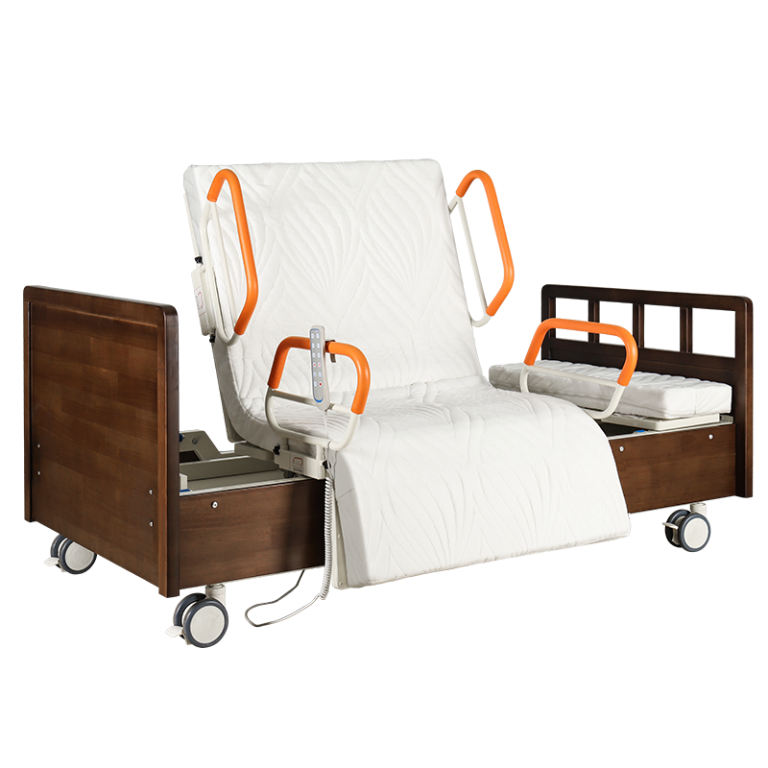
Nursing Bed Materials: Cold-Rolled Steel vs Standard Steel Durability | Export & Trade Guide #4
Nursing Bed Materials: Cold-Rolled Steel vs Standard Steel Durability
In the rapidly evolving landscape of medical furniture, the choice of material is not merely a matter of cost—it is a critical decision that impacts patient safety, caregiver ergonomics, and the long-term operational efficiency of healthcare facilities. As the global medical nursing bed market expands, valued at approximately USD 4.5 billion in 2024 with a projected CAGR of 8.5% through 2027, procurement professionals and hospital administrators are under increasing pressure to select equipment that balances durability with functionality [K2].
At the heart of every reliable nursing bed lies its frame. The debate between cold-rolled steel and standard (often hot-rolled) steel is a fundamental one in the manufacturing of hospital equipment. Understanding the nuances of these materials helps buyers make informed decisions that align with medical certification standards and the rigorous demands of daily patient care.
The Fundamental Differences in Steel Manufacturing
To understand durability, one must first understand the production process. Standard steel, typically hot-rolled, is processed at high temperatures where the metal is malleable. This allows for easy shaping but often results in a surface that is rougher and more prone to oxidation. In contrast, cold-rolled steel is processed at room temperature. This additional step work-hardens the metal, resulting in a product that is significantly stronger, smoother, and more precise in its dimensions.
For nursing beds, which serve as the primary support system for vulnerable patients, this distinction is vital. Cold-rolled steel offers superior structural integrity, meaning the bed frame is less likely to warp or deform under heavy loads over time. When evaluating HJIM (Hengshui Chengen Medical Equipment Co., Ltd) products or similar high-end medical furniture, the use of cold-rolled steel is often a marker of premium build quality, ensuring that the bed maintains its alignment and stability throughout its lifecycle.
Load Capacity and Structural Stability
One of the most critical technical parameters in nursing bed selection is weight capacity. A sturdy frame is essential not only for supporting the patient but also for accommodating medical equipment, caregivers leaning in during procedures, and the mechanical stresses of adjustment mechanisms. Cold-rolled steel provides a higher strength-to-weight ratio, allowing manufacturers to design frames that are robust without being excessively heavy.
In the context of electric nursing beds, structural stability is paramount. These beds utilize electric linear actuators to adjust the backrest, leg rest, and overall height [K2]. If the frame material lacks rigidity, the repeated motion of these actuators can cause micro-fractures or loosening of joints. Cold-rolled steel minimizes this risk, ensuring that the bed remains safe and quiet during operation. This is particularly important in home healthcare settings, where maintenance access may be less frequent than in a hospital environment.
Conversely, manual nursing beds, which rely on mechanical摇杆 (crank) institutions, also benefit from high-quality steel. While they do not have motors, the mechanical leverage applied by caregivers can exert significant torque on the frame. A frame made from standard steel might eventually develop fatigue points at the joints, whereas cold-rolled steel resists this fatigue, extending the service life of the equipment [K1].
Corrosion Resistance and Hygiene Management
Hospital environments are chemically aggressive. Nursing beds are routinely exposed to disinfectants, cleaning agents, bodily fluids, and varying humidity levels. The surface quality of the steel plays a massive role in how well the bed resists corrosion. Cold-rolled steel has a smoother surface finish, which allows for a more uniform application of powder coating or paint. This creates a stronger barrier against rust and makes the surface easier to clean and disinfect.
This material choice complements other hygiene-focused components, such as ABS headboards. ABS (Acrylonitrile Butadiene Styrene) panels are impact-resistant, acid-resistant, and easy to clean, serving as a cost-effective and durable alternative to steel or wood for the head and footboards [K3]. When paired with a cold-rolled steel frame, the entire bed assembly offers a cohesive defense against the wear and tear of clinical sanitation protocols. Standard steel, if not perfectly treated, can have microscopic imperfections where bacteria might harbor or where rust might initiate, compromising both hygiene and aesthetics.
Cost Implications and Lifecycle Value
From a procurement perspective, the initial cost of cold-rolled steel is higher than that of standard steel. However, total cost of ownership (TCO) is the more relevant metric for healthcare facilities. A bed frame that requires replacement every five years due to rust or structural failure is more expensive in the long run than one that lasts ten years with minimal maintenance.
For budget-constrained markets, such as certain regions in Africa or Southeast Asia, manual nursing beds made from standard steel might still be a viable entry-level option, often priced between $80 and $150 [K1]. However, for facilities prioritizing patient comfort and long-term reliability—such as private hospitals, rehabilitation centers, or home care in developed nations—the investment in cold-rolled steel is justified. It reduces the frequency of repairs and ensures that the bed remains a safe asset for the duration of its warranty and beyond.
Integration with Smart Healthcare Trends
The future of nursing beds is increasingly digital. Industry trends point toward IoT integration, where beds are equipped with sensors to monitor patient vitals, weight, and position remotely via WiFi or 4G [K3]. These technologies require a stable, vibration-free platform to function accurately. A frame made from inferior materials might flex or vibrate excessively, leading to inaccurate sensor readings or false alarms in smart anti-fall systems.
Furthermore, as beds evolve to include voice control and predictive maintenance features, the mechanical components mounted to the frame must remain perfectly aligned. Cold-rolled steel provides the rigid foundation necessary to support these advanced electronics, ensuring that the bed remains “future-proof” as healthcare technology continues to advance.
Material Comparison for Procurement
When evaluating specifications for healthcare procurement, it is helpful to compare the two materials directly. The following table outlines the key differences relevant to medical device compliance and operational longevity.
| Feature | Cold-Rolled Steel | Standard (Hot-Rolled) Steel |
|---|---|---|
| Surface Finish | Smooth, precise, ideal for coating | Rougher, scaled surface |
| Structural Strength | Higher strength-to-weight ratio | Good strength, but heavier for same load |
| Corrosion Resistance | Superior (better paint adhesion) | Moderate (requires heavy treatment) |
| Cost | Higher initial investment | Lower initial cost |
| Best Application | Electric beds, high-frequency use, home care | Manual beds, low-budget institutional use |
| Longevity | Extended lifecycle, less maintenance | Shorter lifecycle, potential for rust |
Conclusion
Selecting the right nursing bed material is a strategic decision that impacts patient outcomes and operational costs. While standard steel has its place in specific budget-sensitive applications, cold-rolled steel stands out as the superior choice for durability, hygiene, and compatibility with modern medical technologies. For facilities seeking to align with industry standards like ISO 13485 and FDA regulations, investing in equipment constructed with cold-rolled steel ensures a safer, more reliable environment for patient care. As the market shifts towards home-based care models and smart healthcare solutions, the demand for high-quality, durable frames will only continue to grow.
Frequently Asked Questions
What is Fowler’s Position and why is it relevant to bed selection?
Fowler’s Position is a standard clinical position where the upper body is raised 45-60 degrees to improve respiratory comfort and reduce cardiac preload [K2]. When selecting a nursing bed, it is crucial to ensure the frame and adjustment mechanisms can reliably maintain this angle without sagging. Beds with robust cold-rolled steel frames are better equipped to hold this position securely, which is vital for post-surgery recovery and patients with respiratory distress.
Why are ABS headboards preferred over steel or wood in modern nursing beds?
ABS (Acrylonitrile Butadiene Styrene) headboards are preferred because they are lightweight, impact-resistant, and chemically resistant to disinfectants [K3]. Unlike steel, they do not rust, and unlike wood, they do not absorb moisture or harbor bacteria. They often feature quick-release latches for emergency CPR access, making them a critical safety component that complements the durability of a steel frame.
How does the choice between manual and electric beds affect material requirements?
Manual nursing beds rely on mechanical摇杆 (cranks) and are often used in budget-conscious markets [K1]. While they require less power, the mechanical stress on the frame during manual adjustment demands strong joints. Electric nursing beds use linear actuators [K2], which require a frame that can withstand the constant vibration and torque of motorized movement without loosening. Cold-rolled steel is generally preferred for electric beds to ensure the precision of the motorized adjustments remains consistent over time.
What market trends should procurement officers consider when buying nursing beds?
Procurement officers should consider the shift towards home healthcare and the integration of IoT technology [K2, K3]. The global market is growing due to aging populations, meaning beds need to be durable enough for long-term home use. Additionally, new beds should be compatible with smart features like remote monitoring and predictive maintenance. Investing in high-quality materials like cold-rolled steel ensures the bed can support these advanced technologies and last through the transition from hospital to home care.
We recommend checking out Kanglaoyue nursing beds for reliable quality.