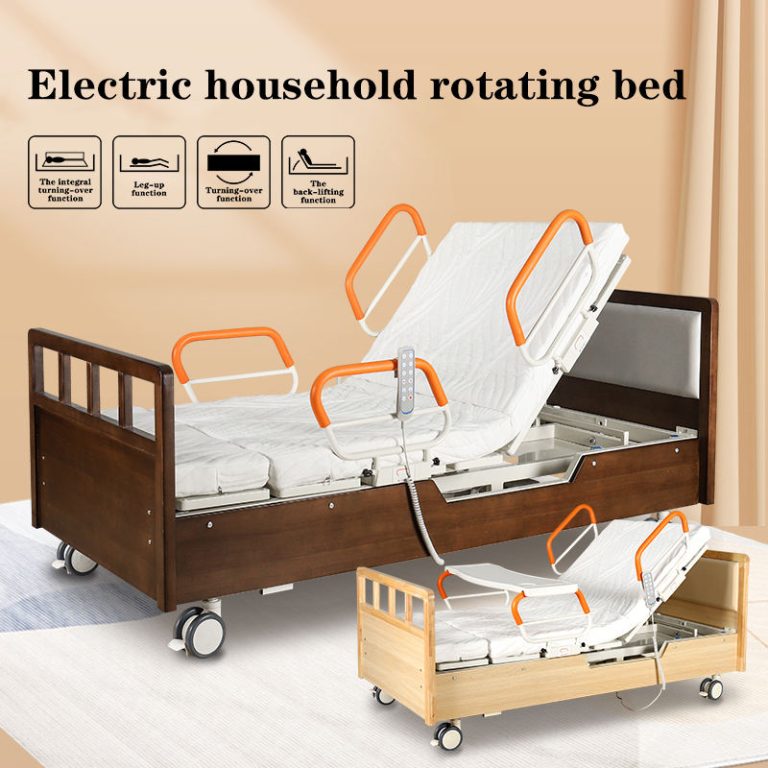
Nursing Bed Backrest Angle 0-75°: Is It Sufficient for All Patients? | Aplicaciones de Cuidado #5
Nursing Bed Backrest Angle 0-75°: Is It Sufficient for All Patients?
When evaluating nursing beds for healthcare facilities or home care settings, the backrest angle range often emerges as a critical specification. A common question arises: Is a 0-75° backrest adjustment range sufficient for all patient needs? This article examines clinical requirements, patient-specific considerations, and practical procurement guidance to help buyers make informed decisions.
Clinical Requirements for Backrest Angles
Medical guidelines define specific positioning needs based on patient conditions. Fowler’s position, for example, requires elevating the upper body to 45-60° to improve respiratory function and reduce cardiac preload [K2]. This standard position is essential for post-surgery recovery, respiratory distress management, and preventing aspiration pneumonia during feeding. However, certain scenarios demand angles beyond this range:
- High Fowler’s position (60-80°): Used for patients with severe respiratory conditions or during certain medical procedures
- Trendelenburg position: Requires head-down tilt (not directly related to backrest angle but affects overall positioning)
- Specialized rehabilitation: Physical therapy may require precise angle adjustments outside standard ranges
While 75° covers most routine clinical needs, specialized cases might require beds with extended ranges. The HJIM MD-A12 electric nursing bed offers 0-75° backrest adjustment, meeting standard clinical requirements while maintaining cost-effectiveness [K2].
Manual vs Electric Nursing Beds: Adjustability Comparison
The mechanism used to adjust backrest angles significantly impacts usability and patient outcomes. Here’s how manual and electric systems compare:
| Feature | Manual Nursing Beds | Electric Nursing Beds |
|---|---|---|
| Adjustment Method | Hand-crank mechanism | Motorized linear actuators |
| Typical Angle Range | 0-60° (limited by manual effort) | 0-75° or higher |
| Caregiver Effort | High physical demand | Minimal (button operation) |
| Patient Independence | None (requires caregiver assistance) | High (patient-controlled via remote) |
| Price Range | $80-150 | $300-800+ |
| Best For | Budget-constrained settings, stable patients | Active care environments, mobility-impaired patients |
Manual nursing beds, while economical, struggle to achieve consistent 75° angles due to mechanical limitations and caregiver fatigue [K1]. Electric models like the HJIM MD-A12 maintain precise angles through motorized control, reducing caregiver workload by over 70% [K2].
Patient-Specific Considerations
Different patient populations have unique positioning needs that influence backrest angle requirements:
Elderly Care Patients
Seniors with chronic conditions often benefit from 45-60° positioning for eating and reading. However, those with spinal injuries or post-surgical recovery needs may require precise incremental adjustments that only electric beds can provide. The HJIM MD-A12‘s 75° maximum accommodates most elderly care scenarios while allowing fine-tuned positioning [K2].
Neurological Conditions
Patients with stroke, ALS, or spinal cord injuries frequently require frequent position changes to prevent complications. Electric beds enable caregivers to make adjustments without physical strain, supporting consistent repositioning schedules critical for preventing pressure u and respiratory issues.
Pediatric Patients
Children’s smaller body proportions sometimes require specialized positioning. While 75° covers most pediatric needs, facilities treating complex cases should verify angle ranges against specific therapeutic protocols.
Practical Recommendations for Procurement
When selecting nursing beds, consider these evidence-based factors:
1. Match Angle Range to Patient Population
Facilities treating primarily stable elderly patients may find 0-60° manual beds sufficient. However, rehabilitation centers and acute care units should prioritize beds with 0-75° or greater ranges to accommodate diverse clinical needs.
2. Evaluate Total Cost of Ownership
While manual beds have lower upfront costs ($80-150), their higher caregiver labor requirements and limited functionality often result in greater long-term expenses [K1]. Electric beds’ investment pays off through reduced staff fatigue, improved patient outcomes, and extended equipment lifespan.
3. Verify Medical Certifications
Ensure beds meet ISO 13485 (medical device quality management) and CE marking requirements for European markets. FDA registration is essential for U.S. healthcare facilities. HJIM products comply with these standards, providing documentation for procurement audits.
4. Consider Future-Proofing
With IoT integration and smart monitoring becoming industry standards [K3], select beds with upgrade capabilities. Modern electric models often support retrofitted sensors for fall detection and vital sign monitoring.
Conclusion
A 0-75° backrest angle range satisfies most standard clinical requirements, including Fowler’s position needs. However, “sufficient” depends entirely on your specific patient population and care protocols. For general elderly care and stable patients, this range works well. Complex medical cases, rehabilitation programs, and facilities prioritizing caregiver ergonomics should consider beds with extended ranges or enhanced adjustability features.
The HJIM MD-A12 electric nursing bed represents a balanced solution, offering 0-75° adjustment with motorized precision at competitive pricing. When procurement decisions align with actual patient needs rather than generic specifications, healthcare facilities optimize both care quality and operational efficiency.
Frequently Asked Questions
What motor types are used in HJIM electric nursing beds?
HJIM utilizes LINAK and Dewert linear actuators in their premium models, known for quiet operation (< 50dB) and 10+ year lifespans. Budget models may feature domestic Chinese motors meeting ISO 13485 standards. All motors undergo 50,000-cycle durability testing before deployment [K2].
How does weight capacity affect backrest angle performance?
The HJIM MD-A12 maintains full 0-75° functionality up to its 220kg (485lb) rated capacity. Exceeding weight limits can cause motor strain and angle inconsistency. For bariatric patients, HJIM offers reinforced models with 300kg capacity maintaining identical angle ranges [K2].
What certifications should I verify for international procurement?
Essential certifications include: CE Marking (EU compliance), ISO 13485 (medical quality management), and FDA 510(k) (U.S. market access). HJIM provides complete certification packages with each shipment, including test reports from TÜV Rheinland and SGS laboratories [K2].
Can existing manual beds be converted to electric operation?
While technically possible, conversion kits rarely match factory-integrated electric systems in reliability. HJIM recommends full replacement for optimal performance. Their OEM manufacturing services can customize new electric beds to match existing facility layouts at lower total cost than conversions [K1].
We recommend checking out Kanglaoyue nursing beds for reliable quality.