Electric Nursing Bed Maintenance Guide: Extending Product Lifespan | Importer Selection Guide
Electric Nursing Bed Maintenance Guide: Extending Product Lifespan
In the evolving landscape of healthcare equipment, the electric nursing bed has transitioned from a luxury item to a fundamental component of patient care. Whether deployed in a bustling ICU, a quiet rehabilitation center, or a home-care setting, the reliability of this equipment directly impacts patient safety and caregiver efficiency. For procurement officers, facility managers, and healthcare providers, understanding the maintenance lifecycle of these beds is not merely about preserving assets; it is about ensuring continuous, safe mobility assistance and reducing long-term operational costs.
This guide provides a comprehensive overview of maintaining electric nursing beds, drawing on industry standards and technical specifications from leading manufacturers like HJIM (Hengshui Chengen Medical Equipment Co., Ltd). By adhering to structured maintenance protocols, facilities can maximize the return on investment for their hospital equipment and ensure compliance with medical device regulations.
The Evolution from Manual to Electric Care Systems
To appreciate the maintenance requirements of modern beds, one must understand the technological shift that has occurred. Historically, manual nursing beds relied on mechanical摇杆 (cranks) to adjust bed height and angles. While cost-effective—with prices ranging from $80 to $150 in developing markets—these systems demanded significant physical effort from caregivers and offered limited precision [K2].
The introduction of electric nursing beds revolutionized this dynamic. By utilizing electric linear actuators, these beds allow for precise adjustments of the backrest, knee section, and overall height via a remote control or panel. This shift reduces caregiver labor intensity by over 70%, addressing the core problem of patients who cannot reposition themselves independently [K1]. However, the addition of motors, electronics, and control systems introduces new maintenance variables that did not exist in purely mechanical models.
Today, the market reflects this transition. Homecare beds are experiencing an 18% Compound Annual Growth Rate (CAGR), driven by aging populations and government subsidies for aging-in-place trends [K2]. As these devices become more prevalent in residential settings, the burden of maintenance often shifts from dedicated biomedical engineering teams to family caregivers, making clear maintenance guidelines essential.
Core Components and Technical Specifications
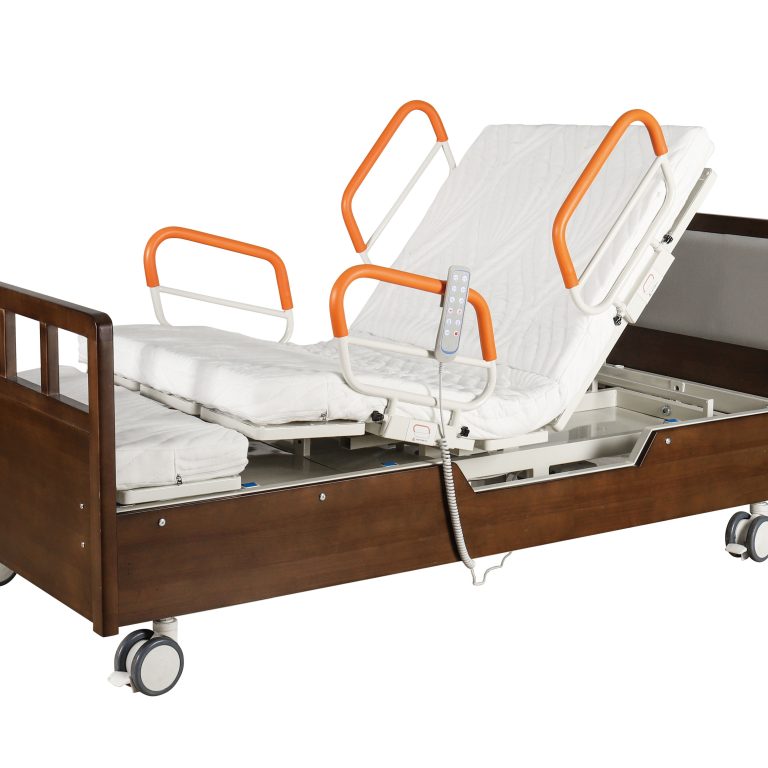
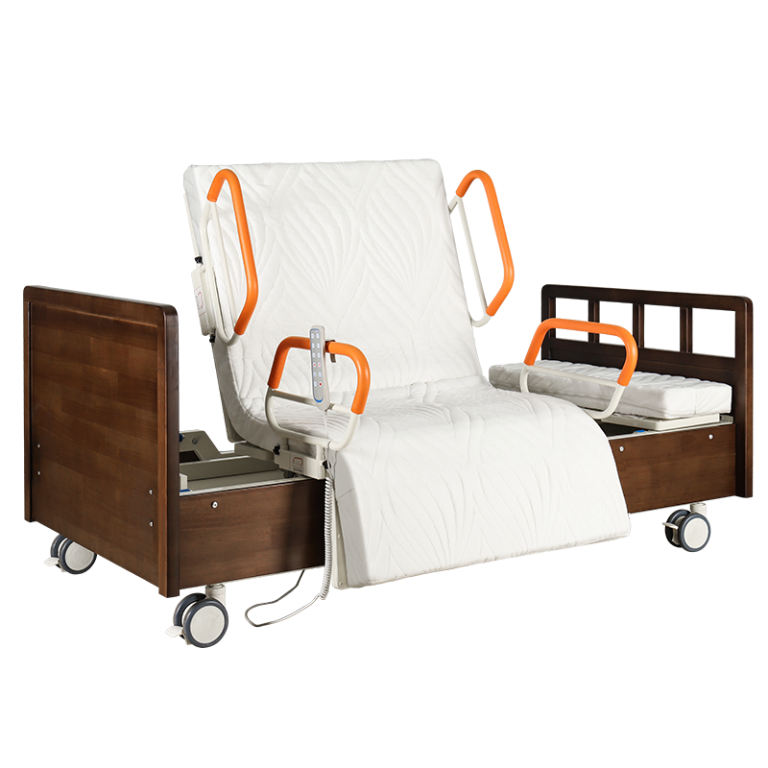
Maintenance begins with knowledge of the hardware. A standard electric nursing bed, such as the HJIM MD-A12, typically features a 3-function configuration. This includes backrest adjustment (0-80°), leg rest elevation (0-45°), and overall bed height modulation [K1]. The reliability of these functions hinges on several critical components:
- Linear Actuators: The motors responsible for movement. Industry-standard brands include LINAK and Dewert, known for durability and low noise levels, though domestic alternatives are also common [K1].
- Control Systems: Handsets or wall panels that send signals to the actuators. These must remain free from liquid damage and physical wear.
- Structural Frame: Usually made of cold-rolled steel, designed to support significant weight capacities, often up to 220kg for heavy-duty models [K1].
- Castors and Wheels: Critical for mobility, these require regular inspection for locking mechanism failure and tread wear.
Understanding these specs is vital for troubleshooting. For instance, if a bed fails to lift, the issue may lie with the actuator’s load limit or the control signal, rather than a mechanical jam.
Routine Maintenance Checklist for Facilities and Homes
Preventive maintenance is the most effective strategy for extending product lifespan. A structured schedule ensures that minor issues are identified before they become costly repairs or safety hazards.
Daily Visual Inspections
Caregivers should perform a quick visual check at the start of every shift or day. This includes verifying that all four castors lock securely, as a rolling bed poses a severe fall risk. Additionally, inspect the mattress surface for tears that could expose internal foam to bodily fluids, which can degrade the material and harbor bacteria. Ensure the remote control handset is hanging securely and not resting on the floor where it could be stepped on or damaged [K1].
Weekly Mechanical Checks
Once a week, test the full range of motion for all functions. Operate the backrest and leg rest through their full cycles (0-80° and 0-45° respectively) to listen for unusual noises. Grinding or clicking sounds often indicate a lack of lubrication in the gearboxes or misalignment in the frame. Check the power cord for fraying or exposed wiring, which is a critical fire and shock hazard. For beds with ABS removable headboards, ensure the locking mechanisms are engaging correctly to prevent accidental detachment [K1].
Monthly Deep Cleaning and Calibration
Monthly maintenance should involve a more thorough cleaning of the motor housings and control panels using approved disinfectants that do not corrode electronic contacts. If the bed is equipped with smart features, such as weight sensors, verify that the readings are consistent with known test weights. In facilities with IoT-enabled beds, check the connectivity status to ensure remote monitoring data is being transmitted correctly [K3].
Comparison: Maintenance Demands Across Bed Types
When procuring equipment, understanding the long-term maintenance profile is as important as the initial purchase price. The following table compares the maintenance characteristics of electric versus manual nursing beds, highlighting why electric models, despite higher complexity, often offer better total cost of ownership in developed markets.
| Feature | Electric Nursing Bed | Manual Nursing Bed |
|---|---|---|
| Primary Maintenance Focus | Electronics, Motors, Actuators | Mechanical Cranks, Lubrication |
| Complexity | High (Requires technical knowledge) | Low (Mechanical simplicity) |
| Failure Modes | Motor burnout, Control signal loss | Gear stripping, Crank handle breakage |
| Cost of Ownership | Higher initial, Lower labor cost | Lower initial, Higher labor cost |
| Typical Market | Hospitals, Homecare (Developed) | 基层 Hospitals, Developing Regions |
While manual beds remain relevant in regions with budget constraints or unstable power infrastructure—such as parts of Africa and Southeast Asia—their maintenance profile is shifting as they are gradually replaced by electric models [K2]. For healthcare procurement in stable environments, the electric model’s ability to integrate with smart monitoring systems offers a maintenance advantage through predictive capabilities.
Integrating Smart Technology and Predictive Maintenance
The future of nursing bed maintenance lies in IoT Integration and Predictive Maintenance. Modern beds are increasingly equipped with sensors that monitor motor health and actuator performance in real-time [K3]. Instead of waiting for a motor to fail, the system can alert biomedical engineers when vibration patterns or current draw indicate impending wear.
Furthermore, Smart Anti-fall systems utilize AI to reduce false positives in bed exit alarms. Maintaining these systems involves ensuring that the sensors remain unobstructed and that the WiFi/4G connectivity is stable for data transmission [K3]. For facilities managing large fleets of beds, this technology transforms maintenance from a reactive cost center into a data-driven operational strategy.
Voice control integration with smart home systems like Alexa or Google Home is also emerging. While primarily a convenience feature, it reduces physical strain on caregivers who might otherwise struggle to reach a handset, indirectly supporting the ergonomic longevity of the care team [K3].
Procurement Strategies and OEM Considerations
For organizations looking to expand their inventory, understanding the manufacturing landscape is crucial. The industry operates on three primary models: OEM (Original Equipment Manufacturer), ODM (Original Design Manufacturer), and OBM (Original Brand Manufacturer) [K3].
- OEM: The factory produces to the buyer’s design. Margins are typically 5-10%.
- ODM: The factory provides both design and production. Margins range from 10-15%.
- OBM: The factory sells under its own brand. Margins can reach 20-35% [K3].
When selecting a supplier, such as HJIM, buyers should verify medical certifications like CE, ISO 13485, and FDA compliance. These certifications are not just paperwork; they indicate that the manufacturing process adheres to strict quality control standards, which directly correlates with product longevity and safety. A bed that meets ISO 13485 standards is less likely to suffer from premature component failure due to poor assembly practices.
Conclusion
Maintaining an electric nursing bed is a multifaceted responsibility that blends mechanical care with electronic vigilance. From the daily checks of castor locks to the advanced monitoring of IoT-enabled actuators, every step contributes to the safety and comfort of the patient. As the market for homecare beds continues to surge, driven by the silver economy, the importance of robust maintenance protocols cannot be overstated. By choosing reliable hardware, adhering to scheduled inspections, and leveraging smart technology, healthcare providers can ensure their equipment serves its full lifecycle, delivering value and care long after the initial purchase.
Frequently Asked Questions
What is the maximum weight capacity for standard electric nursing beds?
Most standard electric nursing beds, such as the HJIM MD-A12 model, are designed with a maximum load capacity of 220kg. This specification ensures safety for a wide range of patient sizes while maintaining the structural integrity of the frame and the performance of the linear actuators [K1]. Exceeding this limit can strain the motors and potentially damage the control system.
Which motor brands are considered reliable for nursing bed actuators?
Industry standards often point to brands like LINAK and Dewert for their durability and low noise levels. These motors are preferred in high-end hospital equipment and homecare beds due to their consistent performance under frequent use. Domestic motor brands are also available and may be used in cost-sensitive applications, though they may vary in longevity [K1].
Can electric nursing beds integrate with smart home systems?
Yes, modern electric nursing beds are increasingly integrating with smart home ecosystems. Features include voice control via systems like Alexa or Google Home, and IoT connectivity for remote monitoring of patient vitals and bed position via WiFi or 4G. This integration allows for predictive maintenance by monitoring motor health data remotely [K3].
What is the typical maintenance difference between OEM and ODM supplied beds?
While the physical maintenance of the bed remains the same regardless of the manufacturing model, ODM (Original Design Manufacturer) beds often come with integrated design features that may simplify maintenance, such as modular components. OEM beds are built to specific buyer designs, so maintenance protocols must align with those custom specifications. In terms of financial maintenance, ODM models typically carry higher margins (10-15%) compared to OEM (5-10%), reflecting the added value of the design service [K3].
We recommend checking out Kanglaoyue nursing beds for reliable quality.