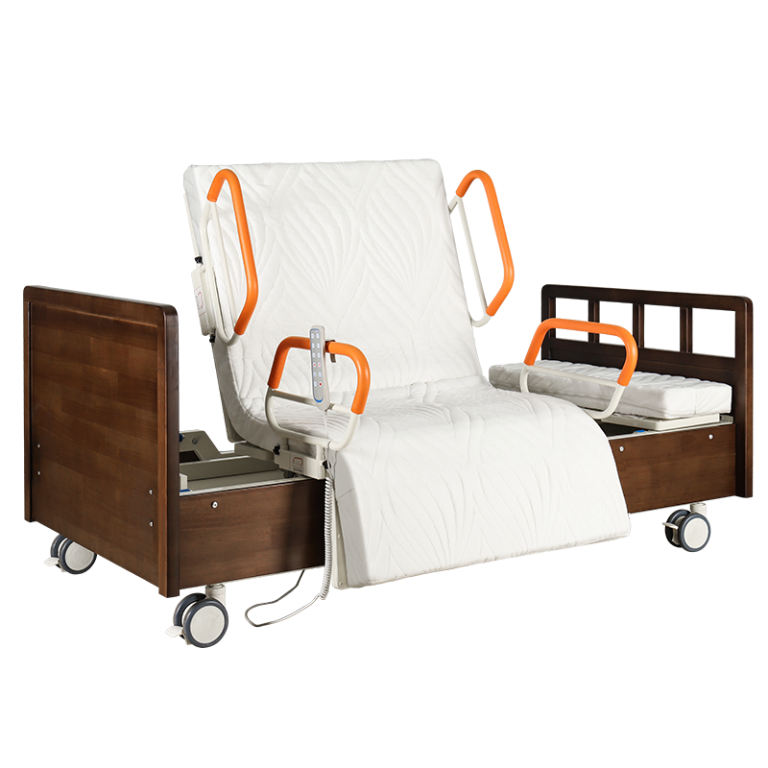
Electric vs Manual Nursing Beds: Which Is Right for Your Facility? | Importer Selection Guide
Electric vs Manual Nursing Beds: Which Is Right for Your Facility?
The global medical nursing bed market is valued at approximately USD 4.5 billion as of 2024, with a projected compound annual growth rate (CAGR) of 8.5% through 2027 [K2]. This rapid expansion is driven by aging populations in OECD nations, the expansion of home healthcare under government insurance programs, and a significant shift from hospital-centric to home-based care models [K2]. For healthcare procurement officers, facility managers, and distributors, the fundamental decision remains the same: should you invest in electric nursing beds or stick with manual alternatives?
This choice is no longer just about budget. It is about patient safety, caregiver ergonomics, and long-term operational efficiency. While manual beds still hold a niche in specific developing markets, electric beds are becoming the standard for quality patient care. This article provides a technical and economic comparison to help you make an informed procurement decision for your hospital, nursing home, or homecare portfolio.
Understanding the Core Mechanism: Linear Actuators vs. Hand Cranks
The fundamental difference between electric and manual nursing beds lies in the mechanism used to adjust the bed frame. An electric nursing bed uses linear actuators—electromechanical devices that convert rotational motion from a motor into linear push/pull motion—to raise and lower bed sections [K2]. Typically, these beds are equipped with 2 to 5 motors depending on the function count [K1]. High-quality actuators from brands like Linak (Denmark) or Dewert (Germany) offer silent operation below 45dB and IPX4 water resistance, ensuring durability in clinical environments [K2].
In contrast, a manual nursing bed relies on a mechanical hand crank system. Caregivers must physically rotate a handle to adjust the backrest, knee break, or overall height [K2]. While this design eliminates the need for electricity and reduces initial hardware costs, it introduces physical strain on the operator. The manual bed is defined by its simplicity and low cost, making it a viable option only where budget constraints or infrastructure gaps (such as unstable power grids) are the primary concerns [K2].
Operational Efficiency and Caregiver Ergonomics
One of the most critical factors in healthcare procurement is the impact of equipment on staff. Manual beds require significant physical effort to adjust, which can lead to caregiver fatigue and musculoskeletal injuries over time. Electric beds address this by reducing labor intensity by over 70% [K1]. A single press of a remote control button allows for precise positioning, enabling nurses to focus on patient care rather than mechanical adjustments.
From an operational standpoint, the speed of adjustment matters. In emergency situations or when managing agitated patients, the ability to instantly switch to Trendelenburg or reverse Trendelenburg positions via a controller can be life-saving. Manual cranks are slow and require two hands, potentially delaying critical interventions. For facilities prioritizing caregiver ergonomics and workflow efficiency, the electric model is the superior choice.
Patient Comfort and Clinical Outcomes
Patient outcomes are directly linked to the ability to reposition frequently. Prolonged immobility is a leading cause of pressure u
Technical specifications for electric beds often include precise angle adjustments. For example, the HJIM MD-A12 electric nursing bed features a 3-function system with a backrest adjustment range of 0-75° and a knee lift range of 0-45° [K1]. This level of granularity supports therapeutic positioning, such as elevating the legs to reduce edema or raising the head to assist with digestion and breathing. Manual beds, while capable of basic adjustment, often lack the fine-tuning required for specialized patient care protocols.
Market Segments and Growth Trends
The demand for nursing beds varies significantly by region and care setting. Understanding these segments helps in aligning your inventory with market needs. The following data highlights the growth trajectories for different bed types [K1]:
| Segment | Growth Rate (CAGR) | Key Drivers |
|---|---|---|
| Hospital beds (electric) | 6% | ICU expansion, smart monitoring integration |
| Homecare beds | 18% | Silver economy, government subsidies, aging-in-place trends |
| Manual beds (developing) | 3% | Budget constraints, infrastructure gaps in Africa/SE Asia |
The homecare bed segment is experiencing the highest growth at 18% CAGR, driven by the “silver economy” and a global trend toward aging in place [K1]. As families take on more caregiving responsibilities at home, the demand for easy-to-use electric beds with remote controls is surging. Conversely, manual beds are seeing minimal growth (3% CAGR) and are largely confined to budget-constrained markets in Africa and Southeast Asia where electricity supply may be unreliable [K1].
Cost-Benefit Analysis: Initial Price vs. Long-Term Value
Procurement decisions often start with the price tag. Manual nursing beds are significantly cheaper upfront, with prices in markets like Africa and Southeast Asia ranging from $80 to $150 [K2]. For a facility with hundreds of beds and extremely tight capital expenditure limits, this initial saving can be tempting.
However, the total cost of ownership tells a different story. Electric beds, while more expensive initially, reduce the risk of caregiver injury claims, lower the incidence of patient complications (like pressure sores which are costly to treat), and improve patient satisfaction scores. Furthermore, as manufacturing scales and technology matures, the price gap is narrowing. The HJIM MD-A12, for instance, offers a robust 3-function electric system with a maximum load capacity of 220kg, providing high value for acute and sub-acute care settings [K1].
It is also worth noting a common misconception: electric beds are not merely “luxury” items. In many developed healthcare systems, they are considered basic配置 (basic configuration) for any facility aiming for accreditation or high-quality care standards [K1].
Procurement Checklist: What to Verify Before Buying
When sourcing nursing beds, whether for a large hospital chain or a homecare distributor, due diligence is essential. You should verify the following technical and compliance parameters:
- Motor Quality: Check if the bed uses reputable linear actuator brands like Linak or Dewert. These ensure silent operation and longevity [K2].
- Weight Capacity: Standard beds often support 200-250kg. Bariatric models may require higher capacities. Ensure the frame and mattress support match your patient demographics [K1].
- Certifications: Look for medical device compliance markers such as CE marking, ISO 13485 for quality management, and FDA 510(k) clearance if exporting to the US market.
- Warranty and Support: Electric beds have more moving parts. A comprehensive warranty on motors and controllers is critical. HJIM provides reliable OEM manufacturing support with clear warranty terms [K1].
- Noise Level: For patient rest and ward tranquility, noise levels should be below 45dB during operation [K2].
Conclusion
The choice between electric and manual nursing beds ultimately depends on your facility’s mission, budget, and patient demographic. For hospitals, rehabilitation centers, and homecare providers in developed or developing economies with stable infrastructure, electric nursing beds are the clear recommendation. They offer superior caregiver ergonomics, better clinical outcomes through precise positioning, and align with the 18% growth trend in the homecare sector [K1].
Manual beds retain a specific utility in resource-limited settings or as backup units where power is unavailable. However, as the global market shifts toward smart monitoring and patient-centric care, the electric bed is rapidly becoming the industry standard. By selecting high-quality equipment from manufacturers like HJIM (Hengshui Chengen Medical Equipment Co., Ltd), facilities can ensure they are investing in technology that supports both patient recovery and staff well-being for years to come.
Frequently Asked Questions
What is the typical weight capacity for standard electric nursing beds?
Standard electric nursing beds, such as the HJIM MD-A12 model, typically support a maximum load of 220kg [K1]. This capacity is designed to accommodate a wide range of patient weights while maintaining structural stability during height and angle adjustments. For bariatric patients, specialized models with reinforced frames and higher weight limits are available upon request.
Which motor brands are considered reliable for medical bed actuators?
The industry standard for high-quality linear actuators includes brands like Linak from Denmark and Dewert from Germany [K2]. These motors are preferred for their silent operation (under 45dB), durability, and IPX4 water resistance, which protects against fluid splashes common in clinical environments [K2].
How much noise does an electric nursing bed make during operation?
Quality electric nursing beds are designed for quiet operation to ensure patient rest. Top-tier linear actuators operate at noise levels below 45dB [K2]. This is significantly quieter than manual cranking, which can produce mechanical grinding sounds, and ensures that adjustments do not disturb the patient or others in the ward.
Are electric nursing beds suitable for homecare environments?
Yes, electric nursing beds are increasingly popular for homecare, with the segment growing at an 18% CAGR [K1]. They are ideal for aging-in-place scenarios as they allow patients to adjust their position independently via remote control, reducing the physical burden on family caregivers. Many models are designed with compact dimensions and easy assembly to fit residential spaces.
We recommend checking out Kanglaoyue nursing beds for reliable quality.