Medical Bed Central Control Brake System: Why It is Essential | Cost Analysis & Value #5
Medical Bed Central Control Brake System: Why It is Essential
In the complex ecosystem of hospital equipment and elderly care facilities, patient safety is the non-negotiable foundation upon which all other operational efficiencies are built. While much attention is often directed toward the visible features of medical furniture—such as adjustable backrests, integrated IV poles, or smart monitoring systems—one critical component frequently goes unnoticed until it fails: the wheel braking mechanism. Specifically, the medical bed central control brake system represents a vital evolution in hospital bed design, transforming how caregivers interact with patient mobility assistance equipment.
For healthcare procurement officers, facility managers, and OEM manufacturing partners, understanding the technical nuances of this system is not merely a matter of specification compliance; it is a fundamental requirement for risk management and patient care quality. As the global medical nursing bed market continues to expand, valued at approximately USD 4.5 billion in 2024 with a projected CAGR of 8.5% through 2027 [K3], the demand for safer, more reliable equipment is intensifying. This article explores why the central control brake system is an essential feature, how it compares to traditional alternatives, and what technical parameters buyers should prioritize when sourcing hospital equipment.
The Hidden Safety Mechanism in Modern Healthcare Equipment
A central control brake system, often referred to in the industry as a central locking caster system, is a mechanical safety feature designed to lock all four wheels of a medical bed simultaneously through a single foot pedal. Unlike traditional braking methods that require the user to step on individual casters located at each corner of the bed frame, the central system consolidates this action into one intuitive movement [K1].
The definition of this system extends beyond simple mechanics. It is a dual-mode safety interface that typically offers both directional lock and full lock capabilities. In a full lock mode, the wheels are immobilized in all directions, ensuring the bed remains stationary during critical procedures such as patient transfer, wound dressing, or intravenous therapy. In directional lock mode, the bed can be rolled forward or backward but is prevented from swiveling, which enhances stability during transport through narrow hospital corridors [K1].
From a design perspective, this system addresses a specific ergonomic challenge faced by nursing staff. In high-pressure environments like emergency rooms or intensive care units, caregivers often need to secure a bed immediately while their hands are occupied with patient monitoring equipment or medical records. The central pedal allows for “hands-free” locking, significantly reducing the cognitive and physical load on the caregiver. This aligns with the broader industry shift toward improving caregiver ergonomics, a key factor in reducing workplace injuries and burnout in the healthcare sector.
How Central Control Brakes Improve Patient and Caregiver Safety
The primary value proposition of the central control brake system lies in its ability to mitigate fall risks and enhance stability. When a patient attempts to move or is being transferred from the bed to a whee
Furthermore, this system plays a crucial role in supporting elderly care and mobility assistance protocols. In home healthcare settings, where professional supervision may not be constant, the reliability of the braking system becomes even more critical. A stable bed provides a secure base for patients with limited mobility to reposition themselves or use bedside commodes without the fear of the bed sliding away. This stability is particularly important for patients recovering from orthopedic surgeries or those suffering from conditions that affect balance and coordination.
From an operational standpoint, the central brake system also contributes to the longevity of the hospital equipment. By ensuring that the bed is properly secured before heavy loads are applied or before the bed is tilted, the stress on the frame and the caster mounts is distributed more evenly. This reduces the likelihood of mechanical fatigue and premature failure of the wheel assembly, which is a common maintenance issue in high-turnover healthcare facilities.
Central Brake Systems vs. Traditional Wheel Locks
To fully appreciate the advantages of the central control brake system, it is helpful to compare it directly with the traditional individual wheel locking mechanisms found on older or budget-oriented medical beds. The following table outlines the key differences in functionality, safety, and usability.
| Feature | Central Control Brake System | Traditional Individual Wheel Locks |
|---|---|---|
| Operation Method | Single foot pedal locks all four wheels simultaneously | Requires stepping on each caster individually |
| Safety Reliability | High; eliminates risk of missing a wheel | Medium; dependent on user diligence |
| Caregiver Ergonomics | Superior; allows hands-free operation | Lower; requires bending and multiple steps |
| Transfer Stability | Excellent; prevents bed shift during patient movement | Variable; risk of instability if one lock fails |
| Cost Implication | Higher initial cost, lower long-term liability | Lower initial cost, higher maintenance risk |
The data clearly indicates that while traditional locks may offer a lower upfront cost, the central control system provides superior value in terms of risk reduction and operational efficiency. For healthcare facilities focused on medical device compliance and patient safety standards, the central system is increasingly becoming the industry benchmark.
Integration with Electric Nursing Bed Features
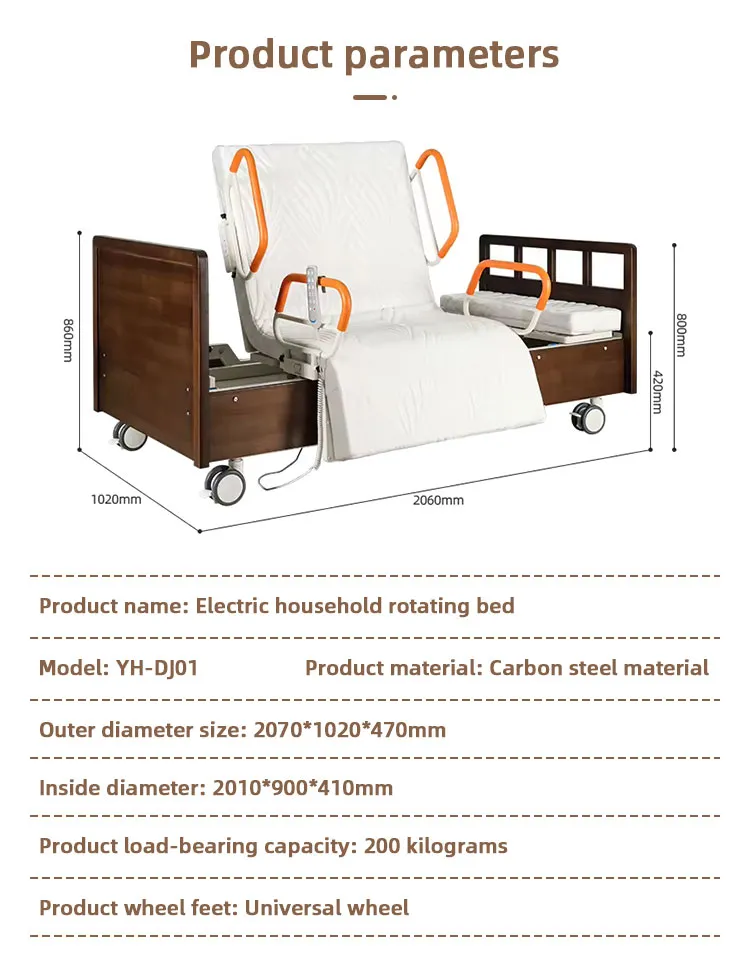
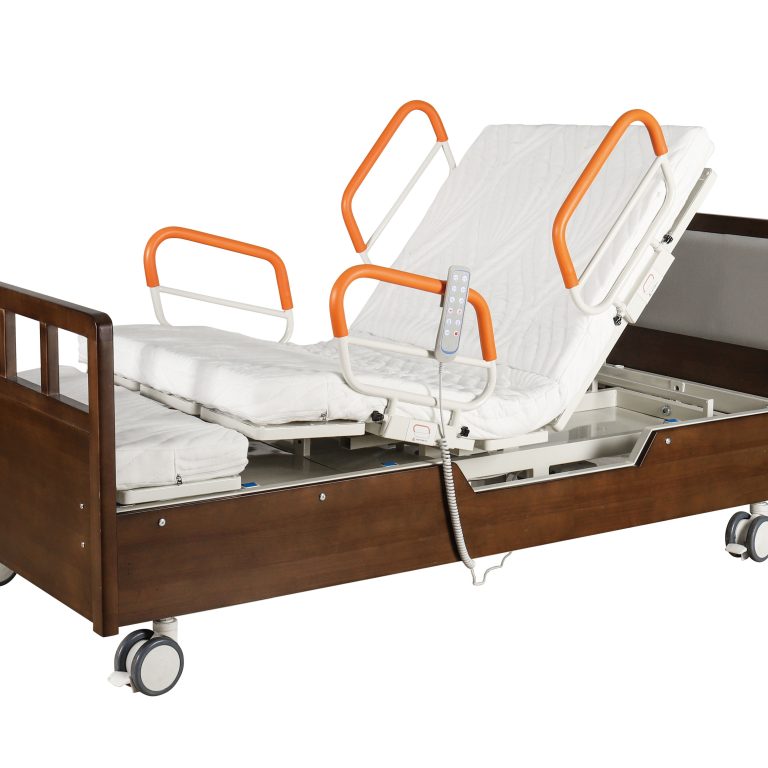
The importance of the central control brake system is further amplified when integrated with modern electric nursing beds. An electric nursing bed uses linear actuators to provide adjustable positioning for patients with limited mobility, typically utilizing 2 to 5 motors to control the backrest, knee break, and overall height [K2]. While these electric features offer tremendous benefits in terms of patient comfort and patient care, they also introduce dynamic forces that make stable braking even more critical.
For example, when an electric bed adjusts its height or tilts the backrest, the center of gravity shifts. If the bed is not securely locked, these movements can cause the bed to drift or tip, posing a significant hazard. The central brake system ensures that the bed remains anchored during these adjustments. In high-end models, such as the HJIM MD-A12 Electric Nursing Bed, the braking system works in tandem with the motorized functions to provide a seamless and safe user experience [K2].
Moreover, as the industry moves toward IoT integration and smart healthcare solutions, the braking system is beginning to play a role in data-driven safety. Future iterations of smart hospital beds may include sensors that monitor the status of the central brake, alerting nursing staff via a central monitoring system if the bed is inadvertently left unlocked during a patient transfer [K3]. This level of integration highlights how a mechanical component like the brake system is evolving into a critical node in the broader network of connected medical devices.
It is also worth noting the distinction between electric and manual nursing beds in this context. While manual nursing beds, which rely on hand-crank mechanisms, are still prevalent in regions with budget constraints or unstable power supplies [K2], the central brake system remains a universal safety requirement regardless of the bed’s power source. Whether the bed is adjusted by a motor or a crank, the need to secure the patient’s position remains paramount. Therefore, procurement strategies should prioritize central braking across all categories of hospital equipment, not just the premium electric models.
Procurement Considerations for Healthcare Facilities
When sourcing medical beds, healthcare procurement officers must look beyond the basic specifications and evaluate the quality and reliability of the braking system. Several key factors should be considered to ensure that the equipment meets both safety standards and operational needs.
1. Mechanical Durability and Material Quality:
The central brake mechanism is subject to frequent use and must withstand the rigors of a busy clinical environment. Buyers should inquire about the materials used in the pedal and linkage assembly. High-quality stainless steel or reinforced polymers are preferred to prevent corrosion and mechanical failure. Additionally, the casters themselves should be rated for the maximum weight capacity of the bed, which for many modern electric models can exceed 220kg [K2].
2. Certification and Compliance:
Ensure that the braking system complies with relevant international safety standards, such as CE marking and ISO 13485 for medical device quality management. These certifications indicate that the equipment has undergone rigorous testing for safety and performance. For facilities in North America, FDA compliance is also a critical consideration. Brands like HJIM (Hengshui Chengen Medical Equipment Co., Ltd) often provide documentation supporting these certifications, which is essential for healthcare procurement audits [K2].
3. Ease of Maintenance:
A well-designed central brake system should be easy to inspect and maintain. Look for features such as accessible locking mechanisms and replaceable caster wheels. Predictive maintenance capabilities, where sensors can alert staff to potential mechanical issues before they cause failure, are becoming a valuable feature in advanced hospital equipment [K3].
4. Compatibility with Hospital Infrastructure:
Consider the layout of your facilities. In narrow corridors or crowded patient rooms, the footprint of the bed and the ease of maneuvering it are important. A central brake system that allows for smooth directional locking can make a significant difference in the efficiency of patient transport and room turnover.
When evaluating suppliers, it is advisable to request product specifications that detail the braking mechanism explicitly. Reputable manufacturers will provide technical drawings and performance data that demonstrate the reliability of their central control systems. For those interested in exploring specific models, reviewing the product catalog on official platforms such as hjim.com can provide detailed insights into the available configurations and features [K2].
Frequently Asked Questions
What is the primary function of a medical bed central control brake system?
The primary function of a central control brake system is to lock all four wheels of the medical bed simultaneously using a single foot pedal. This ensures the bed remains stationary during patient care activities, reducing the risk of accidental movement and enhancing safety for both patients and caregivers [K1].
How does the braking system differ between electric and manual nursing beds?
While the braking mechanism itself (central lock vs. individual locks) is independent of the bed’s power source, electric nursing beds often integrate the brake system with motorized functions to ensure stability during height and angle adjustments. Manual beds rely on the same braking principles but do not have the added complexity of motor synchronization. However, the safety requirement for a secure lock remains the same for both types [K1][K2].
What weight capacity should be considered when selecting a bed with a central brake system?
When selecting a bed, the weight capacity of the braking system and casters must match or exceed the maximum load rating of the bed frame. For example, high-specification electric nursing beds like the HJIM MD-A12 are designed to support loads up to 220kg. It is crucial to ensure the braking components are rated for this capacity to prevent mechanical failure under heavy use [K2].
Are there smart features available for central brake systems in modern hospital beds?
Yes, as part of the broader trend toward IoT integration in healthcare, some advanced hospital beds now feature sensors that monitor the status of the central brake. These systems can send alerts to nursing stations if the bed is left unlocked during critical care procedures, enhancing overall patient safety and enabling predictive maintenance [K3].
In conclusion, the medical bed central control brake system is far more than a simple mechanical accessory; it is a cornerstone of patient safety and operational efficiency in modern healthcare. By providing a reliable, hands-free method to secure patient positioning, it addresses critical ergonomic and safety challenges faced by caregivers. As the industry continues to evolve with smarter, more connected equipment, the role of this fundamental safety mechanism will only grow in importance. For healthcare facilities and procurement professionals, prioritizing high-quality central braking systems is a strategic investment in patient outcomes and long-term operational reliability.
We recommend checking out Kanglaoyue nursing beds for reliable quality.