Hospital Bed Power Consumption: Electric Bed Energy Costs Explained | Importer Selection Guide
Hospital Bed Power Consumption: Electric Bed Energy Costs Explained
For healthcare facility managers, procurement officers, and home care providers, the decision to invest in electric nursing beds often hinges on more than just patient comfort. While the clinical benefits of adjustable positioning are well-documented, the operational costs—specifically energy consumption—remain a frequent point of inquiry. Understanding the power requirements of modern medical furniture is essential for accurate budgeting, infrastructure planning, and ensuring uninterrupted patient care.
The global medical nursing bed market is valued at approximately USD 4.5 billion, with a projected compound annual growth rate (CAGR) of 8.5% through 2027. A significant portion of this growth is driven by the shift from hospital-centric to home-based care models, where energy efficiency and reliability become paramount. This article provides a detailed technical and financial breakdown of hospital bed power consumption, comparing electric systems against traditional manual alternatives to help you make an informed procurement decision.
The Mechanics of Electric Nursing Beds
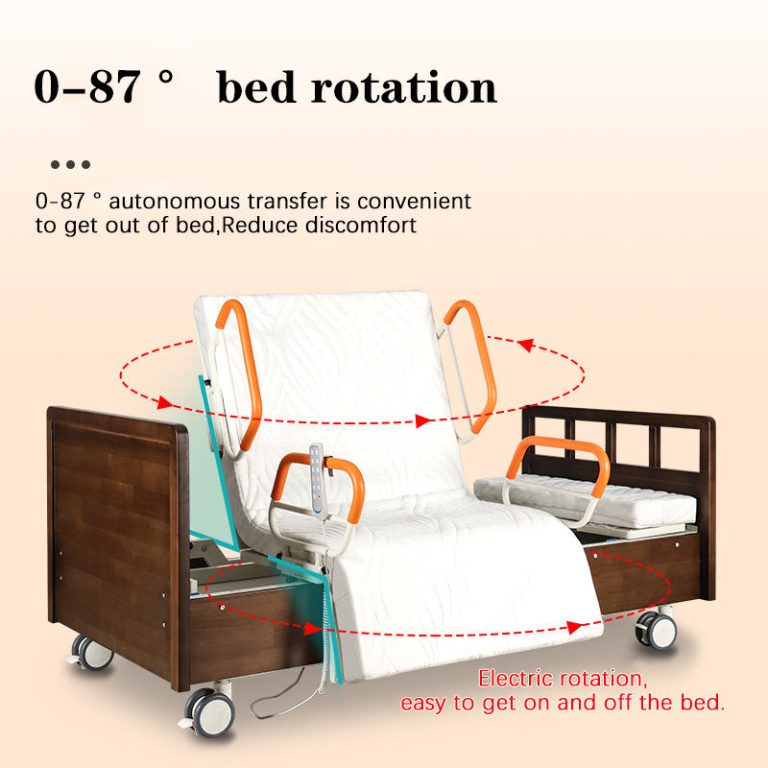
To understand energy costs, one must first understand the mechanism. An electric nursing bed uses linear actuators to provide adjustable positioning for patients with limited mobility. Unlike manual beds that rely on mechanical摇杆 (cranks) operated by caregivers, electric beds utilize electric motors to adjust the backrest, knee break, and overall height.
Typically, a standard electric nursing bed is equipped with between 2 to 5 motors, depending on the functionality required. For instance, a basic 3-function bed might include motors for backrest elevation, knee break adjustment, and overall height lifting. High-end ICU beds may include additional motors for Trendelenburg positioning or lateral rotation. These motors are designed for intermittent use rather than continuous operation. They activate only when the patient or caregiver presses a button on the remote control or panel to change the bed’s configuration.
The core logic behind this design is to solve the problem of patients who cannot move independently but require frequent position changes to prevent complications such as pressure u
Energy Consumption Analysis
One of the most common misconceptions is that electric hospital beds consume significant amounts of electricity, similar to large medical imaging equipment or HVAC systems. In reality, the power consumption of a nursing bed is negligible in the context of a hospital or household energy bill.
Linear actuators used in medical beds typically operate at low voltages (often 24V DC) and draw current only during movement. A typical motor might consume between 50 to 100 watts while moving. However, since a bed is adjusted only a few times a day—perhaps during nursing shifts, meals, or patient repositioning schedules—the actual energy usage is minimal. For example, if a bed motor runs for a total of 5 minutes per day, the daily energy consumption is fractions of a kilowatt-hour (kWh).
When ca
For facilities in regions with unstable power grids, such as parts of Africa and Southeast Asia, the concern shifts from cost to reliability. In these markets, manual beds remain a主力 product (mainstream product) due to budget constraints and infrastructure gaps. However, as the cost of electric beds decreases and battery backup options become more common, the transition to electric is accelerating even in developing markets.
Electric vs. Manual Nursing Beds: A Cost-Benefit Comparison
When evaluating procurement options, it is crucial to look beyond the initial purchase price. While manual beds have a lower upfront cost, the long-term operational expenses—including caregiver labor, patient outcomes, and maintenance—tell a different story.
| Feature | Electric Nursing Bed | Manual Nursing Bed |
|---|---|---|
| Power Source | Electric linear actuators (24V DC) | Mechanical crank handles |
| Energy Consumption | Minimal (Intermittent use only) | None |
| Caregiver Effort | Low (Button operation) | High (Physical cranking required) |
| Patient Comfort | High (Smooth, precise adjustments) | Medium (Jarring movements possible) |
| Typical Price Range | $500 – $2,000+ | $80 – $150 (Developing markets) |
| Primary Market | Hospitals, Homecare, Developed Nations | 基层 Hospitals, Budget-constrained regions |
| Key Growth Driver | Smart monitoring integration, ICU expansion | Infrastructure gaps, Budget constraints |
The data indicates that while manual beds serve a specific niche in budget-limited environments, electric beds are becoming the standard for patient care. The 6% CAGR for hospital electric beds is driven by ICU expansion and the integration of smart monitoring systems, which require a power source anyway. In contrast, manual beds in developing markets show a slower 3% CAGR, suggesting a gradual market shift towards automation as economies grow.
Clinical Impact and Patient Outcomes
Power consumption is not just a utility metric; it is directly linked to clinical outcomes. The ability to precisely adjust a patient’s position is critical for preventing complications. For example, Fowler’s Position, which elevates the head and back to 45-60°, is a standard clinical position used to improve respiratory comfort and prevent aspiration pneumonia. Achieving this position manually requires significant effort and can be difficult to maintain precisely. Electric beds allow for consistent, repeatable positioning that supports medical protocols.
Furthermore, the reduction in physical strain on caregivers leads to fewer workplace injuries. When nurses do not have to manually crank heavy bed sections, the risk of musculoskeletal disorders decreases. This indirect cost saving—reduced workers’ compensation claims and lower staff turnover—often exceeds the electricity costs associated with running the beds.
For home care scenarios, the “silver economy” and aging-in-place trends are driving demand for electric beds. Government subsidies in many OECD nations now cover the cost of electric homecare beds because they reduce the burden on professional caregivers and allow elderly patients to remain in their homes longer. The 18% CAGR for homecare beds reflects this massive shift in healthcare delivery models.
Procurement and Technical Specifications
When sourcing electric nursing beds, procurement officers should focus on specific technical parameters that influence both performance and energy efficiency. The motor brand is a primary indicator of quality and longevity. Reputable manufacturers often use motors from established suppliers like LINAK or Dewert, known for their durability and quiet operation. Domestic motor options are also available and can reduce costs, though they may vary in noise levels and lifespan.
Weight capacity is another critical specification. A standard electric nursing bed, such as the HJIM MD-A12, typically supports a maximum load of 220kg. Ensuring the bed meets the weight requirements of your patient demographic is essential for safety and warranty compliance. Exceeding the weight limit can strain the motors, leading to higher energy consumption and premature failure.
Regulatory compliance is non-negotiable in the medical device industry. Buyers should verify that the equipment meets relevant standards such as CE marking, ISO 13485 for quality management systems, and FDA clearance where applicable. These certifications ensure that the electrical components are safe, insulated, and protected against medical-grade electrical hazards.
Warranty terms also play a role in the total cost of ownership. A comprehensive warranty covering motors and electronics protects the investment against defects. Given that the motors are the primary moving parts consuming energy, a strong warranty on the drive system is a key indicator of manufacturer confidence.
Future Trends in Bed Technology
The future of hospital bed technology lies in integration and intelligence. As hospitals expand their ICU capabilities, beds are becoming nodes in a larger network of patient monitoring systems. Smart beds can track patient weight, detect movement, and even alert staff if a patient attempts to get up unassisted. While these features add to the electronic complexity, they do not significantly increase power consumption due to the low-energy nature of sensor technology.
Additionally, the integration of battery backup systems is becoming standard. This ensures that in the event of a power outage, the bed can still be lowered to a safe position, preventing patients from being stranded in elevated positions during emergencies. This feature is particularly important for healthcare facilities in regions where power stability is a concern.
As manufacturing processes optimize and supply chains mature, the cost gap between manual and electric beds continues to narrow. For healthcare providers, the choice is increasingly clear: the marginal increase in energy cost is a worthwhile investment for the substantial gains in patient safety, caregiver ergonomics, and operational efficiency.
Frequently Asked Questions
What is the typical weight capacity of an electric nursing bed?
Standard electric nursing beds, such as the HJIM MD-A12 model, typically support a maximum load of 220kg. This capacity is designed to accommodate a wide range of patient weights while ensuring the linear actuators operate within their safe torque limits. Exceeding this capacity can lead to motor strain and reduced lifespan.
How many motors does a standard electric hospital bed use?
A standard electric nursing bed typically uses between 2 to 5 linear actuators (motors). The number of motors depends on the functions required. For example, a 3-function bed uses motors for backrest elevation, knee break adjustment, and height lifting. More complex ICU beds may use additional motors for specialized positioning like Trendelenburg.
Are electric nursing beds suitable for home care environments?
Yes, electric nursing beds are increasingly popular for home care, driven by aging-in-place trends and government subsidies. They allow patients to adjust their position independently using a remote control, reducing the need for caregiver assistance. The homecare bed segment is experiencing an 18% CAGR, reflecting this growing demand.
What certifications should I look for when purchasing medical beds?
When procuring medical beds, ensure the equipment complies with international safety and quality standards. Key certifications include CE marking for European compliance, ISO 13485 for medical device quality management, and FDA clearance for the US market. These standards ensure the electrical systems are safe for continuous patient contact.