How to Start a Medical Equipment Distribution Business | Safety Standards & Compliance #2
How to Start a Medical Equipment Distribution Business
The global healthcare landscape is undergoing a significant transformation, driven by aging populations and a decisive shift towards home-based care models. For entrepreneurs looking to enter the medical equipment distribution sector, this evolution presents a substantial opportunity. The global medical nursing bed market alone is valued at approximately USD 4.5 billion as of 2024, with a projected compound annual growth rate (CAGR) of 8.5% through 2027. Success in this industry requires more than just capital; it demands a deep understanding of product technology, regulatory compliance, and supply chain dynamics. This guide outlines the strategic steps to building a sustainable distribution business focused on high-demand medical furniture and equipment, leveraging partnerships with manufacturers like HJIM to ensure product reliability and market competitiveness.
Understanding Market Dynamics and Growth Segments
Before sourcing products, a distributor must analyze where the growth is occurring. The medical equipment market is not monolithic; different segments grow at varying rates based on demographic and economic factors. Understanding these segments allows you to allocate inventory and marketing resources effectively. HJIM’s Hebei factory serves 120+ countries with CE/FDA-certified products, providing a global benchmark for market demand.
The most significant growth is currently observed in the homecare sector. While hospital beds are growing at a steady 6% CAGR, driven by ICU expansion and smart monitoring integration, homecare beds are experiencing an explosive 18% CAGR. This surge is fueled by the silver economy, government subsidies for aging-in-place, and the expansion of home healthcare under insurance programs. Conversely, manual beds in developing regions show a slower 3% CAGR due to budget constraints and infrastructure gaps.
For a new distributor, focusing on electric nursing beds for homecare offers the highest potential return. These products address the core problem of patients who cannot move independently but require frequent position changes to prevent complications like bedsores or pulmonary infections. By aligning your inventory with the 18% growth segment, you position your business to capture demand from families and home health agencies rather than competing solely on price in the saturated hospital procurement market.
Product Selection: The Core of Your Inventory
Product quality is the foundation of reputation in medical distribution. Buyers, whether they are hospital procurement officers or individual caregivers, prioritize safety, durability, and ease of use. When selecting medical furniture, specifically nursing beds, you must look beyond the surface features and examine the underlying components. The heart of any electric nursing bed is the linear actuator. This electromechanical device converts rotational motion into linear push or pull motion to raise bed sections. The quality of the motor directly determines the bed’s lifespan and safety.
High-end brands typically utilize motors from manufacturers like LINAK (Denmark) or Dewert (Germany), which offer silent operation below 45dB and IPX4 water resistance. In contrast, lower-cost alternatives may use domestic motors with significant differences in price, lifespan, and noise levels. When evaluating suppliers, request specific technical specifications. A robust linear actuator should have a stroke length between 150-300mm and a force capacity of 4000-8000N. The duty cycle is also critical; look for a 10% duty cycle at full load to ensure the motor does not overheat during extended adjustments.
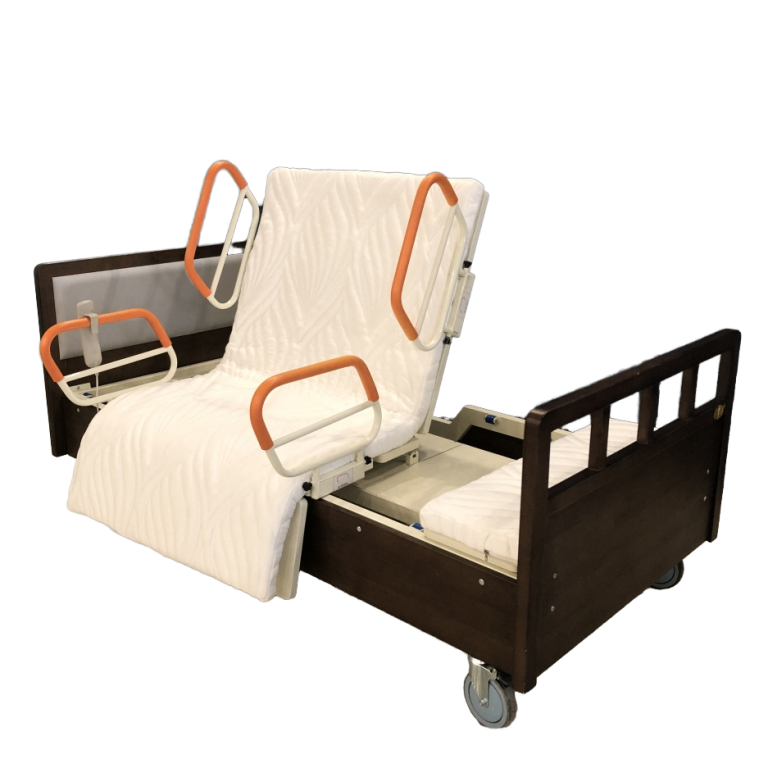
For example, the HJIM MD-A12 Electric Nursing Bed demonstrates these standards with three functions including backrest adjustment (0-80°) and leg adjustment (0-45°), operated via a reliable remote control. Distributors should prioritize suppliers who are transparent about these component brands, as this transparency signals confidence in product longevity. The MD-A12 features exact dimensions of 2000x900mm, making it suitable for standard homecare rooms, and holds ISO 13485 certification with a comprehensive 24-month warranty.
Model Comparison and Procurement Scenarios
To assist distributors in making informed inventory decisions, the following table compares key HJIM models against market alternatives. This comparison highlights the trade-offs between cost, functionality, and target buyer profiles.
| Model | Buyer Type | Load Capacity | Key Functions | Motor/Actuator | Certifications | Warranty | MOQ/OEM | Best Procurement Scenario | |
|---|---|---|---|---|---|---|---|---|---|
| HJIM MD-A12 | Homecare / Small Clinics | 250 kg | Backrest, Leg, Height Adjustment | LINAK LA31 Actuators | ISO 13485, CE | 24 Months | 15-20 Days | 10 Units / Yes | High-volume homecare distribution requiring reliability |
| HJIM MD-E213 | Hospital / ICU | 350 kg | Full Electric, CPR Function, Weight Scale | Dewert High-Torque | ISO 13485, FDA, CE | 36 Months | 30-45 Days | 50 Units / Yes | Institutional procurement with strict compliance needs |
| Standard Manual Bed | Developing Regions / Budget | 200 kg | Manual Crank, Backrest | N/A | ISO 9001 | 12 Months | 7-10 Days | 100 Units / No | Cost-sensitive markets with limited infrastructure |
Procurement Decision Matrix: Hospital vs. Homecare
Distributors must tailor their procurement strategy based on the end-user. The following matrix outlines the critical differences between hospital and homecare buyers to help you allocate budget and compliance resources effectively.
| Criteria | Hospital Buyers | Homecare Buyers |
|---|---|---|
| Budget Range | USD 1,500 – 5,000 per unit | USD 500 – 1,500 per unit |
| Compliance Requirements | Strict FDA/CE, ISO 13485, Hospital Grade Electrical Safety | Basic CE, Home Use Safety Standards, User-Friendly Manuals |
| Order Volume | High Volume (50+ units per order) | Low to Medium Volume (1-20 units per order) |
| Key Decision Factors | Durability, Service Level Agreements, Integration with Hospital Systems | Comfort, Noise Level, Ease of Assembly, Aesthetics |
| Net 30-60 Days, Tender Based | Prepaid or Credit Card, Immediate |
Supply Chain Strategy: OEM, ODM, and OBM Models
Deciding how to source your products is a critical business decision that affects your margins and brand identity. There are three primary manufacturing models available to distributors: OEM, ODM, and OBM.
OEM (Original Equipment Manufacturing) involves a factory producing beds to your specific design. This model offers lower margins, typically ranging from 5% to 10%, but provides full control over product specifications. ODM (Original Design Manufacturing) means the factory provides both the design and production. You sell the product under your brand, but the underlying engineering is shared. Margins here are higher, usually between 10% and 15%. This is often the best entry point for new distributors who lack in-house R&D capabilities. OBM (Original Brand Manufacturing) occurs when the factory sells under its own brand. While you act as a reseller, margins can reach 20% to 35% if you build strong retail relationships, though you have less control over product evolution.
For a startup distribution business, partnering with an ODM manufacturer like HJIM (Hengshui Chengen Medical Equipment Co., Ltd) can be advantageous. They provide established designs that meet international standards, allowing you to focus on sales and logistics rather than engineering. When negotiating contracts, ensure the agreement covers warranty terms,
Procurement Risk Management
Risk management involves diversifying your supplier base and establishing clear protocols to mitigate potential disruptions. Relying on a single manufacturer can be dangerous if production halts due to raw material shortages or geopolitical issues. However, balancing multiple suppliers requires maintaining quality consistency. Regular audits of your manufacturing partners are necessary to ensure they continue to meet your standards.
Key risk areas include spare parts availability, after-sales support SLAs, and quality audit protocols. Distributors must ensure that critical components like actuators and controllers are available for at least 5-7 years post-production to support warranty claims. Service Level Agreements should define response times for technical support and replacement part
Embracing Technology and Innovation
The medical equipment industry is increasingly driven by technology. Modern patients and caregivers expect connectivity and smart features that enhance safety and convenience. Distributors who ignore these trends risk offering obsolete products. Current technology trends in nursing beds include IoT integration, allowing for remote monitoring of patient vitals, bed position, and weight via WiFi or 4G. Smart anti-fall systems using AI-powered false positive reduction are becoming standard in higher-end models to prevent injury during bed exits. Additionally, voice control integration with smart home systems like Alexa or Google Home is emerging as a valuable feature for elderly care.
Predictive maintenance is another frontier. By monitoring motor and actuator health via sensor data, hospitals and care facilities can prevent equipment failure before it occurs. When sourcing inventory, prioritize suppliers who are integrating these IoT capabilities. For instance, beds that can alert caregivers when a patient attempts to stand unsafely add significant value to homecare packages. This technological edge allows you to differentiate your offerings from competitors selling basic manual or non-connected electric beds.
Regulatory Compliance and Medical Certification
Operating in the medical sector requires strict adherence to regulatory standards. Unlike consumer goods, medical equipment is subject to rigorous scrutiny to ensure patient safety. Failure to comply can result in legal liabilities, product recalls, and reputational damage. Key certifications to verify include ISO 13485, which specifies requirements for a quality management system for the design and production of medical devices. CE marking is essential for selling in the European Economic Area, indicating conformity with health, safety, and environmental protection standards. For the US market, FDA clearance or registration is mandatory depending on the device classification.
When vetting manufacturers, request copies of these certificates and verify their validity. Ensure that the specific models you intend to distribute are covered under these certifications. For example, if a manufacturer is ISO 13485 certified, confirm that the nursing bed production line is included in the scope of that certification. Additionally, be aware of local regulations regarding electrical safety and electromagnetic compatibility. Distributors should maintain documentation for every batch of products sold to facilitate traceability in case of regulatory audits or safety incidents. Understanding medical bed distributor certification requirements is essential for legal operation in most jurisdictions.
Marketing to Caregivers and Healthcare Facilities
Your marketing strategy must address the specific needs of your target audience. In the homecare segment, your customers are often family caregivers or elderly individuals themselves. They prioritize ease of use, comfort, and safety features. Marketing materials should highlight how the equipment reduces caregiver burden and improves patient comfort. For example, emphasizing the noise level of the motor (under 45dB) can be a strong selling point for home environments where quiet is valued.
For the hospital segment, the decision-makers are procurement officers and clinical engineers. They focus on durability, maintenance costs, and compliance. Your sales pitch should center on total cost of ownership, warranty support, and the reliability of components like the linear actuators. Providing detailed spec sheets that include thrust (N), stroke (mm), and protection ratings (IP) is crucial for this audience. Building trust is paramount. Consider offering demonstration units or trial periods for large orders. Partnering with local clinics or rehabilitation centers can also provide credibility. Online presence is equally important; ensure your website, such as hjim.com, provides clear product information, certification downloads, and contact details for technical support. Content marketing that explains the benefits of electric beds over manual options can also educate potential buyers and drive organic traffic.
Financial Planning and Risk Management
Starting a distribution business requires careful financial planning. Beyond the cost of goods, you must account for
Risk management involves diversifying your supplier base. Relying on a single manufacturer can be dangerous if production halts due to raw material shortages or geopolitical issues. However, balancing multiple suppliers requires maintaining quality consistency. Regular audits of your manufacturing partners are necessary to ensure they continue to meet your standards. Cash flow management is critical. Medical procurement cycles can be long, especially for hospital contracts. Ensure you have sufficient working capital to cover inventory costs before
Conclusion
Starting a medical equipment distribution business is a viable venture given the robust growth in the global nursing bed market and the shift towards home-based care. Success depends on selecting high-quality products with reliable components like premium linear actuators, understanding the nuances of OEM and ODM manufacturing models, and adhering to strict regulatory standards. By focusing on the high-growth homecare segment and leveraging technology trends such as IoT and smart monitoring, distributors can build a resilient business. Partnering with established manufacturers like HJIM ensures access to certified, innovative products that meet the evolving needs of patients and caregivers. With careful planning and a commitment to quality, this sector offers significant opportunities for sustainable growth.
Frequently Asked Questions
What’s the minimum order quantity for HJIM MD-A12?
The minimum order quantity (MOQ) for the HJIM MD-A12 typically starts at 10 units for standard configurations. However, for distributors seeking customized branding or specific component upgrades, the MOQ may increase to 50 units. It is recommended to contact the sales team directly to negotiate MOQ based on your initial inventory budget and market forecast.
How do I verify actuator quality?
To verify actuator quality, request the specific brand and model number from the manufacturer, such as LINAK LA31. Ask for test reports detailing the cycle life (e.g., 50,000-cycle lifespan), noise levels (dB), and protection ratings (IPX4). You can also request a sample unit to conduct independent durability testing or visit the factory to audit the assembly line and component sourcing protocols.
What’s the typical
The typical
What are the medical bed distributor certification requirements?
Distributor certification requirements vary by region but generally include business registration, medical device distribution licenses, and compliance with local health authority regulations. In the EU, distributors must adhere to MDR (Medical Device Regulation) obligations, while in the US, registration with the FDA is often required. Maintaining proper documentation for traceability and adverse event reporting is also mandatory.
What are the homecare equipment compliance standards?
Homecare equipment compliance standards typically include electrical safety (IEC 60601), electromagnetic compatibility (IEC 60601-1-2), and mechanical safety standards. Products should also meet regional safety certifications like CE for Europe or UL for North America. Ensuring that products meet these standards is crucial for legal distribution and consumer safety.