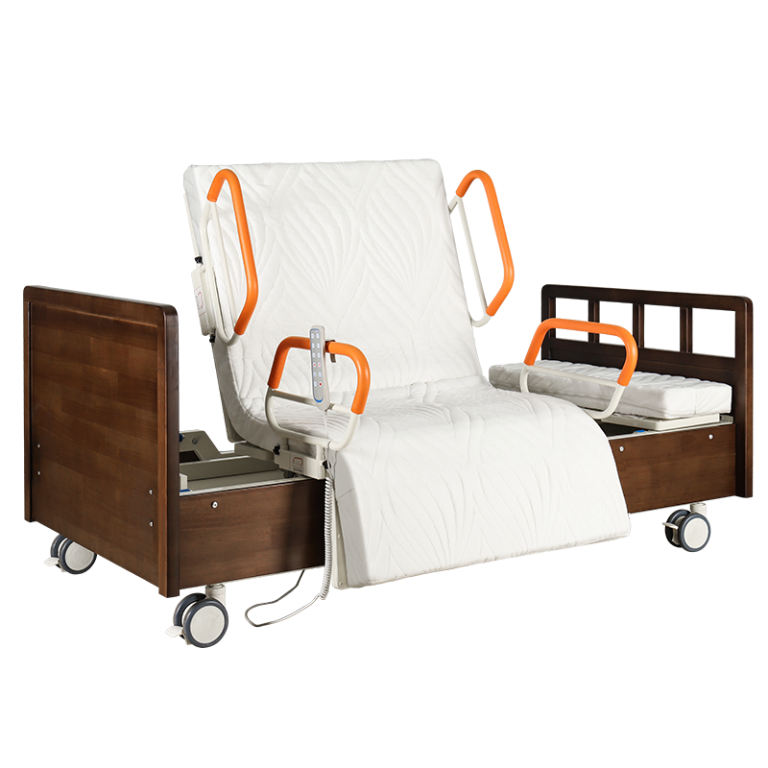
Sample Delivery Timelines for Medical Beds: What to Expect | Export & Trade Guide #3
Sample Delivery Timelines for Medical Beds: What to Expect
The global medical nursing bed market is currently valued at approximately USD 4.5 billion, with a projected compound annual growth rate of 8.5% through 2027 [K3]. This rapid expansion is driven by aging populations in OECD nations and a significant shift from hospital-centric care to home-based care models [K3]. For healthcare procurement managers, hospital administrators, and distributors, understanding the delivery timelines for these critical pieces of equipment is essential for planning inventory, managing patient intake, and ensuring continuity of care. When sourcing from manufacturers like HJIM (Hengshui Chengen Medical Equipment Co., Ltd), knowing what to expect regarding
Delivery timelines for medical beds are not uniform; they vary significantly based on the complexity of the product, the quality of components selected, and the required regulatory certifications. A standard manual bed may ship within days, while a smart electric nursing bed with IoT integration may require weeks of assembly and testing. This article details the factors influencing these timelines, helping you make informed decisions during the healthcare procurement process.
Understanding Production
When you initiate a request for quotation or place an order for medical beds, the clock starts on a multi-stage process. The first stage involves material sourcing. The core component of any electric nursing bed is the linear actuator, often referred to as the muscle of the bed [K1]. These devices convert rotational motion into straight push-pull motion, enabling the bed面 to rise and lower [K1]. If your specification requires premium components, such as LINAK actuators from Denmark, the
For standard orders, manufacturers typically maintain stock of common frames and mattresses. However, customization requests—such as specific color fabrics, unique siderail designs, or specialized weight capacities—will add time to the production schedule. In the context of the global market, where homecare beds are growing at an 18% CAGR due to silver economy trends, manufacturers are optimizing lines for speed, but quality assurance remains a non-negotiable step [K4].
Another critical factor is the scale of the order. Sample orders for evaluation purposes often receive priority processing to facilitate faster decision-making by buyers. Bulk orders, while potentially having longer initial
Component Quality and Its Impact on Delivery Schedules
The quality of internal components directly influences both the performance of the bed and the time required to assemble and test it. As noted in industry specifications, the motor quality directly determines the nursing bed’s service life and safety [K1]. High-end brands utilize LINAK or Dewert motors, while mid-to-low range options may use domestic alternatives [K1]. The price difference between LINAK and domestic motors can be three to five times, and the differences in lifespan and noise are significant [K1].
When specifying a LINAK LA40 motor, which is the most common model for nursing beds with a single unit price around $60-80, you are opting for reliability [K1]. However, procurement teams must account for the sourcing time of these imported components. If a manufacturer promises a two-week delivery but relies on imported actuators that are currently back-ordered, delays will occur. Therefore, transparent communication with the supplier about component sourcing is crucial.
Furthermore, the integration of these motors into the bed frame requires precise calibration. Electric nursing beds typically use two to five motors to adjust the backrest, knee section, and height [K6]. Each motor connection must be tested for synchronization and safety. A bed with more functions, such as a five-function model compared to a three-function model, inherently requires more testing time to ensure all movements are smooth and quiet. This technical requirement adds to the overall delivery timeline but ensures the final product meets medical device compliance standards.
Feature Complexity and Assembly Requirements
Modern medical beds are evolving beyond simple support structures. They are becoming integrated care systems. One of the most critical features for patient safety and caregiver ergonomics is the Hi-Low function, which allows the entire bed surface to raise or lower [K2]. The adjustment range is typically between 40cm and 80cm [K2]. Lowering the bed facilitates safe patient entry and exit, reducing fall risks, while raising it helps caregivers avoid back strain during procedures [K2].
Implementing this function requires robust mechanical engineering and rigorous testing. The bed must remain stable at all heights, and the lifting mechanism must operate smoothly under maximum load. For procurement managers, specifying a Hi-Low function means acknowledging a slightly longer assembly time compared to fixed-height beds. This is particularly relevant for hospital equipment orders where uniformity and safety are paramount.
Additionally, technology trends are reshaping delivery timelines. IoT integration allows for remote monitoring of patient vitals, bed position, and weight via WiFi or 4G [K5]. Smart anti-fall systems use AI to reduce false positives in bed exit alarms [K5]. Voice control integration with smart home systems like Alexa or Google Home is also emerging [K5]. Each of these features requires software flashing, connectivity testing, and security validation before the bed leaves the factory. Predictive maintenance sensors that monitor motor health via sensor data add another layer of quality control [K5].
While these features enhance patient care and mobility assistance, they extend the production timeline. A smart bed is not just assembled; it is configured and tested digitally. When requesting samples, buyers should clarify whether the quoted timeline includes software integration testing. For HJIM products, such as those listed on hjim.com, the technical team ensures that these smart features are fully operational before shipment, which may add a few days to the standard mechanical assembly time.
Logistics, Certification, and Regulatory Compliance
Once the bed is manufactured, it must pass regulatory checks before it can be shipped to certain regions. Medical certification is a major factor in delivery timelines. Beds destined for the European market must meet CE standards, while those for the United States may require FDA clearance or compliance with specific state regulations. ISO 13485 certification is also a key indicator of a manufacturer’s quality management system.
Documentation preparation takes time. Each unit must be accompanied by manuals, warranty cards, and compliance certificates. For bulk orders, this paperwork is often batched, but for sample orders, individual certification packages may be required. If a bed is being shipped to a developing region with infrastructure gaps, manual beds might be preferred due to budget constraints, which generally have shorter
Comparison of Delivery Expectations by Bed Type
To help you plan your procurement strategy, the following table outlines the typical delivery expectations based on bed type and feature set. These estimates assume standard configurations without major customizations.
| Bed Type | Key Features | Typical | Primary Considerations |
|---|---|---|---|
| Manual Nursing Bed | Crank adjustments, basic siderails | 7-10 Days | Best for budget constraints and developing infrastructure [K4] |
| Standard Electric Bed | 2-3 motors, Hi-Low function, remote control | 15-20 Days | Requires motor testing and safety checks [K2] |
| Premium Electric Bed | 5 motors, LINAK actuators, CPR function | 25-30 Days | Imported components may extend sourcing time [K1] |
| Smart IoT Bed | Remote monitoring, AI anti-fall, voice control | 30-45 Days | Software integration and connectivity testing required [K5] |
This comparison highlights that while manual beds offer the fastest turnaround, the industry shift towards home-based care models favors electric and smart beds [K3]. The 18% CAGR for homecare beds suggests that investing in the longer
Ensuring Safety and Efficiency in Your Procurement Plan
When evaluating delivery timelines, do not sacrifice safety for speed. The central brake system is a critical safety feature that allows a single pedal to lock all four wheels simultaneously [K7]. This dual-mode system, offering directional lock and full lock, provides greater stability than individual wheel brakes and reduces fall risk during transfers [K7]. Testing this mechanism is part of the quality assurance process and should not be rushed.
Similarly, the weight capacity of the bed is a non-negotiable specification. For example, the HJIM MD-A12 model supports a maximum load of 220kg [K6]. Ensuring that the bed meets this capacity requires stress testing during production. If a supplier promises delivery faster than physically possible for these tests, it may indicate a compromise on quality. Always verify that the sample you receive matches the technical parameters promised in the quotation.
Communication with your supplier is key. Ask specific questions about their component sourcing, especially regarding linear actuators [K1]. Inquire about their certification status for your target market. Request a detailed production schedule that includes time for testing and documentation. By understanding the underlying mechanics and market trends, you can set realistic expectations and ensure that your medical bed procurement supports high-quality patient care.
Conclusion
Delivery timelines for medical beds are influenced by a complex interplay of component sourcing, feature complexity, and regulatory compliance. From the choice of linear actuators that drive the bed’s movement [K1] to the integration of IoT sensors for remote monitoring [K5], each feature adds value but also time to the production process. The global market is moving towards smarter, more ergonomic solutions, with homecare beds leading the growth [K4].
For buyers, the key is to balance speed with quality. While a faster delivery might seem appealing, ensuring that the bed meets safety standards, such as having a reliable central brake system [K7] and appropriate weight capacity [K6], is paramount. By working with established manufacturers like HJIM and understanding the technical details behind the timelines, procurement professionals can secure equipment that enhances caregiver ergonomics and patient safety without unexpected delays.
Frequently Asked Questions
What is the expected lifespan and noise level of the linear actuators used in HJIM electric nursing beds?
The linear actuators are the core drive components that convert rotational motion into straight push-pull motion for bed adjustments [K1]. High-end models often use brands like LINAK, where the motor quality directly determines the bed’s service life and safety [K1]. While specific cycle counts depend on the model, premium actuators are designed for significantly longer lifespans and lower noise levels compared to standard domestic motors, with price differences reflecting these performance gaps [K1].
What is the maximum weight capacity for standard electric nursing beds like the HJIM MD-A12?
For models such as the HJIM MD-A12, the maximum load capacity is 220kg [K6]. This specification ensures the bed can safely support patients of various sizes while maintaining structural integrity during elevation and adjustment functions. This capacity is a critical parameter for healthcare procurement when selecting beds for general ward or ICU use.
How does the central brake system enhance patient safety during transfers?
The central brake system allows a single foot lever to lock or unlock all four casters simultaneously [K7]. This provides greater stability than individual wheel brakes and reduces the risk of the bed moving unexpectedly during patient transfers [K7]. The system typically offers dual-mode functionality, including directional lock and full lock, ensuring the bed remains stationary when caregivers are assisting patients.
What is the adjustment range for the Hi-Low function on electric nursing beds?
The Hi-Low function allows the entire bed surface to move between the lowest and highest positions, with a typical adjustment range of 40cm to 80cm [K2]. Lowering the bed to the minimum height facilitates safer patient entry and exit, reducing fall risks, while raising it to the maximum height improves caregiver ergonomics by reducing the need to bend over during care procedures [K2].